Myanmar Public Cloud Market Size & Growth Rate (2026-2032)
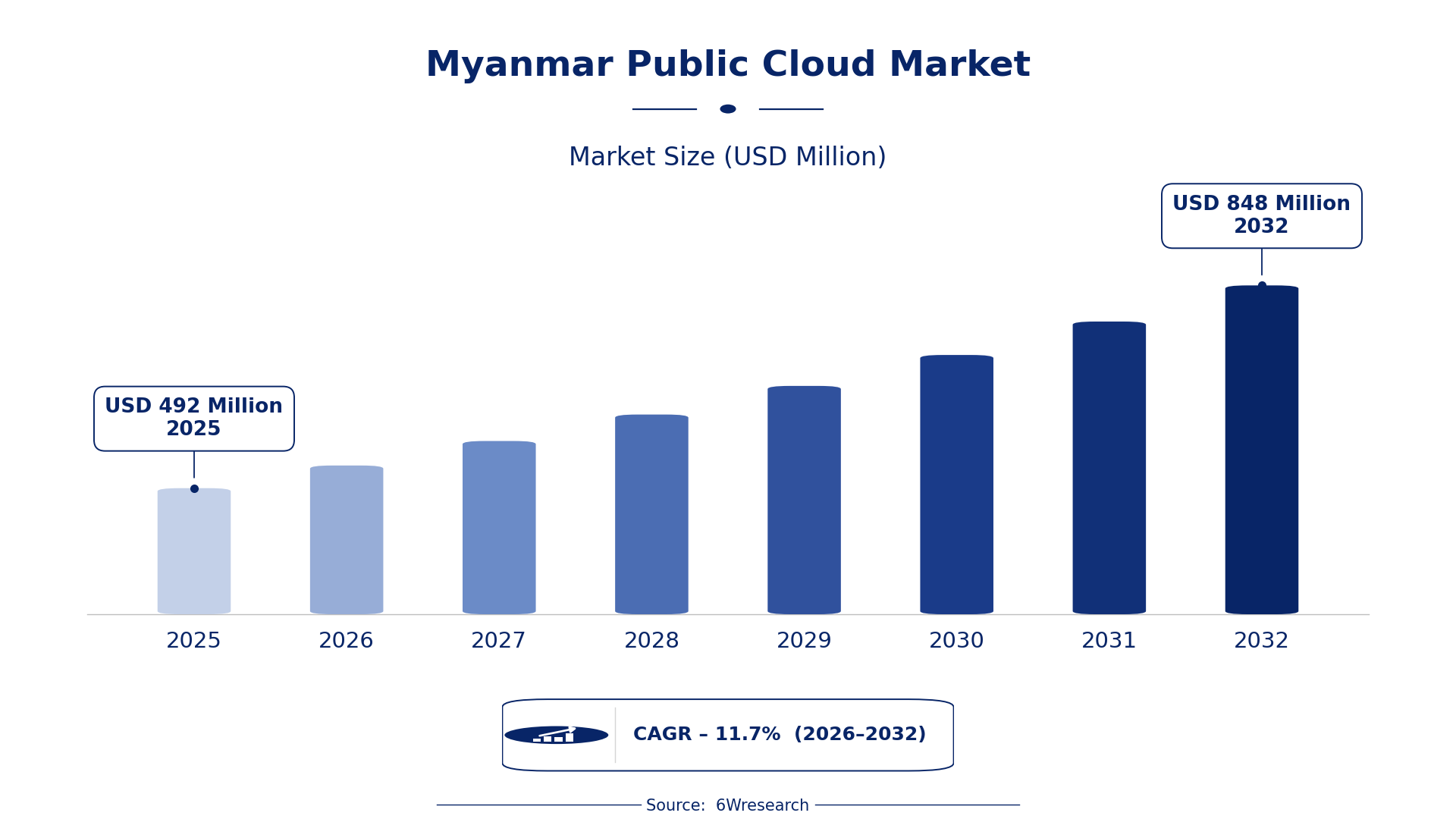
The Myanmar Public Cloud Market was estimated at USD 492 Million in 2025 and is projected to reach USD 848 Million by 2032, growing at a CAGR of 11.7% from 2026 to 2032.
Myanmar Public Cloud Market Synopsis
The Myanmar public cloud market has gained notable momentum in recent years, driven by the increasing adoption of digital solutions across various sectors. Organizations are eager to enhance operational efficiencies while reducing IT costs, which has propelled cloud service uptake.
Looking ahead, the market is expected to continue its upward trajectory as local businesses increasingly recognize the strategic advantages of public cloud adoption. With ongoing government support and rising internet penetration, the groundwork is being laid for sustained growth.
Myanmar Public Cloud Market Year-wise Growth Rate and Key Drivers
This graph illustrates the annual growth rates of the Myanmar Public Cloud Market from 2021 to 2032, highlighting a steady upward trajectory and projected expansion over the forecast period.
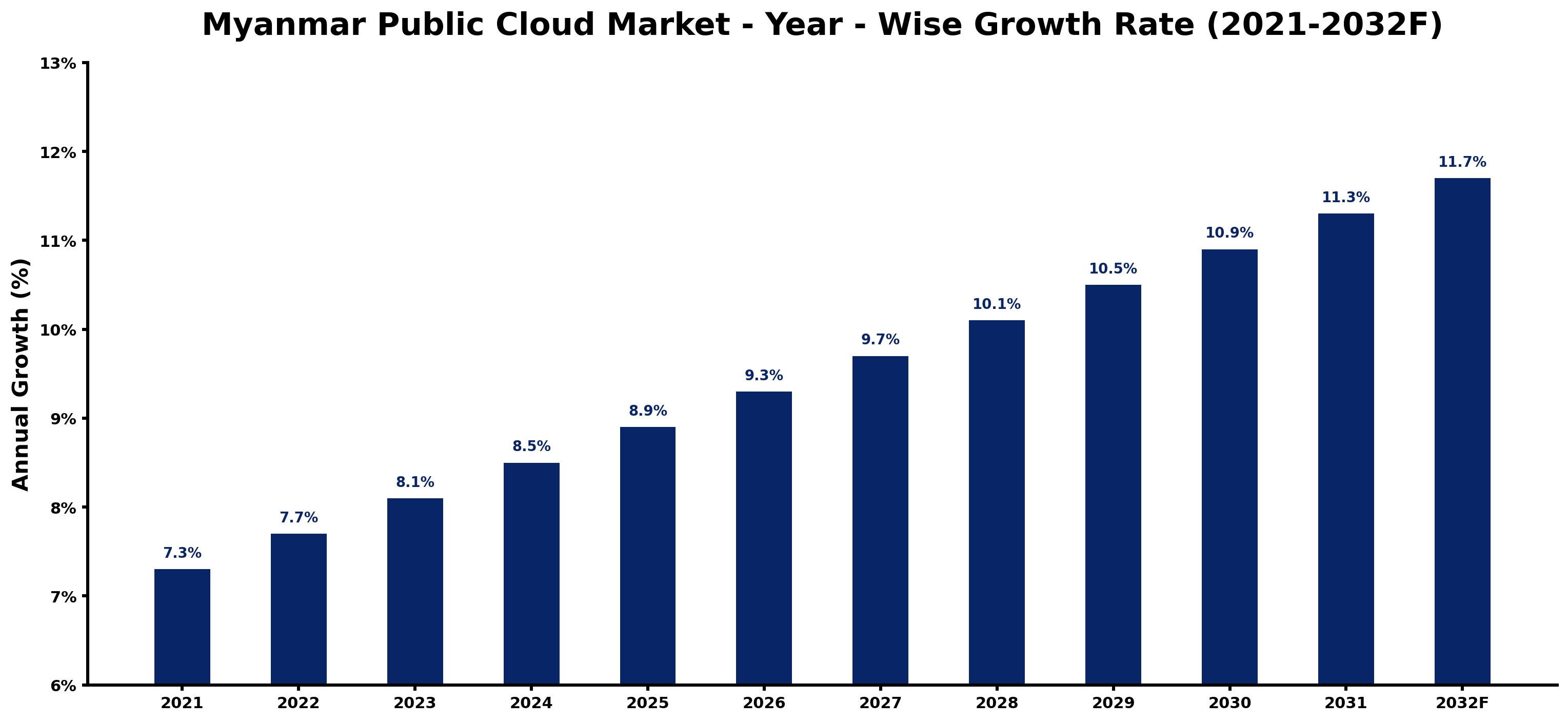
The table below presents the year‑wise growth rates along with the key drivers influencing the market
| Year | Growth Rate | Major Drivers |
| 2021 | 7.3% | Government's digital economy strategy encourages cloud adoption. |
| 2022 | 7.7% | Increased smartphone penetration boosts online service utilization. |
| 2023 | 8.1% | Growing local startups seek scalable cloud infrastructure solutions. |
| 2024 | 8.5% | Developing IT skills among youth supports cloud deployment. |
| 2025 | 8.9% | E-commerce growth necessitates enhanced cloud-based logistics solutions. |
| 2026 | 9.3% | Investment in fintech accelerates need for secure cloud services. |
| 2027 | 9.7% | Local data protection regulations mandate cloud compliance solutions. |
| 2028 | 10.1% | Rise in remote work promotes need for cloud collaboration tools. |
| 2029 | 10.5% | Healthtech innovations drive demand for cloud-based health solutions. |
| 2030 | 10.9% | Government initiatives support digital transformation across industries. |
| 2031 | 11.3% | Increased foreign investment enhances cloud infrastructure development. |
| 2032 | 11.7% | Growing urban population boosts demand for smart cloud services. |
Note: Market size estimations and growth projections presented in this report are based on 6Wresearch's proprietary forecasting methodology, utilizing the latest available industry data, government publications, and primary research inputs.
Myanmar Public Cloud Market Key Takeaways
Below are some of the specific key takeaways from the market, including:
- The Myanmar public cloud market is experiencing rapid growth fueled by digital transformation initiatives.
- Global cloud providers dominate, but local players are emerging to cater to specific needs.
- There is a strong demand for hybrid and multi-cloud solutions among businesses.
- Government initiatives are enhancing internet infrastructure to support cloud adoption.
- Data security concerns remain a critical barrier to broader cloud uptake.
Evaluation of Restraints in Myanmar Public Cloud Market
Despite its promising potential, the Myanmar public cloud market grapples with several limitations. A key challenge is the country's inadequate internet infrastructure, which hampers access to reliable cloud services. Additionally, regulatory uncertainties and data sovereignty issues create a cautious environment for businesses contemplating cloud migration. The ongoing political instability further complicates matters, making it crucial for stakeholders to approach the market with a clear understanding of these risks. Investments in infrastructure and workforce training will be essential to overcoming these hurdles.
Myanmar Public Cloud Market Trends
Several trends are shaping the Myanmar public cloud market. Notably, there is a growing preference for cloud-based infrastructure and software services across key sectors such as finance, e-commerce, and healthcare. Businesses are increasingly leaning towards hybrid and multi-cloud strategies to align with regulatory requirements while enhancing data security.
The maturation of cloud technology is fostering a wave of innovation, as organizations seek to leverage these tools for competitive advantage. As awareness of cloud benefits spreads, businesses are expected to increasingly incorporate public cloud services to streamline operations and drive growth.
Myanmar Public Cloud Market Opportunities
The Myanmar public cloud market presents a wealth of investment opportunities, primarily driven by the increasing demand for efficient cloud solutions. With businesses across various sectors pursuing digital transformation, there is a pressing need for IaaS, PaaS, and SaaS offerings that cater specifically to local requirements. Establishing data centers and enhancing infrastructure will be critical in capturing this emerging demand.
on top of that, providing tailored services that address data security and compliance will be crucial for success. As more organizations recognize the strategic role of cloud technology in enhancing productivity and competitiveness, the appetite for investment in this space is set to grow.
Government Initiatives in the Myanmar Public Cloud Market
Government policy is playing a crucial role in shaping the Myanmar public cloud market. The authorities are prioritizing the development of digital infrastructure, which is essential for fostering cloud adoption across the country. With a focus on enhancing data security and privacy regulations, the government aims to create an environment that encourages both local and foreign investments in the cloud computing sector.
- A national digital infrastructure upgrade programme was launched to improve connectivity across urban and rural areas.
- Ongoing initiatives are focused on establishing regulatory frameworks that support cloud service providers while ensuring data protection.
- A planned public-private partnership aims to enhance telecom infrastructure access by 2028, facilitating better cloud service delivery.
- Recently completed efforts have included workshops aimed at increasing awareness of cloud technologies among local businesses.
- The government is currently working on incentives to attract foreign cloud service providers to invest in Myanmar.
Future Insights of the Myanmar Public Cloud Market
Looking to the future, the Myanmar public cloud market is set for robust growth from 2026 to 2032. As businesses increasingly adopt cloud services, the demand for scalable and efficient IT solutions will intensify. Government initiatives to improve digital infrastructure and foster a favorable regulatory environment will bolster this trend.
The rising awareness of cloud benefits, such as cost-efficiency and operational flexibility, will drive further adoption. As businesses in Myanmar continue to embrace digital transformation, the public cloud market is anticipated to thrive, presenting numerous opportunities for investment and innovation.
Myanmar Public Cloud Market Latest Developments
Recent activity in the Myanmar public cloud market reflects a dynamic shift towards enhanced service offerings and infrastructure development. Over the past year, various initiatives have been launched to address the challenges of connectivity and data security while promoting cloud adoption among local enterprises.
- A leading regional operator launched a new data center in early 2025, aimed at enhancing service delivery for local businesses.
- Ongoing partnerships between technology vendors and local firms are focused on developing customized cloud solutions, starting in Q2 2025.
- Plans for a government-led digital literacy campaign are expected to roll out by mid-2026, targeting small and medium enterprises.
- A major technology vendor is currently expanding its cloud service offerings in Myanmar, with a focus on financial services, initiated in early 2025 and still underway.
- A public-private initiative to improve cybersecurity measures for cloud services is planned for launch in late 2026.
Myanmar Public Cloud Market - Key Attractiveness of the Report
- 10 Years of Market Numbers
- Historical Data Starting from 2022 to 2025
- Base Year: 2025
- Forecast Data until 2032
- Key Performance Indicators Impacting the Market
- Major Upcoming Developments and Projects
Key Highlights of the Report:
- Myanmar Public Cloud Market Outlook
- Market Size of Myanmar Public Cloud Market, 2025
- Forecast of Myanmar Public Cloud Market, 2032
- Historical Data and Forecast of Myanmar Public Cloud Revenues & Volume for the Period 2022-2032F
- Myanmar Public Cloud Market Trend Evolution
- Myanmar Public Cloud Market Drivers and Challenges
- Myanmar Public Cloud Price Trends
- Myanmar Public Cloud Porter's Five Forces
- Myanmar Public Cloud Industry Life Cycle
- Historical Data and Forecast of Myanmar Public Cloud Market Revenues & Volume By Service Model for the Period 2022-2032F
- Historical Data and Forecast of Myanmar Public Cloud Market Revenues & Volume By Infrastructure as a Service for the Period 2022-2032F
- Historical Data and Forecast of Myanmar Public Cloud Market Revenues & Volume By Platform as a Service for the Period 2022-2032F
- Historical Data and Forecast of Myanmar Public Cloud Market Revenues & Volume By Software as a Service for the Period 2022-2032F
- Historical Data and Forecast of Myanmar Public Cloud Market Revenues & Volume By Organization Size Large enterprises for the Period 2022-2032F
- Historical Data and Forecast of Myanmar Public Cloud Market Revenues & Volume By Small for the Period 2022-2032F
- Historical Data and Forecast of Myanmar Public Cloud Market Revenues & Volume By Medium Enterprises SMEs for the Period 2022-2032F
- Historical Data and Forecast of Myanmar Public Cloud Market Revenues & Volume By Verticals for the Period 2022-2032F
- Historical Data and Forecast of Myanmar Public Cloud Market Revenues & Volume By BFSI for the Period 2022-2032F
- Historical Data and Forecast of Myanmar Public Cloud Market Revenues & Volume By Telecommunication for the Period 2022-2032F
- Historical Data and Forecast of Myanmar Public Cloud Market Revenues & Volume By IT & ITeS for the Period 2022-2032F
- Historical Data and Forecast of Myanmar Public Cloud Market Revenues & Volume By Government & Public Sector for the Period 2022-2032F
- Historical Data and Forecast of Myanmar Public Cloud Market Revenues & Volume By Retail & Consumer Goods for the Period 2022-2032F
- Historical Data and Forecast of Myanmar Public Cloud Market Revenues & Volume By Manufacturing for the Period 2022-2032F
- Historical Data and Forecast of Myanmar Public Cloud Market Revenues & Volume By Energy & Utility for the Period 2022-2032F
- Historical Data and Forecast of Myanmar Public Cloud Market Revenues & Volume By Media & Entertainment for the Period 2022-2032F
- Myanmar Public Cloud Import Export Trade Statistics
- Market Opportunity Assessment By Service Model
- Market Opportunity Assessment By Organization Size Large enterprises
- Market Opportunity Assessment By Verticals
- Myanmar Public Cloud Top Companies Market Share
- Myanmar Public Cloud Competitive Benchmarking By Technical and Operational Parameters
- Myanmar Public Cloud Company Profiles
- Myanmar Public Cloud Key Strategic Recommendations






































