Myanmar Sports Apparel Market Summary
The myanmar sports apparel market was estimated at USD 541 Million in 2025 and is projected to reach USD 769 Million by 2032, growing at a CAGR of 5.7% from 2026 to 2032.
Myanmar Sports Apparel Market Year-wise Growth Rate and Key Drivers
This graph highlights how the Myanmar Sports Apparel Market has steadily grown over the past five years, supported by major growth factors.
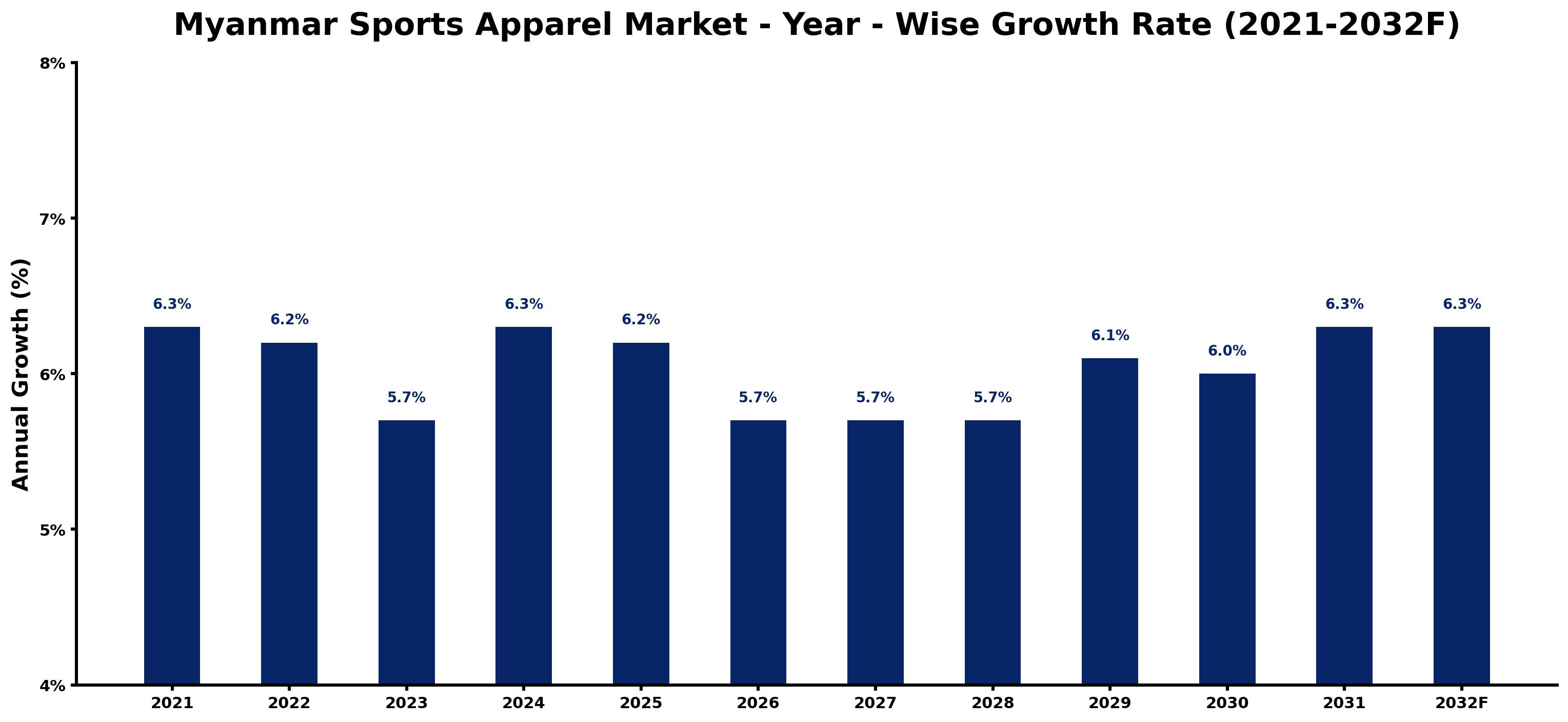
The table below presents the year wise growth rates along with the key drivers influencing the market
| Year | Growth Rate | Major Drivers |
| 2021 | 6.3% | The pandemic spurred local sports brands to enhance online sales channels. |
| 2022 | 6.2% | Youth interest in health and fitness expanded the casual sportswear segment significantly. |
| 2023 | 5.7% | Local manufacturers embraced sustainable materials, appealing to eco-conscious consumers increasingly. |
| 2024 | 6.3% | International sports events increased visibility and enthusiasm for athletic apparel in Myanmar. |
| 2025 | 6.2% | E-commerce platforms began offering localized services, boosting access to diverse apparel brands. |
| 2026 | 5.7% | Increased disposable incomes led to more consumers purchasing premium sports apparel options. |
| 2027 | 5.7% | Fitness influencers leveraged social media, driving brand awareness and consumer engagement. |
| 2028 | 5.7% | Emerging local brands focused on unique designs, catering to regional fashion preferences. |
| 2029 | 6.1% | Collaboration with international athletes helped elevate brand credibility within the market. |
| 2030 | 6.0% | Mass participation sports events encouraged communities to invest in active lifestyles and apparel. |
| 2031 | 6.3% | Technological innovation in fabric production created lighter, more breathable sportswear alternatives. |
| 2032 | 6.3% | Overall health awareness campaigns positioned sports apparel as essential for active living. |
Note - Market size estimations and growth projections presented in this report are based on 6Wresearch's advanced forecasting approach, validated with industry datasets as of June 2026.
Myanmar Sports Apparel Market Synopsis
The Myanmar Sports Apparel Market is projected to reach 5.7% and witness significant growth during the forecast period (2026-2032). This growth trajectory can be traced back to multiple interrelated factors, including an increasing health consciousness among the population and rising disposable incomes. As more individuals prioritize fitness, the demand for specialized sports apparel is expected to surge. Additionally, the proliferation of fitness clubs and increased participation in sporting activities are instrumental in propelling market expansion.
Myanmar Sports Apparel Market Growth Drivers
Several pivotal factors are contributing to the growth of the Myanmar Sports Apparel Market. First, the surge in health awareness among the populace has driven individuals to adopt more active lifestyles, leading to increased apparel purchases. Second, rising disposable incomes enable consumers to spend more on quality sports and fitness gear, setting the stage for substantial market growth. Third, the growing number of fitness clubs across urban centers is enhancing the public's access to sporting activities, which in turn boosts apparel demand. Fourth, the popularity of online shopping has provided a convenient platform for consumers to purchase sports apparel, expanding market reach significantly. Lastly, government initiatives focusing on sports development are also expected to encourage active participation in sports, contributing positively to the market.
Myanmar Sports Apparel Market Trends and Opportunities
The Myanmar sports apparel market is poised to witness several key trends through the forecast period. Increased engagement in team sports and recreational activities among youths is driving a shift toward stylish and functional sportswear. Furthermore, the rise of athleisure—a blending of athletic and leisure apparel—is creating new opportunities, as consumers tend to favor versatile clothing suitable for both workouts and casual settings. The growth of e-commerce platforms is another considerable trend, allowing brands to reach a wider audience and cater to varying consumer preferences effectively. Also, the market is seeing an inclination towards sustainable and eco-friendly materials, reflecting a growing consumer preference for environmentally conscious products. Lastly, local brands are increasingly gaining traction as they provide culturally relevant designs, tapping into the national identity.
Myanmar Sports Apparel Market Challenges and Restraints
Despite the promising growth prospects, the Myanmar Sports Apparel Market faces several challenges. One of the primary constraints is the limited availability of high-quality raw materials for apparel manufacturing, which can hinder production efficiency. Additionally, there may be fluctuations in consumer spending patterns due to economic uncertainties, affecting overall market stability. The lack of brand awareness and consumer education regarding the benefits of specialized sports apparel is another significant hurdle. Furthermore, competition from low-cost imports can undermine the market's growth, as price-sensitive consumers might opt for cheaper alternatives. Lastly, issues related to distribution logistics, particularly in rural areas, could impede market expansion efforts.
Myanmar Sports Apparel Market Government Investment and Initiatives
The government of Myanmar has been actively promoting sports and fitness initiatives, which indirectly bolster the sports apparel market. Efforts to develop sports infrastructure, such as new stadiums and sports complexes, are part of a broader strategy to encourage public participation in sports. Investment in athletic programs across educational institutions is also a key focus, aiming to foster a culture of health and fitness within the younger generation. Moreover, various public campaigns aimed at increasing awareness about the benefits of physical activity further support the growth of this market sector. Initiatives to promote local talent in sports through sponsorship and funding programs are enhancing the visibility of sportswear requirements. These government-led efforts are creating a conducive environment for growth in the sports apparel segment.
Myanmar Sports Apparel Market Latest Developments (May 2025 - June 2026)
Recent developments within the Myanmar Sports Apparel Market indicate a robust focus on enhancing product offerings and tapping into broader consumer bases. There has been a marked increase in collaborations between local manufacturers and international design firms, aiming to elevate product quality and appeal. Consumer interest in digital shopping experiences has led to improvements in online retail platforms, enabling brands to engage with consumers more effectively. Increased social media presence by sports apparel brands has facilitated real-time customer feedback and brand loyalty. In parallel, fitness influencers are playing a significant role in driving consumer trends and preferences towards innovative sports apparel. Collectively, these developments suggest a dynamic and evolving market landscape in the lead-up to 2026.
Myanmar Sports Apparel Market - Key Attractiveness of the Report
- 10 Years of Market Numbers
- Historical Data Starting from 2022 to 2025
- Base Year: 2025
- Forecast Data until 2032
- Key Performance Indicators Impacting the Market
- Major Upcoming Developments and Projects
Key Highlights of the Report:
- Myanmar Sports Apparel Market Outlook
- Market Size of Myanmar Sports Apparel Market, 2025
- Forecast of Myanmar Sports Apparel Market, 2032F
- Historical Data and Forecast of Myanmar Sports Apparel Revenues & Volume for the Period 2022-2032F
- Myanmar Sports Apparel Market Trend Evolution
- Myanmar Sports Apparel Market Drivers and Challenges
- Myanmar Sports Apparel Price Trends
- Myanmar Sports Apparel Porter's Five Forces
- Myanmar Sports Apparel Industry Life Cycle
- Historical Data and Forecast of Myanmar Sports Apparel Market Revenues & Volume By End-users for the Period 2022-2032F
- Historical Data and Forecast of Myanmar Sports Apparel Market Revenues & Volume By Children for the Period 2022-2032F
- Historical Data and Forecast of Myanmar Sports Apparel Market Revenues & Volume By Men for the Period 2022-2032F
- Historical Data and Forecast of Myanmar Sports Apparel Market Revenues & Volume By Women for the Period 2022-2032F
- Historical Data and Forecast of Myanmar Sports Apparel Market Revenues & Volume By Distribution Channel for the Period 2022-2032F
- Historical Data and Forecast of Myanmar Sports Apparel Market Revenues & Volume By E-commerce for the Period 2022-2032F
- Historical Data and Forecast of Myanmar Sports Apparel Market Revenues & Volume By Supermarket/Hypermarket for the Period 2022-2032F
- Historical Data and Forecast of Myanmar Sports Apparel Market Revenues & Volume By Brand Outlets for the Period 2022-2032F
- Historical Data and Forecast of Myanmar Sports Apparel Market Revenues & Volume By Discount Stores for the Period 2022-2032F
- Myanmar Sports Apparel Import Export Trade Statistics
- Market Opportunity Assessment By End-users
- Market Opportunity Assessment By Distribution Channel
- Myanmar Sports Apparel Top Companies Market Share
- Myanmar Sports Apparel Competitive Benchmarking By Technical and Operational Parameters
- Myanmar Sports Apparel Company Profiles
- Myanmar Sports Apparel Key Strategic Recommendations






































