Myanmar Wound Dressings Market Size, Share & Growth Rate
The Myanmar Wound Dressings Market was estimated at USD 181 Million in 2025 and is projected to reach USD 244 Million by 2032, growing at a CAGR of 4.4% from 2026 to 2032. This trajectory is driven by an increasing prevalence of chronic wounds and a growing geriatric population that demands more advanced care options. Furthermore, the gradual enhancement of healthcare infrastructure across Myanmar is facilitating better access to effective wound care products, thus fostering market expansion.
Myanmar Wound Dressings Market Year-wise Growth Rate and Key Drivers
This graph highlights how the Myanmar Wound Dressings Market has steadily grown over the years, supported by major growth factors.
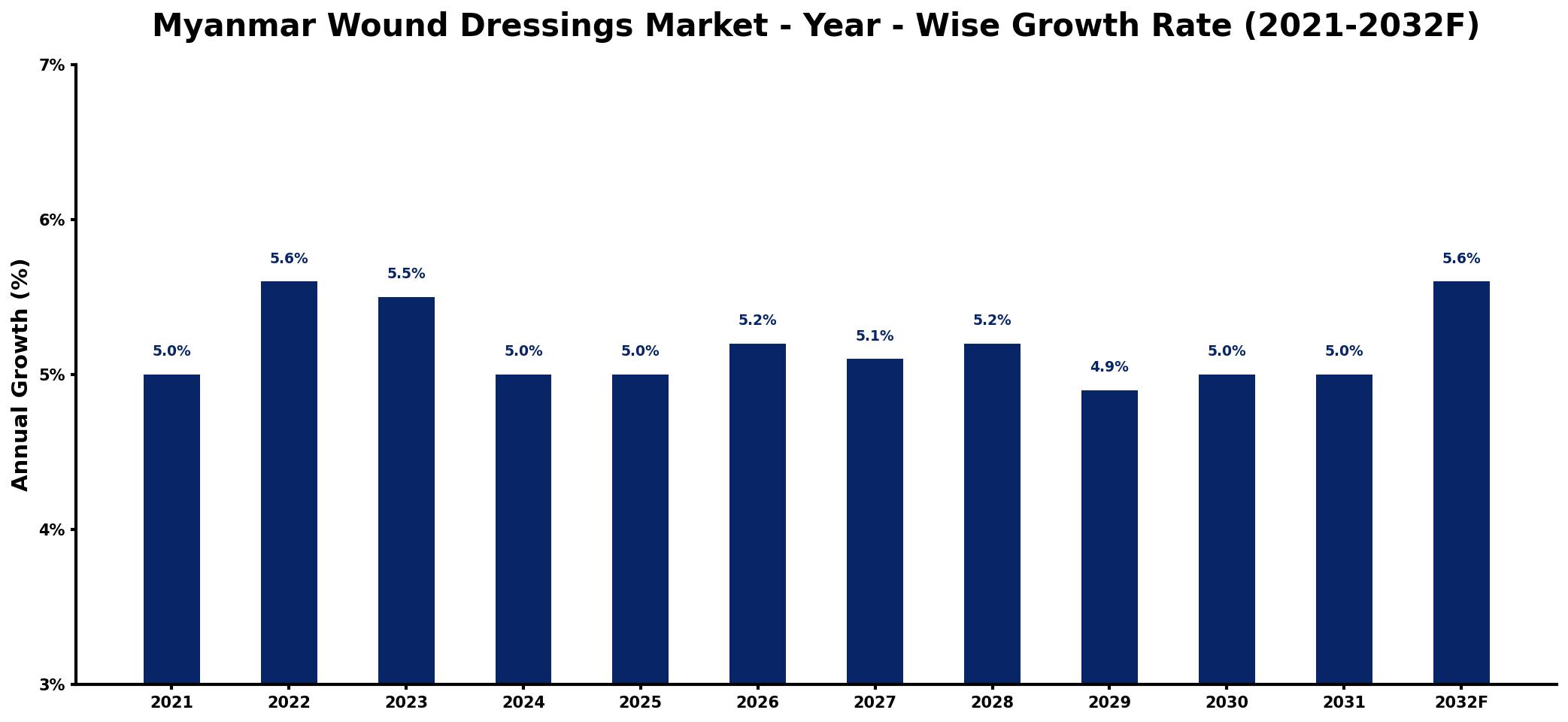
The table below presents the year‑wise growth rates along with the key drivers influencing the market
| Year | Growth Rate | Major Drivers |
| 2021 | 5.0% | Rising healthcare infrastructure investments |
| 2022 | 5.6% | Increased prevalence of chronic conditions |
| 2023 | 5.5% | Growing awareness of advanced therapies |
| 2024 | 5.0% | Expansion of healthcare facilities network |
| 2025 | 5.0% | Surge in outpatient surgical procedures |
| 2026 | 5.2% | Growing demand for specialized care |
| 2027 | 5.1% | Increase in elderly population demographics |
| 2028 | 5.2% | Enhanced focus on preventive care |
| 2029 | 4.9% | Rise in healthcare funding initiatives |
| 2030 | 5.0% | Growing adoption of innovative technologies |
| 2031 | 5.0% | Increased collaboration among healthcare providers |
| 2032 | 5.6% | improved processing technologies adoption |
Note: Market size estimations and growth projections presented in this report are based on 6Wresearch's proprietary forecasting methodology, utilizing the latest available industry data, government publications, and primary research inputs.
Myanmar Wound Dressings Market Synopsis
In Myanmar, advanced wound dressings such as foams, hydrogels, and antimicrobial dressings are witnessing heightened demand, primarily due to their effectiveness in promoting rapid healing. The growing awareness of proper wound management among healthcare professionals and patients is a significant driver behind this trend.
Despite promising growth, the market is challenged by limited access to healthcare in rural regions, where the healthcare infrastructure remains underdeveloped. A scarcity of skilled healthcare professionals further complicates the situation, but the government is committed to enhancing the quality of care, which could positively impact future market dynamics.
Myanmar Wound Dressings Market Key Takeaways
- The shift towards advanced wound care products is reshaping the market landscape.
- Healthcare infrastructure improvements are expected to bolster product availability.
- There is a notable increase in the elderly population, contributing to rising demand for effective wound management.
- Awareness campaigns about wound care are pivotal in educating both healthcare professionals and patients.
- Investment in local manufacturing can mitigate reliance on imports, enhancing market stability.
Evaluation of Restraints in Myanmar Wound Dressings Market
Several constraints are influencing the growth trajectory of the Myanmar wound dressings market. Limited access to advanced wound care technologies remains a significant barrier, particularly in remote areas. Furthermore, the inadequacy of healthcare infrastructure and the lack of trained professionals hinder the effective distribution of knowledge regarding best practices for wound management. Economic challenges also restrict the affordability of high-quality dressings, which could otherwise improve patient outcomes. Additionally, regulatory hurdles and import restrictions pose challenges to the diversity and availability of products.
Myanmar Wound Dressings Market Trends
The market is witnessing a distinct shift toward the utilization of advanced wound care products, with hydrocolloid and foam dressings gaining popularity for their comfort and effectiveness in managing chronic wounds. These products not only facilitate faster healing but also minimize infection risks, an aspect particularly crucial given the rising incidence of diabetes-related wounds in the aging population. Innovations in product design focusing on breathability and moisture control are also emerging as key trends, reflecting a growing consumer preference for enhanced comfort during the healing process.
Myanmar Wound Dressings Market Opportunities
The Myanmar wound dressings market is ripe for investment as the need for advanced wound care continues to grow. Opportunities lie in the production and distribution of innovative wound care products tailored to local needs, including hydrocolloids and antimicrobial dressings. Collaborating with healthcare providers and engaging in government initiatives aimed at bolstering healthcare infrastructure could further enhance market penetration. A strategic focus on education and awareness can drive demand, making this a lucrative sector for investors looking for long-term growth.
Government Initiatives in the Myanmar Wound Dressings Market
The Myanmar government has been proactive in implementing policies aimed at ensuring the safety and quality of wound dressings available in the market. The Ministry of Health and Sports oversees the registration and approval processes for medical devices, including wound care products, to ensure they meet safety and efficacy standards. Additionally, the government promotes the local manufacturing of wound dressings, aiming to reduce dependency on imports and enhance the availability of quality products for consumers.
Future Insights of the Myanmar Wound Dressings Market
Looking ahead to 2026-2032, the Myanmar wound dressings market is anticipated to maintain its growth momentum. Factors such as an increasing awareness of wound care, a rising incidence of chronic wounds, and ongoing improvements in healthcare infrastructure will continue to drive market expansion. The aging population, combined with a growing prevalence of lifestyle diseases like diabetes, is expected to further elevate the demand for effective wound management solutions. Innovations and new product introductions will also play a crucial role in shaping the future of this market.
Myanmar Wound Dressings Market Latest Developments (2025 - 2026)
Recent developments in the Myanmar wound dressings market indicate a growing trend towards advanced product offerings designed to cater to the unique needs of local consumers. Initiatives aimed at increasing healthcare education and awareness about proper wound care practices are gaining traction, which is expected to significantly influence consumer preferences. Furthermore, collaborations between domestic manufacturers and international partners are starting to emerge, promising to enhance product diversity and quality within the market.
Myanmar Wound Dressings Market - Key Attractiveness of the Report
- 10 Years of Market Numbers
- Historical Data Starting from 2022 to 2025
- Base Year: 2025
- Forecast Data until 2032
- Key Performance Indicators Impacting the Market
- Major Upcoming Developments and Projects
Key Highlights of the Report:
- Myanmar Wound Dressings Market Outlook
- Market Size of Myanmar Wound Dressings Market, 2025
- Forecast of Myanmar Wound Dressings Market, 2032
- Historical Data and Forecast of Myanmar Wound Dressings Revenues & Volume for the Period 2022-2032F
- Myanmar Wound Dressings Market Trend Evolution
- Myanmar Wound Dressings Market Drivers and Challenges
- Myanmar Wound Dressings Price Trends
- Myanmar Wound Dressings Porter's Five Forces
- Myanmar Wound Dressings Industry Life Cycle
- Historical Data and Forecast of Myanmar Wound Dressings Market Revenues & Volume By Type for the Period 2022-2032F
- Historical Data and Forecast of Myanmar Wound Dressings Market Revenues & Volume By Advanced Wound Dressings for the Period 2022-2032F
- Historical Data and Forecast of Myanmar Wound Dressings Market Revenues & Volume By Traditional Wound Dressings for the Period 2022-2032F
- Historical Data and Forecast of Myanmar Wound Dressings Market Revenues & Volume By Wound Type for the Period 2022-2032F
- Historical Data and Forecast of Myanmar Wound Dressings Market Revenues & Volume By Surgical and Traumatic Wounds for the Period 2022-2032F
- Historical Data and Forecast of Myanmar Wound Dressings Market Revenues & Volume By Diabetic Foot Ulcers for the Period 2022-2032F
- Historical Data and Forecast of Myanmar Wound Dressings Market Revenues & Volume By Pressure Ulcers for the Period 2022-2032F
- Historical Data and Forecast of Myanmar Wound Dressings Market Revenues & Volume By Venous Leg Ulcers for the Period 2022-2032F
- Historical Data and Forecast of Myanmar Wound Dressings Market Revenues & Volume By Burns and Other Wounds for the Period 2022-2032F
- Historical Data and Forecast of Myanmar Wound Dressings Market Revenues & Volume By End User for the Period 2022-2032F
- Historical Data and Forecast of Myanmar Wound Dressings Market Revenues & Volume By Hospitals, ASCs, and Clinics for the Period 2022-2032F
- Historical Data and Forecast of Myanmar Wound Dressings Market Revenues & Volume By Home Care Settings for the Period 2022-2032F
- Historical Data and Forecast of Myanmar Wound Dressings Market Revenues & Volume By Other End Users for the Period 2022-2032F
- Myanmar Wound Dressings Import Export Trade Statistics
- Market Opportunity Assessment By Type
- Market Opportunity Assessment By Wound Type
- Market Opportunity Assessment By End User
- Myanmar Wound Dressings Top Companies Market Share
- Myanmar Wound Dressings Competitive Benchmarking By Technical and Operational Parameters
- Myanmar Wound Dressings Company Profiles
- Myanmar Wound Dressings Key Strategic Recommendations






































