Namibia Cooking Appliances Market Growth Rate Analysis (2025 - 2031)
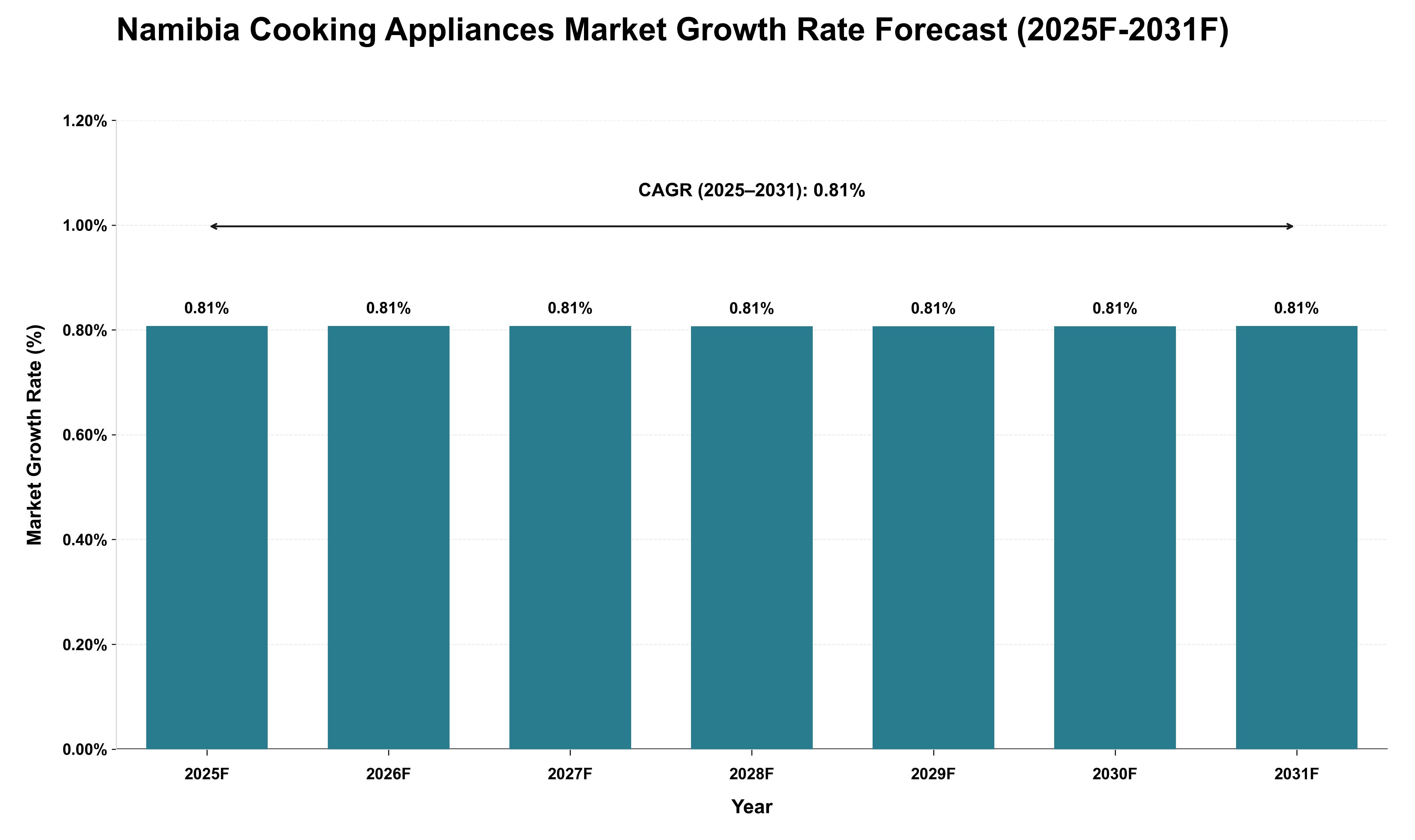
The Namibia cooking appliances market is projected to experience a compound annual growth rate of 0.81% from 2025 to 2031, reflecting a steady yet modest increase in end-use demand. This growth trajectory will likely be influenced by several macroeconomic factors, including rising urbanization and an expanding middle class that will drive consumer preferences towards more efficient and modern cooking solutions. Additionally, import dependencies on foreign manufacturing may create fluctuations in availability and pricing, impacting overall market dynamics. As disposable incomes gradually rise, consumers are expected to prioritize quality and energy efficiency in their purchasing decisions, fostering a gradual shift towards higher-end appliances. Furthermore, cyclical trends related to economic conditions and energy prices will play a crucial role in shaping demand patterns within this sector, as households adapt their cooking habits in response to broader economic signals.
Key Highlights of the Report:
- Namibia Cooking Appliances Market Outlook
- Market Size of Namibia Cooking Appliances Market, 2024
- Forecast of Namibia Cooking Appliances Market, 2031
- Historical Data and Forecast of Namibia Cooking Appliances Revenues & Volume for the Period 2021-2031
- Namibia Cooking Appliances Market Trend Evolution
- Namibia Cooking Appliances Market Drivers and Challenges
- Namibia Cooking Appliances Price Trends
- Namibia Cooking Appliances Porter`s Five Forces
- Namibia Cooking Appliances Industry Life Cycle
- Historical Data and Forecast of Namibia Cooking Appliances Market Revenues & Volume By Types for the Period 2021-2031
- Historical Data and Forecast of Namibia Cooking Appliances Market Revenues & Volume By Microwaves for the Period 2021-2031
- Historical Data and Forecast of Namibia Cooking Appliances Market Revenues & Volume By Ovens for the Period 2021-2031
- Historical Data and Forecast of Namibia Cooking Appliances Market Revenues & Volume By Cooktops for the Period 2021-2031
- Historical Data and Forecast of Namibia Cooking Appliances Market Revenues & Volume By Range Hoods for the Period 2021-2031
- Historical Data and Forecast of Namibia Cooking Appliances Market Revenues & Volume By Small Appliances for the Period 2021-2031
- Historical Data and Forecast of Namibia Cooking Appliances Market Revenues & Volume By Parts & Accessories for the Period 2021-2031
- Historical Data and Forecast of Namibia Cooking Appliances Market Revenues & Volume By Applications for the Period 2021-2031
- Historical Data and Forecast of Namibia Cooking Appliances Market Revenues & Volume By Household for the Period 2021-2031
- Historical Data and Forecast of Namibia Cooking Appliances Market Revenues & Volume By Commercial for the Period 2021-2031
- Historical Data and Forecast of Namibia Cooking Appliances Market Revenues & Volume By Fuel Type for the Period 2021-2031
- Historical Data and Forecast of Namibia Cooking Appliances Market Revenues & Volume By Cooking gas for the Period 2021-2031
- Historical Data and Forecast of Namibia Cooking Appliances Market Revenues & Volume By Electricity for the Period 2021-2031
- Historical Data and Forecast of Namibia Cooking Appliances Market Revenues & Volume By Distribution Channel for the Period 2021-2031
- Historical Data and Forecast of Namibia Cooking Appliances Market Revenues & Volume By Online for the Period 2021-2031
- Historical Data and Forecast of Namibia Cooking Appliances Market Revenues & Volume By Offline for the Period 2021-2031
- Namibia Cooking Appliances Import Export Trade Statistics
- Market Opportunity Assessment By Types
- Market Opportunity Assessment By Applications
- Market Opportunity Assessment By Fuel Type
- Market Opportunity Assessment By Distribution Channel
- Namibia Cooking Appliances Top Companies Market Share
- Namibia Cooking Appliances Competitive Benchmarking By Technical and Operational Parameters
- Namibia Cooking Appliances Company Profiles
- Namibia Cooking Appliances Key Strategic Recommendations






































