Nepal Antiseptics and Disinfectants Market Summary
The nepal antiseptics and disinfectants market was estimated at USD 368 Million in 2025 and is projected to reach USD 508 Million by 2032, growing at a CAGR of 5.7% from 2026 to 2032.
Nepal Antiseptics and Disinfectants Market Year-wise Growth Rate and Key Drivers
This graph highlights how the Nepal Antiseptics and Disinfectants Market has steadily grown over the past five years, supported by major growth factors.
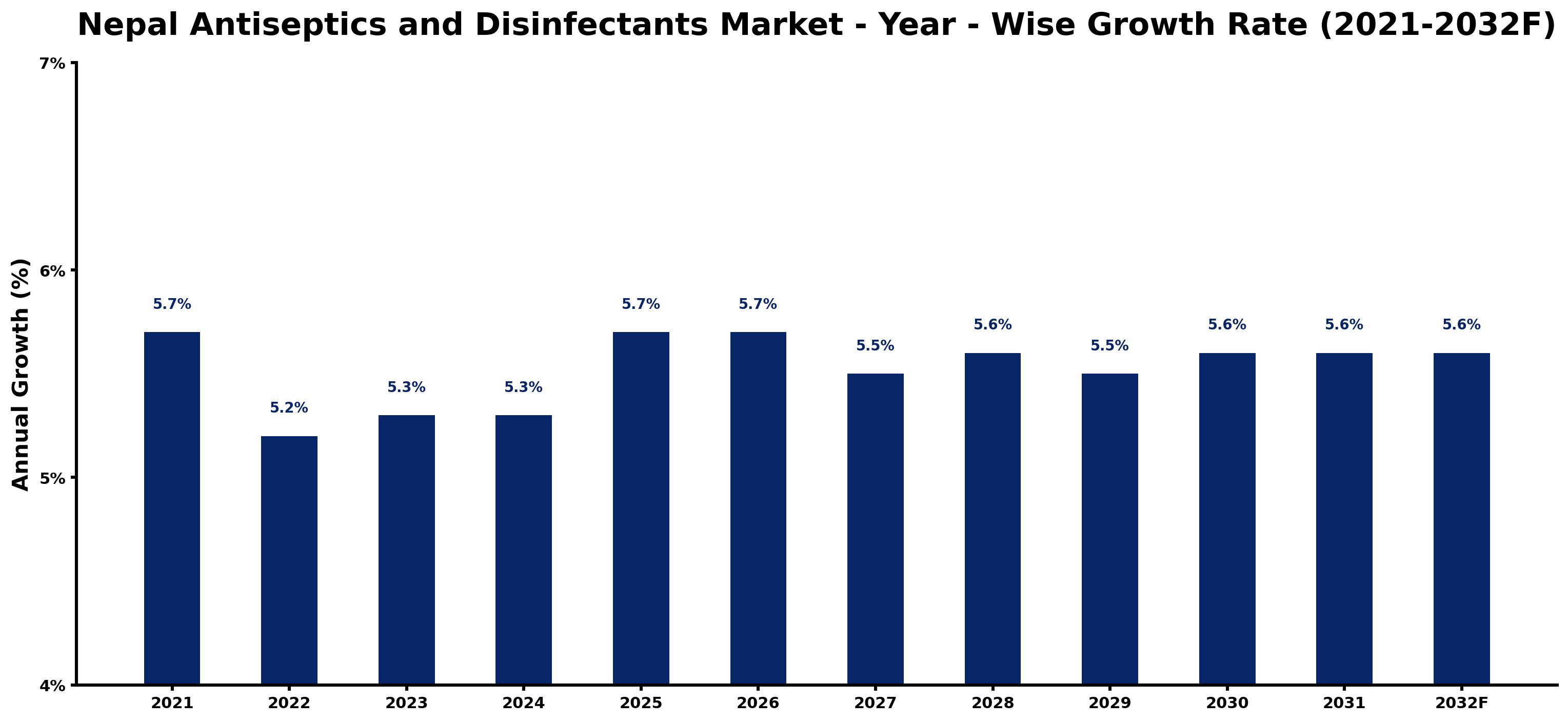
The table below presents the year wise growth rates along with the key drivers influencing the market
| Year | Growth Rate | Major Drivers |
| 2021 | 5.7% | Heightened awareness around hygiene spurred by pandemic conditions reshaped consumer behavior. |
| 2022 | 5.2% | Retail pharmacies expanded, improving accessibility of antiseptics and disinfectants nationwide. |
| 2023 | 5.3% | Local manufacturers embraced innovation, developing cost-effective products tailored to regional needs. |
| 2024 | 5.3% | Increased urbanization led to higher demand for sanitization in public spaces. |
| 2025 | 5.7% | Healthcare sector expansion required more robust disinfectant solutions for facilities. |
| 2026 | 5.7% | Growth in tourism prompted higher standards for cleanliness in hospitality sectors. |
| 2027 | 5.5% | Educational institutions began implementing regular sanitization protocols amid health guidelines. |
| 2028 | 5.6% | Corporate responsibility initiatives prioritized employee safety through enhanced workplace hygiene measures. |
| 2029 | 5.5% | E-commerce platforms facilitated direct consumer access to hygiene products across urban areas. |
| 2030 | 5.6% | Environmental concerns pushed demand for eco-friendly and biodegradable disinfectant options. |
| 2031 | 5.6% | Research and development in antimicrobial solutions saw increased investment from startups. |
| 2032 | 5.6% | Global partnerships enhanced local supply chains, ensuring steady availability of disinfectants. |
Note - Market size estimations and growth projections presented in this report are based on 6Wresearch's advanced forecasting approach, validated with industry datasets as of June 2026.
Nepal Antiseptics and Disinfectants Market Synopsis
The Nepal Antiseptics and Disinfectants Market is projected to reach 5.7% and witness significant growth during the forecast period (2026-2032). This expansion is primarily driven by heightened public awareness regarding hygiene and sanitization, particularly in the aftermath of the COVID-19 pandemic. The demand for antiseptics and disinfectants has surged across various sectors, including healthcare, households, and commercial establishments, reflecting a collective effort to maintain higher health standards.
Nepal Antiseptics and Disinfectants Market Growth Drivers
Several key factors are propelling the growth of the Nepal Antiseptics and Disinfectants Market. Firstly, the ongoing impact of the COVID-19 pandemic has instilled a long-term commitment to hygiene practices among consumers and institutions alike. This persistent shift in consumer behavior underscores the importance of cleanliness in everyday life.
- The rise of disposable incomes in urban areas facilitates broader access to antiseptic products, contributing to increased sales and market penetration.
- Urbanization trends have also played a significant role, as growing populations in cities demand improved public health solutions.
- Government initiatives aimed at promoting cleanliness and health standards further stimulate market growth, providing the necessary support to enhance public health infrastructure.
- Consumer preference for innovative products, such as portable disinfectant sprays and wipes, reflects the evolving landscape of the market.
- Lastly, the increasing shift towards eco-friendly and sustainable products signifies a growing awareness of environmental issues among consumers.
Nepal Antiseptics and Disinfectants Market Trends and Opportunities
The Nepal Antiseptics and Disinfectants Market is currently witnessing notable trends that indicate promising opportunities for growth. The demand for natural and organic disinfectants derived from sustainable ingredients is on the rise, reflecting a shift in consumer preferences towards environmentally conscious products.
- Manufacturers are increasingly investing in research and development to create products with enhanced efficacy, targeting both consumer safety and environmental sustainability.
- The development of new distribution channels is facilitating better market penetration, particularly in rural and underserved regions of Nepal.
- Targeted marketing strategies highlighting product efficacy and safety can capitalize on rising consumer awareness, driving demand across various demographics.
- Collaboration with local authorities to promote hygiene education and product usage is becoming increasingly vital to market expansion.
- Emerging technologies that enhance product convenience, such as smart dispensers or integrated sanitary solutions, present further avenues for innovation.
Nepal Antiseptics and Disinfectants Market Challenges and Restraints
Despite the promising outlook, the Nepal Antiseptics and Disinfectants Market faces several challenges that could impede growth. One significant hurdle is the limited awareness and understanding of effective hygiene practices, particularly prevalent in rural areas.
- Infrastructure limitations and inadequate distribution networks hinder product availability, especially in remote regions of the country.
- Price sensitivity among consumers influences purchasing decisions, making it imperative for brands to find a balance between quality and affordability.
- The proliferation of counterfeit products in the market poses a significant risk, undermining consumer trust and potentially harming legitimate brands.
- Regulatory hurdles concerning compliance with safety standards may slow new entrants to the market, impacting overall competition.
- Addressing these challenges necessitates targeted marketing initiatives, enhanced distribution efforts, and collaboration with public health authorities.
Nepal Antiseptics and Disinfectants Market Government Investment and Initiatives
The government of Nepal plays a crucial role in shaping the landscape of the Antiseptics and Disinfectants Market through various investment initiatives and regulatory policies. The Department of Drug Administration (DDA) is responsible for overseeing the registration and compliance of antiseptics and disinfectants, ensuring that products meet established safety and efficacy standards.
- The DDA enforces regulations on proper labeling, packaging, and quality control measures to ensure consumer safety.
- Periodic inspections and quality checks are conducted to prevent the distribution of substandard products in the market.
- Public spending on healthcare initiatives increasingly focuses on enhancing sanitation and hygiene practices at healthcare facilities and public spaces.
- Government-led awareness campaigns aim to educate the public on the importance of using approved antiseptics and disinfectants for disease prevention.
- Collaborations between the government and private sector stakeholders facilitate the development of better sanitation infrastructure across various regions.
Nepal Antiseptics and Disinfectants Market Latest Developments (May 2025 - June 2026)
From May 2025 to June 2026, the Nepal Antiseptics and Disinfectants Market has seen notable developments that reflect the evolving industry dynamics. A surge in consumer demand for antiseptic products has been observed, with a particular emphasis on specialized formulations targeting various applications.
- Manufacturers have accelerated innovation efforts, introducing highly effective formulas that cater to both hygiene and environmental considerations.
- The trend towards natural and organic disinfectants has gained momentum, aligning with global sustainability movements.
- Increased collaboration with healthcare institutions has led to improved product testing and validation, enhancing consumer confidence.
- Market players are increasingly focusing on strengthening distribution channels to ensure product availability in both urban and rural settings.
- Public policies promoting hygiene education continue to support market growth, emphasizing the importance of proper sanitization practices.
Nepal Antiseptics and Disinfectants Market - Key Attractiveness of the Report
- 10 Years of Market Numbers
- Historical Data Starting from 2022 to 2025
- Base Year: 2025
- Forecast Data until 2032
- Key Performance Indicators Impacting the Market
- Major Upcoming Developments and Projects
Key Highlights of the Report:
- Nepal Antiseptics and Disinfectants Market Outlook
- Market Size of Nepal Antiseptics and Disinfectants Market, 2025
- Forecast of Nepal Antiseptics and Disinfectants Market, 2032F
- Historical Data and Forecast of Nepal Antiseptics and Disinfectants Revenues & Volume for the Period 2022-2032F
- Nepal Antiseptics and Disinfectants Market Trend Evolution
- Nepal Antiseptics and Disinfectants Market Drivers and Challenges
- Nepal Antiseptics and Disinfectants Price Trends
- Nepal Antiseptics and Disinfectants Porter's Five Forces
- Nepal Antiseptics and Disinfectants Industry Life Cycle
- Historical Data and Forecast of Nepal Antiseptics and Disinfectants Market Revenues & Volume By Type for the Period 2022-2032F
- Historical Data and Forecast of Nepal Antiseptics and Disinfectants Market Revenues & Volume By Quaternary Ammonium Compounds for the Period 2022-2032F
- Historical Data and Forecast of Nepal Antiseptics and Disinfectants Market Revenues & Volume By Chlorine Compounds for the Period 2022-2032F
- Historical Data and Forecast of Nepal Antiseptics and Disinfectants Market Revenues & Volume By Alcohols & Aldehyde Products for the Period 2022-2032F
- Historical Data and Forecast of Nepal Antiseptics and Disinfectants Market Revenues & Volume By Enzyme for the Period 2022-2032F
- Historical Data and Forecast of Nepal Antiseptics and Disinfectants Market Revenues & Volume By Others for the Period 2022-2032F
- Historical Data and Forecast of Nepal Antiseptics and Disinfectants Market Revenues & Volume By Product Type for the Period 2022-2032F
- Historical Data and Forecast of Nepal Antiseptics and Disinfectants Market Revenues & Volume By Enzymatic Cleaners for the Period 2022-2032F
- Historical Data and Forecast of Nepal Antiseptics and Disinfectants Market Revenues & Volume By Medical Device Disinfectants for the Period 2022-2032F
- Historical Data and Forecast of Nepal Antiseptics and Disinfectants Market Revenues & Volume By Surface Disinfectants for the Period 2022-2032F
- Historical Data and Forecast of Nepal Antiseptics and Disinfectants Market Revenues & Volume By End-use for the Period 2022-2032F
- Historical Data and Forecast of Nepal Antiseptics and Disinfectants Market Revenues & Volume By Hospitals for the Period 2022-2032F
- Historical Data and Forecast of Nepal Antiseptics and Disinfectants Market Revenues & Volume By Clinics for the Period 2022-2032F
- Historical Data and Forecast of Nepal Antiseptics and Disinfectants Market Revenues & Volume By Others for the Period 2022-2032F
- Nepal Antiseptics and Disinfectants Import Export Trade Statistics
- Market Opportunity Assessment By Type
- Market Opportunity Assessment By Product Type
- Market Opportunity Assessment By End-use
- Nepal Antiseptics and Disinfectants Top Companies Market Share
- Nepal Antiseptics and Disinfectants Competitive Benchmarking By Technical and Operational Parameters
- Nepal Antiseptics and Disinfectants Company Profiles
- Nepal Antiseptics and Disinfectants Key Strategic Recommendations






































