Nepal Bathroom Products Market Summary
The nepal bathroom products market was estimated at USD 183 Million in 2025 and is projected to reach USD 253 Million by 2032, growing at a CAGR of 5.5% from 2026 to 2032.
Nepal Bathroom Products Market Year-wise Growth Rate and Key Drivers
This graph highlights how the Nepal Bathroom Products Market has steadily grown over the past five years, supported by major growth factors.
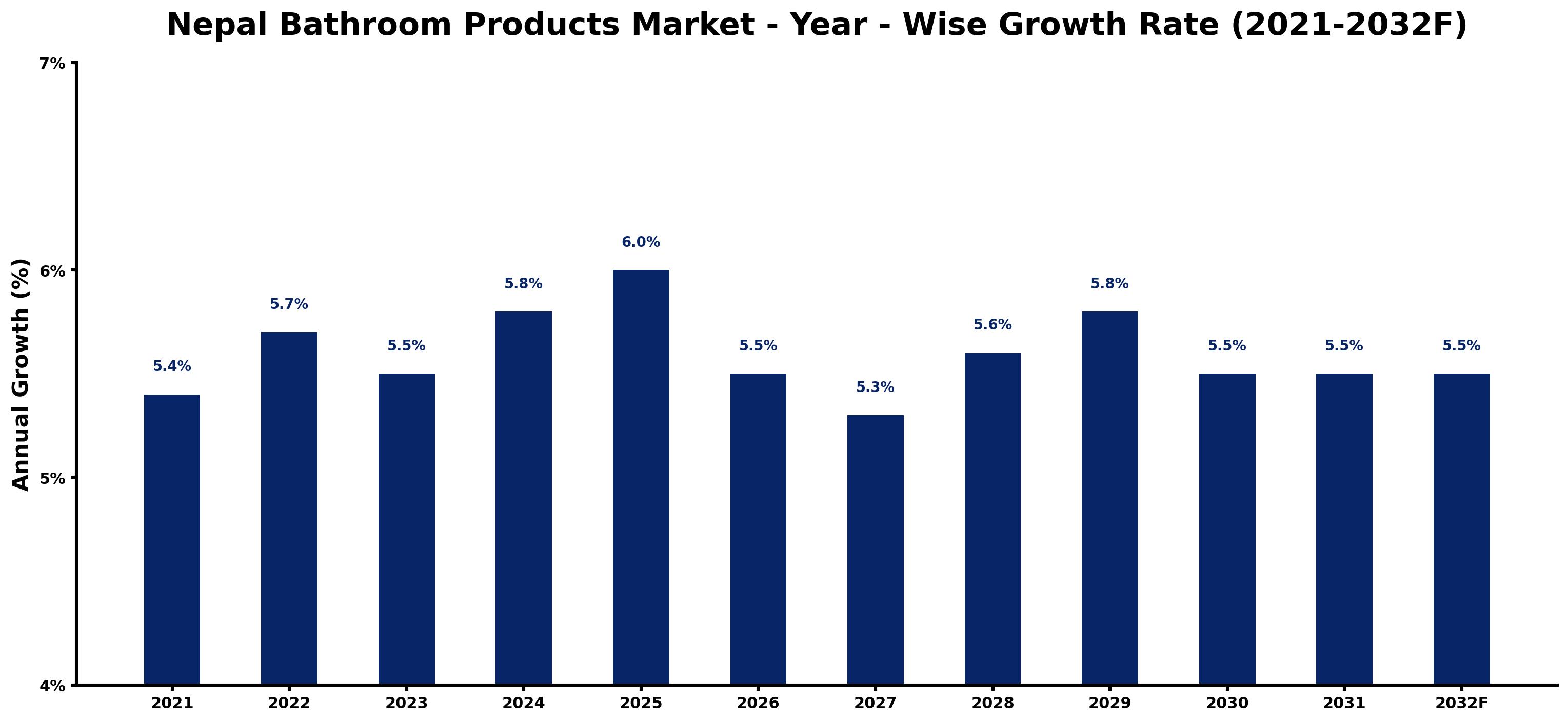
The table below presents the year wise growth rates along with the key drivers influencing the market
| Year | Growth Rate | Major Drivers |
| 2021 | 5.4% | COVID-19 challenges highlighted the importance of hygiene and personal space at home. |
| 2022 | 5.7% | Increased urbanization led to a greater demand for modern bathroom renovations. |
| 2023 | 5.5% | E-commerce platforms emerged as significant distribution channels for bathroom products. |
| 2024 | 5.8% | Affordable housing projects stimulated investments in essential bathroom amenities. |
| 2025 | 6.0% | Growing middle-class populations sought premium bathroom experiences and product variety. |
| 2026 | 5.5% | Sustainability trends influenced consumer preferences towards eco-friendly bathroom solutions. |
| 2027 | 5.3% | Technological innovations enhanced product features, appealing to tech-savvy homeowners. |
| 2028 | 5.6% | Regional manufacturers began introducing localized designs for culturally relevant bathrooms. |
| 2029 | 5.8% | Tourism and hospitality sectors expanded, driving upscale bathroom product demands. |
| 2030 | 5.5% | Government incentives promoted energy-efficient bathroom installations for residential properties. |
| 2031 | 5.5% | Young professionals prioritized modern bathroom aesthetics in urban housing developments. |
| 2032 | 5.5% | The emergence of smart home technologies spurred interest in intelligent bathroom solutions. |
Note - Market size estimations and growth projections presented in this report are based on 6Wresearch's advanced forecasting approach, validated with industry datasets as of June 2026.
Nepal Bathroom Products Market Synopsis
The Nepal Bathroom Products Market is projected to reach 5.5% and witness significant growth during the forecast period (2026-2032). This market is being driven by several factors, including increasing urbanization, rising disposable income levels, and a marked shift in consumer preferences towards modern and convenient bathroom solutions. The scope of the market encompasses a comprehensive range of products such as sanitary ware, faucets, showers, bathroom furniture, and various accessories, making it a vital segment of the broader home improvement industry.
Nepal Bathroom Products Market Growth Drivers
Several factors are propelling the growth of the Nepal Bathroom Products Market. First, urbanization is accelerating throughout the country, with more individuals opting for modern housing that inherently requires upgraded bathroom facilities. Second, rising disposable incomes among the growing middle class have led to increased spending on home improvement and luxury items, including high-quality bathroom products. Third, consumers are increasingly inclined towards sustainable and energy-efficient options in response to heightened environmental awareness. Fourth, the integration of smart technology in bathroom fixtures, such as touchless faucets, is influencing purchasing decisions. Lastly, changing lifestyles and preferences are steering demand towards customized and aesthetically pleasing bathroom solutions that cater to individual tastes.
Nepal Bathroom Products Market Trends and Opportunities
The current landscape of the Nepal Bathroom Products Market is characterized by several emerging trends that present significant opportunities for growth. The demand for eco-friendly products is on the rise, with consumers seeking water-saving fixtures and energy-efficient lighting options. Furthermore, the quest for personalization is leading to increased interest in customizable bathroom solutions tailored to individual needs and preferences. The integration of smart technologies into bathroom designs, such as intelligent temperature control systems, is also gaining traction. Additionally, the trend towards holistic living is fostering a market for wellness-focused bathroom products that enhance personal hygiene and comfort.
Nepal Bathroom Products Market Challenges and Restraints
Despite its growth potential, the Nepal Bathroom Products Market faces several challenges that could hinder its progress. Limited access to modern distribution channels in rural areas can restrict market penetration, leaving a significant segment of the population underserved. Additionally, there is a low level of awareness regarding advanced bathroom products, which impedes adoption. Price sensitivity is prevalent among consumers, making them more likely to choose cheaper alternatives from unorganized local players. Inadequate infrastructure and inconsistent supply chain logistics pose significant hurdles for timely product delivery. Moreover, traditional cultural preferences can influence consumer choices, creating challenges for companies aiming to introduce innovative bathroom solutions.
Nepal Bathroom Products Market Investment Opportunities
The Nepal Bathroom Products Market presents several lucrative investment opportunities for companies seeking to capitalize on its growth trajectory. Key areas for potential investment include the production and distribution of high-quality bathroom fixtures, such as faucets, sinks, showers, and toilets, which cater to the rising demand for stylish and functional bathrooms in both residential and commercial projects. There is also an increasing interest in eco-friendly products, offering a chance for businesses to introduce sustainable options to the market. Investing in digital marketing strategies can enhance brand visibility and outreach, allowing companies to engage with a broader audience effectively. Ultimately, successful investments will hinge on a focus on quality, innovation, and sustainability.
Nepal Bathroom Products Market Government Investment and Initiatives
The Nepalese government has enacted various policies aimed at regulating the bathroom products market to ensure consumer safety and promote sustainable practices. These policies include establishing quality standards for bathroom products to safeguard consumers from substandard goods. Regulations on water usage are designed to encourage water conservation, while guidelines for waste management aim to minimize environmental impact. Moreover, the government has initiated programs promoting the adoption of eco-friendly and energy-efficient bathroom products, thereby fostering sustainable living practices among citizens. Overall, these governmental efforts are geared towards creating a more regulated, consumer-protected, and environmentally sustainable market landscape.
Nepal Bathroom Products Market Latest Developments (May 2025 - June 2026)
In the recent period from May 2025 to June 2026, the Nepal Bathroom Products Market has experienced notable developments in several sectors. There has been a marked increase in consumer interest in sustainability, leading to more manufacturers focusing on eco-friendly product lines. Innovations in smart technology in bathroom fixtures have also gained traction, with manufacturers exploring advanced features that enhance user convenience and efficiency. Additionally, the government has intensified its efforts to promote clean water initiatives, further driving demand for water-efficient products. E-commerce platforms have expanded their market reach, enabling consumers in both urban and rural areas to access a wider variety of bathroom products. Overall, these developments indicate a dynamic and evolving market landscape.
Nepal Bathroom Products Market - Key Attractiveness of the Report
- 10 Years of Market Numbers
- Historical Data Starting from 2022 to 2025
- Base Year: 2025
- Forecast Data until 2032
- Key Performance Indicators Impacting the Market
- Major Upcoming Developments and Projects
Key Highlights of the Report:
- Nepal Bathroom Products Market Outlook
- Market Size of Nepal Bathroom Products Market, 2025
- Forecast of Nepal Bathroom Products Market, 2032F
- Historical Data and Forecast of Nepal Bathroom Products Revenues & Volume for the Period 2022-2032F
- Nepal Bathroom Products Market Trend Evolution
- Nepal Bathroom Products Market Drivers and Challenges
- Nepal Bathroom Products Price Trends
- Nepal Bathroom Products Porter's Five Forces
- Nepal Bathroom Products Industry Life Cycle
- Historical Data and Forecast of Nepal Bathroom Products Market Revenues & Volume By Product Type for the Period 2022-2032F
- Historical Data and Forecast of Nepal Bathroom Products Market Revenues & Volume By Towel Rack for the Period 2022-2032F
- Historical Data and Forecast of Nepal Bathroom Products Market Revenues & Volume By Shower for the Period 2022-2032F
- Historical Data and Forecast of Nepal Bathroom Products Market Revenues & Volume By Soap Holder for the Period 2022-2032F
- Historical Data and Forecast of Nepal Bathroom Products Market Revenues & Volume By Toilet Brushes and Holder for the Period 2022-2032F
- Historical Data and Forecast of Nepal Bathroom Products Market Revenues & Volume By Others for the Period 2022-2032F
- Historical Data and Forecast of Nepal Bathroom Products Market Revenues & Volume By Applications for the Period 2022-2032F
- Historical Data and Forecast of Nepal Bathroom Products Market Revenues & Volume By Residential for the Period 2022-2032F
- Historical Data and Forecast of Nepal Bathroom Products Market Revenues & Volume By Hotels for the Period 2022-2032F
- Historical Data and Forecast of Nepal Bathroom Products Market Revenues & Volume By Others for the Period 2022-2032F
- Historical Data and Forecast of Nepal Bathroom Products Market Revenues & Volume By Distribution Channel for the Period 2022-2032F
- Historical Data and Forecast of Nepal Bathroom Products Market Revenues & Volume By Online for the Period 2022-2032F
- Historical Data and Forecast of Nepal Bathroom Products Market Revenues & Volume By Offline for the Period 2022-2032F
- Nepal Bathroom Products Import Export Trade Statistics
- Market Opportunity Assessment By Product Type
- Market Opportunity Assessment By Applications
- Market Opportunity Assessment By Distribution Channel
- Nepal Bathroom Products Top Companies Market Share
- Nepal Bathroom Products Competitive Benchmarking By Technical and Operational Parameters
- Nepal Bathroom Products Company Profiles
- Nepal Bathroom Products Key Strategic Recommendations






































