Nepal Bread and Bakery Products Market Summary
The nepal bread and bakery products market was estimated at USD 483 Million in 2025 and is projected to reach USD 697 Million by 2032, growing at a CAGR of 6.6% from 2026 to 2032.
Nepal Bread and Bakery Products Market Year-wise Growth Rate and Key Drivers
This graph highlights how the Nepal Bread and Bakery Products Market has steadily grown over the past five years, supported by major growth factors.
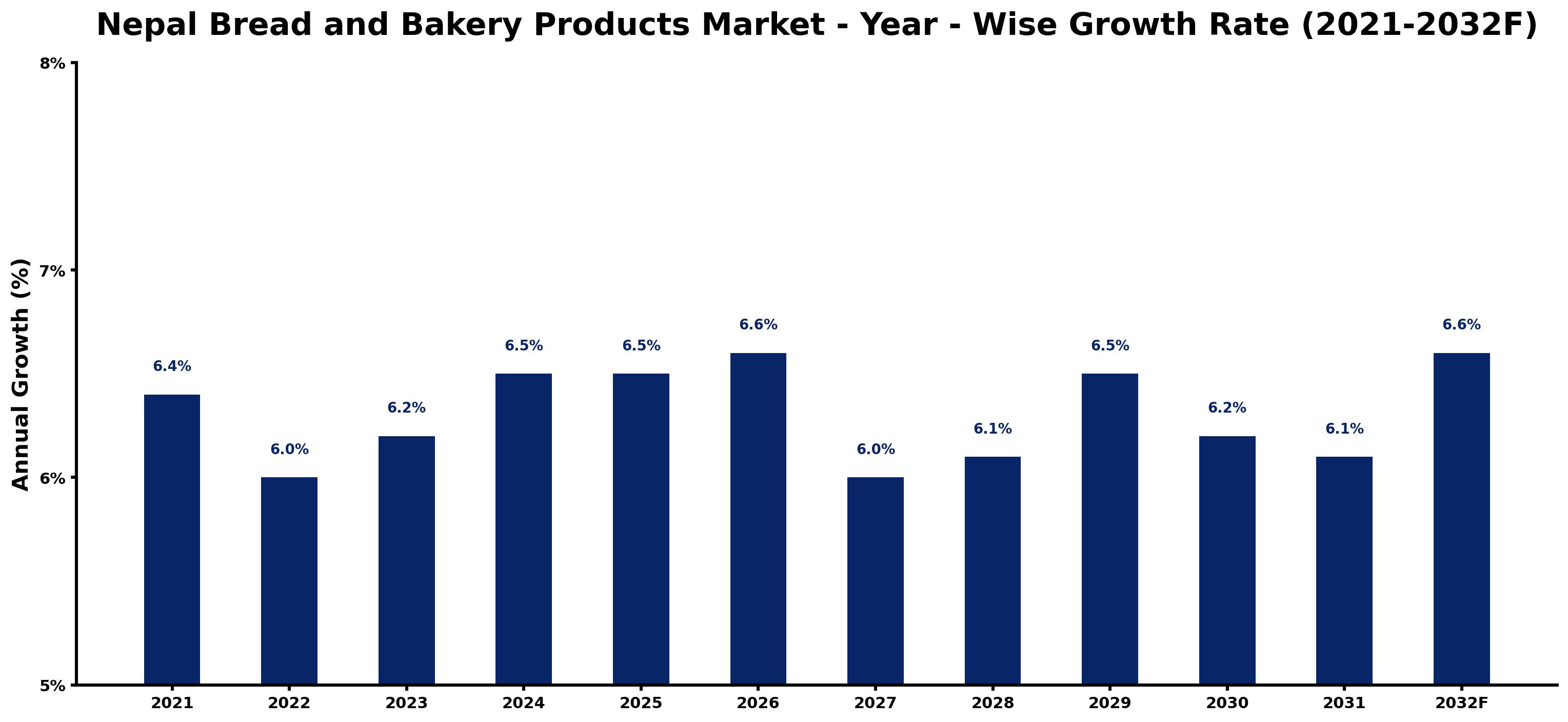
The table below presents the year wise growth rates along with the key drivers influencing the market
| Year | Growth Rate | Major Drivers |
| 2021 | 6.4% | Consumer preferences shifted towards fresh, high-quality bakery products post-pandemic. |
| 2022 | 6.0% | Local bakeries began embracing artisanal methods, enhancing product differentiation significantly. |
| 2023 | 6.2% | Urban populations increasingly favored convenience, leading to more bakery chain expansions. |
| 2024 | 6.5% | Emerging trends in health consciousness encouraged gluten-free and whole grain offerings. |
| 2025 | 6.5% | Technological advances in baking equipment allowed for more efficient production processes. |
| 2026 | 6.6% | Collaboration between local farmers and bakers improved supply chain sustainability and freshness. |
| 2027 | 6.0% | Cultural integration of diverse cuisines prompted innovation in product varieties and flavors. |
| 2028 | 6.1% | E-commerce platforms facilitated wider market reach for both small and large bakeries. |
| 2029 | 6.5% | Consumer loyalty programs became essential, enhancing repeat purchases and brand affinity. |
| 2030 | 6.2% | Rural electrification projects provided power access, boosting bakery operations in remote areas. |
| 2031 | 6.1% | Increasing disposable incomes allowed families to indulge in premium bakery goods. |
| 2032 | 6.6% | Global trends in plant-based diets influenced increased offerings of vegan bakery products. |
Note - Market size estimations and growth projections presented in this report are based on 6Wresearch's advanced forecasting approach, validated with industry datasets as of June 2026.
Nepal Bread and Bakery Products Market Synopsis
The Nepal Bread and Bakery Products Market is projected to reach 6.6% and witness significant growth during the forecast period (2026-2032). This growth trajectory is primarily driven by the increasing consumer inclination towards healthier bakery options, including whole wheat bread, low-sugar cakes, and other nutritious products. These shifts in preferences are evident across various demographics, making bread and bakery products essential staples for Nepalese consumers.
Nepal Bread and Bakery Products Market Growth Drivers
Several key factors are fueling the expansion of the Nepal Bread and Bakery Products Market. These include:
- Urbanization is playing a significant role, as more consumers in urban areas seek convenient and high-quality bakery products, aligning with their fast-paced lifestyles.
- Rising disposable income levels have led to increased spending on premium bakery items, resulting in a broader range of product offerings catering to diverse consumer tastes.
- Innovative baking technologies and techniques, such as frozen dough technology, have increased production efficiency and product availability, enhancing consumer access to bakery products.
- The growing trend towards health and wellness has compelled manufacturers to develop healthier alternatives, thus widening market appeal among health-conscious consumers.
- The increase in organized retailing and bakery chains across the country has also facilitated greater market penetration, providing consumers with more options than ever before.
Nepal Bread and Bakery Products Market Trends and Opportunities
The trends prevailing in the Nepal Bread and Bakery Products Market reflect a shift towards innovation and consumer-centric offerings. A notable trend is the rise of artisan and specialty bakery products, which cater to the increasing consumer demand for unique flavors and premium quality. Additionally, the introduction of gluten-free and vegan products is opening new avenues for market players to satisfy diverse dietary needs.
Moreover, the trend of online shopping and home delivery services is becoming more prominent, creating significant opportunities for bakeries to expand their market reach and engage with consumers directly. This shift in consumer behavior can be particularly advantageous in urban environments where convenience is a priority.
Nepal Bread and Bakery Products Market Challenges and Restraints
Despite the positive growth outlook for the Nepal Bread and Bakery Products Market, several challenges and restraints must be considered:
- Intense competition among local bakeries and international brands can lead to price wars, potentially squeezing profit margins for smaller players in the market.
- Limited access to quality raw materials in certain regions can pose challenges for producers striving to maintain high standards in their products.
- Consumer preferences can be volatile, and fluctuations in demand for specific bakery items may impact inventory management and production schedules.
- Economic fluctuations, including inflation and changes in disposable income, can affect consumer purchasing power and overall demand for bakery goods.
- The need for substantial investment in marketing and branding to differentiate products in a crowded market can be a barrier for new entrants.
Nepal Bread and Bakery Products Market Government Investment and Initiatives
Government initiatives and investments play a crucial role in the development of the Nepal Bread and Bakery Products Market. Policies aimed at enhancing food security and promoting local agricultural production positively influence the quality and supply of raw materials necessary for bakery operations. Additionally, government support for the establishment of food processing units contributes to the development of the bakery sector by encouraging technological advancements and improving production capabilities.
Training programs and workshops initiated by the government can enhance skills in the baking industry, fostering innovation and quality improvements. Furthermore, the implementation of regulatory frameworks ensures food safety and consumer protection, which helps in building consumer trust and sustaining market growth. Overall, favorable government policies are essential for fostering a conducive environment for the growth of the bakery sector in Nepal.
Nepal Bread and Bakery Products Market Latest Developments (May 2025 - June 2026)
Recent developments within the Nepal Bread and Bakery Products Market from May 2025 to June 2026 indicate a dynamic shift towards more health-focused and innovative products. The period saw an increase in collaborations aimed at enhancing product offerings with an emphasis on organic ingredients and sustainable practices. Additionally, various bakeries have begun to adopt digital platforms for better customer engagement, including online ordering systems, which have become increasingly popular.
Moreover, the market has observed the launch of new product lines specifically designed to meet the nutritional needs of children and the elderly, reflecting a broader consumer trend towards health consciousness. Bakeries that incorporated technology for process optimization reported enhanced operational efficiency, which consequently supports market growth. Overall, these developments highlight an evolving landscape where adaptability and innovation are essential for success in the competitive bakery sector.
Nepal Bread and Bakery Products Market - Key Attractiveness of the Report
- 10 Years of Market Numbers
- Historical Data Starting from 2022 to 2025
- Base Year: 2025
- Forecast Data until 2032
- Key Performance Indicators Impacting the Market
- Major Upcoming Developments and Projects
Key Highlights of the Report:
- Nepal Bread and Bakery Products Market Outlook
- Market Size of Nepal Bread and Bakery Products Market, 2025
- Forecast of Nepal Bread and Bakery Products Market, 2032F
- Historical Data and Forecast of Nepal Bread and Bakery Products Revenues & Volume for the Period 2022-2032F
- Nepal Bread and Bakery Products Market Trend Evolution
- Nepal Bread and Bakery Products Market Drivers and Challenges
- Nepal Bread and Bakery Products Price Trends
- Nepal Bread and Bakery Products Porter's Five Forces
- Nepal Bread and Bakery Products Industry Life Cycle
- Historical Data and Forecast of Nepal Bread and Bakery Products Market Revenues & Volume By Type for the Period 2022-2032F
- Historical Data and Forecast of Nepal Bread and Bakery Products Market Revenues & Volume By Cake for the Period 2022-2032F
- Historical Data and Forecast of Nepal Bread and Bakery Products Market Revenues & Volume By Pastries for the Period 2022-2032F
- Historical Data and Forecast of Nepal Bread and Bakery Products Market Revenues & Volume By Breads for the Period 2022-2032F
- Historical Data and Forecast of Nepal Bread and Bakery Products Market Revenues & Volume By Pastries for the Period 2022-2032F
- Historical Data and Forecast of Nepal Bread and Bakery Products Market Revenues & Volume By Others for the Period 2022-2032F
- Historical Data and Forecast of Nepal Bread and Bakery Products Market Revenues & Volume By Claim for the Period 2022-2032F
- Historical Data and Forecast of Nepal Bread and Bakery Products Market Revenues & Volume By Gluten-Free for the Period 2022-2032F
- Historical Data and Forecast of Nepal Bread and Bakery Products Market Revenues & Volume By Organic for the Period 2022-2032F
- Historical Data and Forecast of Nepal Bread and Bakery Products Market Revenues & Volume By Form for the Period 2022-2032F
- Historical Data and Forecast of Nepal Bread and Bakery Products Market Revenues & Volume By Fresh for the Period 2022-2032F
- Historical Data and Forecast of Nepal Bread and Bakery Products Market Revenues & Volume By Frozen for the Period 2022-2032F
- Historical Data and Forecast of Nepal Bread and Bakery Products Market Revenues & Volume By Others for the Period 2022-2032F
- Nepal Bread and Bakery Products Import Export Trade Statistics
- Market Opportunity Assessment By Type
- Market Opportunity Assessment By Claim
- Market Opportunity Assessment By Form
- Nepal Bread and Bakery Products Top Companies Market Share
- Nepal Bread and Bakery Products Competitive Benchmarking By Technical and Operational Parameters
- Nepal Bread and Bakery Products Company Profiles
- Nepal Bread and Bakery Products Key Strategic Recommendations






































