Nepal Building And Construction Plastic Market Size, Share & Growth Rate
The Nepal Building And Construction Plastic Market was estimated at USD 302 Million in 2025 and is projected to reach USD 426 Million by 2032, growing at a CAGR of 5.0% from 2026 to 2032. This growth trajectory is primarily driven by the escalating urbanization and infrastructure projects across Nepal, fueling the demand for cost-effective and durable plastic materials. Additionally, the increasing emphasis on sustainable construction practices is promoting the use of recycled plastics and eco-friendly options in various building applications.
Nepal Building And Construction Plastic Market Year-wise Growth Rate and Key Drivers
This graph highlights how the Nepal Building And Construction Plastic Market has steadily grown over the years, supported by major growth factors.
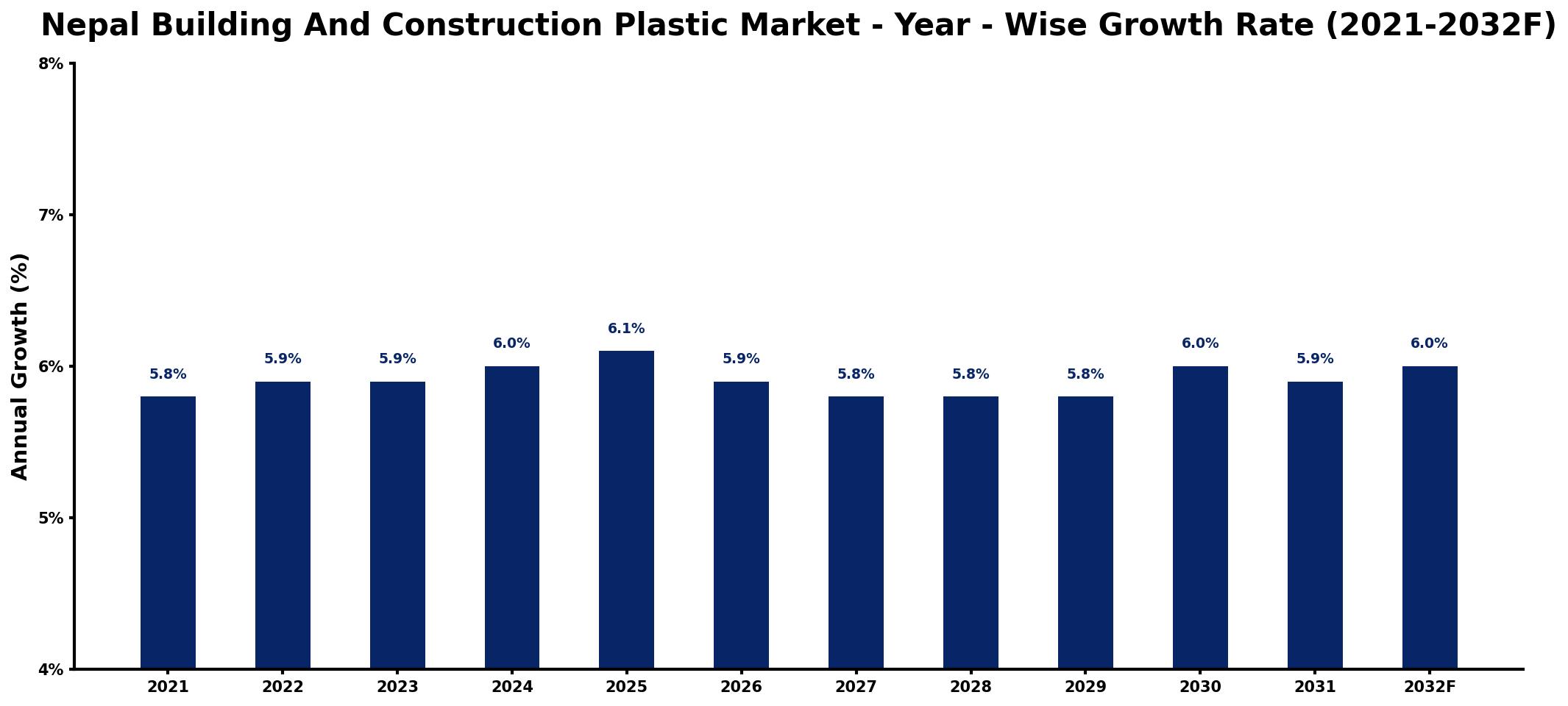
The table below presents the year‑wise growth rates along with the key drivers influencing the market
| Year | Growth Rate | Major Drivers |
| 2021 | 5.8% | Rising demand for sustainable materials |
| 2022 | 5.9% | Increased investments in infrastructure projects |
| 2023 | 5.9% | Expansion of urban housing initiatives |
| 2024 | 6.0% | Growing preference for lightweight alternatives |
| 2025 | 6.1% | Surge in renewable energy projects |
| 2026 | 5.9% | Development of smart city initiatives |
| 2027 | 5.8% | Increase in eco-friendly regulations |
| 2028 | 5.8% | Growth in transportation infrastructure investments |
| 2029 | 5.8% | strengthening underlying market demand |
| 2030 | 6.0% | Rising interest in modular designs |
| 2031 | 5.9% | Increased focus on energy efficiency |
| 2032 | 6.0% | Growing popularity of innovative solutions |
Note: Market size estimations and growth projections presented in this report are based on 6Wresearch's proprietary forecasting methodology, utilizing the latest available industry data, government publications, and primary research inputs.
Nepal Building And Construction Plastic Market Synopsis
The strongest force currently shaping the Nepal Building And Construction Plastic Market is the rapid urbanization and ongoing infrastructure development throughout the country. This surge in construction activities is necessitating the adoption of versatile plastic products, ranging from pipes to insulation materials, due to their inherent advantages of durability and ease of installation.
Furthermore, government initiatives aimed at promoting sustainable building practices are also influencing market dynamics. By encouraging the use of eco-friendly materials, these policies are facilitating a shift towards innovative products that meet the growing demand for sustainability in the construction sector.
Nepal Building And Construction Plastic Market Key Takeaways
- Steady market growth driven by urbanization and increasing infrastructure development.
- Rising demand for sustainable and eco-friendly plastic materials.
- Innovation and product development are key strategies among manufacturers.
- Challenges exist regarding environmental concerns and raw material cost fluctuations.
- Investment opportunities are abundant, especially in recycling and advanced manufacturing technologies.
Evaluation of Restraints in Nepal Building And Construction Plastic Market
The Nepal Building And Construction Plastic Market faces several restraints that could hinder its growth trajectory. One significant issue is the lack of awareness and education among builders and consumers regarding the benefits and applications of plastic materials. This lack of understanding can limit the adoption of innovative products. Additionally, the market struggles with quality control and standardization, creating concerns about the durability and safety of plastic solutions used in construction. Infrastructure challenges, particularly in recycling facilities and waste management, further exacerbate sustainability issues, posing long-term risks to environmental goals in the building sector.
Nepal Building And Construction Plastic Market Trends
Current trends in the Nepal Building And Construction Plastic Market indicate a strong shift towards sustainable and energy-efficient materials. There is growing interest in the use of recycled plastics for construction applications, reflecting a broader global trend toward sustainability. Innovations in product technology, such as the development of advanced plastic composites and efficient manufacturing processes, are becoming increasingly prominent. These trends not only improve product quality but also align with the shifting preferences of both consumers and regulatory bodies.
Nepal Building And Construction Plastic Market Opportunities
The Nepal Building And Construction Plastic Market presents substantial investment opportunities due to the burgeoning construction sector. Investors can explore avenues in the manufacturing of eco-friendly plastic materials, especially those suited for piping, insulation, and other critical applications. Collaborations with local construction companies for project-specific solutions can yield mutual benefits, while investments in recycling infrastructure support the circular economy. Additionally, advancements in technology offer pathways for high-performance products tailored to meet local market demands.
Government Initiatives in the Nepal Building And Construction Plastic Market
The Nepalese government has introduced several initiatives to regulate and enhance the Building And Construction Plastic Market. These include stringent regulations against single-use plastics in construction to mitigate environmental impacts. The government emphasizes the importance of quality standards for plastic products used in construction, focusing on their durability and safety. By promoting recycled materials within the construction sector, the government seeks to encourage sustainable practices and reduce plastic waste, thereby fostering a healthier environmental landscape.
Future Insights of the Nepal Building And Construction Plastic Market
Looking ahead to 2026-2032, the Nepal Building And Construction Plastic Market is positioned for steady growth. The surge in urbanization and ongoing infrastructure development will likely continue to fuel demand for diverse plastic applications. Government initiatives supporting affordable housing and green building practices will also play a pivotal role in shaping the market's trajectory. Despite potential hurdles like volatile raw material prices, the overall outlook remains optimistic as industry players innovate to meet evolving consumer needs.
Nepal Building And Construction Plastic Market Latest Developments (2025 - 2026)
Recent developments in the Nepal Building And Construction Plastic Market indicate a trend toward increased collaboration between manufacturers and construction companies, aimed at developing tailored solutions for ongoing projects. Additionally, innovations in manufacturing technologies are making strides in enhancing product quality and reducing production costs. There has also been a noticeable uptick in government programs that incentivize the use of recycled materials in construction applications, signaling a strong push toward sustainability within the sector.
Nepal Building And Construction Plastic Market - Key Attractiveness of the Report
- 10 Years of Market Numbers
- Historical Data Starting from 2022 to 2025
- Base Year: 2025
- Forecast Data until 2032
- Key Performance Indicators Impacting the Market
- Major Upcoming Developments and Projects
Key Highlights of the Report:
- Nepal Building And Construction Plastic Market Outlook
- Market Size of Nepal Building And Construction Plastic Market, 2025
- Forecast of Nepal Building And Construction Plastic Market, 2032
- Historical Data and Forecast of Nepal Building And Construction Plastic Revenues & Volume for the Period 2022-2032F
- Nepal Building And Construction Plastic Market Trend Evolution
- Nepal Building And Construction Plastic Market Drivers and Challenges
- Nepal Building And Construction Plastic Price Trends
- Nepal Building And Construction Plastic Porter's Five Forces
- Nepal Building And Construction Plastic Industry Life Cycle
- Historical Data and Forecast of Nepal Building And Construction Plastic Market Revenues & Volume By Type for the Period 2022-2032F
- Historical Data and Forecast of Nepal Building And Construction Plastic Market Revenues & Volume By Thermoplastic for the Period 2022-2032F
- Historical Data and Forecast of Nepal Building And Construction Plastic Market Revenues & Volume By Thermosetting Plastic for the Period 2022-2032F
- Historical Data and Forecast of Nepal Building And Construction Plastic Market Revenues & Volume By Application for the Period 2022-2032F
- Historical Data and Forecast of Nepal Building And Construction Plastic Market Revenues & Volume By Flooring for the Period 2022-2032F
- Historical Data and Forecast of Nepal Building And Construction Plastic Market Revenues & Volume By Window and Door Panel for the Period 2022-2032F
- Historical Data and Forecast of Nepal Building And Construction Plastic Market Revenues & Volume By Siding for the Period 2022-2032F
- Historical Data and Forecast of Nepal Building And Construction Plastic Market Revenues & Volume By Piping for the Period 2022-2032F
- Historical Data and Forecast of Nepal Building And Construction Plastic Market Revenues & Volume By Roofing for the Period 2022-2032F
- Historical Data and Forecast of Nepal Building And Construction Plastic Market Revenues & Volume By Insulation for the Period 2022-2032F
- Historical Data and Forecast of Nepal Building And Construction Plastic Market Revenues & Volume By Others for the Period 2022-2032F
- Nepal Building And Construction Plastic Import Export Trade Statistics
- Market Opportunity Assessment By Type
- Market Opportunity Assessment By Application
- Nepal Building And Construction Plastic Top Companies Market Share
- Nepal Building And Construction Plastic Competitive Benchmarking By Technical and Operational Parameters
- Nepal Building And Construction Plastic Company Profiles
- Nepal Building And Construction Plastic Key Strategic Recommendations






































