Nepal Container Security Market Size & Growth Rate (2026-2032)
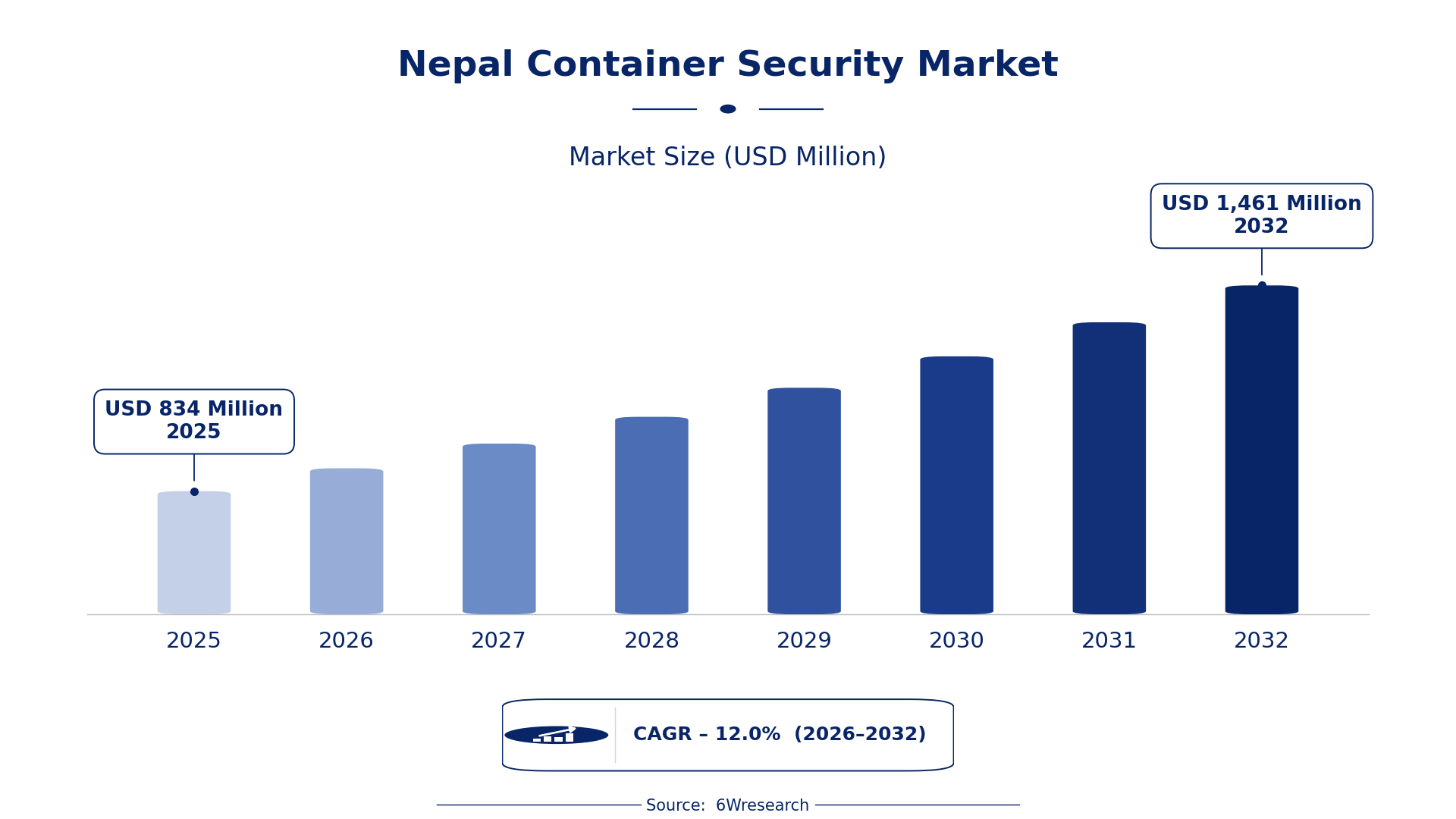
The Nepal Container Security Market was estimated at USD 834 Million in 2025 and is projected to reach USD 1461 Million by 2032, growing at a CAGR of 12.0% from 2026 to 2032.
Nepal Container Security Market Synopsis
The Nepal Container Security Market is transitioning from a focus on basic security measures to the adoption of advanced technologies aimed at addressing escalating concerns over cargo theft and smuggling. As trade activities through Nepal's ports and border checkpoints intensify, the demand for sophisticated security solutions is gaining momentum.
With the government pushing for improved security protocols, industry stakeholders are increasingly aware of the necessity for innovative solutions like IoT-enabled tracking systems and electronic locks. This shift not only bolsters the integrity of the supply chain but also aligns Nepal with international standards in container security.
Nepal Container Security Market Year-wise Growth Rate and Key Drivers
This graph illustrates the annual growth rates of the Nepal Container Security Market from 2021 to 2032, highlighting a steady upward trajectory and projected expansion over the forecast period.
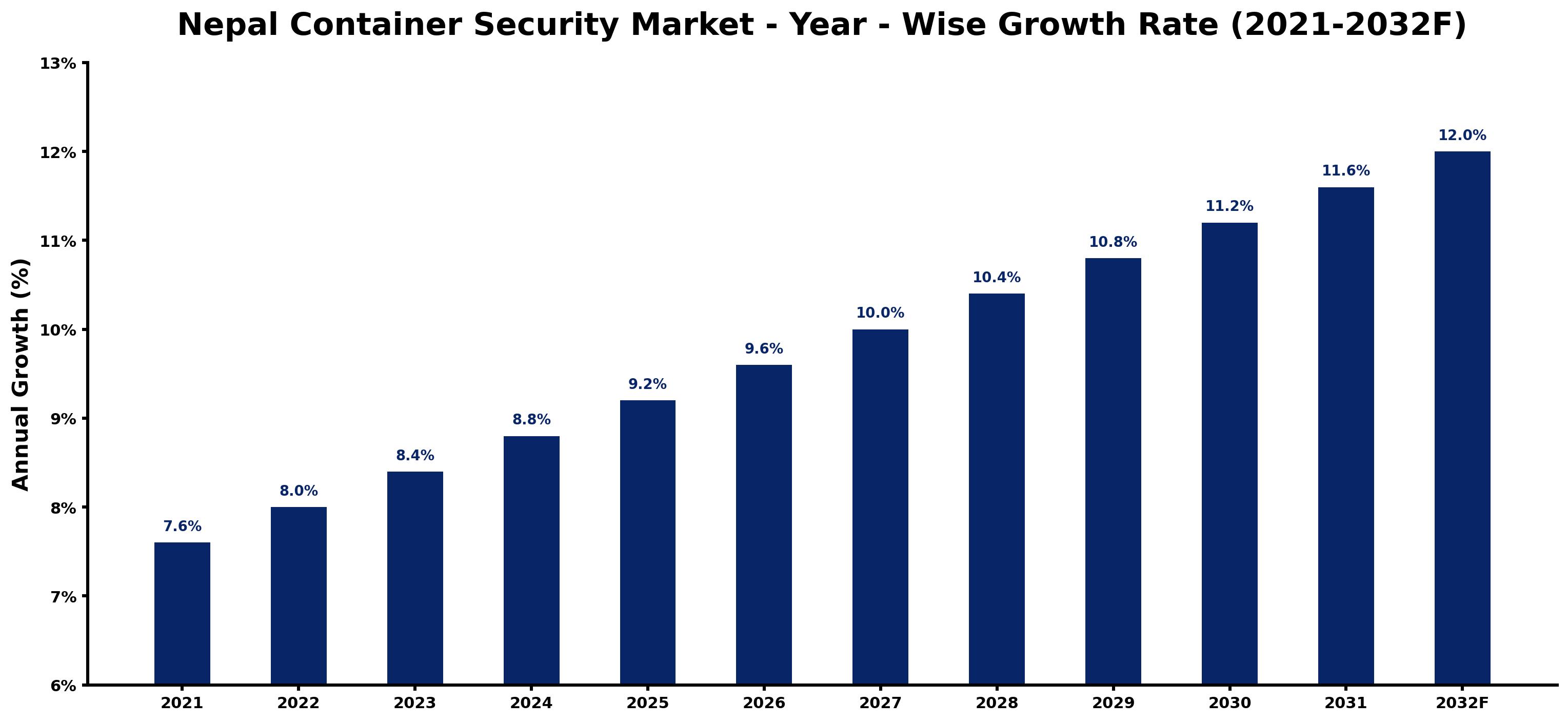
The table below presents the year‑wise growth rates along with the key drivers influencing the market
| Year | Growth Rate | Major Drivers |
| 2021 | 7.6% | Implementation of Customs Council's security authorization frameworks. |
| 2022 | 8.0% | Increase in trade volumes triggering demand for container safety. |
| 2023 | 8.4% | Government initiatives for logistics sector modernization and safety. |
| 2024 | 8.8% | Rise in e-commerce boosting container security requirements. |
| 2025 | 9.2% | Investments in Nepal's infrastructure improving shipping security needs. |
| 2026 | 9.6% | Regulatory updates enhancing compliance for container security. |
| 2027 | 10.0% | Partnerships with international security firms enhancing service standards. |
| 2028 | 10.4% | Growing tourism increasing shipping and container traffic vulnerabilities. |
| 2029 | 10.8% | Local manufacturers requiring stricter safety measures for exports. |
| 2030 | 11.2% | Rising awareness of supply chain risks among businesses. |
| 2031 | 11.6% | Continued foreign investment supporting advanced security technologies. |
| 2032 | 12.0% | Adoption of smart container technology enhancing tracking capabilities. |
Note: Market size estimations and growth projections presented in this report are based on 6Wresearch's proprietary forecasting methodology, utilizing the latest available industry data, government publications, and primary research inputs.
Nepal Container Security Market Key Takeaways
Below are some of the specific key takeaways from the market, including:
- Growing demand for IoT-enabled tracking solutions driven by rising cargo theft incidents.
- Government initiatives are paving the way for enhanced security measures at borders and ports.
- Investment opportunities in advanced technologies like RFID and electronic seals are emerging.
- Collaborations between security providers and shipping companies are on the rise, creating tailored solutions.
- The shift toward cloud-based monitoring solutions is enhancing real-time security oversight.
Evaluation of Restraints in Nepal Container Security Market
Several factors are restraining the growth of the Nepal Container Security Market. Inadequate infrastructure and technology for effective security measures hinder implementation efforts. Additionally, limited resources and expertise in advanced security solutions add complexity to the market dynamics. Corruption and transparency issues in customs operations further exacerbate challenges, while Nepal's diverse geography complicates monitoring and securing container movements. Addressing these limitations requires significant investment and a commitment to enhancing regulatory frameworks.
Nepal Container Security Market Trends
Technological advancements are reshaping the Nepal Container Security Market. The integration of IoT devices for real-time tracking is quickly gaining traction, responding to the urgency for improved security measures. Blockchain technology is emerging as a vital tool for secure data management, helping to verify container integrity throughout the supply chain.
on top of that, AI-powered surveillance systems are being deployed to deter tampering and theft. The collaboration between security providers and shipping companies is evolving into a critical strategy for developing comprehensive security measures that cater to the unique challenges of Nepal’s container transportation ecosystem.
Nepal Container Security Market Opportunities
Investment opportunities in the Nepal Container Security Market are expanding, particularly in electronic seals, GPS tracking systems, and RFID solutions. As the region continues to emphasize secure and efficient transportation, there's a clear demand for innovative security technologies. Potential partnerships with local technology providers can introduce tailored solutions, enhancing overall security.
Government collaborations could further enhance border security and trade facilitation, creating lucrative prospects for stakeholders eager to invest in the evolving security landscape of Nepal's container transportation sector.
Government Initiatives in the Nepal Container Security Market
The government of Nepal has taken several steps to bolster security in the container market, focusing on regulatory measures that promote compliance and safety. These initiatives are essential for enhancing trade operations and mitigating risks associated with illegal activities. A consistent regulatory posture underscores the importance of these efforts in establishing a secure environment for container transportation.
- A national programme launched in early 2025 focusing on upgrading customs protocols to enhance security checks for all container shipments.
- The ongoing collaboration with international organizations, including training programs aimed at improving local customs operations and security measures.
- A new regulatory framework introduced in 2025 mandating stringent security checks at all designated container checkpoints.
- A planned public-private initiative expected to initiate in 2026, aimed at upgrading digital infrastructure for real-time container monitoring.
- Current efforts to enhance training for customs officials, aimed at increasing transparency and reducing corruption in border control operations.
Future Insights of the Nepal Container Security Market
The future of the Nepal Container Security Market looks bright, propelled by an increasing awareness of security threats. As international trade volumes rise, the demand for robust security solutions will intensify. Innovations in tracking technologies, such as RFID and IoT devices, will gain traction as stakeholders look to enhance supply chain visibility.
Regulatory initiatives focused on enhancing trade security will further drive market growth. The next few years will likely see a transformative phase where securing the integrity of shipments becomes a non-negotiable aspect of trade operations in Nepal.
Nepal Container Security Market Latest Developments
Recent developments in the Nepal Container Security Market indicate a marked shift towards advanced security measures. Over the past 12 months, various initiatives have focused on upgrading infrastructure and enhancing technological capabilities to combat growing security threats.
- A leading regional operator announced the launch of a new RFID tracking system in Q1 2025, enhancing cargo visibility during transportation.
- A public-private partnership has begun rollout of electronic seals for containers in mid-2025, aimed at reducing tampering risks.
- Ongoing training programs for customs officials have been expanded, focusing on new technologies and compliance measures, set to complete by late 2025.
- An initiative to integrate blockchain for secure data management is currently underway, expected to finalize in early 2026.
- Plans for a national audit of existing container security measures are scheduled for mid-2026, intended to identify gaps and enhance overall security protocols.
Nepal Container Security Market - Key Attractiveness of the Report
- 10 Years of Market Numbers
- Historical Data Starting from 2022 to 2025
- Base Year: 2025
- Forecast Data until 2032
- Key Performance Indicators Impacting the Market
- Major Upcoming Developments and Projects
Key Highlights of the Report:
- Nepal Container Security Market Outlook
- Market Size of Nepal Container Security Market, 2025
- Forecast of Nepal Container Security Market, 2032
- Historical Data and Forecast of Nepal Container Security Revenues & Volume for the Period 2022-2032F
- Nepal Container Security Market Trend Evolution
- Nepal Container Security Market Drivers and Challenges
- Nepal Container Security Price Trends
- Nepal Container Security Porter's Five Forces
- Nepal Container Security Industry Life Cycle
- Historical Data and Forecast of Nepal Container Security Market Revenues & Volume By Component for the Period 2022-2032F
- Historical Data and Forecast of Nepal Container Security Market Revenues & Volume By Container Security Products for the Period 2022-2032F
- Historical Data and Forecast of Nepal Container Security Market Revenues & Volume By Services (Professional, Managed) for the Period 2022-2032F
- Historical Data and Forecast of Nepal Container Security Market Revenues & Volume By Deployment Type for the Period 2022-2032F
- Historical Data and Forecast of Nepal Container Security Market Revenues & Volume By Cloud for the Period 2022-2032F
- Historical Data and Forecast of Nepal Container Security Market Revenues & Volume By On-premises for the Period 2022-2032F
- Historical Data and Forecast of Nepal Container Security Market Revenues & Volume By Vertical for the Period 2022-2032F
- Historical Data and Forecast of Nepal Container Security Market Revenues & Volume By BFSI for the Period 2022-2032F
- Historical Data and Forecast of Nepal Container Security Market Revenues & Volume By Retail for the Period 2022-2032F
- Historical Data and Forecast of Nepal Container Security Market Revenues & Volume By Government for the Period 2022-2032F
- Historical Data and Forecast of Nepal Container Security Market Revenues & Volume By Healthcare for the Period 2022-2032F
- Nepal Container Security Import Export Trade Statistics
- Market Opportunity Assessment By Component
- Market Opportunity Assessment By Deployment Type
- Market Opportunity Assessment By Vertical
- Nepal Container Security Top Companies Market Share
- Nepal Container Security Competitive Benchmarking By Technical and Operational Parameters
- Nepal Container Security Company Profiles
- Nepal Container Security Key Strategic Recommendations






































