Nepal Data Center Logical Security Market Size & Growth Rate (2026-2032)
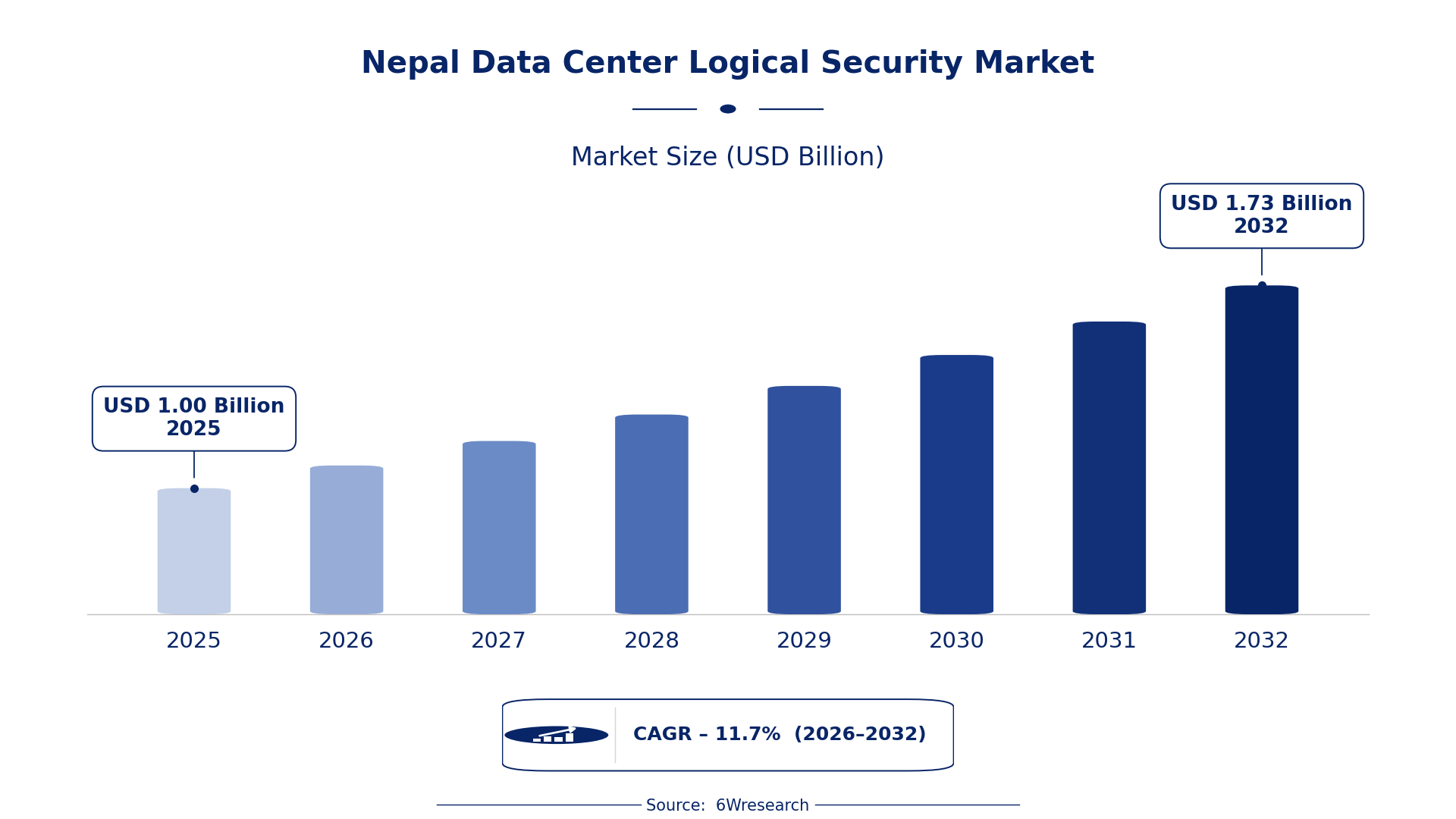
The Nepal Data Center Logical Security Market was estimated at USD 1005 Million in 2025 and is projected to reach USD 1732 Million by 2032, growing at a CAGR of 11.7% from 2026 to 2032.
Nepal Data Center Logical Security Market Synopsis
The demand for logical security solutions in Nepal's data centers is on the rise, driven by increasing data breaches and digital transformation efforts across various sectors. Organizations are prioritizing data confidentiality, integrity, and availability, recognizing that robust security measures are essential in safeguarding their operations.
As businesses embrace cloud services, the need for advanced security protocols becomes critical. The market is witnessing a shift towards encryption, access controls, and security information and event management (SIEM) solutions, reflecting a proactive approach to managing cyber threats.
Nepal Data Center Logical Security Market Year-wise Growth Rate and Key Drivers
This graph illustrates the annual growth rates of the Nepal Data Center Logical Security Market from 2021 to 2032, highlighting a steady upward trajectory and projected expansion over the forecast period.
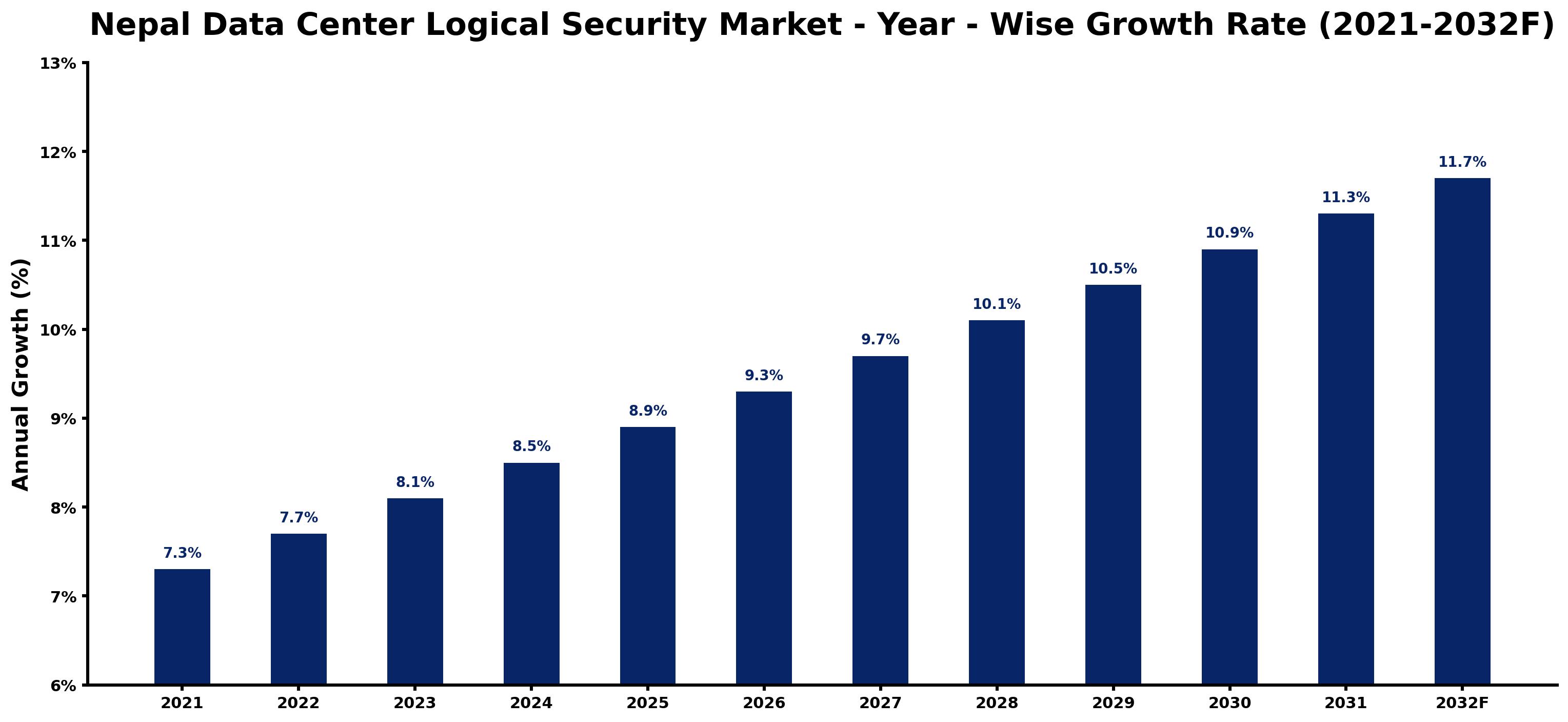
The table below presents the year‑wise growth rates along with the key drivers influencing the market
| Year | Growth Rate | Major Drivers |
| 2021 | 7.3% | Nepal's increasing internet penetration enhances data security needs. |
| 2022 | 7.7% | Emerging e-commerce sector heightens demand for cybersecurity solutions. |
| 2023 | 8.1% | Government regulations on data protection stimulate logical security investments. |
| 2024 | 8.5% | Rise in local cloud service providers boosts security spending. |
| 2025 | 8.9% | Growth in fintech innovations requires stringent security measures. |
| 2026 | 9.3% | Telecom advancements drive need for enhanced logical security. |
| 2027 | 9.7% | Increasing cyber threats urge businesses to adopt security protocols. |
| 2028 | 10.1% | Educational institutions invest in data protection for online learning. |
| 2029 | 10.5% | Local startups adopt security measures for competitive advantage. |
| 2030 | 10.9% | Government initiatives promote awareness of cybersecurity best practices. |
| 2031 | 11.3% | Adoption of IoT devices in enterprises demands stronger security layers. |
| 2032 | 11.7% | Stricter compliance standards force organizations to enhance security frameworks. |
Note: Market size estimations and growth projections presented in this report are based on 6Wresearch's proprietary forecasting methodology, utilizing the latest available industry data, government publications, and primary research inputs.
Nepal Data Center Logical Security Market Key Takeaways
Below are some of the specific key takeaways from the market, including:
- The market is experiencing accelerated growth fueled by increasing awareness of cybersecurity risks.
- Advanced encryption and multi-factor authentication are becoming standard practices for data protection.
- Organizations face challenges related to a skills gap in cybersecurity expertise.
- Government regulations are driving compliance, pushing businesses to invest in security measures.
- There is a growing trend towards integrating SIEM solutions for enhanced monitoring and incident response.
Evaluation of Restraints in Nepal Data Center Logical Security Market
Several factors hinder the growth of the Nepal Data Center Logical Security Market. A significant challenge is the lack of awareness among businesses regarding advanced cybersecurity measures, which often leads to underinvestment in necessary solutions. on top of that, the scarcity of skilled cybersecurity professionals complicates the implementation and management of comprehensive security systems. As cyber threats evolve, organizations must continuously adapt their security strategies, yet many struggle due to limited resources and expertise. Additionally, the absence of clear regulatory frameworks specific to data center security creates ambiguity, making compliance a daunting task for many organizations.
Nepal Data Center Logical Security Market Trends
The market is marked by a growing emphasis on advanced encryption technologies and multi-factor authentication as businesses strive to protect sensitive data. With the surge in cloud service adoption, data center operators are investing heavily in robust access controls and real-time monitoring systems. The integration of SIEM solutions is becoming a focal point for proactive security management, allowing organizations to detect and respond to incidents swiftly. This trend towards enhanced logical security measures is critical as companies seek to mitigate cybersecurity risks and align with regulatory requirements.
Nepal Data Center Logical Security Market Opportunities
The increasing focus on digital transformation presents substantial investment opportunities in the Nepal Data Center Logical Security Market. Companies are actively seeking innovative solutions that address the growing threat of cyber attacks. Investing in providers of advanced security technologies like encryption, access controls, and threat detection systems can yield significant returns. The government's push for digitalization and cybersecurity awareness further complements these opportunities, paving the way for robust growth in the sector.
Government Initiatives in the Nepal Data Center Logical Security Market
The Nepalese government has recognized the critical need for data security, implementing several policies aimed at safeguarding information within data centers. These initiatives focus on establishing standards for data protection, promoting compliance, and fostering a secure digital environment. As regulatory frameworks evolve, they play a crucial role in shaping the data center security landscape, compelling organizations to enhance their security measures.
- A regulatory framework introduced in 2025 mandating encryption standards for sensitive data in data centers.
- A national cybersecurity awareness campaign currently underway, aimed at educating businesses about data protection best practices.
- Planned development of a data protection authority expected to begin in early 2026, which will oversee compliance and enforcement of data security regulations.
- A public-private initiative launched in late 2025 to enhance collaboration between government and tech firms in developing advanced security technologies.
- Implementation of incident response protocols established in 2024 to ensure a coordinated approach to handling data breaches.
Future Insights of the Nepal Data Center Logical Security Market
Looking ahead to 2026-2032, the Nepal Data Center Logical Security Market is positioned for considerable growth. The ongoing adoption of digital technologies will likely lead to increased investments in security infrastructure. As organizations prioritize the safeguarding of sensitive information, demand for logical security solutions will intensify. Emerging technologies such as IoT and big data analytics will further necessitate enhanced security protocols, driving innovation and expansion within the sector. Businesses that proactively invest in logical security will be better equipped to navigate the complexities of the cyber landscape.
Nepal Data Center Logical Security Market Latest Developments
In the past year, the Nepal Data Center Logical Security Market has witnessed a flurry of activity as organizations ramp up their cybersecurity efforts. With rising cyber threats, the focus on establishing robust security frameworks has intensified among local businesses and data center operators.
- A major technology vendor announced a rollout of an upgraded SIEM solution in Q2 2025, enhancing real-time monitoring capabilities for data centers.
- In early 2025, a leading regional operator launched a new encryption service aimed at protecting sensitive customer data stored in their facilities.
- An initiative that began in mid-2025 focuses on training programs for cybersecurity professionals, addressing the skills gap in the industry.
- A collaborative project between the government and private sector is expected to kick off in late 2026, aimed at developing a national cybersecurity framework.
- By mid-2025, a series of workshops were conducted to raise awareness about data protection regulations among businesses in Nepal.
Nepal Data Center Logical Security Market - Key Attractiveness of the Report
- 10 Years of Market Numbers
- Historical Data Starting from 2022 to 2025
- Base Year: 2025
- Forecast Data until 2032
- Key Performance Indicators Impacting the Market
- Major Upcoming Developments and Projects
Key Highlights of the Report:
- Nepal Data Center Logical Security Market Outlook
- Market Size of Nepal Data Center Logical Security Market, 2025
- Forecast of Nepal Data Center Logical Security Market, 2032
- Historical Data and Forecast of Nepal Data Center Logical Security Revenues & Volume for the Period 2022-2032F
- Nepal Data Center Logical Security Market Trend Evolution
- Nepal Data Center Logical Security Market Drivers and Challenges
- Nepal Data Center Logical Security Price Trends
- Nepal Data Center Logical Security Porter's Five Forces
- Nepal Data Center Logical Security Industry Life Cycle
- Historical Data and Forecast of Nepal Data Center Logical Security Market Revenues & Volume By Solutions Types for the Period 2022-2032F
- Historical Data and Forecast of Nepal Data Center Logical Security Market Revenues & Volume By Threat and Application Security Solutions for the Period 2022-2032F
- Historical Data and Forecast of Nepal Data Center Logical Security Market Revenues & Volume By Access Control and Compliance for the Period 2022-2032F
- Historical Data and Forecast of Nepal Data Center Logical Security Market Revenues & Volume By Data Protection Solutions for the Period 2022-2032F
- Historical Data and Forecast of Nepal Data Center Logical Security Market Revenues & Volume By Service Types for the Period 2022-2032F
- Historical Data and Forecast of Nepal Data Center Logical Security Market Revenues & Volume By Security Consulting services for the Period 2022-2032F
- Historical Data and Forecast of Nepal Data Center Logical Security Market Revenues & Volume By Managed Security Services for the Period 2022-2032F
- Historical Data and Forecast of Nepal Data Center Logical Security Market Revenues & Volume By Data Center Types for the Period 2022-2032F
- Historical Data and Forecast of Nepal Data Center Logical Security Market Revenues & Volume By Mid-Size for the Period 2022-2032F
- Historical Data and Forecast of Nepal Data Center Logical Security Market Revenues & Volume By Enterprise for the Period 2022-2032F
- Historical Data and Forecast of Nepal Data Center Logical Security Market Revenues & Volume By Large for the Period 2022-2032F
- Historical Data and Forecast of Nepal Data Center Logical Security Market Revenues & Volume By Verticals for the Period 2022-2032F
- Historical Data and Forecast of Nepal Data Center Logical Security Market Revenues & Volume By IT and Telecom for the Period 2022-2032F
- Historical Data and Forecast of Nepal Data Center Logical Security Market Revenues & Volume By BFSI for the Period 2022-2032F
- Historical Data and Forecast of Nepal Data Center Logical Security Market Revenues & Volume By Government for the Period 2022-2032F
- Historical Data and Forecast of Nepal Data Center Logical Security Market Revenues & Volume By Healthcare for the Period 2022-2032F
- Historical Data and Forecast of Nepal Data Center Logical Security Market Revenues & Volume By Energy for the Period 2022-2032F
- Historical Data and Forecast of Nepal Data Center Logical Security Market Revenues & Volume By Others (Education and Retail) for the Period 2022-2032F
- Nepal Data Center Logical Security Import Export Trade Statistics
- Market Opportunity Assessment By Solutions Types
- Market Opportunity Assessment By Service Types
- Market Opportunity Assessment By Data Center Types
- Market Opportunity Assessment By Verticals
- Nepal Data Center Logical Security Top Companies Market Share
- Nepal Data Center Logical Security Competitive Benchmarking By Technical and Operational Parameters
- Nepal Data Center Logical Security Company Profiles
- Nepal Data Center Logical Security Key Strategic Recommendations






































