Nepal Data Protection Market Size & Growth Rate (2026-2032)
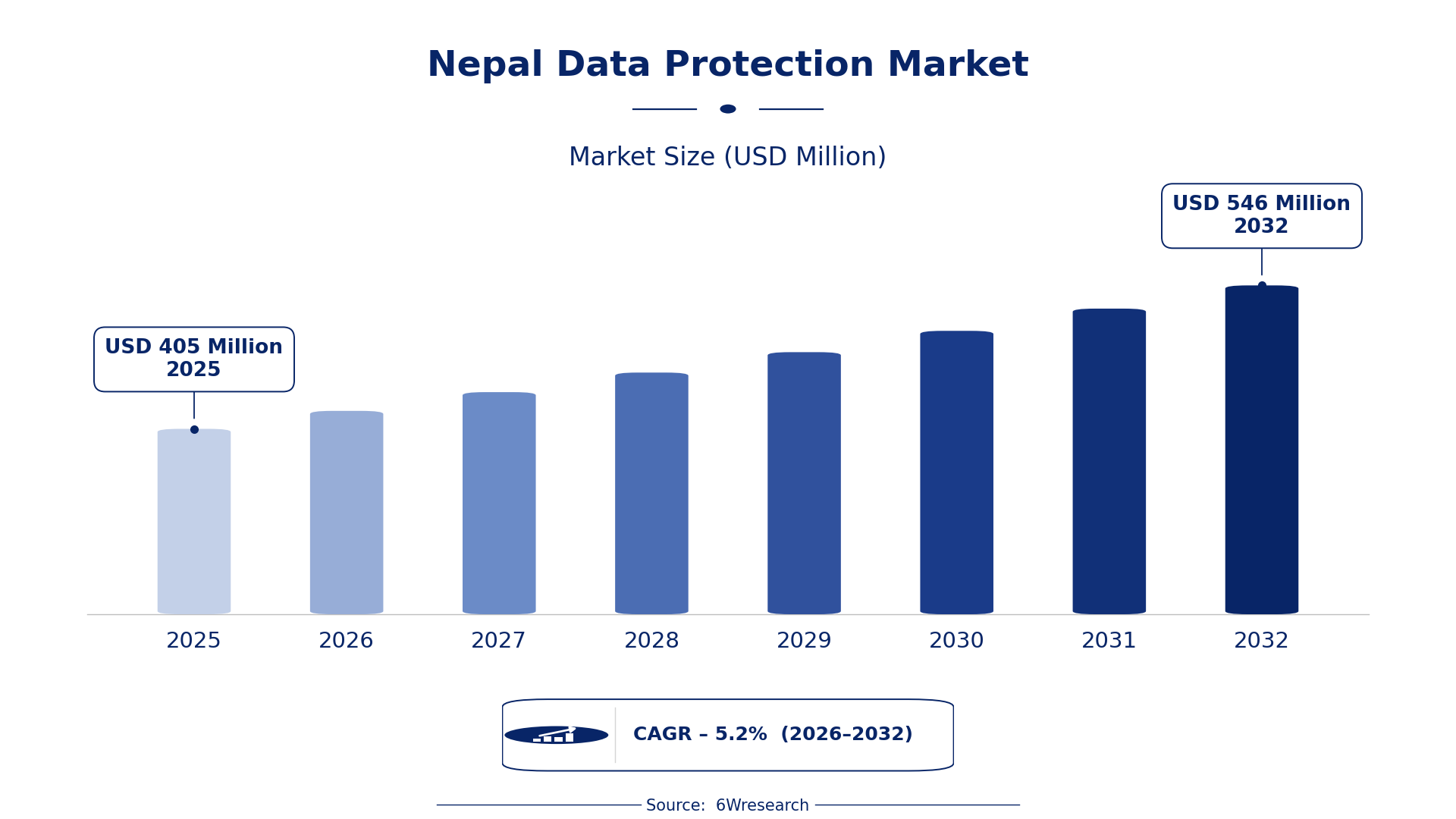
The Nepal Data Protection Market was estimated at USD 405 Million in 2025 and is projected to reach USD 546 Million by 2032, growing at a CAGR of 5.2% from 2026 to 2032.
Nepal Data Protection Market Synopsis
A prominent force shaping the Nepal Data Protection Market is the escalating need for secure data management amidst rapid digital transformation. Organizations across various sectors are prioritizing data security as the digitization of services expands, intensifying vulnerabilities to cyber threats.
The impending implementation of the Personal Data Protection Act has further catalyzed organizations to adopt comprehensive data protection strategies. This regulatory push is not merely a compliance checkbox; it's driving investments in advanced security technologies that will shape the future of data handling in Nepal.
Nepal Data Protection Market Year-wise Growth Rate and Key Drivers
This graph illustrates the annual growth rates of the Nepal Data Protection Market from 2021 to 2032, highlighting a steady upward trajectory and projected expansion over the forecast period.
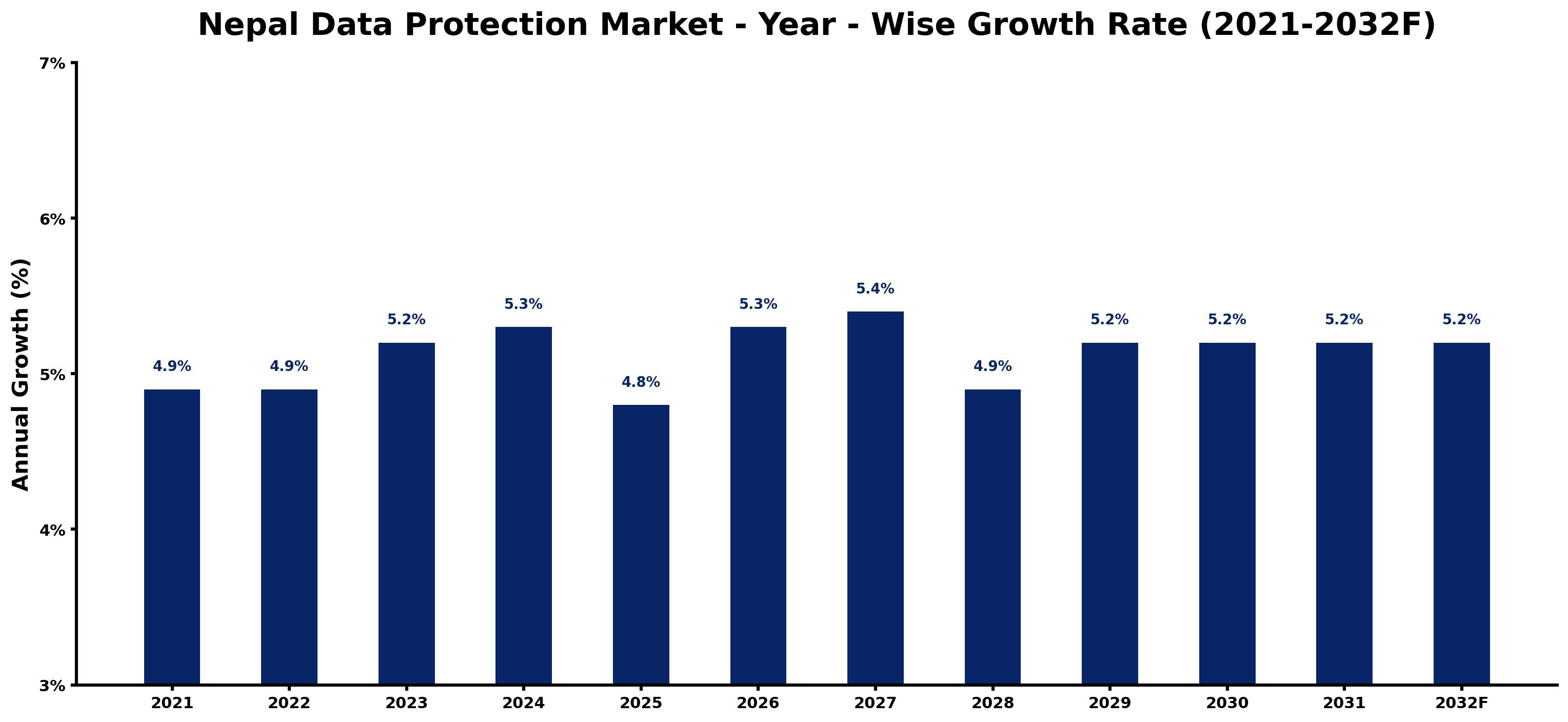
The table below presents the year‑wise growth rates along with the key drivers influencing the market
| Year | Growth Rate | Major Drivers |
| 2021 | 4.9% | Nepal's Digital Nepal Framework promotes data privacy initiatives. |
| 2022 | 4.9% | Implementation of Personal Data Protection Act enhances compliance needs. |
| 2023 | 5.2% | Increasing cyber threats prompt local enterprises to invest. |
| 2024 | 5.3% | Rising mobile payment adoption drives data security necessity. |
| 2025 | 4.8% | Growing awareness of data privacy among consumers accelerates demand. |
| 2026 | 5.3% | Government's focus on digital infrastructure supports data protection services. |
| 2027 | 5.4% | Educational institutions prioritize data security in digital curriculum. |
| 2028 | 4.9% | Local startups innovate solutions addressing data management challenges. |
| 2029 | 5.2% | Regulatory updates boost demand for compliance-driven data practices. |
| 2030 | 5.2% | Rising digital literacy increases consumer demand for privacy. |
| 2031 | 5.2% | Emergence of biometric authentication spurs investments in data security. |
| 2032 | 5.2% | Growth in telehealth sectors necessitates stringent data protection measures. |
Note: Market size estimations and growth projections presented in this report are based on 6Wresearch's proprietary forecasting methodology, utilizing the latest available industry data, government publications, and primary research inputs.
Nepal Data Protection Market Key Takeaways
Below are some of the specific key takeaways from the market, including:
- The market is on a growth trajectory due to increased digitalization and regulatory compliance.
- Organizations are prioritizing encryption and access control solutions to protect sensitive information.
- Cloud-based data protection services are becoming essential for scalable security measures.
- The growing awareness of data privacy is prompting investments in data protection training and consulting.
- New technologies and solutions are continuously being developed to counteract emerging cyber threats.
Evaluation of Restraints in Nepal Data Protection Market
The Nepal Data Protection Market faces substantial hurdles, primarily stemming from a lack of comprehensive regulations and enforcement mechanisms. This creates gaps that organizations struggle to navigate, leading to inconsistent data security practices. Limited awareness around data protection best practices further exacerbates these challenges, as many businesses lack the necessary expertise to implement effective solutions. Without a standardized compliance framework, organizations often find themselves in precarious positions, grappling with the complexities of safeguarding sensitive information in an increasingly digital world.
Nepal Data Protection Market Trends
There is a noticeable shift towards compliance-driven solutions as organizations increasingly focus on adhering to the Personal Data Protection Act. This has amplified the adoption of data loss prevention tools and encryption technologies. Concurrently, businesses are turning to cloud-based solutions, recognizing their cost-effectiveness and scalability in securing vast amounts of data. As companies accumulate more data, a growing emphasis on privacy and robust security protocols is evident, revealing a market that is gradually maturing in its approach to data protection.
Nepal Data Protection Market Opportunities
The market presents significant investment opportunities, especially in the realms of data security software and compliance consulting. Companies can tap into the demand for advanced encryption and identity management systems as businesses scramble to fortify their defenses. on top of that, offering training programs focused on data protection practices could yield substantial returns, as organizations prioritize building internal expertise to meet evolving regulatory requirements.
Government Initiatives in the Nepal Data Protection Market
Government regulation is reshaping the data protection environment in Nepal, highlighting the importance of safeguarding personal data. The establishment of the Personal Data Protection Bill reflects a commitment to addressing privacy concerns and providing a framework for organizations to follow. Such policies are vital for fostering trust and accountability in data handling practices.
- The Personal Data Protection Bill, enacted in 2075 BS (2018 AD), mandates guidelines for the collection and processing of personal data.
- The National Information Technology Center (NITC) is actively overseeing the implementation and enforcement of data protection measures.
- Ongoing initiatives aim to enhance public awareness of data protection rights and responsibilities.
- A regulatory framework focusing on international data transfer protocols is currently in development.
- Plans for a nationwide awareness campaign about data privacy are set to launch in the next fiscal year.
Future Insights of the Nepal Data Protection Market
Looking ahead to 2026-2032, the Nepal Data Protection Market is anticipated to evolve as organizations increasingly recognize the importance of safeguarding sensitive information. As compliance with regulations becomes non-negotiable, demand for innovative solutions will likely surge. The combination of heightened cyber threats and emerging technologies will push businesses to seek advanced data protection measures, ultimately driving market growth. Companies that position themselves strategically to address these needs stand to gain a competitive advantage in this dynamic landscape.
Nepal Data Protection Market Latest Developments
In the past year, the Nepal Data Protection Market has seen notable advancements reflecting an increasing focus on data security and compliance. Organizations are actively investing in technologies and partnerships to bolster their data protection strategies, demonstrating a proactive approach in a climate of rising cyber threats.
- A leading regional operator announced a comprehensive data security upgrade in Q2 2025, focusing on enhancing encryption protocols.
- In early 2025, a major technology vendor rolled out an innovative cloud-based data protection solution tailored for small and medium-sized enterprises.
- Current collaborations between local businesses and international cybersecurity firms are underway to develop tailored data protection strategies.
- A planned initiative set to commence in late 2026 aims to expand the National Information Technology Center's capabilities to enforce compliance effectively.
- Ongoing discussions are taking place regarding the creation of a national data protection certification program to standardize practices across industries.
Nepal Data Protection Market - Key Attractiveness of the Report
- 10 Years of Market Numbers
- Historical Data Starting from 2022 to 2025
- Base Year: 2025
- Forecast Data until 2032
- Key Performance Indicators Impacting the Market
- Major Upcoming Developments and Projects
Key Highlights of the Report:
- Nepal Data Protection Market Outlook
- Market Size of Nepal Data Protection Market, 2025
- Forecast of Nepal Data Protection Market, 2032
- Historical Data and Forecast of Nepal Data Protection Revenues & Volume for the Period 2022-2032F
- Nepal Data Protection Market Trend Evolution
- Nepal Data Protection Market Drivers and Challenges
- Nepal Data Protection Price Trends
- Nepal Data Protection Porter's Five Forces
- Nepal Data Protection Industry Life Cycle
- Historical Data and Forecast of Nepal Data Protection Market Revenues & Volume By Component for the Period 2022-2032F
- Historical Data and Forecast of Nepal Data Protection Market Revenues & Volume By Solutions for the Period 2022-2032F
- Historical Data and Forecast of Nepal Data Protection Market Revenues & Volume By Services (Professional Services and Managed Services) for the Period 2022-2032F
- Historical Data and Forecast of Nepal Data Protection Market Revenues & Volume By Deployment Mode for the Period 2022-2032F
- Historical Data and Forecast of Nepal Data Protection Market Revenues & Volume By On-premises for the Period 2022-2032F
- Historical Data and Forecast of Nepal Data Protection Market Revenues & Volume By Cloud for the Period 2022-2032F
- Historical Data and Forecast of Nepal Data Protection Market Revenues & Volume By Industry Vertical for the Period 2022-2032F
- Historical Data and Forecast of Nepal Data Protection Market Revenues & Volume By Government and defense for the Period 2022-2032F
- Historical Data and Forecast of Nepal Data Protection Market Revenues & Volume By Banking, Financial Services, and Insurance (BFSI) for the Period 2022-2032F
- Historical Data and Forecast of Nepal Data Protection Market Revenues & Volume By Healthcare for the Period 2022-2032F
- Historical Data and Forecast of Nepal Data Protection Market Revenues & Volume By IT and telecom for the Period 2022-2032F
- Historical Data and Forecast of Nepal Data Protection Market Revenues & Volume By Consumer goods and retail for the Period 2022-2032F
- Historical Data and Forecast of Nepal Data Protection Market Revenues & Volume By Education for the Period 2022-2032F
- Historical Data and Forecast of Nepal Data Protection Market Revenues & Volume By Media and entertainment for the Period 2022-2032F
- Historical Data and Forecast of Nepal Data Protection Market Revenues & Volume By Organization Size Large Enterprises for the Period 2022-2032F
- Historical Data and Forecast of Nepal Data Protection Market Revenues & Volume By SMEs for the Period 2022-2032F
- Historical Data and Forecast of Nepal Data Protection Market Revenues & Volume By Large Enterprises for the Period 2022-2032F
- Nepal Data Protection Import Export Trade Statistics
- Market Opportunity Assessment By Component
- Market Opportunity Assessment By Deployment Mode
- Market Opportunity Assessment By Industry Vertical
- Market Opportunity Assessment By Organization Size Large Enterprises
- Nepal Data Protection Top Companies Market Share
- Nepal Data Protection Competitive Benchmarking By Technical and Operational Parameters
- Nepal Data Protection Company Profiles
- Nepal Data Protection Key Strategic Recommendations






































