Nepal Decorative Laminates Market Size, Share & Growth Rate
The Nepal Decorative Laminates Market was estimated at USD 261 Million in 2025 and is projected to reach USD 356 Million by 2032, growing at a CAGR of 4.5% from 2026 to 2032. This positive trajectory is fueled by the rapid urbanization and an uptick in construction activities across the country. As consumer preferences shift towards innovative and durable interior solutions, decorative laminates have emerged as a preferred choice in both residential and commercial sectors, underscoring their aesthetic and functional benefits.
Nepal Decorative Laminates Market Year-wise Growth Rate and Key Drivers
This graph highlights how the Nepal Decorative Laminates Market has steadily grown over the years, supported by major growth factors.
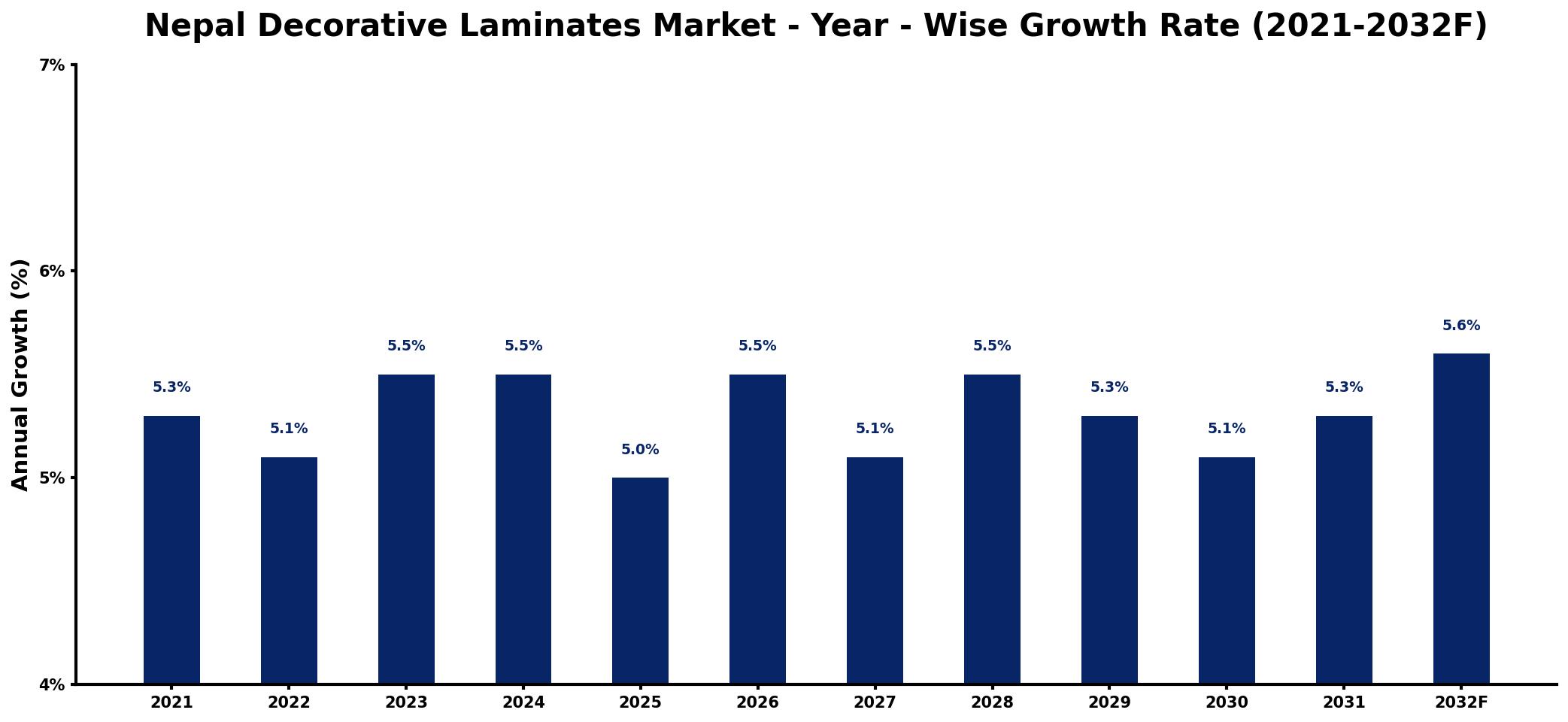
The table below presents the year‑wise growth rates along with the key drivers influencing the market
| Year | Growth Rate | Major Drivers |
| 2021 | 5.3% | Rising construction sector activities |
| 2022 | 5.1% | Increased demand for interior design |
| 2023 | 5.5% | Growing real estate investments |
| 2024 | 5.5% | Expansion of furniture manufacturing sector |
| 2025 | 5.0% | Boost in home renovation projects |
| 2026 | 5.5% | Surge in commercial property development |
| 2027 | 5.1% | Higher consumer spending on interiors |
| 2028 | 5.5% | Increased adoption of sustainable materials |
| 2029 | 5.3% | Growth in hospitality industry investments |
| 2030 | 5.1% | Rising popularity of modular homes |
| 2031 | 5.3% | improved processing technologies adoption |
| 2032 | 5.6% | Increased focus on aesthetic appeal |
Note: Market size estimations and growth projections presented in this report are based on 6Wresearch's proprietary forecasting methodology, utilizing the latest available industry data, government publications, and primary research inputs.
Nepal Decorative Laminates Market Synopsis
In Nepal, decorative laminates are increasingly utilized to enhance the visual appeal of furniture and interior spaces, thanks to their versatility and cost-effectiveness. The growing trend towards modern interior design aesthetics is driving demand for high-quality laminates featuring unique textures and patterns.
Furthermore, a significant consumer shift towards sustainable products is reshaping the market landscape. An increasing number of Nepali consumers are actively seeking laminates made from recycled materials or certified as eco-friendly, highlighting a growing awareness of environmental impact.
Nepal Decorative Laminates Market Key Takeaways
- The market is set for substantial growth driven by rising urbanization and infrastructure development.
- There is a marked shift towards eco-friendly products, with an emphasis on sustainable materials.
- Innovative designs and textures are becoming critical in meeting consumer preferences.
- The market is grappling with challenges related to counterfeit products and raw material price fluctuations.
- Investment opportunities abound in manufacturing and distribution, particularly for customized solutions.
Evaluation of Restraints in Nepal Decorative Laminates Market
The Nepal Decorative Laminates Market is currently facing several significant constraints that could impede its growth trajectory. The prevalence of counterfeit products poses a serious risk to brand reputation and consumer trust, making it difficult for legitimate companies to compete. Moreover, fluctuations in raw material prices can lead to unpredictable production costs, affecting pricing strategies. Additionally, a lack of consumer awareness regarding the benefits and applications of decorative laminates further complicates market expansion, creating an imperative for educational initiatives. Finally, the absence of standardized quality control measures can result in inconsistencies that impact product safety and overall market credibility.
Nepal Decorative Laminates Market Trends
Several trends are shaping the Nepal Decorative Laminates Market, particularly the demand for environmentally sustainable products. Consumers are increasingly favoring laminates that utilize recycled materials or come from sustainably managed sources. Additionally, the integration of digital printing technology allows for a broader range of customizable designs, appealing to a more discerning customer base looking for unique aesthetic choices. The emphasis on eco-friendly products is driving manufacturers to innovate and align their offerings with current consumer values.
Nepal Decorative Laminates Market Opportunities
The Nepal Decorative Laminates Market is ripe with opportunities for growth and investment. As the construction and real estate sectors expand, there is increasing demand for decorative laminates in both residential and commercial applications. Investing in local manufacturing facilities or distribution networks can yield significant returns, particularly given the rise in urban living spaces. Furthermore, tapping into the eco-conscious segment by developing sustainable product lines presents a lucrative opportunity. Collaborating with local designers to offer customized, aesthetically appealing solutions can also cater to the evolving preferences of the Nepali consumer.
Government Initiatives in the Nepal Decorative Laminates Market
The government of Nepal plays a crucial role in shaping the Decorative Laminates Market through various policies and regulations. Manufacturers are required to comply with quality standards set forth by the Nepal Bureau of Standards and Metrology, ensuring consumer safety. Additionally, import tariffs and regulations impact the competitive dynamics within the market, while environmental policies are increasingly encouraging sustainable practices. These initiatives aim to foster a fair and competitive landscape while promoting product quality and environmental responsibility within the decorative laminates sector.
Future Insights of the Nepal Decorative Laminates Market
Looking ahead to 2026-2032, the Nepal Decorative Laminates Market is poised for significant expansion. Ongoing urbanization and rising disposable incomes are expected to drive demand for aesthetically pleasing surfacing solutions across various sectors, including residential, commercial, and industrial. The emphasis on custom interior decor and the growing availability of diverse design options will further catalyze market growth. Manufacturers are anticipated to intensify product innovations, particularly in the realm of eco-friendly laminates and advanced finishes, aligning their offerings with the evolving preferences of consumers.
Nepal Decorative Laminates Market Latest Developments (2025 - 2026)
Recent developments in the Nepal Decorative Laminates Market indicate a strong momentum towards sustainability and innovation. Companies are increasingly adopting advanced technologies to enhance the quality and aesthetic appeal of their laminates. There has been a noticeable rise in partnerships between manufacturers and local designers, enabling the introduction of customized solutions tailored to the unique preferences of Nepali consumers. Moreover, ongoing initiatives to improve consumer awareness about decorative laminates are beginning to bear fruit, contributing to market growth.
Nepal Decorative Laminates Market - Key Attractiveness of the Report
- 10 Years of Market Numbers
- Historical Data Starting from 2022 to 2025
- Base Year: 2025
- Forecast Data until 2032
- Key Performance Indicators Impacting the Market
- Major Upcoming Developments and Projects
Key Highlights of the Report:
- Nepal Decorative Laminates Market Outlook
- Market Size of Nepal Decorative Laminates Market, 2025
- Forecast of Nepal Decorative Laminates Market, 2032
- Historical Data and Forecast of Nepal Decorative Laminates Revenues & Volume for the Period 2022-2032F
- Nepal Decorative Laminates Market Trend Evolution
- Nepal Decorative Laminates Market Drivers and Challenges
- Nepal Decorative Laminates Price Trends
- Nepal Decorative Laminates Porter's Five Forces
- Nepal Decorative Laminates Industry Life Cycle
- Historical Data and Forecast of Nepal Decorative Laminates Market Revenues & Volume By Raw Material for the Period 2022-2032F
- Historical Data and Forecast of Nepal Decorative Laminates Market Revenues & Volume By Plastic resins for the Period 2022-2032F
- Historical Data and Forecast of Nepal Decorative Laminates Market Revenues & Volume By Overlays for the Period 2022-2032F
- Historical Data and Forecast of Nepal Decorative Laminates Market Revenues & Volume By Adhesives for the Period 2022-2032F
- Historical Data and Forecast of Nepal Decorative Laminates Market Revenues & Volume By Wood substrate for the Period 2022-2032F
- Historical Data and Forecast of Nepal Decorative Laminates Market Revenues & Volume By Type for the Period 2022-2032F
- Historical Data and Forecast of Nepal Decorative Laminates Market Revenues & Volume By General Purpose for the Period 2022-2032F
- Historical Data and Forecast of Nepal Decorative Laminates Market Revenues & Volume By Postforming for the Period 2022-2032F
- Historical Data and Forecast of Nepal Decorative Laminates Market Revenues & Volume By Special Products for the Period 2022-2032F
- Historical Data and Forecast of Nepal Decorative Laminates Market Revenues & Volume By Backer for the Period 2022-2032F
- Historical Data and Forecast of Nepal Decorative Laminates Market Revenues & Volume By Application for the Period 2022-2032F
- Historical Data and Forecast of Nepal Decorative Laminates Market Revenues & Volume By Cabinets for the Period 2022-2032F
- Historical Data and Forecast of Nepal Decorative Laminates Market Revenues & Volume By Furniture for the Period 2022-2032F
- Historical Data and Forecast of Nepal Decorative Laminates Market Revenues & Volume By Flooring for the Period 2022-2032F
- Historical Data and Forecast of Nepal Decorative Laminates Market Revenues & Volume By Table Top for the Period 2022-2032F
- Historical Data and Forecast of Nepal Decorative Laminates Market Revenues & Volume By Counter Top for the Period 2022-2032F
- Historical Data and Forecast of Nepal Decorative Laminates Market Revenues & Volume By Wall Panels for the Period 2022-2032F
- Historical Data and Forecast of Nepal Decorative Laminates Market Revenues & Volume By End-Use for the Period 2022-2032F
- Historical Data and Forecast of Nepal Decorative Laminates Market Revenues & Volume By Residential for the Period 2022-2032F
- Historical Data and Forecast of Nepal Decorative Laminates Market Revenues & Volume By Non-residential for the Period 2022-2032F
- Historical Data and Forecast of Nepal Decorative Laminates Market Revenues & Volume By Transportation for the Period 2022-2032F
- Nepal Decorative Laminates Import Export Trade Statistics
- Market Opportunity Assessment By Raw Material
- Market Opportunity Assessment By Type
- Market Opportunity Assessment By Application
- Market Opportunity Assessment By End-Use
- Nepal Decorative Laminates Top Companies Market Share
- Nepal Decorative Laminates Competitive Benchmarking By Technical and Operational Parameters
- Nepal Decorative Laminates Company Profiles
- Nepal Decorative Laminates Key Strategic Recommendations






































