Nepal Electric shavers Market Size Growth Rate
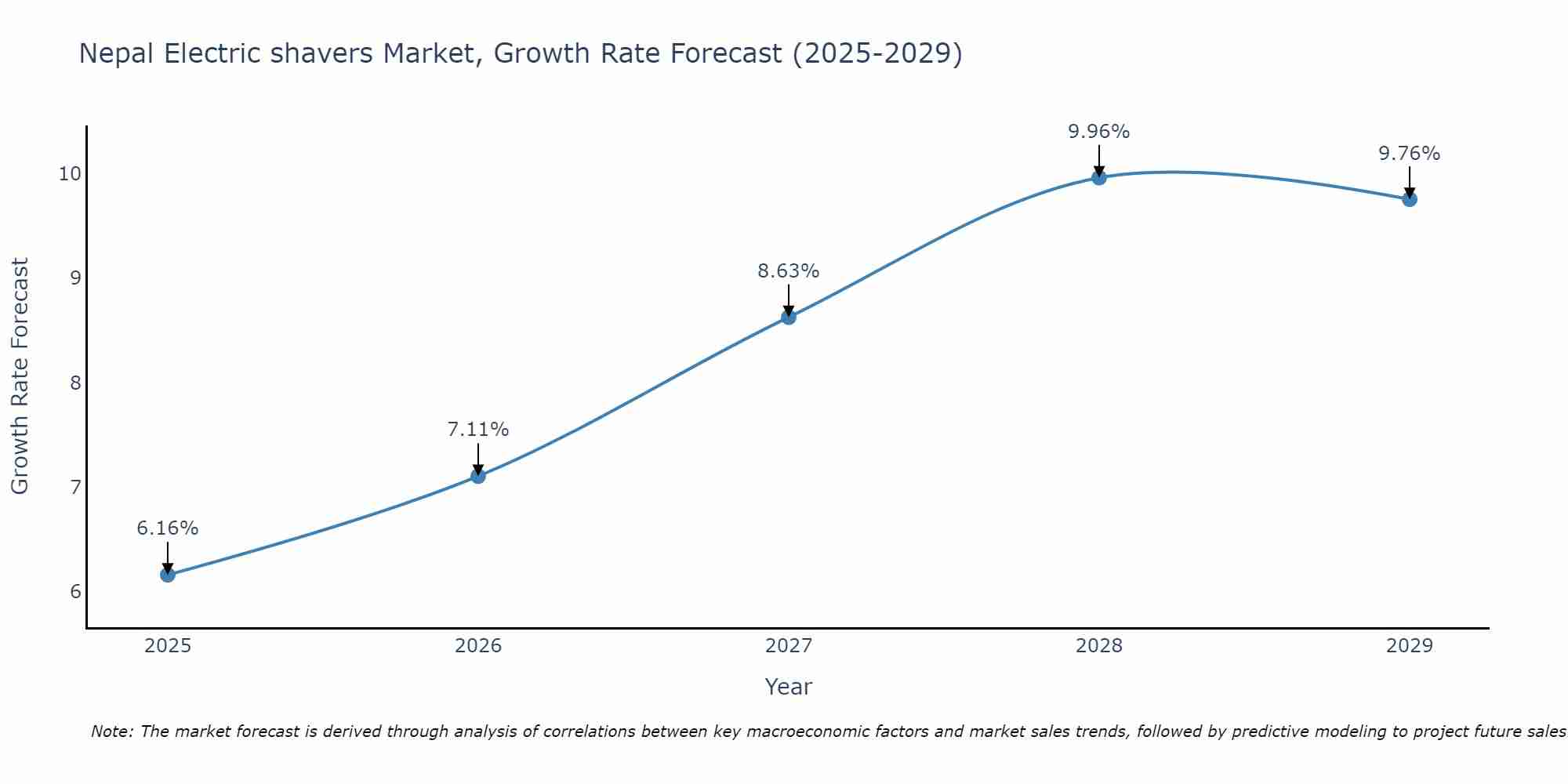
The Nepal Electric shavers Market is projected to witness mixed growth rate patterns during 2025 to 2029. The growth rate begins at 6.16% in 2025, climbs to a high of 9.96% in 2028, and moderates to 9.76% by 2029.
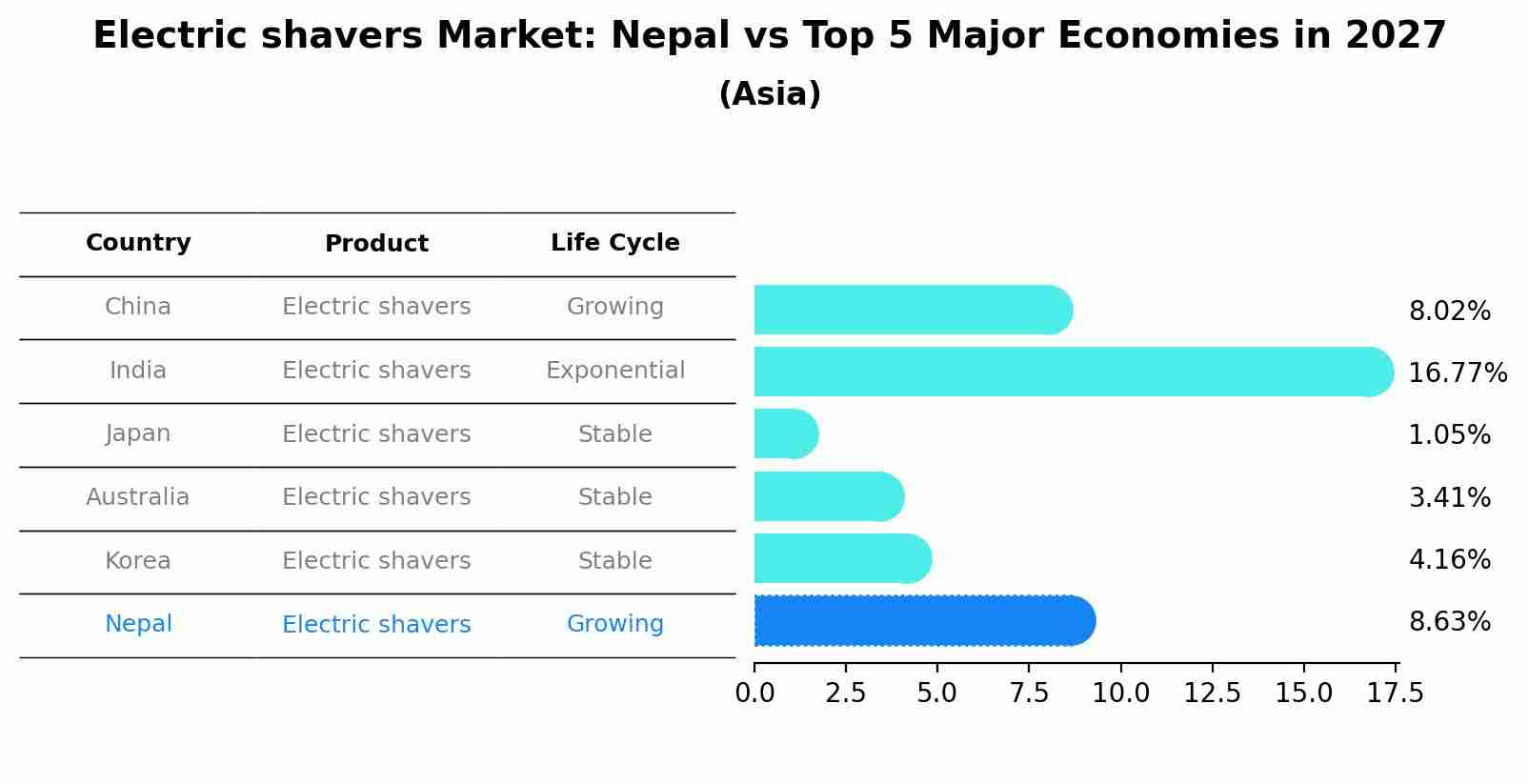
Electric shavers Market: Nepal vs Top 5 Major Economies in 2027 (Asia)
The Electric shavers market in Nepal is projected to grow at a growing growth rate of 8.63% by 2027, highlighting the country's increasing focus on advanced technologies within the Asia region, where China holds the dominant position, followed closely by India, Japan, Australia and South Korea, shaping overall regional demand.
Nepal Electric shavers Market Overview
The electric shavers market in Nepal is witnessing steady growth driven by increasing awareness about personal grooming among both men and women. The market is primarily dominated by major international brands such as Philips, Panasonic, and Braun, known for their quality and innovative products. However, there is also a growing presence of local brands offering more affordable options to cater to a wider consumer base. Factors such as convenience, efficiency, and the rising disposable income of the Nepalese population are contributing to the growing demand for electric shavers. Online retail channels are gaining traction as a popular avenue for purchasing these grooming devices, offering a wide range of options and competitive pricing. In the coming years, the market is expected to expand further as consumers continue to prioritize personal grooming and seek advanced grooming solutions.
Nepal Electric shavers Market Trends
In the Nepal electric shavers market, one of the current trends is the increasing demand for multifunctional shavers that offer various features such as wet and dry shaving capabilities, adjustable speed settings, precision trimming options, and longer battery life. Consumers are also showing a preference for shavers with ergonomic designs and easy-to-clean mechanisms. Another notable trend is the rising popularity of eco-friendly and sustainable electric shavers that are energy-efficient and made from recyclable materials. Additionally, the market is witnessing a growing interest in smart shavers that can be connected to mobile apps for personalized grooming experiences. Overall, the Nepal electric shavers market is evolving to meet the changing preferences and needs of consumers for efficient, versatile, and environmentally conscious grooming solutions.
Nepal Electric shavers Market Challenges
In the Nepal electric shavers market, several challenges are faced, including low awareness and limited consumer education about the benefits of electric shavers compared to traditional methods. Infrastructure constraints and intermittent power supply in certain regions also hinder the widespread adoption of electric shavers. Additionally, the relatively higher initial cost of electric shavers compared to disposable razors may deter price-sensitive consumers. Limited availability of a variety of electric shaver brands and models in the market further restricts consumer choice and may impact overall market growth. Addressing these challenges would require strategic marketing efforts to educate consumers, improved distribution networks, and potentially offering more affordable options to cater to different consumer segments in the Nepal market.
Nepal Electric shavers Market Investment Opportunities
Investment opportunities in the Nepal electric shavers market are promising due to the increasing demand for grooming products among the country`s growing urban population. The market is witnessing a shift towards electric shavers as they offer convenience, time-saving benefits, and improved grooming experiences. With rising disposable incomes and changing lifestyles, consumers are willing to invest in high-quality grooming products, presenting opportunities for both established brands and new entrants to introduce innovative products tailored to the local market preferences. Additionally, the growing awareness of personal grooming and hygiene among Nepali consumers further boosts the potential for market expansion. Investing in product development, marketing strategies targeted towards the tech-savvy younger generation, and distribution channels expansion in urban centers could yield significant returns in the evolving Nepal electric shavers market.
Nepal Electric shavers Market Government Policy
The Nepal government has implemented various policies to regulate the electric shavers market in the country. Some key policies include setting standards for quality, safety, and performance of electric shavers to protect consumer interests. Import regulations and tariffs are also in place to control the influx of low-quality products into the market. Additionally, the government promotes local manufacturing of electric shavers by providing incentives and subsidies to domestic manufacturers. Environmental regulations are also enforced to ensure that electric shavers comply with sustainability standards. Overall, these policies aim to ensure a competitive and fair market for electric shavers in Nepal while safeguarding consumer rights and promoting local industry growth.
Nepal Electric shavers Market Future Outlook
The future outlook for the Nepal Electric shavers market appears promising, driven by factors such as increasing urbanization, rising disposable income levels, and growing awareness about personal grooming among consumers. As more Nepalese men and women seek convenient and efficient grooming solutions, the demand for electric shavers is expected to rise. Additionally, technological advancements in electric shavers, such as improved battery life, precision cutting technology, and ergonomic designs, are likely to attract more consumers. The market is also witnessing the entry of new players offering a variety of products at competitive prices, further fueling market growth. Overall, the Nepal Electric shavers market is poised for steady expansion in the coming years, presenting opportunities for both existing and new entrants to capitalize on the growing demand for personal care products in the country.
Key Highlights of the Report:
- Nepal Electric shavers Market Outlook
- Market Size of Nepal Electric shavers Market, 2021
- Forecast of Nepal Electric shavers Market, 2031
- Historical Data and Forecast of Nepal Electric shavers Revenues & Volume for the Period 2021 - 2031
- Nepal Electric shavers Market Trend Evolution
- Nepal Electric shavers Market Drivers and Challenges
- Nepal Electric shavers Price Trends
- Nepal Electric shavers Porter's Five Forces
- Nepal Electric shavers Industry Life Cycle
- Historical Data and Forecast of Nepal Electric shavers Market Revenues & Volume By Product for the Period 2021 - 2031
- Historical Data and Forecast of Nepal Electric shavers Market Revenues & Volume By Oil Shaver for the Period 2021 - 2031
- Historical Data and Forecast of Nepal Electric shavers Market Revenues & Volume By Wet/Dry Shaver for the Period 2021 - 2031
- Historical Data and Forecast of Nepal Electric shavers Market Revenues & Volume By Clippers for the Period 2021 - 2031
- Historical Data and Forecast of Nepal Electric shavers Market Revenues & Volume By A Rotary Shaver for the Period 2021 - 2031
- Historical Data and Forecast of Nepal Electric shavers Market Revenues & Volume By Accessories for the Period 2021 - 2031
- Historical Data and Forecast of Nepal Electric shavers Market Revenues & Volume By End-user for the Period 2021 - 2031
- Historical Data and Forecast of Nepal Electric shavers Market Revenues & Volume By Male for the Period 2021 - 2031
- Historical Data and Forecast of Nepal Electric shavers Market Revenues & Volume By Female for the Period 2021 - 2031
- Historical Data and Forecast of Nepal Electric shavers Market Revenues & Volume By Distribution Channel for the Period 2021 - 2031
- Historical Data and Forecast of Nepal Electric shavers Market Revenues & Volume By Health & Beauty Stores for the Period 2021 - 2031
- Historical Data and Forecast of Nepal Electric shavers Market Revenues & Volume By General Merchandising/Mass Stores for the Period 2021 - 2031
- Historical Data and Forecast of Nepal Electric shavers Market Revenues & Volume By Supermarkets & Hypermarkets for the Period 2021 - 2031
- Historical Data and Forecast of Nepal Electric shavers Market Revenues & Volume By Others for the Period 2021 - 2031
- Historical Data and Forecast of Nepal Electric shavers Market Revenues & Volume By Type for the Period 2021 - 2031
- Historical Data and Forecast of Nepal Electric shavers Market Revenues & Volume By Rechargeable Shaver for the Period 2021 - 2031
- Historical Data and Forecast of Nepal Electric shavers Market Revenues & Volume By Battery Type Shaver for the Period 2021 - 2031
- Nepal Electric shavers Import Export Trade Statistics
- Market Opportunity Assessment By Product
- Market Opportunity Assessment By End-user
- Market Opportunity Assessment By Distribution Channel
- Market Opportunity Assessment By Type
- Nepal Electric shavers Top Companies Market Share
- Nepal Electric shavers Competitive Benchmarking By Technical and Operational Parameters
- Nepal Electric shavers Company Profiles
- Nepal Electric shavers Key Strategic Recommendations






































