Nepal Eye Makeup Market Size, Share & Growth Rate
The Nepal Eye Makeup Market was estimated at USD 370 Million in 2025 and is projected to reach USD 504 Million by 2032, growing at a CAGR of 4.5% from 2026 to 2032. This growth trajectory is fueled by an increasingly beauty-conscious young population, significant disposable income growth, and the influence of vibrant social media trends. As consumers seek more innovative and diverse eye makeup options, brands are responding with exciting product offerings that cater to these evolving preferences.
Nepal Eye Makeup Market Year-wise Growth Rate and Key Drivers
This graph highlights how the Nepal Eye Makeup Market has steadily grown over the years, supported by major growth factors.
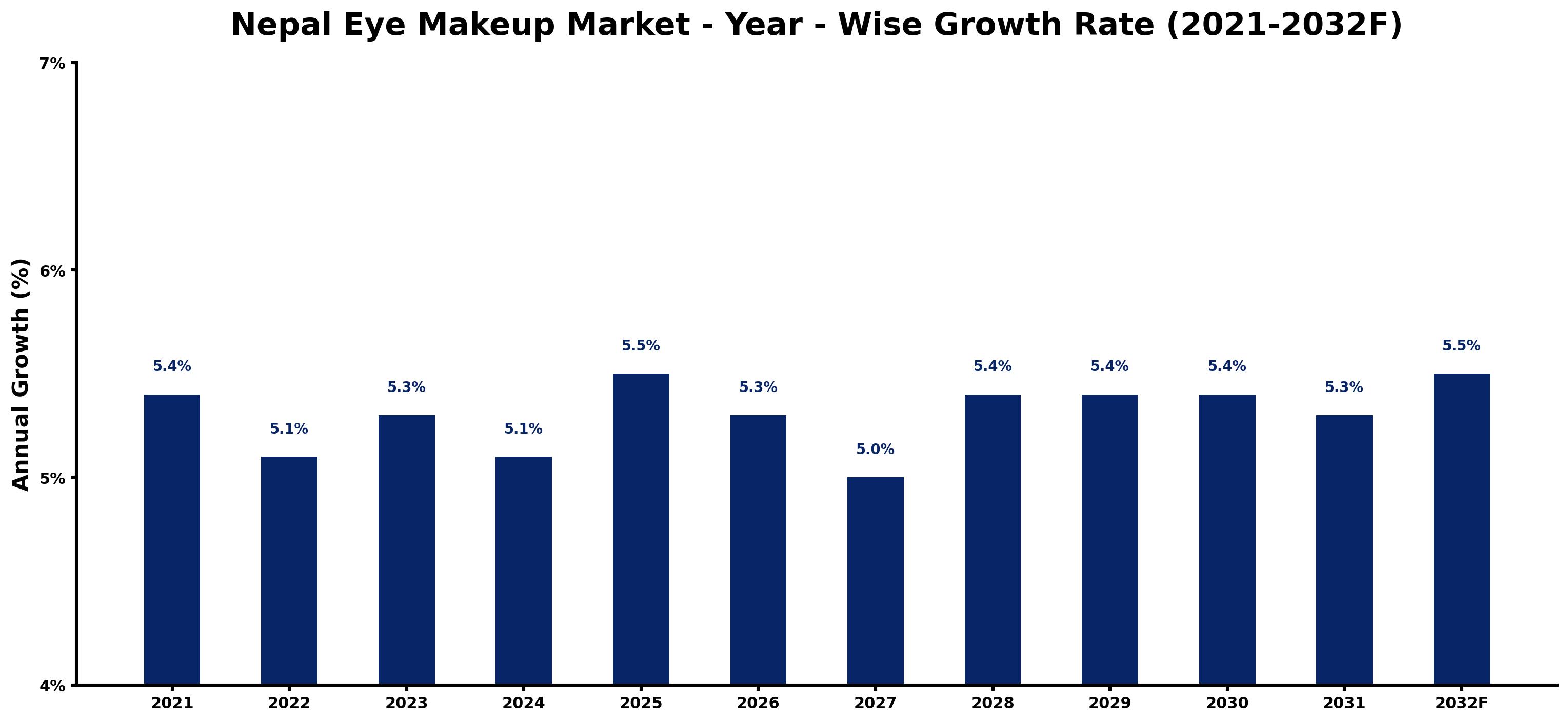
The table below presents the year‑wise growth rates along with the key drivers influencing the market
| Year | Growth Rate | Major Drivers |
| 2021 | 5.4% | Growing renewable energy integration projects |
| 2022 | 5.1% | Increasing smart city development projects |
| 2023 | 5.3% | Expansion of transportation and logistics networks |
| 2024 | 5.1% | Increasing adoption of advanced technologies |
| 2025 | 5.5% | Increasing industrial infrastructure investments |
| 2026 | 5.3% | Increasing smart city development projects |
| 2027 | 5.0% | Growing urbanization and commercial development |
| 2028 | 5.4% | Growing renewable energy integration projects |
| 2029 | 5.4% | Government infrastructure modernization initiatives |
| 2030 | 5.4% | Rapid growth in telecom and data center sectors |
| 2031 | 5.3% | Expansion of transportation and logistics networks |
| 2032 | 5.5% | Expansion of transportation and logistics networks |
Note - Market size estimations and growth projections presented in this report are based on 6Wresearch’s advanced forecasting approach, validated with industry datasets as of June 2026.
Nepal Eye Makeup Market Synopsis
The Nepali consumer base is increasingly leaning towards eye makeup products that enhance their looks, particularly eyeliners and eyeshadows. There is a notable demand for products that are not only aesthetically pleasing but also fulfill ethical standards, driving the popularity of cruelty-free and vegan options.
Moreover, the recent trend in multi-functional palettes is reshaping shopping behaviors, as consumers seek versatility in their makeup kits. This shift is opening avenues for both international brands and local entrepreneurs to innovate and capture the attention of a diverse audience.
Nepal Eye Makeup Market Key Takeaways
- Demand for bold eyeshadow colors is increasing, driven by social media influences.
- The shift towards cruelty-free and vegan products reflects changing consumer values.
- Innovative and multi-functional eye makeup offerings are becoming popular among consumers.
- Young, urban consumers are shaping the market landscape with their preferences and buying power.
- Brands need to navigate cultural preferences and market size constraints to thrive.
Evaluation of Restraints in Nepal Eye Makeup Market
Despite the promising outlook, the Nepal Eye Makeup Market faces several limitations that could stymie growth. A lack of high-quality and diverse products hampers consumer satisfaction, often leading to a lack of brand loyalty. Smaller market size combined with lower purchasing power compared to more developed regions can create significant hurdles for brands aiming for scale. Additionally, cultural norms play a crucial role in shaping product demand, requiring brands to tailor their offerings to align with local preferences and expectations.
Nepal Eye Makeup Market Trends
The Nepal Eye Makeup Market is currently experiencing a vibrant shift, with a growing appetite for bold and vibrant colors in eyeshadow palettes. The influence of beauty tutorials on social media platforms is encouraging consumers to experiment with various looks, integrating glitter and metallic shades into their daily routines. Additionally, the rising preference for natural ingredients points to a broader movement towards sustainable beauty.
Moreover, the market is witnessing an increase in demand for innovative packaging that enhances the user experience. Consumers are not just purchasing products; they are seeking versatile solutions that offer value and multi-functionality.
Nepal Eye Makeup Market Opportunities
Investment opportunities within the Nepal Eye Makeup Market are abundant, particularly in segments focusing on natural and organic products. As consumer awareness grows, brands that prioritize sustainable ingredients and ethical practices are likely to capture significant market share. Collaboration with social media influencers can also amplify brand visibility and accelerate consumer engagement. The push for innovative product designs and packaging serves as another opportunity for brands to stand out in a competitive landscape.
Government Initiatives in the Nepal Eye Makeup Market
Government initiatives focusing on product safety and quality are critical for the Nepal Eye Makeup Market. The Department of Drug Administration has set regulatory frameworks that ensure cosmetic products meet health and safety standards. These measures include strict guidelines on ingredient safety, labeling requirements, and ethical marketing practices. Such policies not only protect consumers but also bolster trust in local and international brands, promoting a transparent market environment.
Future Insights of the Nepal Eye Makeup Market
Looking ahead to 2026-2032, the Nepal Eye Makeup Market is poised for substantial growth. Factors like rising disposable incomes, shifts in beauty culture, and an expanding population eager for beauty solutions are expected to sustain this momentum. The proliferation of digital platforms, combined with the continuing rise of influencer culture, will further galvanize consumer interest. With international brands keen on establishing a foothold in Nepal, the diversity and quality of products available to consumers are likely to enhance, enriching the overall market landscape.
Nepal Eye Makeup Market Latest Developments (May 2025 - June 2026)
In recent months, the Nepal Eye Makeup Market has seen an increased influx of both domestic and international brands launching new product lines. The trend toward ethical beauty has gained traction, with brands focusing on cruelty-free and sustainable formulations. Additionally, social media campaigns are becoming more sophisticated, allowing brands to engage with their audiences in innovative ways. Emerging startups are beginning to influence the market by introducing unique and culturally relevant products.
Nepal Eye Makeup Market - Key Attractiveness of the Report
- 10 Years of Market Numbers
- Historical Data Starting from 2022 to 2025
- Base Year: 2025
- Forecast Data until 2032
- Key Performance Indicators Impacting the Market
- Major Upcoming Developments and Projects
Key Highlights of the Report:
- Nepal Eye Makeup Market Outlook
- Market Size of Nepal Eye Makeup Market, 2025
- Forecast of Nepal Eye Makeup Market, 2032
- Historical Data and Forecast of Nepal Eye Makeup Revenues & Volume for the Period 2022-2032F
- Nepal Eye Makeup Market Trend Evolution
- Nepal Eye Makeup Market Drivers and Challenges
- Nepal Eye Makeup Price Trends
- Nepal Eye Makeup Porter's Five Forces
- Nepal Eye Makeup Industry Life Cycle
- Historical Data and Forecast of Nepal Eye Makeup Market Revenues & Volume By Product Type for the Period 2022-2032F
- Historical Data and Forecast of Nepal Eye Makeup Market Revenues & Volume By Mascara for the Period 2022-2032F
- Historical Data and Forecast of Nepal Eye Makeup Market Revenues & Volume By Shadow for the Period 2022-2032F
- Historical Data and Forecast of Nepal Eye Makeup Market Revenues & Volume By Liner for the Period 2022-2032F
- Historical Data and Forecast of Nepal Eye Makeup Market Revenues & Volume By Pencil for the Period 2022-2032F
- Historical Data and Forecast of Nepal Eye Makeup Market Revenues & Volume By Brow for the Period 2022-2032F
- Historical Data and Forecast of Nepal Eye Makeup Market Revenues & Volume By Others for the Period 2022-2032F
- Historical Data and Forecast of Nepal Eye Makeup Market Revenues & Volume By Distribution Channel for the Period 2022-2032F
- Historical Data and Forecast of Nepal Eye Makeup Market Revenues & Volume By Online for the Period 2022-2032F
- Historical Data and Forecast of Nepal Eye Makeup Market Revenues & Volume By Offline for the Period 2022-2032F
- Nepal Eye Makeup Import Export Trade Statistics
- Market Opportunity Assessment By Product Type
- Market Opportunity Assessment By Distribution Channel
- Nepal Eye Makeup Top Companies Market Share
- Nepal Eye Makeup Competitive Benchmarking By Technical and Operational Parameters
- Nepal Eye Makeup Company Profiles
- Nepal Eye Makeup Key Strategic Recommendations






































