Nepal Fleet Management Market Size & Growth Rate (2026-2032)
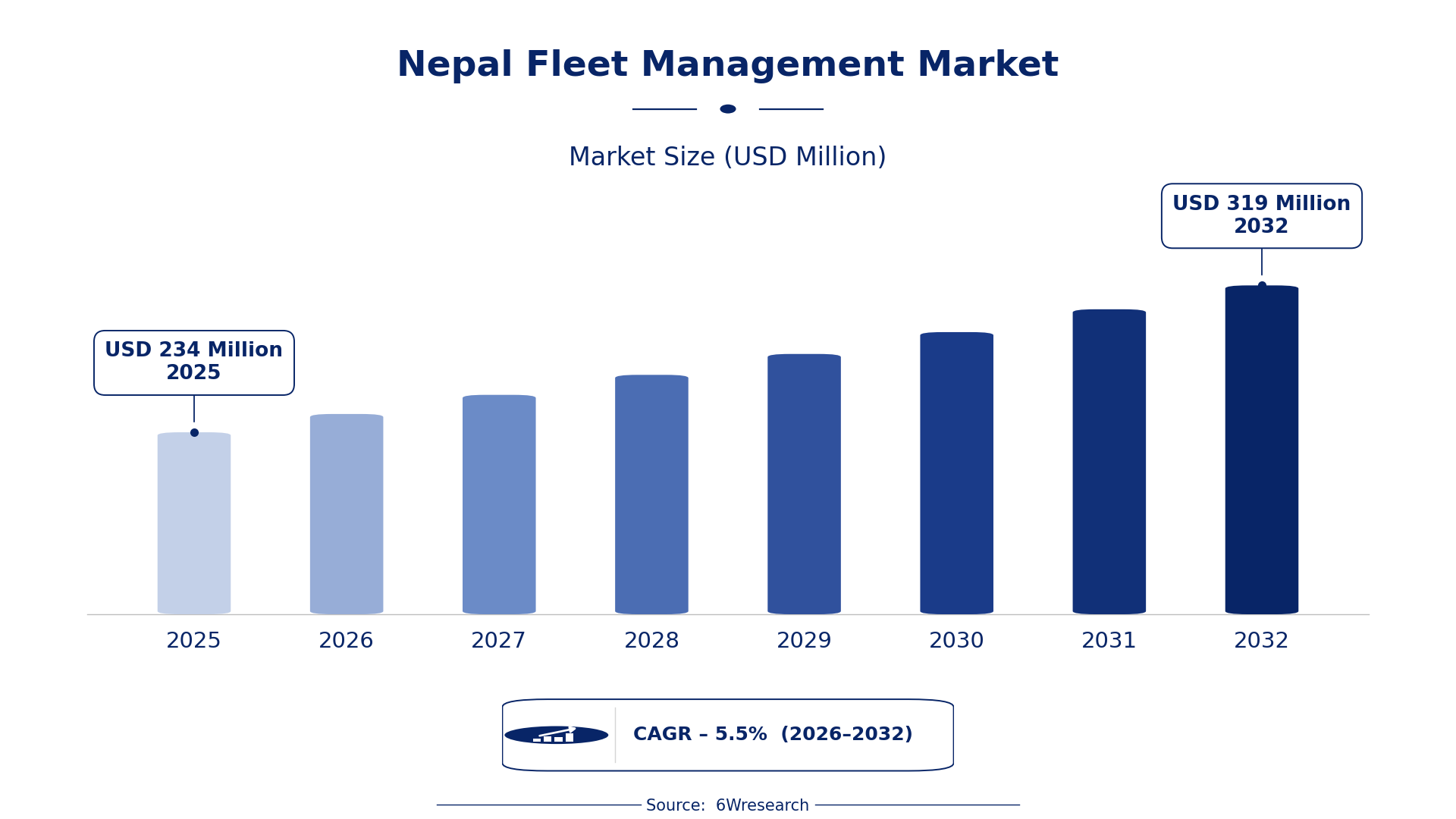
The Nepal Fleet Management Market was estimated at USD 234 Million in 2025 and is projected to reach USD 319 Million by 2032, growing at a CAGR of 5.5% from 2026 to 2032.
Nepal Fleet Management Market Synopsis
The Nepal Fleet Management Market has gained momentum in recent years, driven by advancements in technology and increasing demands for operational efficiency. As industries such as logistics, transportation, and construction expand, the adoption of fleet management solutions is becoming more critical for businesses to enhance their performance.
Looking ahead, the market is set to evolve further, propelled by government policies that promote road safety and efficiency. With growing investments in infrastructure and technology, organizations are prioritizing fleet optimization, positioning themselves to respond to emerging challenges and opportunities in a competitive environment.
Nepal Fleet Management Market Year-wise Growth Rate and Key Drivers
This graph illustrates the annual growth rates of the Nepal Fleet Management Market from 2021 to 2032, highlighting a steady upward trajectory and projected expansion over the forecast period.
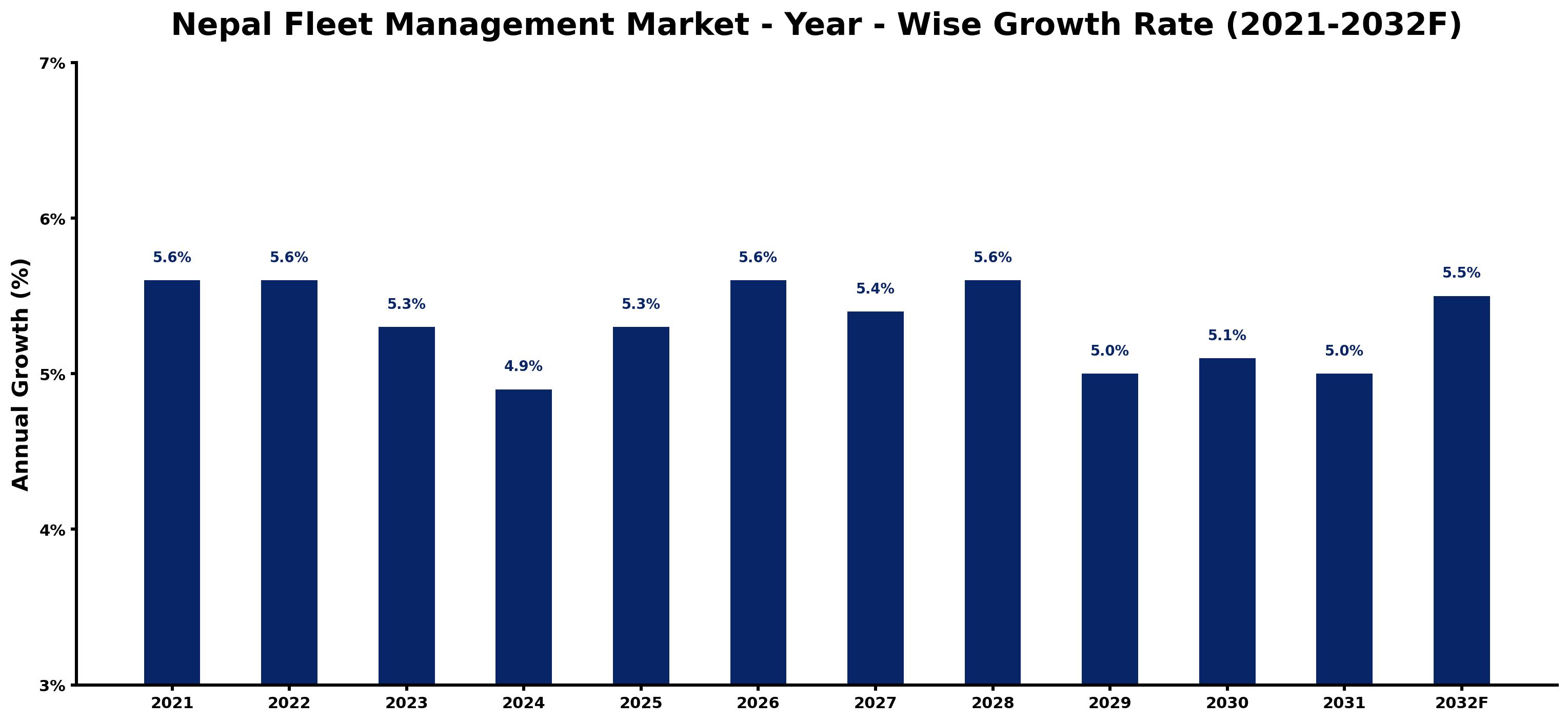
The table below presents the year‑wise growth rates along with the key drivers influencing the market
| Year | Growth Rate | Major Drivers |
| 2021 | 5.6% | Government incentives for clean vehicle technologies |
| 2022 | 5.6% | Increased adoption of GPS technology in urban logistics |
| 2023 | 5.3% | Growing tourism boosting demand for transport fleet management |
| 2024 | 4.9% | Regulatory push for fuel efficiency standards by Nepal's DOE |
| 2025 | 5.3% | Surge in e-commerce driving last-mile fleet tracking needs |
| 2026 | 5.6% | Regional partnerships enhancing cross-border transportation solutions |
| 2027 | 5.4% | Rise of transport startup ecosystem in Kathmandu Valley |
| 2028 | 5.6% | National roads improvement projects expanding fleet operation areas |
| 2029 | 5.0% | Shift towards electric vehicles supported by local initiatives |
| 2030 | 5.1% | Increased smartphone penetration improving fleet management access |
| 2031 | 5.0% | Growing focus on logistics efficiency in rural areas |
| 2032 | 5.5% | Government policies encouraging public transport digitalization |
Note: Market size estimations and growth projections presented in this report are based on 6Wresearch's proprietary forecasting methodology, utilizing the latest available industry data, government publications, and primary research inputs.
Nepal Fleet Management Market Key Takeaways
Below are some of the specific key takeaways from the market, including:
- Adoption of advanced telematics solutions is transforming fleet operations across various sectors.
- Government initiatives are crucial for fostering a safer and more efficient fleet management ecosystem.
- Cloud-based fleet management solutions are increasingly popular for data analysis and decision-making.
- Rising focus on eco-friendly vehicles is influencing market dynamics.
- Investment opportunities are emerging as businesses seek tailored fleet management solutions.
Evaluation of Restraints in Nepal Fleet Management Market
The Nepal Fleet Management Market faces notable challenges that hinder its growth potential. Poor infrastructure and challenging terrain significantly impact the ability to monitor and manage fleets effectively. Real-time tracking becomes complicated in areas where road conditions are unreliable.
Additionally, the absence of standardized systems leads to inefficiencies, making it difficult for companies, especially smaller ones, to invest in fleet management solutions. The high costs associated with implementing these systems can deter businesses from adopting necessary technologies, further stalling market growth.
Nepal Fleet Management Market Trends
Several trends are shaping the future of the Nepal Fleet Management Market. Advanced telematics technologies are gaining traction, allowing for real-time tracking and improved fleet efficiency. GPS integration is becoming standard practice for route optimization, which not only enhances fuel efficiency but also ensures timely deliveries.
on top of that, there is an increasing shift towards eco-friendly vehicles, driven by both consumer demand and regulatory pressures. This trend is accompanied by a growing emphasis on driver behavior monitoring systems, aimed at enhancing safety and reducing operational costs, which collectively point to a more sustainable approach to fleet management.
Nepal Fleet Management Market Opportunities
The market offers substantial investment opportunities, particularly in the transportation, logistics, and construction sectors. With ongoing infrastructure development projects, there is a pressing need for advanced fleet tracking and optimization solutions. Businesses are increasingly focusing on operational efficiency, which opens doors for innovative technologies and services in fleet management.
Additionally, tailoring solutions to meet the unique challenges of the local market could lead to significant growth. As companies prioritize cost reduction and improved productivity, investment in fleet management software and related technologies will likely prove lucrative.
Government Initiatives in the Nepal Fleet Management Market
Government policies play a crucial role in shaping the Nepal Fleet Management Market. By prioritizing road safety and efficiency, the government is setting the groundwork for a more effective fleet management ecosystem. The introduction of regulations and incentives demonstrates the commitment to modernizing the transportation sector and promoting sustainable practices.
- A regulatory framework introduced in 2025 mandating GPS tracking systems in commercial vehicles to enhance monitoring.
- Ongoing initiatives to enforce strict speed limits and maintenance standards to improve road safety.
- Incentives for businesses adopting eco-friendly vehicles to promote sustainability in fleet operations.
- Plans for a nationwide digital infrastructure upgrade to support the integration of advanced fleet management technologies by 2028.
Future Insights of the Nepal Fleet Management Market
The future of the Nepal Fleet Management Market looks bright, driven by increasing demands for efficient logistics and transportation solutions. As businesses increasingly recognize the value of fleet management systems, there will be a sustained push for operational improvements and cost reductions. However, the market must overcome barriers such as limited awareness and the fragmentation of service providers.
In the coming years, as technological adoption accelerates and government initiatives take root, the market is expected to expand significantly. Organizations will likely invest more heavily in fleet management solutions, paving the way for innovations that cater to the evolving needs of various industries.
Nepal Fleet Management Market Latest Developments
Recent developments in the Nepal Fleet Management Market indicate a trend towards modernization and efficiency. Companies are increasingly investing in telematics and GPS technologies to enhance their operational capabilities. This push for innovation is crucial as competition intensifies across the market.
- A major technology vendor launched a new fleet management software solution in early 2025, aimed at improving data analytics capabilities for local businesses.
- A partnership between a leading regional operator and a tech startup was formed in mid-2025 to integrate IoT devices for better fleet monitoring, which is currently underway.
- Plans for a nationwide driver behavior training program were announced in late 2025, aiming to enhance safety and efficiency in fleet operations.
- By mid-2026, an initiative to provide subsidies for eco-friendly vehicle adoption is expected to launch, encouraging companies to transition to greener fleets.
Nepal Fleet Management Market - Key Attractiveness of the Report
- 10 Years of Market Numbers
- Historical Data Starting from 2022 to 2025
- Base Year: 2025
- Forecast Data until 2032
- Key Performance Indicators Impacting the Market
- Major Upcoming Developments and Projects
Key Highlights of the Report:
- Nepal Fleet Management Market Outlook
- Market Size of Nepal Fleet Management Market, 2025
- Forecast of Nepal Fleet Management Market, 2032
- Historical Data and Forecast of Nepal Fleet Management Revenues & Volume for the Period 2022-2032F
- Nepal Fleet Management Market Trend Evolution
- Nepal Fleet Management Market Drivers and Challenges
- Nepal Fleet Management Price Trends
- Nepal Fleet Management Porter's Five Forces
- Nepal Fleet Management Industry Life Cycle
- Historical Data and Forecast of Nepal Fleet Management Market Revenues & Volume By Solution for the Period 2022-2032F
- Historical Data and Forecast of Nepal Fleet Management Market Revenues & Volume By Operations Management for the Period 2022-2032F
- Historical Data and Forecast of Nepal Fleet Management Market Revenues & Volume By Vehicle Maintenance and Diagnostics for the Period 2022-2032F
- Historical Data and Forecast of Nepal Fleet Management Market Revenues & Volume By Fleet Analytics and Reporting for the Period 2022-2032F
- Historical Data and Forecast of Nepal Fleet Management Market Revenues & Volume By Deployment Type for the Period 2022-2032F
- Historical Data and Forecast of Nepal Fleet Management Market Revenues & Volume By Cloud for the Period 2022-2032F
- Historical Data and Forecast of Nepal Fleet Management Market Revenues & Volume By On-premises for the Period 2022-2032F
- Historical Data and Forecast of Nepal Fleet Management Market Revenues & Volume By Fleet Type for the Period 2022-2032F
- Historical Data and Forecast of Nepal Fleet Management Market Revenues & Volume By Commercial Fleets for the Period 2022-2032F
- Historical Data and Forecast of Nepal Fleet Management Market Revenues & Volume By Passenger Cars for the Period 2022-2032F
- Historical Data and Forecast of Nepal Fleet Management Market Revenues & Volume By Service for the Period 2022-2032F
- Historical Data and Forecast of Nepal Fleet Management Market Revenues & Volume By Professional Services for the Period 2022-2032F
- Historical Data and Forecast of Nepal Fleet Management Market Revenues & Volume By Managed Services for the Period 2022-2032F
- Historical Data and Forecast of Nepal Fleet Management Market Revenues & Volume By Vertical for the Period 2022-2032F
- Historical Data and Forecast of Nepal Fleet Management Market Revenues & Volume By Retail for the Period 2022-2032F
- Historical Data and Forecast of Nepal Fleet Management Market Revenues & Volume By Healthcare and Pharmaceutical for the Period 2022-2032F
- Historical Data and Forecast of Nepal Fleet Management Market Revenues & Volume By Construction for the Period 2022-2032F
- Historical Data and Forecast of Nepal Fleet Management Market Revenues & Volume By Transportation and Logistics for the Period 2022-2032F
- Historical Data and Forecast of Nepal Fleet Management Market Revenues & Volume By Utilities for the Period 2022-2032F
- Historical Data and Forecast of Nepal Fleet Management Market Revenues & Volume By Oil, Gas, and Mining for the Period 2022-2032F
- Historical Data and Forecast of Nepal Fleet Management Market Revenues & Volume By Government for the Period 2022-2032F
- Historical Data and Forecast of Nepal Fleet Management Market Revenues & Volume By Other Verticals for the Period 2022-2032F
- Nepal Fleet Management Import Export Trade Statistics
- Market Opportunity Assessment By Solution
- Market Opportunity Assessment By Deployment Type
- Market Opportunity Assessment By Fleet Type
- Market Opportunity Assessment By Service
- Market Opportunity Assessment By Vertical
- Nepal Fleet Management Top Companies Market Share
- Nepal Fleet Management Competitive Benchmarking By Technical and Operational Parameters
- Nepal Fleet Management Company Profiles
- Nepal Fleet Management Key Strategic Recommendations






































