Nepal LTE IoT Market Size & Growth Rate (2026-2032)
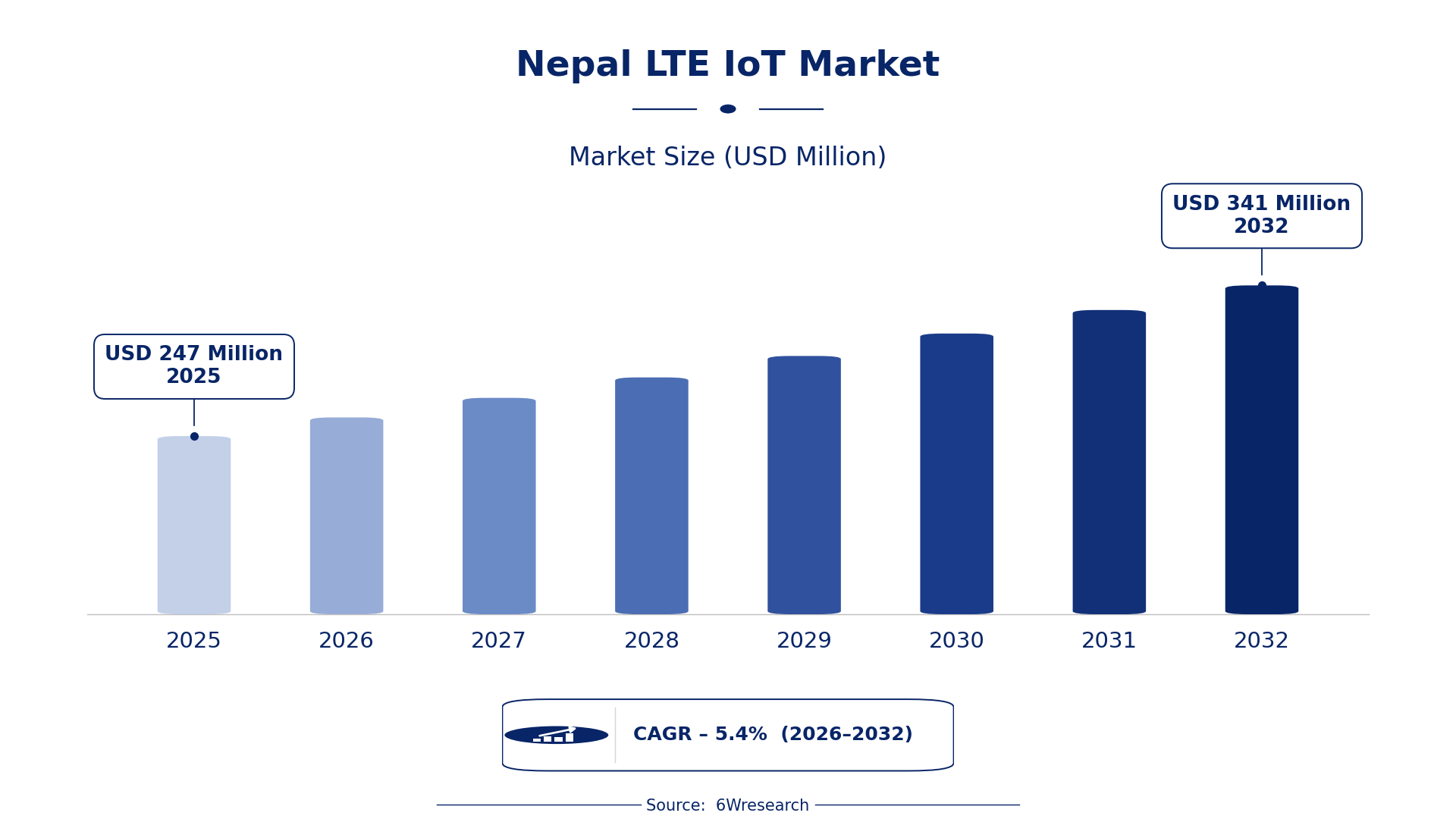
The Nepal LTE IoT Market was estimated at USD 247 Million in 2025 and is projected to reach USD 341 Million by 2032, growing at a CAGR of 5.4% from 2026 to 2032.
Nepal LTE IoT Market Synopsis
The surge in IoT device adoption across various sectors is the primary force propelling the Nepal LTE IoT market. Industries such as agriculture, healthcare, and smart cities are keenly integrating IoT solutions, driven by the need for enhanced operational efficiencies and better data-driven decision-making.
The deployment of LTE networks has created a dependable and high-speed connectivity backbone, which is essential for the effective functioning of IoT applications. This infrastructure, combined with government initiatives aimed at digital transformation, sets the stage for expansive growth and innovation within this burgeoning market.
Nepal LTE IoT Market Year-wise Growth Rate and Key Drivers
This graph illustrates the annual growth rates of the Nepal LTE IoT Market from 2021 to 2032, highlighting a steady upward trajectory and projected expansion over the forecast period.
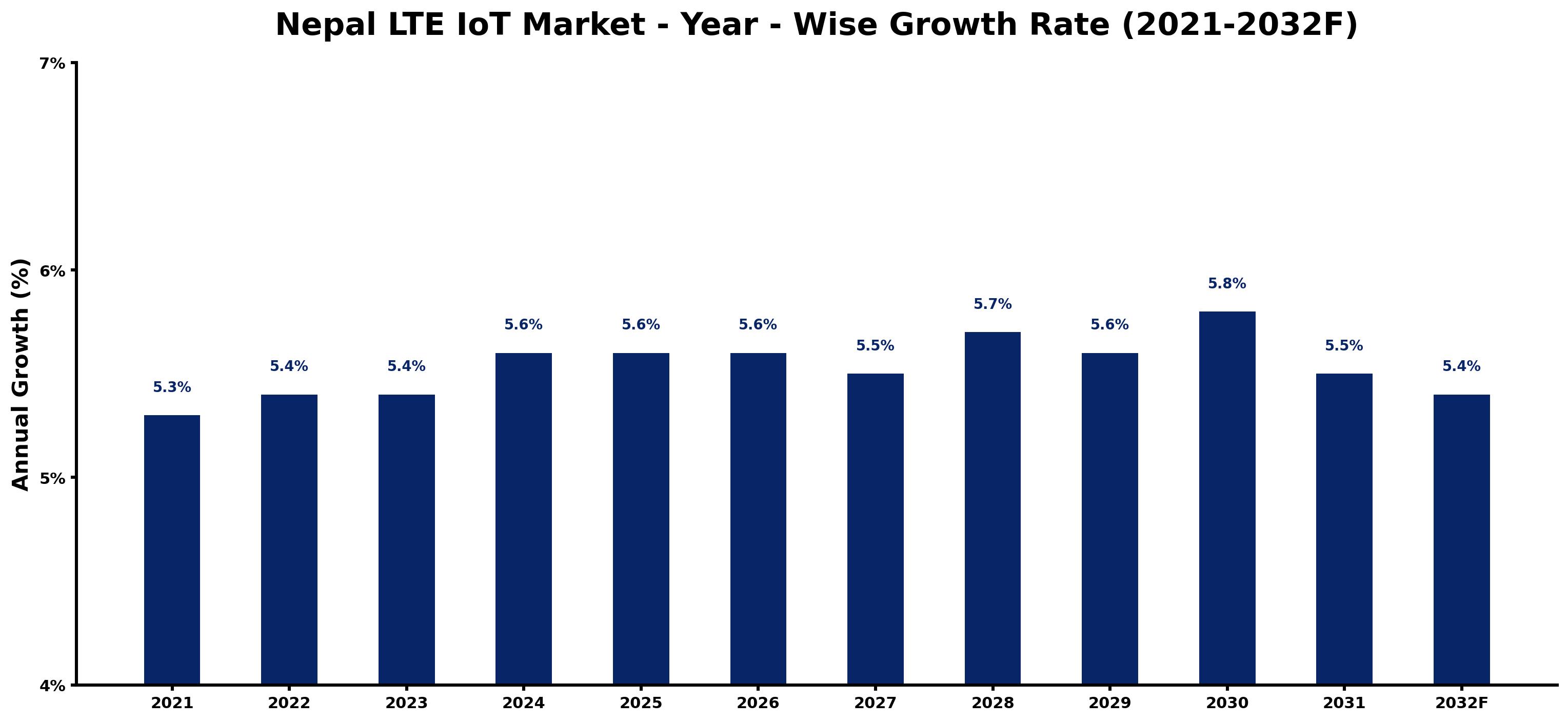
The table below presents the year‑wise growth rates along with the key drivers influencing the market
| Year | Growth Rate | Major Drivers |
| 2021 | 5.3% | Nepal Telecom's 4G expansion enhances IoT connectivity. |
| 2022 | 5.4% | Government's Digital Nepal Framework boosts IoT adoption. |
| 2023 | 5.4% | Rising agriculture technology solutions drive IoT usage. |
| 2024 | 5.6% | Smart city projects initiate demand for connected devices. |
| 2025 | 5.6% | Surge in mobile users increases IoT device deployment. |
| 2026 | 5.6% | Local startups innovate in IoT for health sector. |
| 2027 | 5.5% | Enhanced urbanization promotes smart infrastructure solutions. |
| 2028 | 5.7% | Telecom regulatory updates improve network access for IoT. |
| 2029 | 5.6% | Growing interest in renewable energy drives smart metering. |
| 2030 | 5.8% | Increased investment in disaster management IoT applications. |
| 2031 | 5.5% | Ongoing roll-out of 5G technology supports IoT growth. |
| 2032 | 5.4% | Collaboration with international tech firms expands IoT solutions. |
Note: Market size estimations and growth projections presented in this report are based on 6Wresearch's proprietary forecasting methodology, utilizing the latest available industry data, government publications, and primary research inputs.
Nepal LTE IoT Market Key Takeaways
Below are some of the specific key takeaways from the market, including:
- The market is driven by the rapid adoption of IoT devices across agriculture, healthcare, and smart cities.
- LTE networks provide vital connectivity that supports the deployment of diverse IoT applications.
- Government support is fostering an environment conducive to digital transformation initiatives.
- Challenges such as limited rural network coverage still pose obstacles to widespread adoption.
- Investment opportunities are emerging across IoT platform development and connectivity solutions.
Evaluation of Restraints in Nepal LTE IoT Market
Despite the promising prospects, the Nepal LTE IoT market faces several impediments. Limited network coverage, particularly in rural regions, restricts the reach of IoT devices, which thrive on reliable connectivity. Additionally, the high initial investment required for IoT infrastructure deters many potential adopters. There is also a notable skills gap in the market, with a shortage of technical expertise that can effectively implement and manage IoT solutions. Security and privacy concerns around data handling further complicate the landscape, creating hesitancy among businesses to fully engage with LTE IoT technologies.
Nepal LTE IoT Market Trends
Several key trends are influencing the demand for LTE IoT solutions in Nepal. First, there is a growing emphasis on cost-effective connectivity solutions, as businesses seek to maximize the return on their investments in IoT technologies. The emergence of new applications continues to reshape the market; for instance, smart agriculture and telemedicine are gaining traction. Additionally, as LTE networks expand, the overall IoT ecosystem is becoming increasingly interconnected and efficient, making the technology more appealing to potential users.
Nepal LTE IoT Market Opportunities
Investment opportunities within the Nepal LTE IoT market are abundant. Industries such as agriculture are ripe for disruption through smart farming technologies, while healthcare is embracing IoT for telehealth solutions and remote patient monitoring. The potential for partnerships with local telecom operators can facilitate market entry and help expand IoT infrastructure. Furthermore, specialized services aimed at solving localized needs present additional avenues for growth, especially as businesses recognize the value of real-time data and improved operational efficiency.
Government Initiatives in the Nepal LTE IoT Market
Government policy plays a crucial role in shaping the development of the Nepal LTE IoT market. The state is actively promoting the adoption of IoT technologies through various initiatives, recognizing the economic potential they harbor. A supportive regulatory environment and dedicated programs for infrastructure development are making it easier for stakeholders to navigate the complexities of this evolving market.
- A national digital infrastructure upgrade program has recently been initiated, focusing on expanding LTE network coverage to underserved areas.
- A regulatory framework was introduced in early 2025 to facilitate better data privacy and security practices for IoT devices.
- Ongoing collaborations between government agencies and industry stakeholders aim to enhance IoT service deployment across critical sectors.
- Plans for a public-private partnership to develop smart city initiatives are currently underway, expected to materialize by 2027.
- Future policies are being formulated to incentivize businesses adopting IoT solutions and technology innovations.
Future Insights of the Nepal LTE IoT Market
Looking ahead to 2026-2032, the Nepal LTE IoT market is set for significant advancements as businesses increasingly recognize the value of connectivity and data analytics. As LTE networks enhance their coverage and capacity, we can expect a rise in the deployment of smart solutions tailored to local needs. Government initiatives focused on infrastructure development and technology integration will further drive market growth. However, stakeholders must remain vigilant to address existing challenges such as data security and connectivity limitations to maximize the potential of LTE IoT technology.
Nepal LTE IoT Market Latest Developments
Recent developments in the Nepal LTE IoT market indicate a heightened focus on technological innovation and infrastructure enhancement. Various stakeholders are actively launching initiatives that reflect the growing demand for smart solutions across multiple sectors.
- A major technology vendor completed the rollout of new IoT sensors in early 2025, targeting smart agriculture applications.
- Current initiatives include a multi-phase expansion of LTE network capacity, aimed at bolstering connectivity for urban and rural areas.
- A planned rollout for an integrated IoT platform expected to launch in late 2026 aims to streamline data collection and management for businesses.
- New partnerships formed in Q3 2025 between local telecom operators and agricultural cooperatives are focusing on deploying precision farming solutions.
- A pilot program for smart healthcare monitoring devices is currently underway, showcasing IoT's potential in enhancing patient care in urban hospitals.
Nepal LTE IoT Market - Key Attractiveness of the Report
- 10 Years of Market Numbers
- Historical Data Starting from 2022 to 2025
- Base Year: 2025
- Forecast Data until 2032
- Key Performance Indicators Impacting the Market
- Major Upcoming Developments and Projects
Key Highlights of the Report:
- Nepal LTE IoT Market Outlook
- Market Size of Nepal LTE IoT Market, 2025
- Forecast of Nepal LTE IoT Market, 2032
- Historical Data and Forecast of Nepal LTE IoT Revenues & Volume for the Period 2022-2032F
- Nepal LTE IoT Market Trend Evolution
- Nepal LTE IoT Market Drivers and Challenges
- Nepal LTE IoT Price Trends
- Nepal LTE IoT Porter's Five Forces
- Nepal LTE IoT Industry Life Cycle
- Historical Data and Forecast of Nepal LTE IoT Market Revenues & Volume By Technology for the Period 2022-2032F
- Historical Data and Forecast of Nepal LTE IoT Market Revenues & Volume By NB-IoT for the Period 2022-2032F
- Historical Data and Forecast of Nepal LTE IoT Market Revenues & Volume By LTE-M for the Period 2022-2032F
- Historical Data and Forecast of Nepal LTE IoT Market Revenues & Volume By Service for the Period 2022-2032F
- Historical Data and Forecast of Nepal LTE IoT Market Revenues & Volume By Professional Services for the Period 2022-2032F
- Historical Data and Forecast of Nepal LTE IoT Market Revenues & Volume By Managed Services for the Period 2022-2032F
- Historical Data and Forecast of Nepal LTE IoT Market Revenues & Volume By Industry for the Period 2022-2032F
- Historical Data and Forecast of Nepal LTE IoT Market Revenues & Volume By Manufacturing for the Period 2022-2032F
- Historical Data and Forecast of Nepal LTE IoT Market Revenues & Volume By Energy and utilities for the Period 2022-2032F
- Historical Data and Forecast of Nepal LTE IoT Market Revenues & Volume By Transportation and logistics for the Period 2022-2032F
- Historical Data and Forecast of Nepal LTE IoT Market Revenues & Volume By Healthcare for the Period 2022-2032F
- Historical Data and Forecast of Nepal LTE IoT Market Revenues & Volume By Agriculture for the Period 2022-2032F
- Nepal LTE IoT Import Export Trade Statistics
- Market Opportunity Assessment By Technology
- Market Opportunity Assessment By Service
- Market Opportunity Assessment By Industry
- Nepal LTE IoT Top Companies Market Share
- Nepal LTE IoT Competitive Benchmarking By Technical and Operational Parameters
- Nepal LTE IoT Company Profiles
- Nepal LTE IoT Key Strategic Recommendations






































