Nepal Melamine Market Size Growth Rate
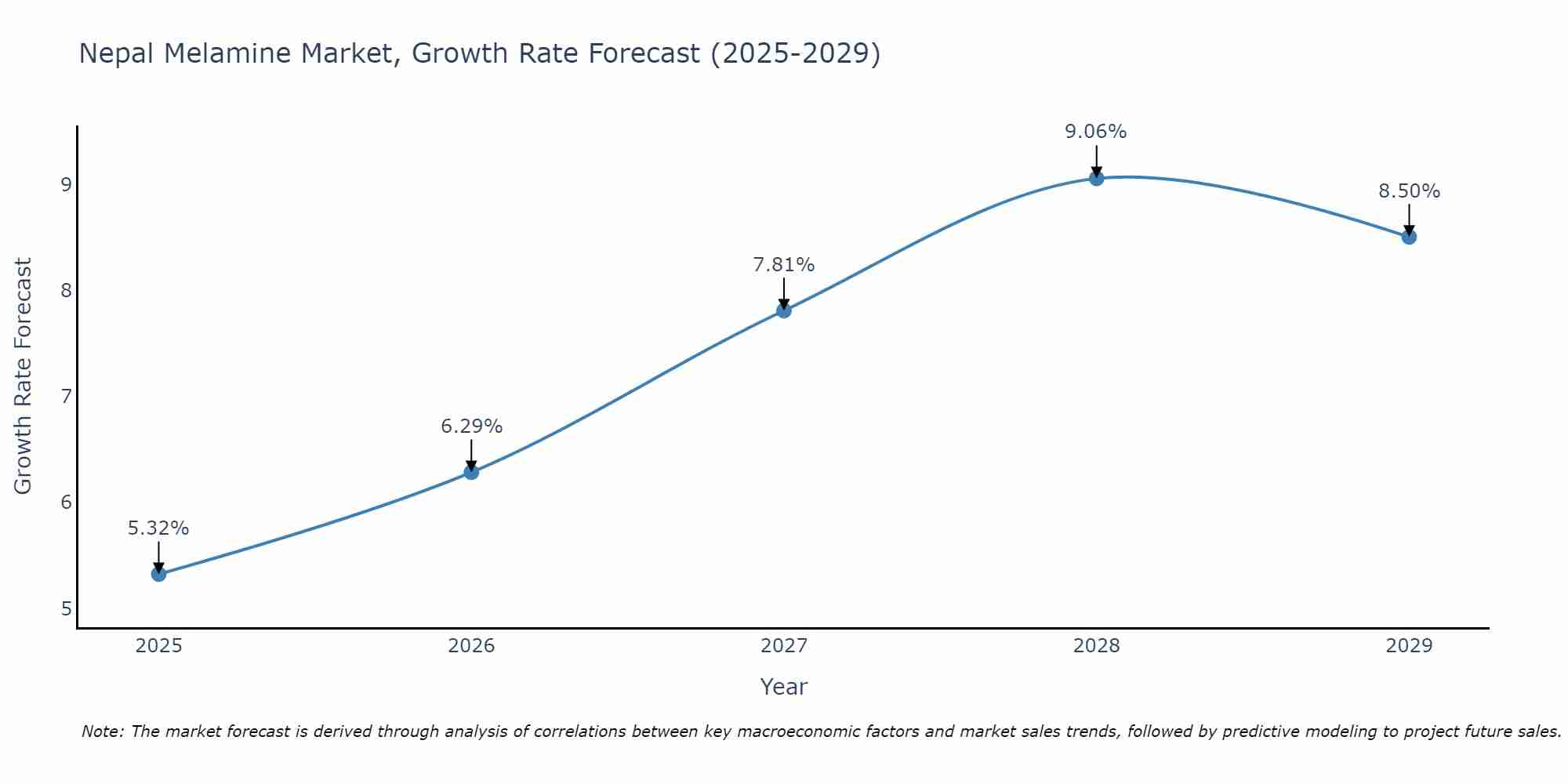
The Nepal Melamine Market is projected to witness mixed growth rate patterns during 2025 to 2029. Starting at 5.32% in 2025, the market peaks at 9.06% in 2028, and settles at 8.50% by 2029.
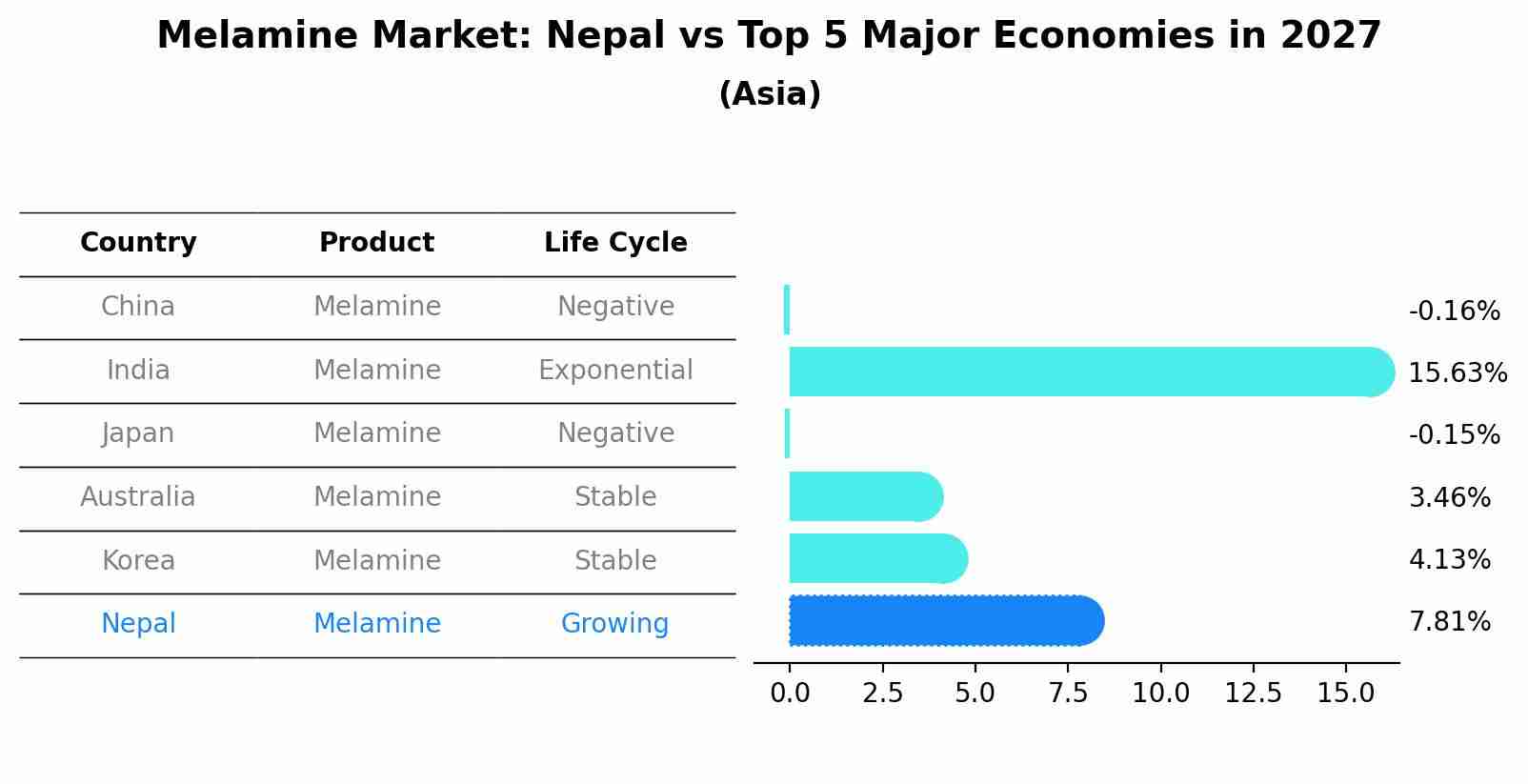
Melamine Market: Nepal vs Top 5 Major Economies in 2027 (Asia)
Nepal's Melamine market is anticipated to experience a growing growth rate of 7.81% by 2027, reflecting trends observed in the largest economy China, followed by India, Japan, Australia and South Korea.
Nepal Melamine Market Overview
The Nepal melamine market is experiencing steady growth due to the expanding food and beverage industry, increasing demand for melamine tableware, and the growing popularity of home decor products. Melamine, a versatile chemical compound used in the production of durable and heat-resistant plastics, is widely utilized in the manufacturing of plates, cups, and bowls in Nepal. The market is also driven by the rising disposable income of consumers, which has led to an uptick in spending on household goods. Additionally, the trend towards eco-friendly and sustainable products has prompted manufacturers to offer melamine-based items as a more durable and long-lasting alternative to traditional dinnerware. Overall, the Nepal melamine market is poised for further growth as it caters to the evolving preferences and lifestyles of consumers in the country.
Nepal Melamine Market Trends
The Nepal Melamine market is experiencing growth due to increasing demand from the construction and home decor industries. With the rising trend of modern interior design, melamine products such as tableware, kitchenware, and furniture are becoming popular among consumers. Manufacturers are focusing on introducing innovative designs and patterns to cater to changing consumer preferences. Additionally, the growing awareness about the durability and cost-effectiveness of melamine products is driving market growth. However, fluctuating raw material prices and competition from alternative materials like ceramic and glass are challenges faced by the market. Overall, the Nepal Melamine market is projected to continue its upward trajectory in the coming years as the demand for stylish and functional household products remains strong.
Nepal Melamine Market Challenges
In the Nepal Melamine market, some of the key challenges faced include intense competition from both domestic and international manufacturers, fluctuating prices of raw materials such as urea and formaldehyde, inadequate infrastructure for storage and transportation, and limited awareness among consumers about the benefits of melamine products. Additionally, the market faces issues related to inconsistent quality standards, which can impact consumer confidence and hinder market growth. Furthermore, the reliance on imports for raw materials and machinery adds complexity to the supply chain and exposes the market to external factors like exchange rate fluctuations and trade policies. Overall, addressing these challenges will require strategic planning, quality control measures, investment in infrastructure, and educational initiatives to increase awareness and demand for melamine products in Nepal.
Nepal Melamine Market Investment Opportunities
The Nepal Melamine Market presents promising investment opportunities due to the increasing demand for melamine in the country`s booming construction and infrastructure sectors. With the growing population and rapid urbanization in Nepal, there is a rising need for melamine-based products such as laminates, tableware, and kitchenware. Investors could consider opportunities in establishing manufacturing facilities for melamine products, distributing imported melamine products, or investing in melamine raw material supply chains. Additionally, investing in research and development to introduce innovative melamine products tailored to the local market preferences could also be a strategic move. Overall, the Nepal Melamine Market offers potential for growth and profitability for investors looking to capitalize on the country`s expanding construction and consumer goods industries.
Nepal Melamine Market Government Policy
The Nepalese government has implemented strict regulations regarding the use of melamine in food products to ensure consumer safety and prevent health hazards. The government has set maximum allowable limits for melamine content in various food items, particularly in dairy products and infant formula. Producers and importers are required to comply with these regulations and undergo regular testing to ensure their products meet the safety standards. Additionally, the government has put in place monitoring and enforcement mechanisms to crack down on any violations of these regulations. Overall, the government`s policies aim to safeguard public health and maintain the integrity of the Nepal Melamine Market by promoting transparency and accountability among industry stakeholders.
Nepal Melamine Market Future Outlook
The future outlook for the Nepal Melamine Market appears promising as demand for melamine continues to grow in the country due to its widespread use in the construction, furniture, and packaging industries. With the increasing disposable income and urbanization in Nepal, there is a rising trend towards modernization and aesthetic appeal, driving the demand for melamine products. Additionally, the government`s focus on infrastructure development and the construction sector is expected to further boost the market. However, challenges such as competition from alternative materials and fluctuating raw material prices may impact the market`s growth. Overall, the Nepal Melamine Market is poised for expansion in the coming years, offering opportunities for businesses to capitalize on the growing demand.
Key Highlights of the Report:
- Nepal Melamine Market Outlook
- Market Size of Nepal Melamine Market, 2021
- Forecast of Nepal Melamine Market, 2031
- Historical Data and Forecast of Nepal Melamine Revenues & Volume for the Period 2021 - 2031
- Nepal Melamine Market Trend Evolution
- Nepal Melamine Market Drivers and Challenges
- Nepal Melamine Price Trends
- Nepal Melamine Porter's Five Forces
- Nepal Melamine Industry Life Cycle
- Historical Data and Forecast of Nepal Melamine Market Revenues & Volume By Forms for the Period 2021 - 2031
- Historical Data and Forecast of Nepal Melamine Market Revenues & Volume By Melamine Resin for the Period 2021 - 2031
- Historical Data and Forecast of Nepal Melamine Market Revenues & Volume By Melamine Foams for the Period 2021 - 2031
- Historical Data and Forecast of Nepal Melamine Market Revenues & Volume By Applications for the Period 2021 - 2031
- Historical Data and Forecast of Nepal Melamine Market Revenues & Volume By Laminates for the Period 2021 - 2031
- Historical Data and Forecast of Nepal Melamine Market Revenues & Volume By Wood Adhesives for the Period 2021 - 2031
- Historical Data and Forecast of Nepal Melamine Market Revenues & Volume By Surface Coatings for the Period 2021 - 2031
- Historical Data and Forecast of Nepal Melamine Market Revenues & Volume By Thermoset Plastics for the Period 2021 - 2031
- Historical Data and Forecast of Nepal Melamine Market Revenues & Volume By End-users for the Period 2021 - 2031
- Historical Data and Forecast of Nepal Melamine Market Revenues & Volume By Construction for the Period 2021 - 2031
- Historical Data and Forecast of Nepal Melamine Market Revenues & Volume By Chemical for the Period 2021 - 2031
- Historical Data and Forecast of Nepal Melamine Market Revenues & Volume By Textile for the Period 2021 - 2031
- Historical Data and Forecast of Nepal Melamine Market Revenues & Volume By Automotive for the Period 2021 - 2031
- Nepal Melamine Import Export Trade Statistics
- Market Opportunity Assessment By Forms
- Market Opportunity Assessment By Applications
- Market Opportunity Assessment By End-users
- Nepal Melamine Top Companies Market Share
- Nepal Melamine Competitive Benchmarking By Technical and Operational Parameters
- Nepal Melamine Company Profiles
- Nepal Melamine Key Strategic Recommendations






































