Nepal Natural Fragrance Market Size, Share & Growth Rate
The Nepal Natural Fragrance Market was estimated at USD 1191 Million in 2025 and is projected to reach USD 1715 Million by 2032, growing at a CAGR of 5.3% from 2026 to 2032. This growth is significantly influenced by the increasing consumer preference for organic and sustainable products, which is prompting a shift away from synthetic alternatives. As awareness grows regarding the health impacts of chemical ingredients, the demand for traditional and authentic fragrances derived from Nepal's rich biodiversity is intensifying.
Nepal Natural Fragrance Market Year-wise Growth Rate and Key Drivers
This graph highlights how the Nepal Natural Fragrance Market has steadily grown over the years, supported by major growth factors.
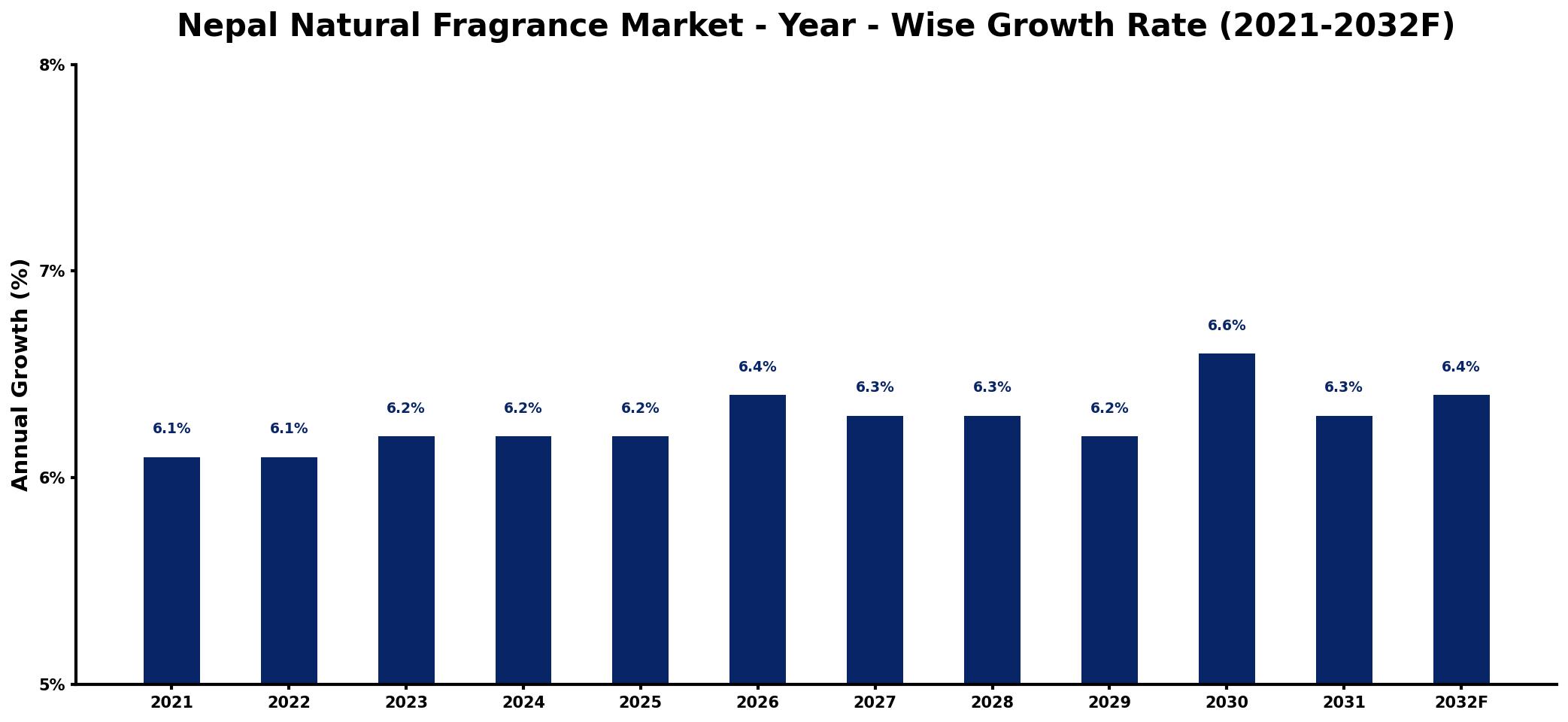
The table below presents the year‑wise growth rates along with the key drivers influencing the market
| Year | Growth Rate | Major Drivers |
| 2021 | 6.1% | Rising consumer awareness trends |
| 2022 | 6.1% | Increased e-commerce adoption rates |
| 2023 | 6.2% | Growth in wellness sector investments |
| 2024 | 6.2% | Expansion of local production facilities |
| 2025 | 6.2% | Emerging market potential realization |
| 2026 | 6.4% | Strengthening export market opportunities |
| 2027 | 6.3% | Surge in tourism-related sales |
| 2028 | 6.3% | Rise in organic product demand |
| 2029 | 6.2% | Growing influence of social media |
| 2030 | 6.6% | Increased focus on sustainability practices |
| 2031 | 6.3% | Diversification of retail distribution channels |
| 2032 | 6.4% | Expanding global market collaborations |
Note: Market size estimations and growth projections presented in this report are based on 6Wresearch's proprietary forecasting methodology, utilizing the latest available industry data, government publications, and primary research inputs.
Nepal Natural Fragrance Market Synopsis
The Nepal Natural Fragrance Market is characterized by its unique offerings, including natural perfumes, essential oils, and incense sticks crafted from local ingredients such as Himalayan herbs and flowers. This rich supply chain not only supports local economies but also emphasizes sustainable harvesting practices that preserve Nepal's flora.
With consumers increasingly leaning towards natural products, the market reflects a robust growth trajectory. The resurgence of traditional extraction methods ensures the authenticity and purity of the fragrances, appealing to a consumer base that values quality over quantity.
Nepal Natural Fragrance Market Key Takeaways
- The market is driven by a growing preference for natural and organic fragrances among consumers.
- Nepal's unique biodiversity provides an abundant supply of high-quality raw materials.
- Increased awareness of the harmful effects of synthetic fragrances is shifting consumer behavior.
- Traditional extraction methods are gaining traction, ensuring product authenticity.
- Government support is fostering a sustainable framework for the natural fragrance industry.
Evaluation of Restraints in Nepal Natural Fragrance Market
Despite its growth potential, the Nepal Natural Fragrance Market faces several constraints. Limited access to high-quality raw materials presents challenges, given the country's geographical intricacies. Supply chain inconsistencies can lead to production delays, while some consumers remain unaware of the benefits of natural fragrances. Additionally, the market contends with competition from more affordable synthetic alternatives, making it crucial for stakeholders to elevate awareness and educate consumers on the value of natural products.
Nepal Natural Fragrance Market Trends
The market is witnessing an uptick in the demand for traditional fragrances like sandalwood and cedarwood, reflecting a consumer shift towards unique, culturally-relevant scents. Essential oils are gaining popularity not just for their aromatic qualities but also for their wellness benefits. Eco-friendly packaging and ethical sourcing are becoming key priorities among consumers and manufacturers alike, reinforcing the markets trajectory towards sustainable and environmentally conscious practices.
Nepal Natural Fragrance Market Opportunities
Significant investment opportunities lie within the cultivation and processing of Nepal's indigenous flora, presenting a unique chance for investors to tap into a growing global appetite for natural products. The development of niche fragrance lines, particularly those emphasizing sustainability and eco-friendliness, can capture the attention of discerning consumers. Furthermore, exploring export markets can enhance growth prospects, allowing stakeholders to harness the rising global trend favoring natural beauty and wellness products.
Government Initiatives in the Nepal Natural Fragrance Market
The Nepalese government has introduced policies designed to bolster the natural fragrance market by promoting sustainable harvesting and establishing quality standards for products. These initiatives not only support local entrepreneurs through financial assistance and training but also aim to preserve indigenous plant species and traditional practices. By fostering an environment conducive to growth, these government actions help ensure the long-term sustainability of the market.
Future Insights of the Nepal Natural Fragrance Market
Looking towards 2026-2032, the Nepal Natural Fragrance Market is expected to thrive as consumer awareness about synthetic fragrance alternatives continues to increase. With Nepal's deep-rooted heritage in producing high-quality natural fragrances and essential oils, the country stands at a pivotal moment to leverage these assets. A growing focus on wellness practices, alongside the demand for ethically sourced and environmentally friendly products, will drive innovation and expansion in this promising sector.
Nepal Natural Fragrance Market Latest Developments (2025 - 2026)
In recent months, the Nepal Natural Fragrance Market has seen an increase in collaborative efforts among local producers to enhance quality control and promote fair trade practices. There has been a notable rise in educational campaigns aimed at consumers to highlight the benefits of natural fragrances over synthetic options. The market is also adapting to evolving consumer preferences by innovating product formulations and enhancing marketing strategies that resonate with eco-conscious buyers.
Nepal Natural Fragrance Market - Key Attractiveness of the Report
- 10 Years of Market Numbers
- Historical Data Starting from 2022 to 2025
- Base Year: 2025
- Forecast Data until 2032
- Key Performance Indicators Impacting the Market
- Major Upcoming Developments and Projects
Key Highlights of the Report:
- Nepal Natural Fragrance Market Outlook
- Market Size of Nepal Natural Fragrance Market, 2025
- Forecast of Nepal Natural Fragrance Market, 2032
- Historical Data and Forecast of Nepal Natural Fragrance Revenues & Volume for the Period 2022-2032F
- Nepal Natural Fragrance Market Trend Evolution
- Nepal Natural Fragrance Market Drivers and Challenges
- Nepal Natural Fragrance Price Trends
- Nepal Natural Fragrance Porter's Five Forces
- Nepal Natural Fragrance Industry Life Cycle
- Historical Data and Forecast of Nepal Natural Fragrance Market Revenues & Volume By Ingredient for the Period 2022-2032F
- Historical Data and Forecast of Nepal Natural Fragrance Market Revenues & Volume By Essential Oils for the Period 2022-2032F
- Historical Data and Forecast of Nepal Natural Fragrance Market Revenues & Volume By Natural Extracts for the Period 2022-2032F
- Historical Data and Forecast of Nepal Natural Fragrance Market Revenues & Volume By Type for the Period 2022-2032F
- Historical Data and Forecast of Nepal Natural Fragrance Market Revenues & Volume By Top note for the Period 2022-2032F
- Historical Data and Forecast of Nepal Natural Fragrance Market Revenues & Volume By Middle Note for the Period 2022-2032F
- Historical Data and Forecast of Nepal Natural Fragrance Market Revenues & Volume By Base Note for the Period 2022-2032F
- Historical Data and Forecast of Nepal Natural Fragrance Market Revenues & Volume By Application for the Period 2022-2032F
- Historical Data and Forecast of Nepal Natural Fragrance Market Revenues & Volume By Fine Fragrances for the Period 2022-2032F
- Historical Data and Forecast of Nepal Natural Fragrance Market Revenues & Volume By Personal Care & Cosmetics for the Period 2022-2032F
- Historical Data and Forecast of Nepal Natural Fragrance Market Revenues & Volume By Household Care for the Period 2022-2032F
- Nepal Natural Fragrance Import Export Trade Statistics
- Market Opportunity Assessment By Ingredient
- Market Opportunity Assessment By Type
- Market Opportunity Assessment By Application
- Nepal Natural Fragrance Top Companies Market Share
- Nepal Natural Fragrance Competitive Benchmarking By Technical and Operational Parameters
- Nepal Natural Fragrance Company Profiles
- Nepal Natural Fragrance Key Strategic Recommendations






































