Nepal Nuclear Medicine Radioisotopes Market Size, Share & Growth Rate
The Nepal Nuclear Medicine Radioisotopes Market was estimated at USD 484 Million in 2025 and is projected to reach USD 652 Million by 2032, growing at a CAGR of 4.3% from 2026 to 2032. This steady growth trajectory is driven primarily by the increasing prevalence of cancer and cardiovascular diseases, leading to greater utilization of radioisotopes in diagnostic and therapeutic applications. Furthermore, technological advancements and heightened awareness among both healthcare professionals and patients regarding the benefits of nuclear medicine are expected to bolster market expansion.
Nepal Nuclear Medicine Radioisotopes Market Year-wise Growth Rate and Key Drivers
This graph highlights how the Nepal Nuclear Medicine Radioisotopes Market has steadily grown over the years, supported by major growth factors.
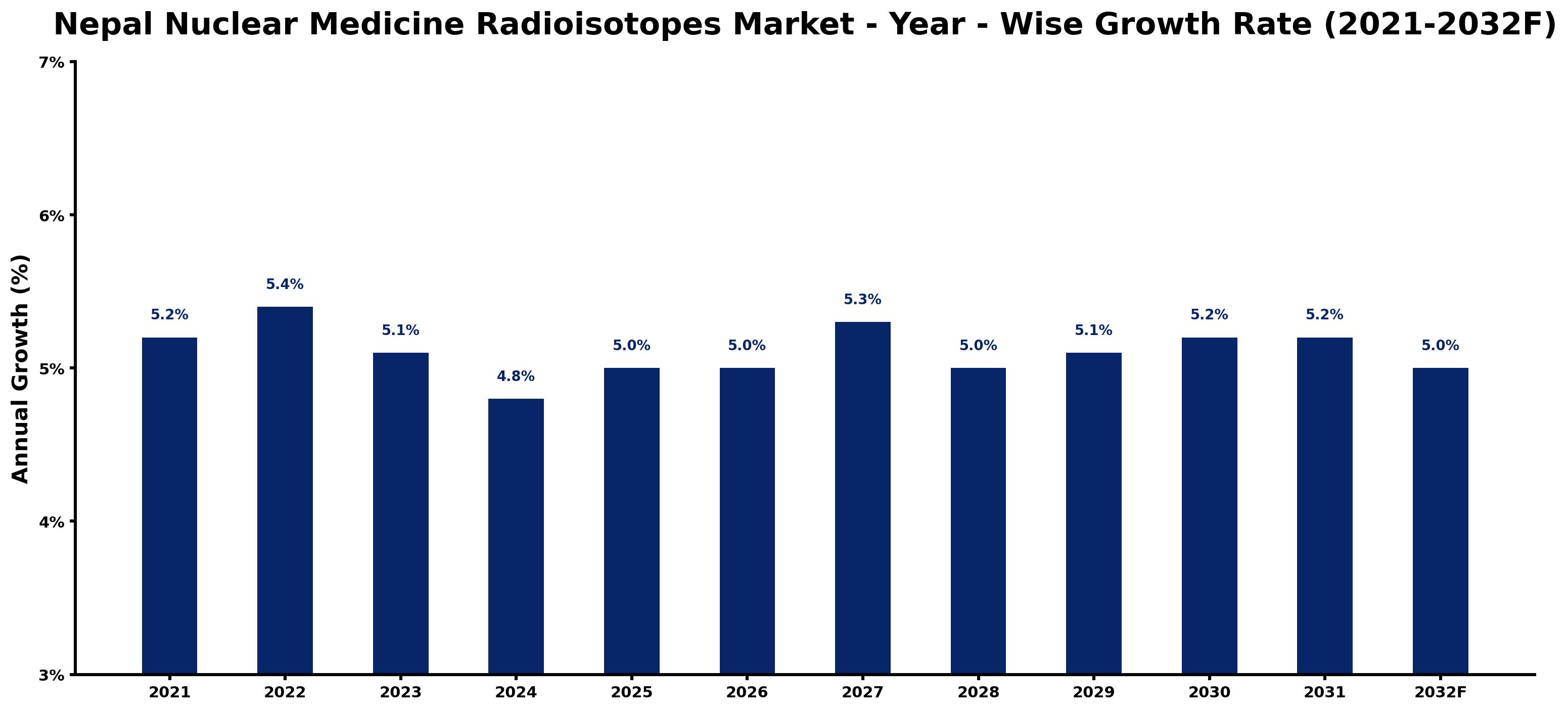
The table below presents the year‑wise growth rates along with the key drivers influencing the market
| Year | Growth Rate | Major Drivers |
| 2021 | 5.2% | increased healthcare investment initiatives |
| 2022 | 5.4% | growing demand for diagnostics services |
| 2023 | 5.1% | expansion of healthcare infrastructure projects |
| 2024 | 4.8% | rising prevalence of chronic diseases |
| 2025 | 5.0% | enhanced research and development funding |
| 2026 | 5.0% | strengthening partnerships with hospitals |
| 2027 | 5.3% | increased awareness of early detection |
| 2028 | 5.0% | growing utilization of advanced technologies |
| 2029 | 5.1% | increased domestic production output |
| 2030 | 5.2% | increased government healthcare spending |
| 2031 | 5.2% | rising patient population needs |
| 2032 | 5.0% | growing focus on preventive healthcare |
Note: Market size estimations and growth projections presented in this report are based on 6Wresearch's proprietary forecasting methodology, utilizing the latest available industry data, government publications, and primary research inputs.
Nepal Nuclear Medicine Radioisotopes Market Synopsis
Recent growth in the Nepal Nuclear Medicine Radioisotopes Market reflects a significant shift towards advanced medical imaging and treatment methods. As healthcare needs evolve, the market is expected to embrace a broader scope of applications, driven by increasing demand for precision medicine.
Looking ahead, the market is likely to experience even greater growth fueled by collaborative efforts between healthcare institutions and suppliers. As regulatory frameworks are refined and infrastructure improvements are made, the landscape for nuclear medicine in Nepal promises to transform, expanding its reach and effectiveness.
Nepal Nuclear Medicine Radioisotopes Market Key Takeaways
- The market is expected to grow from USD 484 Million in 2025 to USD 652 Million by 2032.
- Increased incidence of cancer and cardiovascular diseases is driving higher demand for radioisotope applications.
- Technological advancements are paving the way for enhanced imaging techniques in diagnostics.
- Collaborations between healthcare providers and manufacturers are expanding market access.
- Government policies are aimed at enhancing safety and compliance in the nuclear medicine sector.
Evaluation of Restraints in Nepal Nuclear Medicine Radioisotopes Market
Several factors currently restrain the growth of the Nepal Nuclear Medicine Radioisotopes Market. Limited infrastructure hampers the effective distribution and administration of radioisotopes, creating barriers to patient access. Moreover, the high costs associated with importing these materials can deter healthcare facilities from integrating them into their services. A lack of specialized medical professionals trained in nuclear medicine also poses a challenge, as insufficient expertise can lead to underutilization of these advanced diagnostic tools. Additionally, regulatory hurdles surrounding safety and disposal of radioactive materials further complicate market entry for new products and services.
Nepal Nuclear Medicine Radioisotopes Market Trends
The landscape of the Nepal Nuclear Medicine Radioisotopes Market is evolving, showcasing several key trends. Notably, there is an increasing emphasis on advanced imaging techniques that leverage the benefits of radioisotopes for precise diagnostics. The market is also witnessing a surge in partnerships between hospitals and manufacturers, facilitating better access to these critical medical resources. Moreover, the integration of new technologies is likely to enhance the efficacy of nuclear medicine applications, ensuring improved patient outcomes.
Nepal Nuclear Medicine Radioisotopes Market Opportunities
Investment opportunities in the Nepal Nuclear Medicine Radioisotopes Market are ripe for exploration. The rising demand for both diagnostic and therapeutic procedures presents a unique chance for stakeholders to establish production facilities tailored for radioisotopes. Additionally, enhancing distribution networks and developing training programs for medical professionals will be essential for maximizing the potential of this growing market. Collaborations with local healthcare providers can not only improve access but also foster innovation in the development of new imaging techniques and radioisotope applications.
Government Initiatives in the Nepal Nuclear Medicine Radioisotopes Market
The Nepal government has taken significant steps to regulate the nuclear medicine sector, specifically concerning the import and use of radioisotopes. The Department of Drug Administration (DDA) is responsible for overseeing compliance with safety standards during the approval process for these materials. By establishing guidelines for the safe handling and disposal of radioactive substances, the government aims to protect public health while promoting the growth of nuclear medicine in the country. These proactive measures are crucial for maintaining quality and safety standards in healthcare delivery.
Future Insights of the Nepal Nuclear Medicine Radioisotopes Market
Looking ahead to the 2026-2032 timeframe, the Nepal Nuclear Medicine Radioisotopes Market is positioned for consistent growth. The increasing prevalence of chronic diseases, particularly cancer, will likely drive demand for advanced diagnostic and therapeutic options. Moreover, ongoing improvements in healthcare infrastructure combined with a growing acceptance of nuclear medicine by both practitioners and patients will play pivotal roles in market expansion. However, addressing the challenges of cost and the need for skilled personnel will be crucial to realizing this potential.
Nepal Nuclear Medicine Radioisotopes Market Latest Developments (2025 - 2026)
The Nepal Nuclear Medicine Radioisotopes Market has seen recent initiatives aimed at bolstering the capabilities of healthcare facilities. Investment in training programs for medical professionals has gained traction, aiming to bridge the knowledge gap in nuclear medicine. Additionally, there has been a push for technological advancements that integrate radioisotopes into everyday diagnostic procedures, enhancing their overall efficacy. These trends signal a shift towards more accessible and effective nuclear medicine services.
Nepal Nuclear Medicine Radioisotopes Market - Key Attractiveness of the Report
- 10 Years of Market Numbers
- Historical Data Starting from 2022 to 2025
- Base Year: 2025
- Forecast Data until 2032
- Key Performance Indicators Impacting the Market
- Major Upcoming Developments and Projects
Key Highlights of the Report:
- Nepal Nuclear Medicine Radioisotopes Market Outlook
- Market Size of Nepal Nuclear Medicine Radioisotopes Market, 2025
- Forecast of Nepal Nuclear Medicine Radioisotopes Market, 2032
- Historical Data and Forecast of Nepal Nuclear Medicine Radioisotopes Revenues & Volume for the Period 2022-2032F
- Nepal Nuclear Medicine Radioisotopes Market Trend Evolution
- Nepal Nuclear Medicine Radioisotopes Market Drivers and Challenges
- Nepal Nuclear Medicine Radioisotopes Price Trends
- Nepal Nuclear Medicine Radioisotopes Porter's Five Forces
- Nepal Nuclear Medicine Radioisotopes Industry Life Cycle
- Historical Data and Forecast of Nepal Nuclear Medicine Radioisotopes Market Revenues & Volume By Types for the Period 2022-2032F
- Historical Data and Forecast of Nepal Nuclear Medicine Radioisotopes Market Revenues & Volume By Technetium-99m (Tc-99m) for the Period 2022-2032F
- Historical Data and Forecast of Nepal Nuclear Medicine Radioisotopes Market Revenues & Volume By Thallium-201 (Tl-201) for the Period 2022-2032F
- Historical Data and Forecast of Nepal Nuclear Medicine Radioisotopes Market Revenues & Volume By Iodine (I-123) for the Period 2022-2032F
- Historical Data and Forecast of Nepal Nuclear Medicine Radioisotopes Market Revenues & Volume By Fluorine-18 for the Period 2022-2032F
- Historical Data and Forecast of Nepal Nuclear Medicine Radioisotopes Market Revenues & Volume By Rubidium-82 (Rb-82) for the Period 2022-2032F
- Historical Data and Forecast of Nepal Nuclear Medicine Radioisotopes Market Revenues & Volume By Iodine-131 (I-131) for the Period 2022-2032F
- Historical Data and Forecast of Nepal Nuclear Medicine Radioisotopes Market Revenues & Volume By Actinium-225 (Ac-225) for the Period 2022-2032F
- Historical Data and Forecast of Nepal Technetium-99m (Tc-99m) Nuclear Medicine Radioisotopes Market Revenues & Volume By Others for the Period 2022-2032F
- Historical Data and Forecast of Nepal Nuclear Medicine Radioisotopes Market Revenues & Volume By Application for the Period 2022-2032F
- Historical Data and Forecast of Nepal Nuclear Medicine Radioisotopes Market Revenues & Volume By Oncology for the Period 2022-2032F
- Historical Data and Forecast of Nepal Nuclear Medicine Radioisotopes Market Revenues & Volume By Cardiology for the Period 2022-2032F
- Historical Data and Forecast of Nepal Nuclear Medicine Radioisotopes Market Revenues & Volume By Thyroid for the Period 2022-2032F
- Historical Data and Forecast of Nepal Nuclear Medicine Radioisotopes Market Revenues & Volume By Neurology for the Period 2022-2032F
- Historical Data and Forecast of Nepal Nuclear Medicine Radioisotopes Market Revenues & Volume By Others for the Period 2022-2032F
- Nepal Nuclear Medicine Radioisotopes Import Export Trade Statistics
- Market Opportunity Assessment By Types
- Market Opportunity Assessment By Application
- Nepal Nuclear Medicine Radioisotopes Top Companies Market Share
- Nepal Nuclear Medicine Radioisotopes Competitive Benchmarking By Technical and Operational Parameters
- Nepal Nuclear Medicine Radioisotopes Company Profiles
- Nepal Nuclear Medicine Radioisotopes Key Strategic Recommendations






































