Nepal Piano Market Size, Share & Growth Rate
The Nepal Piano Market was estimated at USD 453 Million in 2025 and is projected to reach USD 658 Million by 2032, growing at a CAGR of 5.5% from 2026 to 2032. This growth trajectory is primarily driven by an increasing appreciation for music education and a burgeoning interest in musical performance among the youth. Additionally, rising disposable incomes are enabling more families to invest in quality instruments, further enhancing market demand.
Nepal Piano Market Year-wise Growth Rate and Key Drivers
This graph highlights how the Nepal Piano Market has steadily grown over the years, supported by major growth factors.
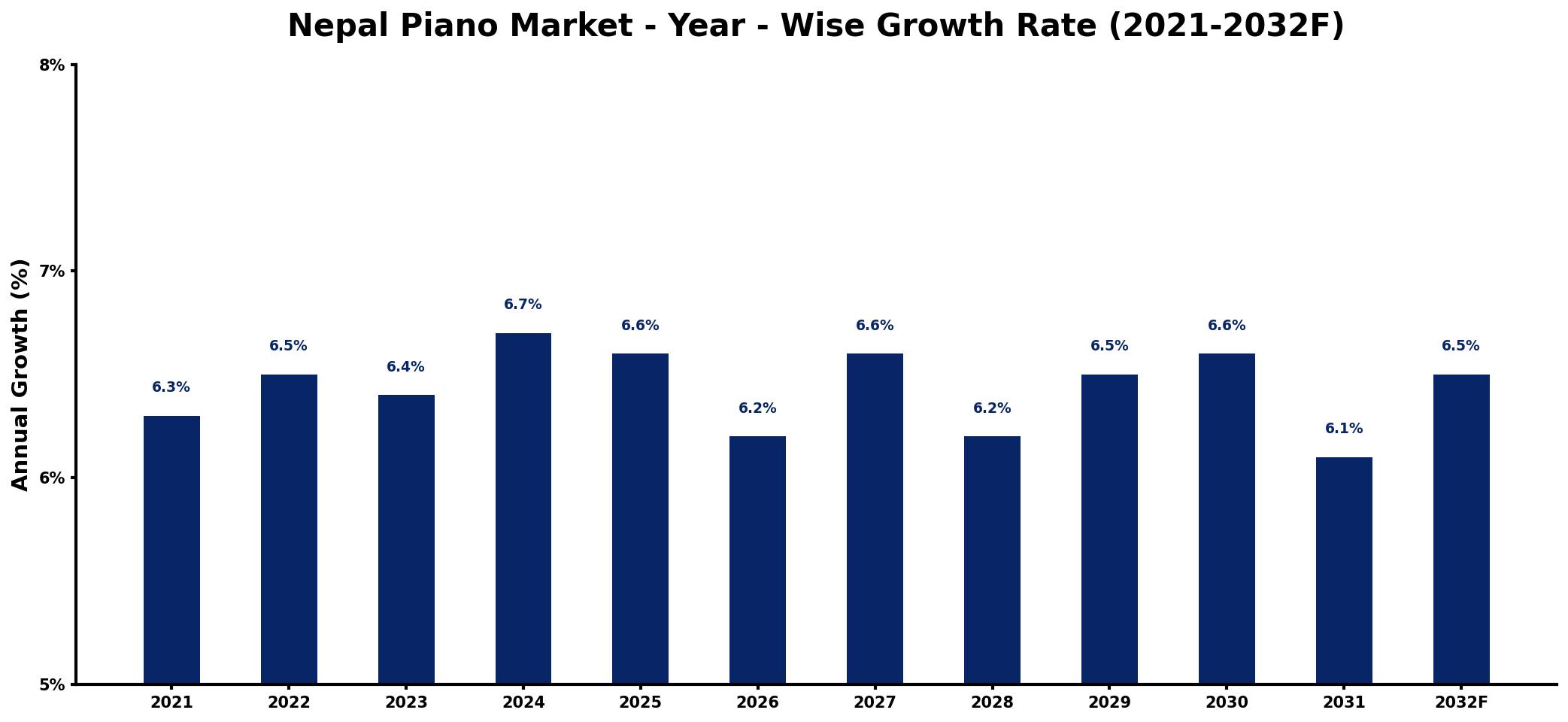
The table below presents the year‑wise growth rates along with the key drivers influencing the market
| Year | Growth Rate | Major Drivers |
| 2021 | 6.3% | Rising interest in music education |
| 2022 | 6.5% | Increased disposable income among families |
| 2023 | 6.4% | Growth of online music platforms |
| 2024 | 6.7% | enhanced product quality standards |
| 2025 | 6.6% | Expansion of music schools nationwide |
| 2026 | 6.2% | Emergence of local music competitions |
| 2027 | 6.6% | Boost in cultural exchange programs |
| 2028 | 6.2% | Increased government support for arts |
| 2029 | 6.5% | Growth in home entertainment spending |
| 2030 | 6.6% | Rise in online music tutorials |
| 2031 | 6.1% | improved processing technologies adoption |
| 2032 | 6.5% | Increased collaboration with international artists |
Note: Market size estimations and growth projections presented in this report are based on 6Wresearch's proprietary forecasting methodology, utilizing the latest available industry data, government publications, and primary research inputs.
Nepal Piano Market Synopsis
The most significant force currently shaping the Nepal Piano Market is the surge in music education across schools and private institutions. As educational frameworks increasingly incorporate music as a core subject, the demand for pianos—both digital and acoustic—is expected to rise markedly.
Moreover, cultural shifts towards Western music styles and digital formats are altering consumer preferences. This trend is leading to greater acceptance of digital pianos, which offer unique features that cater to modern musicians, especially students and hobbyists.
Nepal Piano Market Key Takeaways
- The Nepal Piano Market is projected to grow from USD 453 Million in 2025 to USD 658 Million by 2032.
- Digital pianos are increasingly preferred due to their advanced features and versatility.
- There's a growing trend towards hybrid instruments that blend acoustic and digital technologies.
- Investment opportunities are emerging due to rising interest in music education.
- Government policies influence pricing and availability through import regulations and potential local manufacturing incentives.
Evaluation of Restraints in Nepal Piano Market
The Nepal Piano Market faces several constraints that impede its growth potential. Chief among these is the relatively high cost of pianos, which limits accessibility for the average consumer. Additionally, there remains a cultural preference for traditional Nepali instruments, which can overshadow the appeal of pianos. The lack of skilled piano technicians for maintenance further complicates ownership for potential buyers, as concerns about upkeep deter some from making a purchase. Together, these factors collectively restrict market expansion.
Nepal Piano Market Trends
Current trends in the Nepal Piano Market indicate a significant shift towards digital pianos and electronic keyboards, driven by both youth interest in modern music styles and the advantages of portability. As music programs continue to evolve within schools, there is a notable rise in the popularity of entry-level digital pianos, which provide essential features at accessible price points. Hybrid pianos that offer a blend of traditional and digital attributes are also gaining traction, appealing to a wide demographic of musicians.
Nepal Piano Market Opportunities
Investment opportunities within the Nepal Piano Market appear promising as music education becomes increasingly valued. Importing and distributing high-quality pianos from reputable brands can capture an expanding consumer base. There is also potential for business growth through the provision of maintenance services, music education programs, and hosting piano events that engage the community. Overall, the evolving landscape of music appreciation presents avenues for sustainable growth.
Government Initiatives in the Nepal Piano Market
Government policies play a critical role in shaping the Nepal Piano Market. Import regulations dictate the requirements for piano imports, ensuring compliance with safety and quality standards. Taxation on imported instruments influences their pricing and overall market accessibility. Moreover, the government has begun to consider incentives aimed at fostering local manufacturing, which could ultimately bolster the domestic production of musical instruments and improve market dynamics.
Future Insights of the Nepal Piano Market
The outlook for the Nepal Piano Market through 2026-2032 appears optimistic. The increasing integration of music education within academic curricula, along with rising disposable income, suggests a consistent demand for quality pianos. As consumer preferences shift towards digital solutions, manufacturers and distributors that adapt to these changes will likely thrive. Nonetheless, education about the benefits of learning piano remains vital for stimulating further interest and ownership.
Nepal Piano Market Latest Developments (2025 - 2026)
Recent developments in the Nepal Piano Market have underscored a growing focus on digital solutions, with several educational institutions enhancing their music programs. There has also been an increase in community events that promote piano learning and performance, enhancing public interest. The market is witnessing innovation in product offerings, with more affordable digital pianos entering the fray, appealing to budding musicians. These trends indicate a responsive shift that aligns with changing consumer behavior.
Nepal Piano Market - Key Attractiveness of the Report
- 10 Years of Market Numbers
- Historical Data Starting from 2022 to 2025
- Base Year: 2025
- Forecast Data until 2032
- Key Performance Indicators Impacting the Market
- Major Upcoming Developments and Projects
Key Highlights of the Report:
- Nepal Piano Market Outlook
- Market Size of Nepal Piano Market, 2025
- Forecast of Nepal Piano Market, 2032
- Historical Data and Forecast of Nepal Piano Revenues & Volume for the Period 2022-2032F
- Nepal Piano Market Trend Evolution
- Nepal Piano Market Drivers and Challenges
- Nepal Piano Price Trends
- Nepal Piano Porter's Five Forces
- Nepal Piano Industry Life Cycle
- Historical Data and Forecast of Nepal Piano Market Revenues & Volume By Type for the Period 2022-2032F
- Historical Data and Forecast of Nepal Piano Market Revenues & Volume By Grand Piano for the Period 2022-2032F
- Historical Data and Forecast of Nepal Piano Market Revenues & Volume By Upright Piano for the Period 2022-2032F
- Historical Data and Forecast of Nepal Piano Market Revenues & Volume By Application for the Period 2022-2032F
- Historical Data and Forecast of Nepal Piano Market Revenues & Volume By Learning and Teaching for the Period 2022-2032F
- Historical Data and Forecast of Nepal Piano Market Revenues & Volume By Entertainment for the Period 2022-2032F
- Historical Data and Forecast of Nepal Piano Market Revenues & Volume By Other for the Period 2022-2032F
- Nepal Piano Import Export Trade Statistics
- Market Opportunity Assessment By Type
- Market Opportunity Assessment By Application
- Nepal Piano Top Companies Market Share
- Nepal Piano Competitive Benchmarking By Technical and Operational Parameters
- Nepal Piano Company Profiles
- Nepal Piano Key Strategic Recommendations






































