Nepal Prom Dresses Market Summary
The nepal prom dresses market was estimated at USD 229 Million in 2025 and is projected to reach USD 310 Million by 2032, growing at a CAGR of 5.0% from 2026 to 2032.
Nepal Prom Dresses Market Year-wise Growth Rate and Key Drivers
This graph highlights how the Nepal Prom Dresses Market has steadily grown over the past five years, supported by major growth factors.
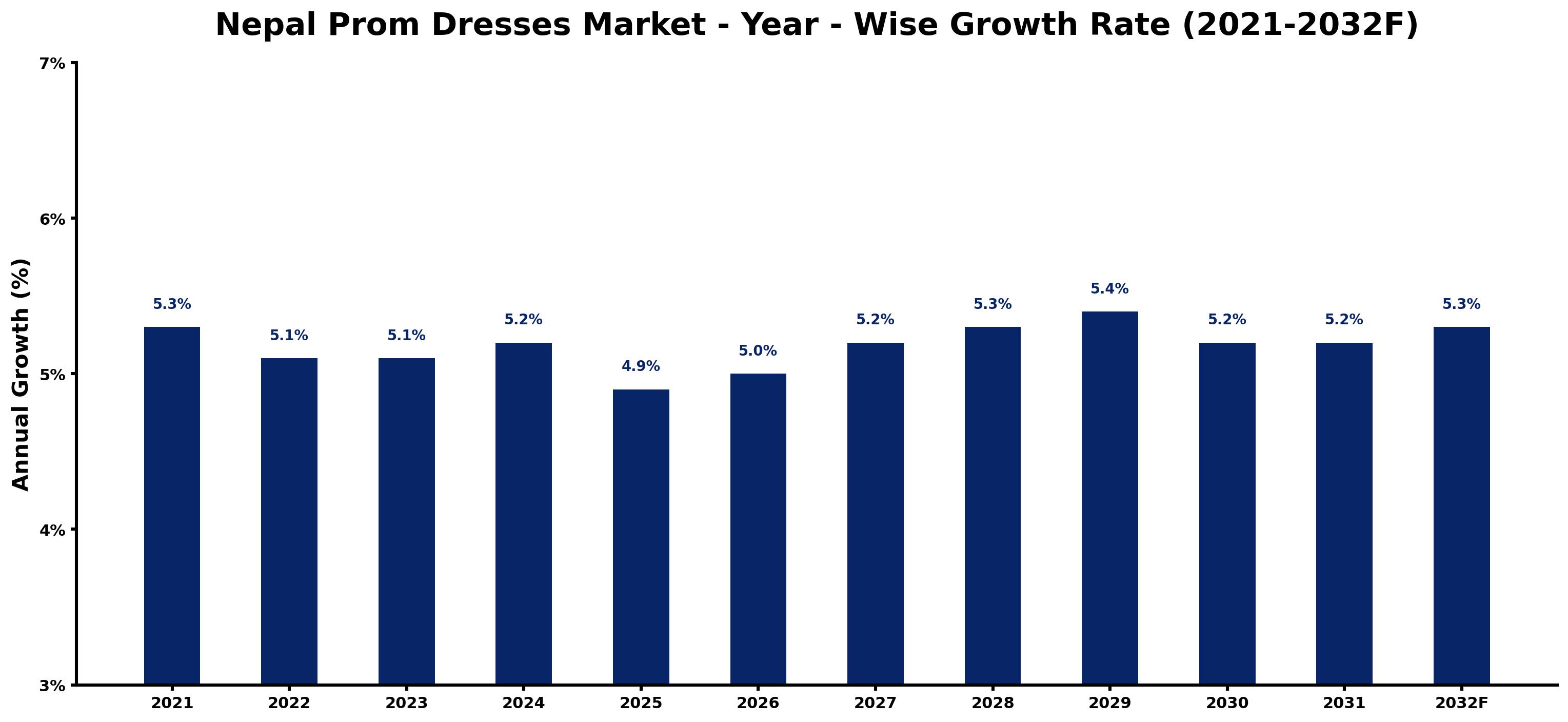
The table below presents the year wise growth rates along with the key drivers influencing the market
| Year | Growth Rate | Major Drivers |
| 2021 | 5.3% | Post-lockdown retail projects reignited fashion interest among the youth population. |
| 2022 | 5.1% | Social media influencers showcased Nepali designers, significantly impacting consumer preferences. |
| 2023 | 5.1% | E-commerce platforms expanded, providing wider access to diverse prom dress options. |
| 2024 | 5.2% | Local brands began incorporating traditional motifs into modern prom dress designs. |
| 2025 | 4.9% | Cultural events hosted across major cities raised awareness about prom fashion trends. |
| 2026 | 5.0% | Increased disposable income among millennials enabled splurging on high-quality dresses. |
| 2027 | 5.2% | Emergence of boutique stores offering customized prom dresses attracted discerning consumers. |
| 2028 | 5.3% | Online shopping experiences improved, encouraging hesitant buyers to explore fashion choices. |
| 2029 | 5.4% | Seasonal collections from local fashion weeks introduced innovation in prom dress styles. |
| 2030 | 5.2% | Collaborations between designers and social media platforms generated buzz for new collections. |
| 2031 | 5.2% | Sustainability trends prompted brands to develop eco-friendly prom dress options causing interest. |
| 2032 | 5.3% | Expansion of international brands into Nepalese markets diversified choices for prom attendees. |
Note - Market size estimations and growth projections presented in this report are based on 6Wresearch's advanced forecasting approach, validated with industry datasets as of June 2026.
Nepal Prom Dresses Market Synopsis
The Nepal Prom Dresses Market is projected to reach 5.0% and witness significant growth during the forecast period (2026-2032). This sector is characterized by an increasing demand for formal attire among the youth, particularly as more individuals engage in prom nights, weddings, and other special occasions. The evolving fashion landscape in Nepal reflects a blend of traditional and contemporary styles, prominently featuring prom dresses that cater to the aesthetic preferences of the younger generation. The rise of Western fashion influences and the accessibility of diverse designs have catalyzed market expansion, offering a vibrant array for consumers.
Nepal Prom Dresses Market Trends and Opportunities
A significant trend within the Nepal Prom Dresses Market is the growing preference for sustainable and ethically made dresses. Many consumers are increasingly leaning towards environmentally friendly products, which has spurred interest in traditional Nepali fabrics and cultural designs. The fusion of these elements provides unique dress options that resonate with local heritage while appealing to modern sensibilities. Moreover, the popularity of flowy silhouettes, adorned with intricate embroidery and beadwork, has become a common choice for special events. The incorporation of customization and personalization services has also gained traction, enabling consumers to design unique outfits for their memorable occasions. Additionally, the influence of social media and the convenience of online shopping are reshaping purchasing behaviors, showcasing the intersection of traditional craftsmanship and contemporary fashion.
Nepal Prom Dresses Market Challenges and Restraints
Despite its growth, the Nepal Prom Dresses Market faces several challenges. One primary issue is the limited availability of trendy and affordable options that cater specifically to prom wear. There exists a scarcity of specialized stores focusing on prom dresses, which can make sourcing attire difficult for consumers. Furthermore, the general population's limited awareness and acceptance of prom culture may hinder wider market adoption. Logistical challenges, particularly in transporting products to remote areas, can affect timely delivery and customer satisfaction. The dominance of traditional attire within Nepali culture could also dissuade potential buyers from investing in prom dresses, thereby limiting the overall market size. To overcome these challenges, it is essential for stakeholders to enhance marketing efforts that promote the concept of prom, explore partnerships with local designers for culturally appropriate designs, and improve distribution networks to better serve a diverse customer base.
Nepal Prom Dresses Market Investment Opportunities
The promising investment potential within the Nepal Prom Dresses Market is underscored by the rising demand for fashionable and trendy formal wear among youth. As Western fashion continues to infiltrate the local market, opportunities abound for businesses. Prospective investors may consider launching dedicated prom dress boutiques or collaborating with talented local designers to create culturally inspired collections. Moreover, establishing an online platform could leverage the burgeoning e-commerce trend, creating a more expansive reach to consumers. Another strategic approach involves offering customization services, inclusive sizing options, and an emphasis on sustainable practices, which can resonate well with environmentally conscious consumers and differentiate brands in a competitive environment.
Nepal Prom Dresses Market Government Investment and Initiatives
While there are no specific government policies targeting the Nepal Prom Dresses Market, general trade regulations and taxation laws govern the import and sale of formal attire in the country. Compliance with these regulations is critical for businesses to ensure smooth operations. Import duties, taxes, and consumer protection laws play a vital role in shaping the market landscape, affecting product pricing and availability. Furthermore, aligning business practices with the government's objectives for sustainability may enhance brand reputation and contribute positively to overall market growth. Initiatives aimed at fostering local design talent and promoting ethical sourcing may also garner government support, thus creating a favorable environment for industry players.
Nepal Prom Dresses Market Latest Developments (May 2025 - June 2026)
Recent developments in the Nepal Prom Dresses Market indicate a strong shift towards integrating sustainability into fashion practices. A noticeable increase in local designers exploring eco-friendly materials has been observed, which reflects a growing consumer preference for ethically produced garments. Additionally, advancements in e-commerce have made significant strides, with several online platforms enhancing user experience and product variety, thus streamlining the purchasing process for prom dresses. Furthermore, social media campaigns focusing on prom culture have gained momentum, further encouraging young consumers to embrace formal dress shopping. Educational institutions are also beginning to incorporate prom-related themes into their event programming, signaling a cultural shift that could enhance market participation in future years.
Nepal Prom Dresses Market - Key Attractiveness of the Report
- 10 Years of Market Numbers
- Historical Data Starting from 2022 to 2025
- Base Year: 2025
- Forecast Data until 2032
- Key Performance Indicators Impacting the Market
- Major Upcoming Developments and Projects
Key Highlights of the Report:
- Nepal Prom Dresses Market Outlook
- Market Size of Nepal Prom Dresses Market, 2025
- Forecast of Nepal Prom Dresses Market, 2032F
- Historical Data and Forecast of Nepal Prom Dresses Revenues & Volume for the Period 2022-2032F
- Nepal Prom Dresses Market Trend Evolution
- Nepal Prom Dresses Market Drivers and Challenges
- Nepal Prom Dresses Price Trends
- Nepal Prom Dresses Porter's Five Forces
- Nepal Prom Dresses Industry Life Cycle
- Historical Data and Forecast of Nepal Prom Dresses Market Revenues & Volume By Type for the Period 2022-2032F
- Historical Data and Forecast of Nepal Prom Dresses Market Revenues & Volume By Long Dresses for the Period 2022-2032F
- Historical Data and Forecast of Nepal Prom Dresses Market Revenues & Volume By Short Dresses for the Period 2022-2032F
- Historical Data and Forecast of Nepal Prom Dresses Market Revenues & Volume By Knee-length Dresses for the Period 2022-2032F
- Historical Data and Forecast of Nepal Prom Dresses Market Revenues & Volume By Fabric for the Period 2022-2032F
- Historical Data and Forecast of Nepal Prom Dresses Market Revenues & Volume By Chiffon for the Period 2022-2032F
- Historical Data and Forecast of Nepal Prom Dresses Market Revenues & Volume By Satin for the Period 2022-2032F
- Historical Data and Forecast of Nepal Prom Dresses Market Revenues & Volume By Organza for the Period 2022-2032F
- Historical Data and Forecast of Nepal Prom Dresses Market Revenues & Volume By Others for the Period 2022-2032F
- Historical Data and Forecast of Nepal Prom Dresses Market Revenues & Volume By Distribution Channel for the Period 2022-2032F
- Historical Data and Forecast of Nepal Prom Dresses Market Revenues & Volume By Store-Based for the Period 2022-2032F
- Historical Data and Forecast of Nepal Prom Dresses Market Revenues & Volume By Non-Store-Based for the Period 2022-2032F
- Nepal Prom Dresses Import Export Trade Statistics
- Market Opportunity Assessment By Type
- Market Opportunity Assessment By Fabric
- Market Opportunity Assessment By Distribution Channel
- Nepal Prom Dresses Top Companies Market Share
- Nepal Prom Dresses Competitive Benchmarking By Technical and Operational Parameters
- Nepal Prom Dresses Company Profiles
- Nepal Prom Dresses Key Strategic Recommendations






































