Nepal Small Wind Turbine Market Size, Share & Growth Rate
The Nepal Small Wind Turbine Market was estimated at USD 263 Million in 2025 and is projected to reach USD 361 Million by 2032, growing at a CAGR of 4.6% from 2026 to 2032. This positive growth trajectory is primarily driven by the increasing adoption of renewable energy initiatives and the expanding need for decentralized energy solutions in rural communities. Government incentives and a heightened awareness of sustainable practices further propel the market, as households and businesses seek reliable energy sources in off-grid locations.
Nepal Small Wind Turbine Market Year-wise Growth Rate and Key Drivers
This graph highlights how the Nepal Small Wind Turbine Market has steadily grown over the years, supported by major growth factors.
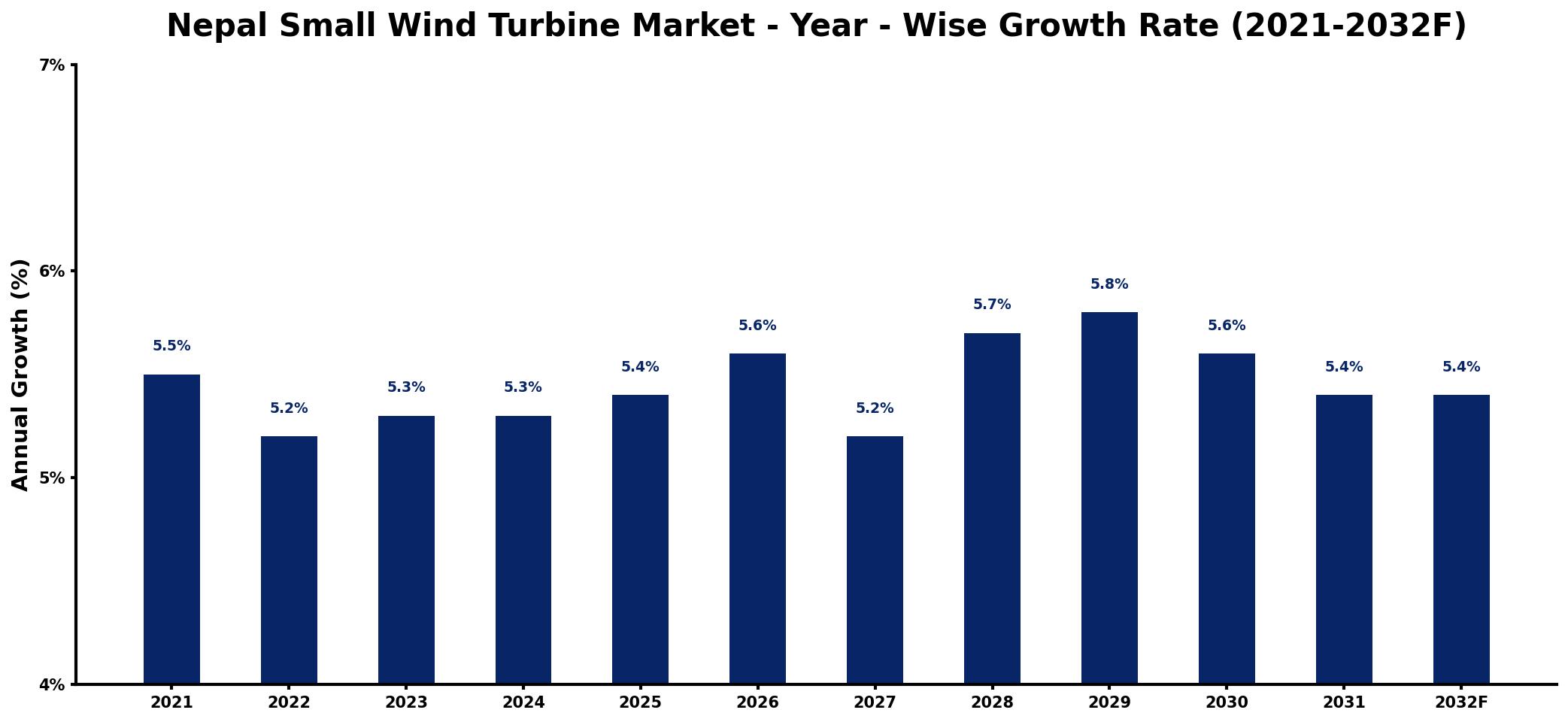
The table below presents the year‑wise growth rates along with the key drivers influencing the market
| Year | Growth Rate | Major Drivers |
| 2021 | 5.5% | Rising demand for renewable energy |
| 2022 | 5.2% | Government incentives for clean technology |
| 2023 | 5.3% | Increased investment in green projects |
| 2024 | 5.3% | Growing awareness of climate change |
| 2025 | 5.4% | Expansion of rural electrification initiatives |
| 2026 | 5.6% | Technological advancements in energy efficiency |
| 2027 | 5.2% | Supportive regulatory frameworks emerging |
| 2028 | 5.7% | Partnerships between private sectors growing |
| 2029 | 5.8% | Increased consumer interest in sustainability |
| 2030 | 5.6% | Diversification of energy sources prioritized |
| 2031 | 5.4% | Development of local manufacturing capabilities |
| 2032 | 5.4% | Enhanced grid connectivity initiatives launched |
Note: Market size estimations and growth projections presented in this report are based on 6Wresearch's proprietary forecasting methodology, utilizing the latest available industry data, government publications, and primary research inputs.
Nepal Small Wind Turbine Market Synopsis
A key demand detail unique to the Nepal Small Wind Turbine Market is the growing utilization of small wind turbines for electricity generation in off-grid areas, particularly in rural regions where access to traditional power sources is severely limited. These small wind systems, ranging from 100 watts to 20 kilowatts, serve critical roles in powering homes, schools, and essential services.
The increasing focus on sustainability and the reduction of fossil fuel reliance are also pivotal in shaping market dynamics. Small wind turbines are becoming a preferred choice for local energy solutions, thus supporting the governments broader renewable energy strategy while fostering economic growth in these underserved areas.
Nepal Small Wind Turbine Market Key Takeaways
- The market is anticipated to grow significantly, driven by rising energy demand in rural areas.
- Government policies are favoring the expansion of small wind turbine installations.
- Technological advancements are leading to more efficient and cost-effective wind turbine solutions.
- Challenges such as financing and technical expertise need to be addressed for further growth.
- Decentralized energy solutions are becoming increasingly attractive for remote applications.
Evaluation of Restraints in Nepal Small Wind Turbine Market
Despite its promising outlook, the Nepal Small Wind Turbine Market faces several significant restraints that could hinder its growth potential. Limited public awareness and understanding of wind turbine technology among the general population impede consumer adoption. Additionally, the high upfront costs associated with installation and the ongoing challenges of securing financing create barriers for potential users. Rural infrastructure issues further complicate the situation, as many regions experience unreliable grid access, hampering the effectiveness of small wind solutions. These factors require strategic interventions from industry stakeholders, policymakers, and financial institutions to enable a more favorable operating environment for wind energy development in Nepal.
Nepal Small Wind Turbine Market Trends
Current trends indicate a robust shift toward adopting more efficient and sustainable small-scale wind energy systems. There is a growing emphasis on community-based energy solutions that not only provide electricity but also foster local economic development. Additionally, technological advancements are enhancing the efficiency and reliability of small wind turbines, making them a more viable option for off-grid and rural applications. The adoption of smart grid technologies is also emerging, enabling better integration of wind energy into local power systems.
Nepal Small Wind Turbine Market Opportunities
The potential for investment in the Nepal Small Wind Turbine Market is significant, particularly in regions with abundant wind resources. As energy demands continue to rise, there are immense opportunities for investors to engage in projects aimed at increasing decentralized energy solutions. Applications such as powering telecom towers, agricultural systems, and remote community infrastructures present lucrative avenues for growth. Furthermore, the ongoing governmental push for renewable energy adoption will likely open more funding and incentive programs, enhancing the market's attractiveness for both local and international investors.
Government Initiatives in the Nepal Small Wind Turbine Market
The government of Nepal is actively engaging in promoting the small wind turbine market through various supportive policies and financial programs. The Alternative Energy Promotion Center (AEPC) is central to these efforts, implementing initiatives that include subsidies for small wind turbine installations and technical assistance for potential users. Additionally, the government has established renewable energy targets and introduced feed-in tariffs aimed at encouraging both residential and commercial users to embrace wind energy. These measures are crucial in fostering a conducive environment for the growth of renewable energy sources in Nepal.
Future Insights of the Nepal Small Wind Turbine Market
Looking ahead to 2026-2032, the Nepal Small Wind Turbine Market is poised for considerable development, driven by increasing demand for clean energy and government support initiatives. The combination of favorable wind conditions, particularly in rural areas, and an enhanced understanding of the benefits of wind energy will likely lead to a surge in installations. As technological innovations continue to evolve, the efficiency and cost-effectiveness of small wind turbines will improve, further attracting investment and fostering sustainable energy independence in Nepal.
Nepal Small Wind Turbine Market Latest Developments (2025 - 2026)
Recent developments in the Nepal Small Wind Turbine Market highlight a continued focus on community engagement and increasing accessibility to renewable energy solutions. Local initiatives aimed at educating rural populations about the benefits of wind energy have gained momentum. Furthermore, partnerships between governmental bodies and private sector entities are forming to enhance technical expertise and improve maintenance services for small wind installations. These collaborative efforts signify a commitment to overcoming existing barriers and advancing sustainable energy adoption throughout the country.
Nepal Small Wind Turbine Market - Key Attractiveness of the Report
- 10 Years of Market Numbers
- Historical Data Starting from 2022 to 2025
- Base Year: 2025
- Forecast Data until 2032
- Key Performance Indicators Impacting the Market
- Major Upcoming Developments and Projects
Key Highlights of the Report:
- Nepal Small Wind Turbine Market Outlook
- Market Size of Nepal Small Wind Turbine Market, 2025
- Forecast of Nepal Small Wind Turbine Market, 2032
- Historical Data and Forecast of Nepal Small Wind Turbine Revenues & Volume for the Period 2022-2032F
- Nepal Small Wind Turbine Market Trend Evolution
- Nepal Small Wind Turbine Market Drivers and Challenges
- Nepal Small Wind Turbine Price Trends
- Nepal Small Wind Turbine Porter's Five Forces
- Nepal Small Wind Turbine Industry Life Cycle
- Historical Data and Forecast of Nepal Small Wind Turbine Market Revenues & Volume By Axis Type for the Period 2022-2032F
- Historical Data and Forecast of Nepal Small Wind Turbine Market Revenues & Volume By Horizontal Axis Wind Turbine for the Period 2022-2032F
- Historical Data and Forecast of Nepal Small Wind Turbine Market Revenues & Volume By Vertical Axis Wind Turbine for the Period 2022-2032F
- Historical Data and Forecast of Nepal Small Wind Turbine Market Revenues & Volume By Application for the Period 2022-2032F
- Historical Data and Forecast of Nepal Small Wind Turbine Market Revenues & Volume By On-grid for the Period 2022-2032F
- Historical Data and Forecast of Nepal Small Wind Turbine Market Revenues & Volume By Off-grid for the Period 2022-2032F
- Nepal Small Wind Turbine Import Export Trade Statistics
- Market Opportunity Assessment By Axis Type
- Market Opportunity Assessment By Application
- Nepal Small Wind Turbine Top Companies Market Share
- Nepal Small Wind Turbine Competitive Benchmarking By Technical and Operational Parameters
- Nepal Small Wind Turbine Company Profiles
- Nepal Small Wind Turbine Key Strategic Recommendations






































