Nepal Synthetic Rope Market Size Growth Rate
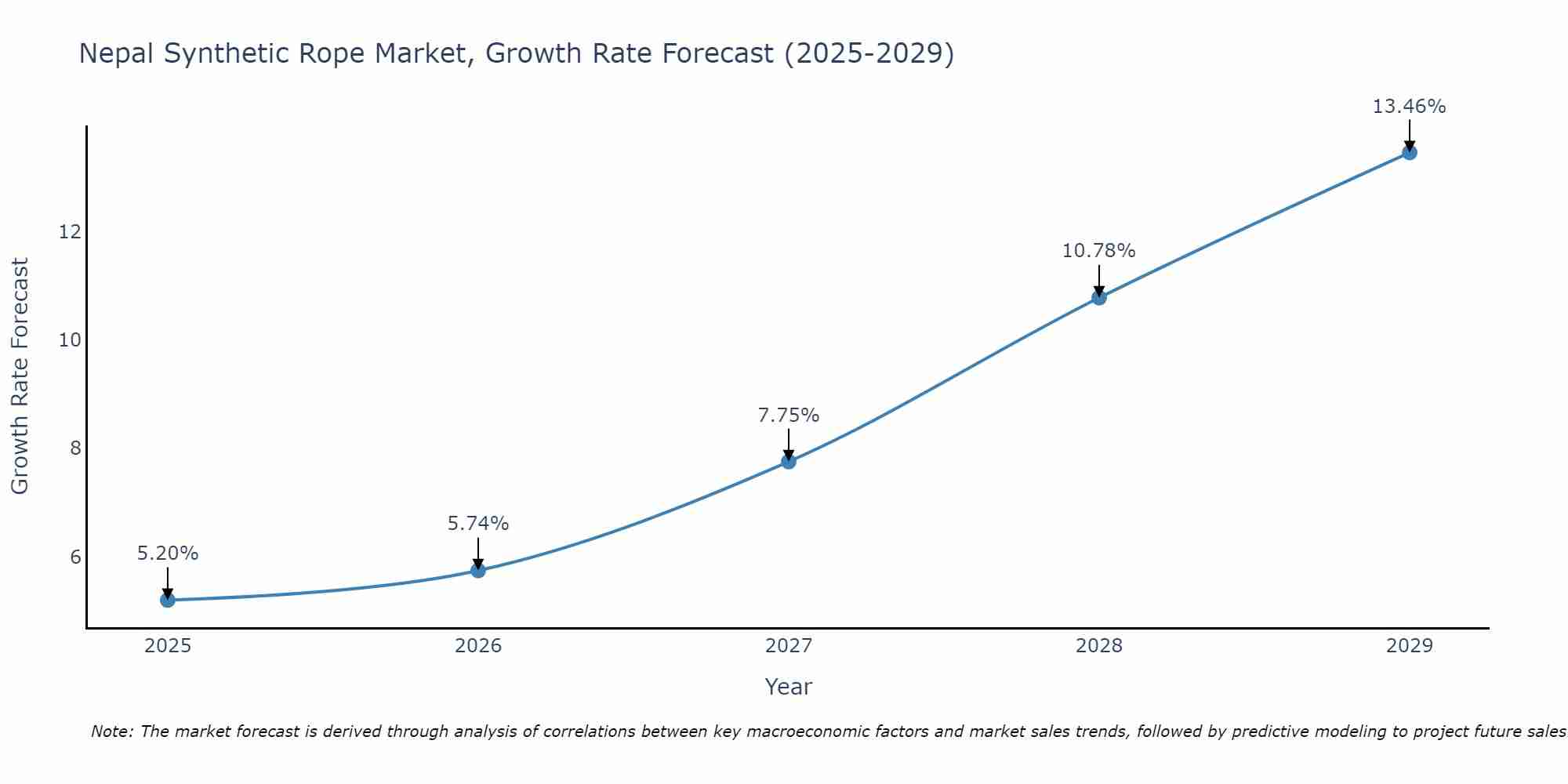
The Nepal Synthetic Rope Market is likely to experience consistent growth rate gains over the period 2025 to 2029. Commencing at 5.20% in 2025, growth builds up to 13.46% by 2029.
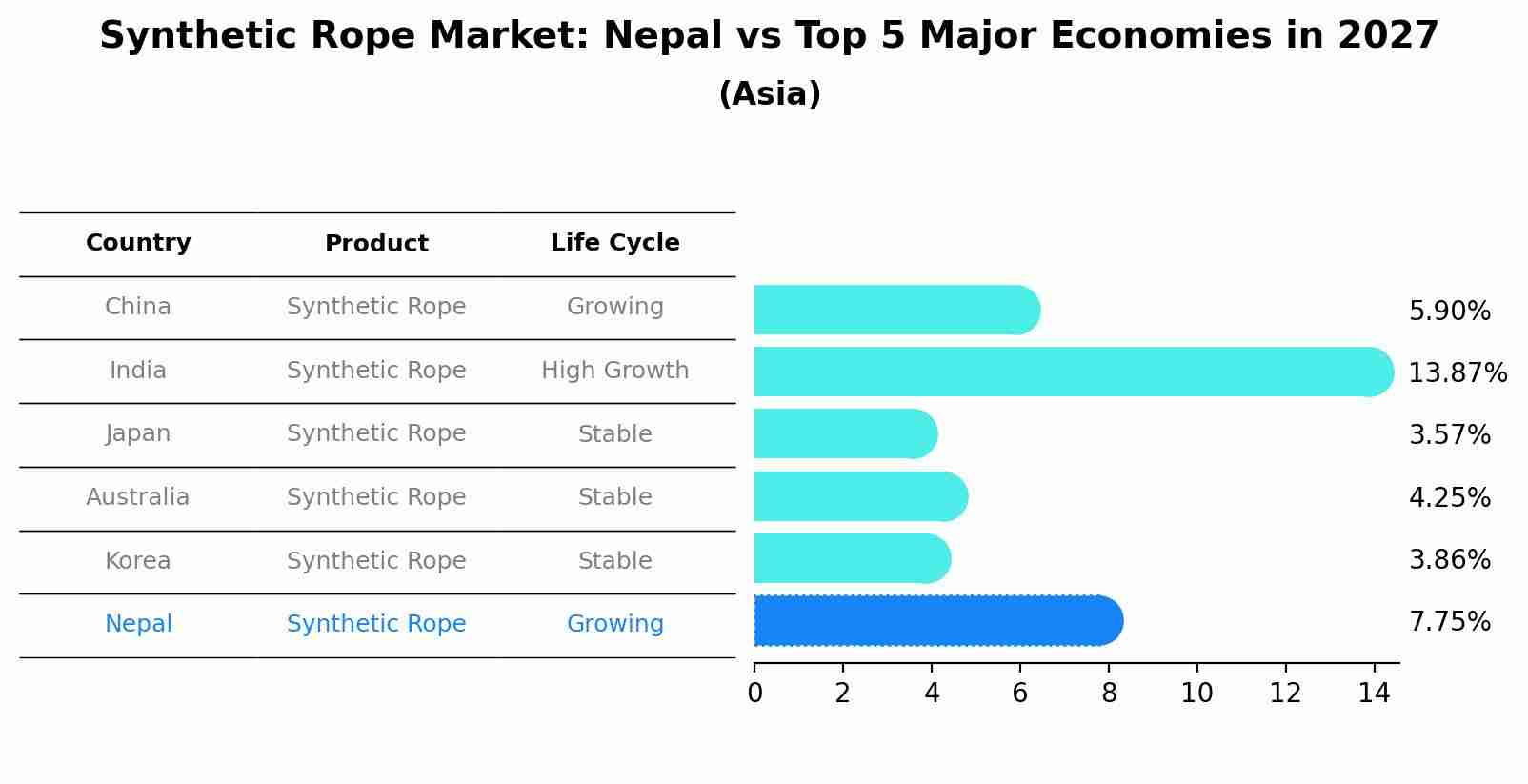
Synthetic Rope Market: Nepal vs Top 5 Major Economies in 2027 (Asia)
By 2027, Nepal's Synthetic Rope market is forecasted to achieve a growing growth rate of 7.75%, with China leading the Asia region, followed by India, Japan, Australia and South Korea.
Nepal Synthetic Rope Market Synopsis
The Nepal synthetic rope market is witnessing steady growth due to the increasing demand for strong and durable ropes across various industries such as construction, marine, and agriculture. Synthetic ropes, made of materials like nylon, polypropylene, and polyester, are preferred for their lightweight nature, resistance to abrasion, and high tensile strength. The market is driven by infrastructure development projects, growth in the shipping industry, and the need for reliable ropes in agricultural activities. Key players in the Nepal synthetic rope market are focusing on product innovation, customization, and strategic partnerships to gain a competitive edge. Factors such as the rising awareness about the benefits of synthetic ropes and the shift towards advanced materials are expected to further propel the market growth in the coming years.
Nepal Synthetic Rope Market Trends
The Nepal Synthetic Rope Market is experiencing upward growth due to increasing adoption in various industries such as agriculture, construction, and marine. The demand for synthetic ropes is driven by their advantages over traditional ropes, including higher strength, durability, and resistance to harsh weather conditions. Manufacturers in Nepal are focusing on product innovation to introduce ropes with enhanced features such as lightweight design, better flexibility, and increased load capacity. Additionally, the growing awareness about the benefits of synthetic ropes in terms of safety and efficiency is further fueling market growth. With the infrastructure development projects and increasing maritime activities in Nepal, the synthetic rope market is expected to continue its positive trajectory in the foreseeable future.
Nepal Synthetic Rope Market Challenges
The Nepal Synthetic Rope Market faces several challenges, including competition from traditional rope materials such as natural fibers like jute and coir, which are often preferred due to their perceived eco-friendliness. Additionally, the lack of awareness about the benefits of synthetic ropes in terms of durability, strength, and resistance to environmental conditions poses a challenge in convincing potential customers to switch from traditional ropes. Infrastructure limitations and logistical challenges in remote areas of Nepal also impact the distribution and availability of synthetic ropes. Furthermore, price sensitivity among consumers, especially in rural areas, where cost can be a significant factor in purchasing decisions, adds another layer of challenge for market penetration and growth in the synthetic rope industry in Nepal.
Nepal Synthetic Rope Market Investment Opportunities
Investment opportunities in the Nepal Synthetic Rope Market include the growing demand from industries such as shipping, construction, and agriculture, driven by their superior strength, durability, and resistance to environmental factors. With the increasing focus on infrastructure development and the expansion of industries in Nepal, there is a rising need for high-quality synthetic ropes for various applications. Investing in the manufacturing and distribution of synthetic ropes tailored to the specific requirements of these sectors can be lucrative. Additionally, exploring innovations in materials and technologies to enhance the performance and sustainability of synthetic ropes can provide a competitive edge in the market. Partnering with key players in the supply chain and leveraging strategic marketing efforts to raise awareness about the benefits of synthetic ropes can further drive growth and profitability in this market.
Jordan Agar Market Government Policies
The government of Nepal has implemented policies to regulate the synthetic rope market, primarily focusing on promoting local production and reducing reliance on imports. In 2019, the government issued guidelines to encourage the domestic manufacturing of synthetic ropes by providing incentives such as tax breaks and subsidies to local producers. Additionally, regulations have been put in place to ensure the quality and safety standards of synthetic ropes sold in the market, with strict enforcement mechanisms to prevent substandard products from entering the market. The government aims to boost the competitiveness of the domestic synthetic rope industry, create employment opportunities, and enhance the overall quality of products available to consumers while reducing the country`s dependence on imported synthetic ropes.
Nepal Synthetic Rope Market Future Outlook
The Nepal Synthetic Rope Market is poised for steady growth in the coming years due to increasing demand across various industries such as marine, construction, and transportation. The market is expected to benefit from the rising adoption of synthetic ropes over traditional materials like natural fibers, thanks to their superior strength, durability, and resistance to weathering. Factors such as infrastructure development projects, growth in the shipping industry, and a focus on safety measures in various sectors are likely to drive the demand for synthetic ropes in Nepal. Additionally, innovations in manufacturing processes and materials are expected to further propel market growth, offering opportunities for market players to expand their product offerings and cater to a wider range of applications.
Key Highlights of the Report:
- Nepal Synthetic Rope Market Outlook
- Market Size of Nepal Synthetic Rope Market, 2024
- Forecast of Nepal Synthetic Rope Market, 2031
- Historical Data and Forecast of Nepal Synthetic Rope Revenues & Volume for the Period 2021 - 2031
- Nepal Synthetic Rope Market Trend Evolution
- Nepal Synthetic Rope Market Drivers and Challenges
- Nepal Synthetic Rope Price Trends
- Nepal Synthetic Rope Porter's Five Forces
- Nepal Synthetic Rope Industry Life Cycle
- Historical Data and Forecast of Nepal Synthetic Rope Market Revenues & Volume By Material for the Period 2021 - 2031
- Historical Data and Forecast of Nepal Synthetic Rope Market Revenues & Volume By Polypropylene for the Period 2021 - 2031
- Historical Data and Forecast of Nepal Synthetic Rope Market Revenues & Volume By Polyester for the Period 2021 - 2031
- Historical Data and Forecast of Nepal Synthetic Rope Market Revenues & Volume By Nylon for the Period 2021 - 2031
- Historical Data and Forecast of Nepal Synthetic Rope Market Revenues & Volume By Polyethylene for the Period 2021 - 2031
- Historical Data and Forecast of Nepal Synthetic Rope Market Revenues & Volume By Specialty Fibers for the Period 2021 - 2031
- Historical Data and Forecast of Nepal Synthetic Rope Market Revenues & Volume By End Use Industry for the Period 2021 - 2031
- Historical Data and Forecast of Nepal Synthetic Rope Market Revenues & Volume By Marine & Fishing for the Period 2021 - 2031
- Historical Data and Forecast of Nepal Synthetic Rope Market Revenues & Volume By Oil & Gas for the Period 2021 - 2031
- Historical Data and Forecast of Nepal Synthetic Rope Market Revenues & Volume By Sports & Leisure for the Period 2021 - 2031
- Historical Data and Forecast of Nepal Synthetic Rope Market Revenues & Volume By Construction for the Period 2021 - 2031
- Historical Data and Forecast of Nepal Synthetic Rope Market Revenues & Volume By Others for the Period 2021 - 2031
- Nepal Synthetic Rope Import Export Trade Statistics
- Market Opportunity Assessment By Material
- Market Opportunity Assessment By End Use Industry
- Nepal Synthetic Rope Top Companies Market Share
- Nepal Synthetic Rope Competitive Benchmarking By Technical and Operational Parameters
- Nepal Synthetic Rope Company Profiles
- Nepal Synthetic Rope Key Strategic Recommendations






































