Nepal Transport Packaging Market Summary
The nepal transport packaging market was estimated at USD 404 Million in 2025 and is projected to reach USD 552 Million by 2032, growing at a CAGR of 5.4% from 2026 to 2032.
Nepal Transport Packaging Market Year-wise Growth Rate and Key Drivers
This graph highlights how the Nepal Transport Packaging Market has steadily grown over the past five years, supported by major growth factors.
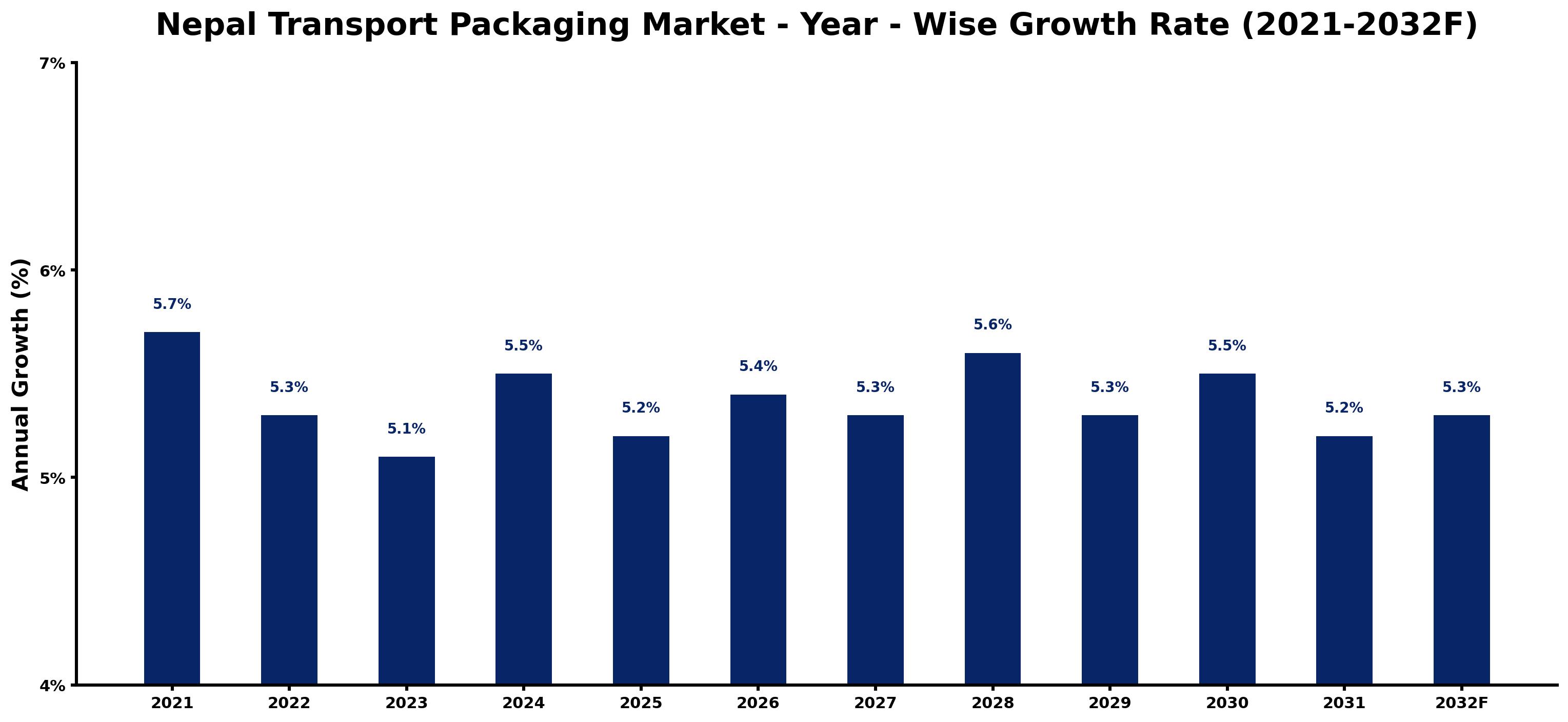
The table below presents the year wise growth rates along with the key drivers influencing the market
| Year | Growth Rate | Major Drivers |
| 2021 | 5.7% | Nepal's increasing urbanization trends create heightened needs for effective transport solutions. |
| 2022 | 5.3% | Rural infrastructure developments significantly enhance logistics and transportation capabilities throughout Nepal. |
| 2023 | 5.1% | An influx of e-commerce platforms fosters innovative packaging solutions for efficient delivery. |
| 2024 | 5.5% | Investment in green packaging materials aligns with global sustainability trends shaping market dynamics. |
| 2025 | 5.2% | Local production facilities respond to rising demand for customized transport packaging solutions. |
| 2026 | 5.4% | Technological advancements streamline packaging processes, improving efficiency and reducing costs. |
| 2027 | 5.3% | International trade agreements expand export opportunities, necessitating robust transport packaging services. |
| 2028 | 5.6% | Consumer expectations for product safety drive innovations in transport packaging materials and design. |
| 2029 | 5.3% | Increased competition among logistics firms necessitates differentiated packaging strategies for market share. |
| 2030 | 5.5% | Shifts towards circular economy practices prompt investment in recyclable and reusable packaging options. |
| 2031 | 5.2% | Growing awareness of supply chain resilience shapes demand for versatile transport packaging solutions. |
| 2032 | 5.3% | Collaboration between manufacturers and retailers enhances the efficiency of the transport packaging ecosystem. |
Note - Market size estimations and growth projections presented in this report are based on 6Wresearch's advanced forecasting approach, validated with industry datasets as of June 2026.
Nepal Transport Packaging Market Synopsis
The Nepal Transport Packaging Market is projected to reach 5.4% and witness significant growth during the forecast period (2026-2032). The market is currently benefiting from an increase in industrial activities and a burgeoning e-commerce sector, which together are creating a robust demand for effective packaging solutions. Encompassing a variety of materials, including corrugated boxes, wooden crates, plastic containers, and pallets, the market is focused on ensuring the safe transportation of goods. As international trade expands, companies are increasingly prioritizing high-quality transport packaging, emphasizing the importance of sustainability, cost-effectiveness, and durability in their choices.
Nepal Transport Packaging Market Growth Drivers
Several factors are driving the expansion of the Nepal transport packaging market. Firstly, the rise in industrial activities has led to an increased production of goods that require safe and efficient packaging solutions. Secondly, the growing e-commerce sector necessitates reliable packaging materials to ensure that products reach consumers intact. Thirdly, sustainability is becoming a major consideration, with businesses seeking eco-friendly packaging options to resonate with environmentally conscious consumers. Furthermore, advancements in logistics and supply chain practices are enhancing the efficiency of transport packaging solutions. Lastly, a growing focus on international trade is encouraging the adoption of higher standards in packaging quality to meet global demands.
Nepal Transport Packaging Market Trends and Opportunities
Key trends are emerging in the Nepal transport packaging market as businesses adapt to changing consumer expectations. A prominent trend is the increasing demand for sustainable packaging solutions, as companies shift towards recyclable and biodegradable materials. This transition is driven by heightened awareness of environmental issues among consumers and regulatory pressures. Another trend is the integration of technology in packaging, such as RFID tracking and IoT-enabled sensors, which enhance supply chain visibility and operational efficiency. Additionally, the market is seeing a rise in customizable packaging solutions tailored to specific product requirements, ensuring that diverse goods are transported safely. Overall, these trends highlight a move towards innovation, sustainability, and customer-centric approaches in the market.
Nepal Transport Packaging Market Challenges and Restraints
Despite its growth prospects, the Nepal transport packaging market faces significant challenges. One of the primary issues is inadequate infrastructure, characterized by poor road conditions, which can lead to increased transportation costs and potential damage to goods during transit. Furthermore, the limited availability of modern packaging materials can hinder innovation and the adoption of advanced packaging solutions. Traditional methods may not adequately protect products, leaving businesses vulnerable. The lack of standardized regulations and enforcement also contributes to inconsistent packaging practices, undermining overall efficiency and reliability. Overcoming these challenges will require targeted investments in infrastructure, improved access to quality materials, and the establishment of comprehensive regulatory frameworks.
Nepal Transport Packaging Market Investment Opportunities
Investment opportunities abound within the Nepal transport packaging market, particularly due to the growth of the e-commerce and industrial sectors. Companies can explore the development of innovative packaging materials, including biodegradable plastics and protective packaging solutions that cater to fragile and perishable goods. Additionally, there is potential for collaboration with logistics companies to offer integrated packaging and shipping services that enhance efficiency. Focusing on the production of customized packaging solutions tailored to specific market needs can yield substantial returns. Overall, prioritizing eco-friendly, cost-effective, and innovative packaging solutions presents significant opportunities for investors in this expanding market.
Nepal Transport Packaging Market Government Investment and Initiatives
Government initiatives are playing a vital role in shaping the transport packaging landscape in Nepal. Recent policies have emphasized the need for standardization in packaging materials to enhance safety during transportation, reduce waste, and promote sustainable practices. There are also initiatives aimed at encouraging the use of eco-friendly packaging options, which align with global sustainability goals. The government seeks to foster innovation in packaging technology and design, contributing to improved efficiency across the transport packaging sector. Investment in infrastructure development, including logistics and transportation networks, is another focus area, aimed at bolstering the overall effectiveness of the market.
Nepal Transport Packaging Market Latest Developments (May 2025 - June 2026)
In the period from May 2025 to June 2026, there have been notable developments within the Nepal transport packaging market. Industry stakeholders are increasingly adopting advanced packaging technologies to enhance safety and efficiency. Eco-friendly materials are gaining traction as businesses respond to consumer demands for sustainable solutions. There has also been a growing emphasis on customization, with packaging solutions being tailored to meet specific industry needs, particularly in sectors such as e-commerce and food delivery. Furthermore, discussions around regulatory frameworks have intensified, with government agencies working to implement standards that foster environmental conservation while ensuring product safety. These developments indicate a market that is evolving to meet contemporary challenges and consumer preferences.
Nepal Transport Packaging Market - Key Attractiveness of the Report
- 10 Years of Market Numbers
- Historical Data Starting from 2022 to 2025
- Base Year: 2025
- Forecast Data until 2032
- Key Performance Indicators Impacting the Market
- Major Upcoming Developments and Projects
Key Highlights of the Report:
- Nepal Transport Packaging Market Outlook
- Market Size of Nepal Transport Packaging Market, 2025
- Forecast of Nepal Transport Packaging Market, 2032F
- Historical Data and Forecast of Nepal Transport Packaging Revenues & Volume for the Period 2022-2032F
- Nepal Transport Packaging Market Trend Evolution
- Nepal Transport Packaging Market Drivers and Challenges
- Nepal Transport Packaging Price Trends
- Nepal Transport Packaging Porter's Five Forces
- Nepal Transport Packaging Industry Life Cycle
- Historical Data and Forecast of Nepal Transport Packaging Market Revenues & Volume By Material Type for the Period 2022-2032F
- Historical Data and Forecast of Nepal Transport Packaging Market Revenues & Volume By Plastic for the Period 2022-2032F
- Historical Data and Forecast of Nepal Transport Packaging Market Revenues & Volume By Polyethylene (PE) for the Period 2022-2032F
- Historical Data and Forecast of Nepal Transport Packaging Market Revenues & Volume By Polypropylene (PP) for the Period 2022-2032F
- Historical Data and Forecast of Nepal Transport Packaging Market Revenues & Volume By Polyethylene Terephthalate (PET) for the Period 2022-2032F
- Historical Data and Forecast of Nepal Transport Packaging Market Revenues & Volume By Paper & Paperboard for the Period 2022-2032F
- Historical Data and Forecast of Nepal Transport Packaging Market Revenues & Volume By Metal for the Period 2022-2032F
- Historical Data and Forecast of Nepal Transport Packaging Market Revenues & Volume By Wood for the Period 2022-2032F
- Historical Data and Forecast of Nepal Plastic Transport Packaging Market Revenues & Volume By Others for the Period 2022-2032F
- Historical Data and Forecast of Nepal Transport Packaging Market Revenues & Volume By Packaging Types for the Period 2022-2032F
- Historical Data and Forecast of Nepal Transport Packaging Market Revenues & Volume By Cartons for the Period 2022-2032F
- Historical Data and Forecast of Nepal Transport Packaging Market Revenues & Volume By Wooden crates for the Period 2022-2032F
- Historical Data and Forecast of Nepal Transport Packaging Market Revenues & Volume By Containers for the Period 2022-2032F
- Historical Data and Forecast of Nepal Transport Packaging Market Revenues & Volume By Corrugated boxes for the Period 2022-2032F
- Historical Data and Forecast of Nepal Transport Packaging Market Revenues & Volume By Barrels for the Period 2022-2032F
- Historical Data and Forecast of Nepal Transport Packaging Market Revenues & Volume By IBCs for the Period 2022-2032F
- Historical Data and Forecast of Nepal Transport Packaging Market Revenues & Volume By Strapping for the Period 2022-2032F
- Historical Data and Forecast of Nepal Transport Packaging Market Revenues & Volume By Others for the Period 2022-2032F
- Historical Data and Forecast of Nepal Transport Packaging Market Revenues & Volume By End-users for the Period 2022-2032F
- Historical Data and Forecast of Nepal Transport Packaging Market Revenues & Volume By Agriculture for the Period 2022-2032F
- Historical Data and Forecast of Nepal Transport Packaging Market Revenues & Volume By Automotive for the Period 2022-2032F
- Historical Data and Forecast of Nepal Transport Packaging Market Revenues & Volume By Building & Construction for the Period 2022-2032F
- Historical Data and Forecast of Nepal Transport Packaging Market Revenues & Volume By Chemicals & Pharmaceuticals for the Period 2022-2032F
- Historical Data and Forecast of Nepal Transport Packaging Market Revenues & Volume By Food & Beverages for the Period 2022-2032F
- Historical Data and Forecast of Nepal Transport Packaging Market Revenues & Volume By Metallurgical for the Period 2022-2032F
- Historical Data and Forecast of Nepal Transport Packaging Market Revenues & Volume By Electrical & Electronics for the Period 2022-2032F
- Historical Data and Forecast of Nepal Transport Packaging Market Revenues & Volume By Others for the Period 2022-2032F
- Nepal Transport Packaging Import Export Trade Statistics
- Market Opportunity Assessment By Material Type
- Market Opportunity Assessment By Packaging Types
- Market Opportunity Assessment By End-users
- Nepal Transport Packaging Top Companies Market Share
- Nepal Transport Packaging Competitive Benchmarking By Technical and Operational Parameters
- Nepal Transport Packaging Company Profiles
- Nepal Transport Packaging Key Strategic Recommendations






































