Nepal Vending machines Market Summary
The nepal vending machines market was estimated at USD 676 Million in 2025 and is projected to reach USD 989 Million by 2032, growing at a CAGR of 6.4% from 2026 to 2032.
Nepal Vending machines Market Year-wise Growth Rate and Key Drivers
This graph highlights how the Nepal Vending machines Market has steadily grown over the past five years, supported by major growth factors.
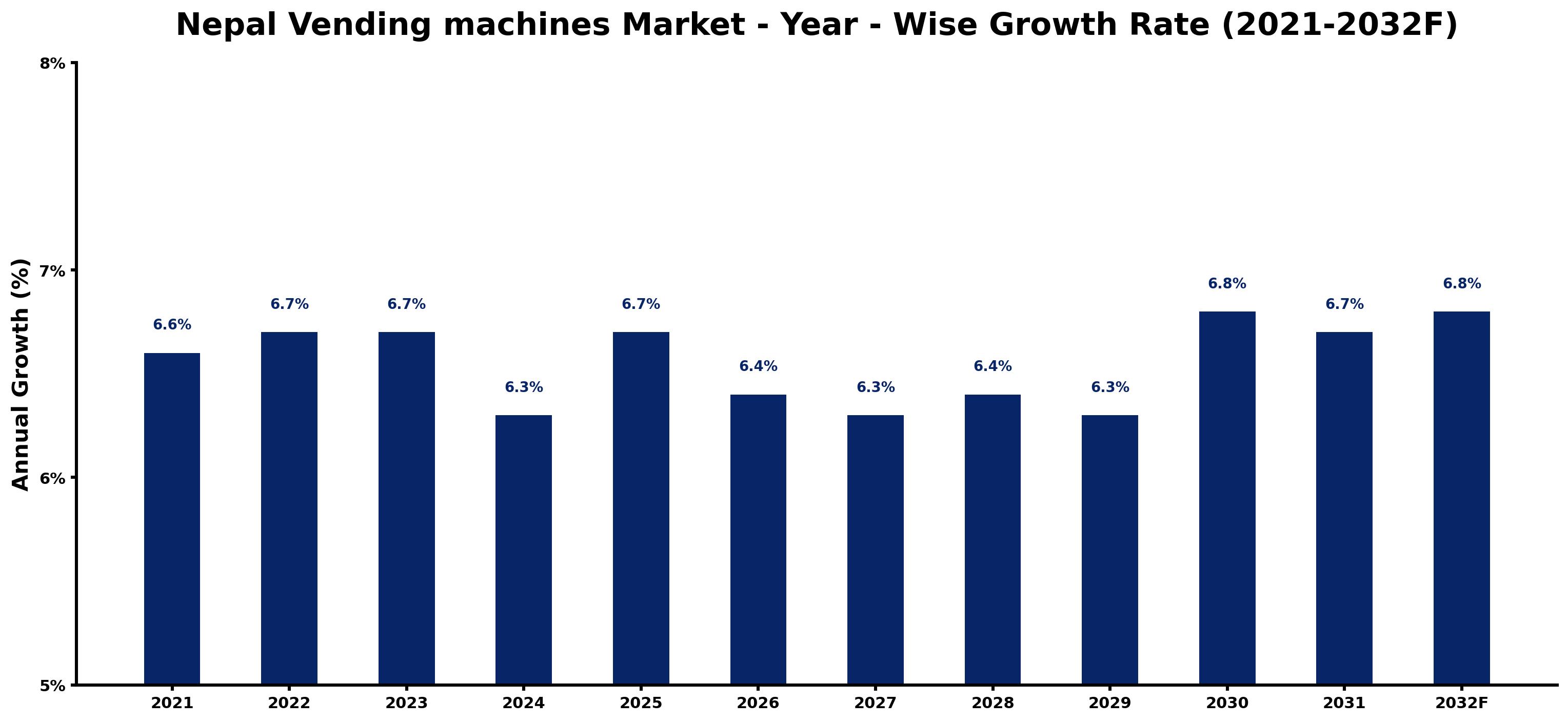
The table below presents the year wise growth rates along with the key drivers influencing the market
| Year | Growth Rate | Major Drivers |
| 2021 | 6.6% | Vending machines began appearing in urban areas, attracting attention from entrepreneurs. |
| 2022 | 6.7% | Consumer behavior shifted towards convenience, enhancing the appeal of vending solutions. |
| 2023 | 6.7% | Urbanization rates accelerated, providing more foot traffic for vending machine locations. |
| 2024 | 6.3% | Local manufacturers started producing vending machines, reducing import dependency significantly. |
| 2025 | 6.7% | Technological innovations enabled cashless payment options, appealing to tech-savvy consumers. |
| 2026 | 6.4% | Partnerships between vending operators and local brands emerged, improving product diversity. |
| 2027 | 6.3% | Tourism rebounds led to heightened demand for vending services in popular areas. |
| 2028 | 6.4% | Health-conscious products became popular, prompting machines to stock healthier snacks. |
| 2029 | 6.3% | The educational sector adopted vending machines, providing students with convenient options. |
| 2030 | 6.8% | Expansion into rural markets commenced, diversifying the customer base significantly. |
| 2031 | 6.7% | Sustainability trends prompted eco-friendly vending machines to gain market traction. |
| 2032 | 6.8% | Advanced analytics in machine operations improved inventory management and customer insights. |
Note - Market size estimations and growth projections presented in this report are based on 6Wresearch's advanced forecasting approach, validated with industry datasets as of June 2026.
Nepal Vending machines Market Synopsis
The Nepal Vending machines Market is projected to reach 6.4% and witness significant growth during the forecast period (2026-2032). The market is evolving, driven by a combination of changing consumer behaviors, urbanization, and technological advancements. A noticeable trend is the increasing consumer preference for convenience, compelling the expansion of vending machines across various sectors, including public spaces, offices, and educational institutions.
Nepal Vending machines Market Growth Drivers
Several pivotal factors are contributing to the growth of the Nepal vending machines market.
- The rapid urbanization in Nepal is significantly influencing market dynamics. An increasing urban population is leading to higher demand for convenience-driven solutions, including vending options.
- Changing consumer lifestyles, characterized by a shift towards on-the-go consumption and convenience, are enhancing the appeal of vending machines. Consumers are increasingly seeking quick and easy access to food and beverage options.
- There is a growing trend towards healthier food options. Vending machines that offer nutritious snacks, fresh fruits, and beverages are increasingly in demand in response to rising health consciousness.
- Technological advancements have introduced modern features such as cashless payment systems and touchless interfaces, enhancing customer experience and encouraging more users to opt for vending machines.
- The increasing number of commercial establishments, including offices and educational institutions, further fuels the growth of the vending machines market as businesses recognize the need to offer convenient amenities to their clients and employees.
Nepal Vending machines Market Trends and Opportunities
The landscape of the Nepal vending machines market is characterized by several emerging trends, creating valuable opportunities for stakeholders.
- There is a discernible rise in installations of vending machines in various public locations, such as bus terminals, airports, and shopping centers, where foot traffic is high, capitalizing on consumer demand for convenience.
- Vending machines are increasingly integrating smart technology, offering customization options for consumers to tailor their selections based on preferences, thereby attracting a broader demographic.
- With the growing trend of remote working, businesses are also deploying vending machines in office environments, catering to the evolving needs of employees for quick refreshments.
- Health-focused vending solutions, supplying a range of organic snacks and beverages, are gaining traction, particularly among health-conscious consumers.
- There is a rising interest in environmentally friendly vending machines that utilize sustainable materials and practices, appealing to a growing demographic concerned about ecological impacts.
Nepal Vending machines Market Challenges and Restraints
Despite its growth potential, the Nepal vending machines market faces several challenges that could impede its development.
- The persistent issue of inadequate infrastructure and unreliable electricity supply poses operational challenges for vending machines, limiting their functionality in several regions.
- The fragmented nature of the market leads to limited consumer awareness regarding vending machine technology, affecting overall market expansion and acceptance.
- The cost of importing vending machines and associated maintenance presents a significant barrier, given the transportation and logistical challenges prevalent in the region.
- Cultural preferences for traditional shopping methods can hinder consumer acceptance of vending machines, as many individuals prefer to purchase from established local vendors.
- Regulatory hurdles associated with business licensing, taxation, and food safety standards can complicate market entry and operational strategies for new players.
Nepal Vending machines Market Government Investment and Initiatives
While there are no specific policies directly targeting the vending machine sector, the broader governmental framework in Nepal supports business growth through various initiatives.
- The government generally encourages entrepreneurship, which indirectly benefits the vending machine market by fostering a conducive environment for new businesses.
- Local authorities may require vending machine operators to obtain permits, which aligns with regulatory standards concerning business practices.
- Regulatory compliance with business licensing and taxation is mandated, creating a structured framework that vending machine operators must navigate to operate legally.
- Moreover, initiatives aimed at improving infrastructure, particularly in urban areas, indirectly support the vending machine market by enhancing locations suitable for installation.
- The government's focus on promoting small businesses may lead to future incentives that could facilitate the growth of innovative vending solutions in Nepal.
Nepal Vending machines Market Latest Developments (May 2025 - June 2026)
The recent period has seen notable shifts within the Nepal vending machines market, indicating a trajectory towards increased adoption and innovation.
- Advancements in vending technology have become more pronounced, with operators exploring integrated payment systems and touchless functionalities to enhance user experience amidst health concerns.
- There has been a clear inclination towards healthier options within vending selections, reflecting changing consumer preferences towards nutritious snacks and beverages.
- The expansion of vending machines in educational institutions has gained traction as schools recognize the benefits of providing quick meal solutions to students.
- Operators have started to emphasize strategic placements of machines in high-traffic areas to maximize visibility and sales potential, aligning with consumer demand for convenience.
- The market has also seen an increase in collaborations and partnerships aimed at improving machine offerings and expanding product ranges, catering to diverse consumer preferences.
Nepal Vending machines Market - Key Attractiveness of the Report
- 10 Years of Market Numbers
- Historical Data Starting from 2022 to 2025
- Base Year: 2025
- Forecast Data until 2032
- Key Performance Indicators Impacting the Market
- Major Upcoming Developments and Projects
Key Highlights of the Report:
- Nepal Vending machines Market Outlook
- Market Size of Nepal Vending machines Market, 2025
- Forecast of Nepal Vending machines Market, 2032F
- Historical Data and Forecast of Nepal Vending machines Revenues & Volume for the Period 2022-2032F
- Nepal Vending machines Market Trend Evolution
- Nepal Vending machines Market Drivers and Challenges
- Nepal Vending machines Price Trends
- Nepal Vending machines Porter's Five Forces
- Nepal Vending machines Industry Life Cycle
- Historical Data and Forecast of Nepal Vending machines Market Revenues & Volume By Applications for the Period 2022-2032F
- Historical Data and Forecast of Nepal Vending machines Market Revenues & Volume By Commercial Places for the Period 2022-2032F
- Historical Data and Forecast of Nepal Vending machines Market Revenues & Volume By Offices for the Period 2022-2032F
- Historical Data and Forecast of Nepal Vending machines Market Revenues & Volume By Public Places for the Period 2022-2032F
- Historical Data and Forecast of Nepal Vending machines Market Revenues & Volume By Others for the Period 2022-2032F
- Historical Data and Forecast of Nepal Vending machines Market Revenues & Volume By Payment Mode for the Period 2022-2032F
- Historical Data and Forecast of Nepal Vending machines Market Revenues & Volume By Cash for the Period 2022-2032F
- Historical Data and Forecast of Nepal Vending machines Market Revenues & Volume By Cashless for the Period 2022-2032F
- Nepal Vending machines Import Export Trade Statistics
- Market Opportunity Assessment By Applications
- Market Opportunity Assessment By Payment Mode
- Nepal Vending machines Top Companies Market Share
- Nepal Vending machines Competitive Benchmarking By Technical and Operational Parameters
- Nepal Vending machines Company Profiles
- Nepal Vending machines Key Strategic Recommendations






































