Nepal Video Conferencing Market Size & Growth Rate (2026-2032)
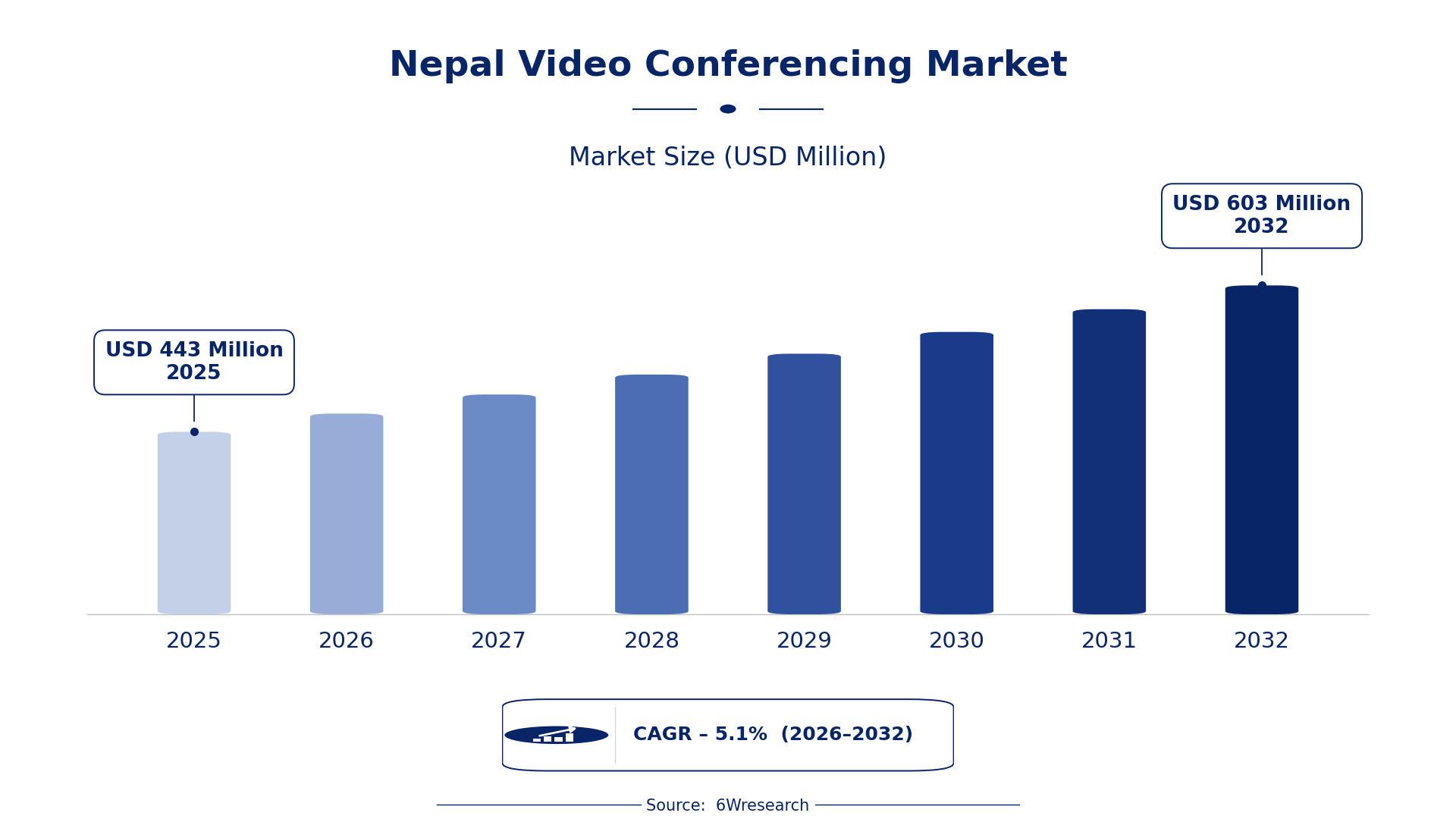
The Nepal Video Conferencing Market was estimated at USD 443 Million in 2025 and is projected to reach USD 603 Million by 2032, growing at a CAGR of 5.1% from 2026 to 2032.
Nepal Video Conferencing Market Synopsis
The demand for video conferencing solutions in Nepal is surging, especially as educational institutions pivot towards online learning platforms. This shift has necessitated a reliable communication infrastructure, propelling the adoption of video conferencing tools among educators and students alike.
Healthcare sectors are also embracing video conferencing for telemedicine, allowing remote consultations and patient follow-ups. This trend not only enhances accessibility but also significantly reduces the burden on physical healthcare facilities.
Nepal Video Conferencing Market Year-wise Growth Rate and Key Drivers
This graph illustrates the annual growth rates of the Nepal Video Conferencing Market from 2021 to 2032, highlighting a steady upward trajectory and projected expansion over the forecast period.
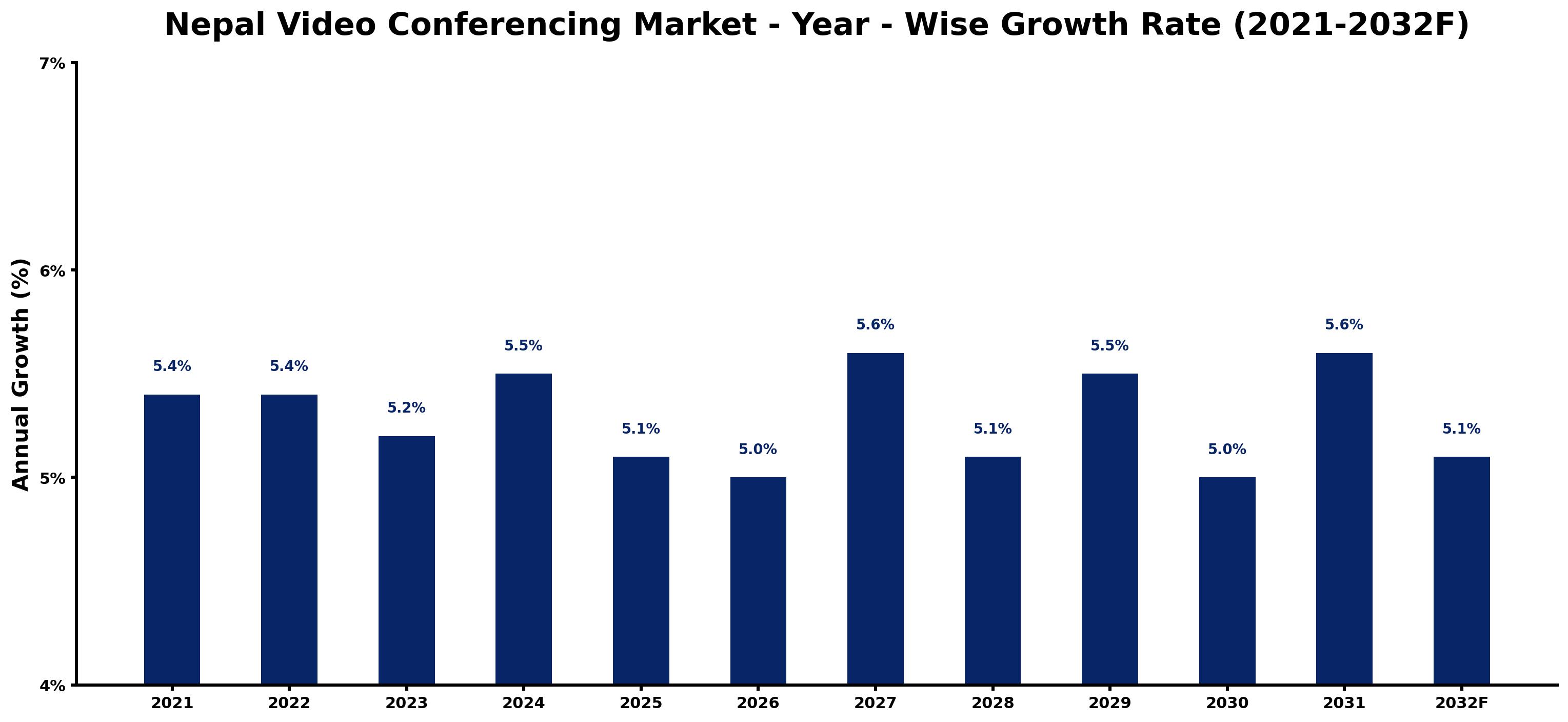
The table below presents the year‑wise growth rates along with the key drivers influencing the market
| Year | Growth Rate | Major Drivers |
| 2021 | 5.4% | Growing tech penetration in urban Nepalese populations. |
| 2022 | 5.4% | Ncell and Nepal Telecom enhancing internet infrastructure. |
| 2023 | 5.2% | Government initiatives promoting remote education and collaboration. |
| 2024 | 5.5% | Increased smartphone adoption among Nepalese youth. |
| 2025 | 5.1% | Enhanced broadband access in rural and remote areas. |
| 2026 | 5.0% | Corporate digitization efforts driven by pandemic recovery. |
| 2027 | 5.6% | Adoption of video solutions by educational institutions. |
| 2028 | 5.1% | Rising popularity of webinars among local businesses. |
| 2029 | 5.5% | Government support for ICT skill development programs. |
| 2030 | 5.0% | Integration of video conferencing in local startups. |
| 2031 | 5.6% | Demand for telehealth services increasing among households. |
| 2032 | 5.1% | Expanding digital literacy programs across urban centers. |
Note: Market size estimations and growth projections presented in this report are based on 6Wresearch's proprietary forecasting methodology, utilizing the latest available industry data, government publications, and primary research inputs.
Nepal Video Conferencing Market Key Takeaways
Below are some of the specific key takeaways from the market, including:
- The increasing adoption of remote work solutions is a primary driver of market growth.
- Cloud-based video conferencing services are becoming increasingly popular due to their flexibility and cost-effectiveness.
- The rise in high-speed internet connectivity is significantly enhancing video conferencing capabilities across Nepal.
- There is a notable trend toward personalized video conferencing solutions tailored to specific industry needs.
- Government initiatives are actively supporting the integration of video conferencing technology in various sectors.
Evaluation of Restraints in Nepal Video Conferencing Market
Despite promising growth, the Nepal video conferencing market faces several hurdles. Chief among these are the limitations of internet infrastructure, which can disrupt the quality of video and audio during meetings. Many areas still experience unreliable connectivity, posing challenges for consistent service delivery. Additionally, the high cost of equipment can deter small and medium-sized enterprises from fully adopting these technologies. Cultural preferences for in-person meetings further complicate widespread acceptance. Lastly, concerns regarding data security and privacy cannot be overlooked as more organizations shift to digital communication platforms.
Nepal Video Conferencing Market Trends
Current trends indicate a marked shift towards hybrid work models, blending remote and in-office work. This paradigm is pushing businesses to invest heavily in video conferencing solutions to maintain seamless communication. on top of that, advancements in artificial intelligence are beginning to influence the market, with features like automated scheduling and real-time transcription enhancing user experiences. The demand for enhanced security measures is also rising as businesses prioritize data protection in their digital communications.
Nepal Video Conferencing Market Opportunities
The market holds substantial growth opportunities, particularly in the education and healthcare sectors. By offering tailored solutions that address specific industry requirements, providers can tap into a growing customer base. Additionally, as internet infrastructure improves, the potential for new entrants to offer innovative services increases. Focusing on enhancing user experience and integrating advanced features like virtual reality could also set companies apart in a competitive landscape.
Government Initiatives in the Nepal Video Conferencing Market
The Nepalese government is actively fostering the development of the video conferencing market to enhance communication efficiency across various sectors. Policies aimed at improving digital infrastructure and promoting technology adoption are crucial at this time. The government's commitment to bolstering data security regulations also plays a significant role in building user trust.
- A national digital infrastructure upgrade program was initiated in early 2025 to enhance internet connectivity nationwide.
- Current efforts include ongoing tax incentives for businesses investing in video conferencing technology, aimed at encouraging widespread adoption.
- A regulatory framework introduced in 2024 mandates enhanced data privacy measures for video conferencing services.
- Upcoming initiatives include a public-private partnership expected to launch in late 2026, focusing on expanding access to video conferencing tools in rural areas.
- A recently completed awareness campaign aimed at educating businesses on the benefits of video conferencing was concluded in mid-2025.
Future Insights of the Nepal Video Conferencing Market
Looking ahead, the Nepal Video Conferencing Market is set to experience accelerated growth as digital transformation becomes a priority across industries. The ongoing improvements in internet infrastructure will likely enhance service reliability, paving the way for more businesses and educational institutions to adopt video conferencing solutions. Additionally, innovations in technology, such as AI integration, are expected to offer new functionalities, driving further demand.
Nepal Video Conferencing Market Latest Developments
In the past year, the Nepal video conferencing market has seen notable developments reflecting its growth trajectory. Organizations are increasingly recognizing the importance of reliable communication tools to support remote and hybrid work environments.
- A major technology vendor launched a new video conferencing platform designed specifically for educational institutions in Q2 2025, focusing on ease of use and accessibility.
- An initiative that began in early 2025 is currently underway, aimed at enhancing video conferencing security features in response to rising data privacy concerns.
- In mid-2025, a partnership was formed between local internet service providers and software developers to offer bundled services for video conferencing solutions.
- A rollout expected to begin in early 2026 will expand high-speed internet access to underserved regions, further facilitating video conferencing adoption.
Nepal Video Conferencing Market - Key Attractiveness of the Report
- 10 Years of Market Numbers
- Historical Data Starting from 2022 to 2025
- Base Year: 2025
- Forecast Data until 2032
- Key Performance Indicators Impacting the Market
- Major Upcoming Developments and Projects
Key Highlights of the Report:
- Nepal Video Conferencing Market Outlook
- Market Size of Nepal Video Conferencing Market, 2025
- Forecast of Nepal Video Conferencing Market, 2032
- Historical Data and Forecast of Nepal Video Conferencing Revenues & Volume for the Period 2022-2032F
- Nepal Video Conferencing Market Trend Evolution
- Nepal Video Conferencing Market Drivers and Challenges
- Nepal Video Conferencing Price Trends
- Nepal Video Conferencing Porter's Five Forces
- Nepal Video Conferencing Industry Life Cycle
- Historical Data and Forecast of Nepal Video Conferencing Market Revenues & Volume By Component for the Period 2022-2032F
- Historical Data and Forecast of Nepal Video Conferencing Market Revenues & Volume By Hardware for the Period 2022-2032F
- Historical Data and Forecast of Nepal Video Conferencing Market Revenues & Volume By Solutions for the Period 2022-2032F
- Historical Data and Forecast of Nepal Video Conferencing Market Revenues & Volume By Services for the Period 2022-2032F
- Historical Data and Forecast of Nepal Video Conferencing Market Revenues & Volume By Application for the Period 2022-2032F
- Historical Data and Forecast of Nepal Video Conferencing Market Revenues & Volume By Corporate Communications for the Period 2022-2032F
- Historical Data and Forecast of Nepal Video Conferencing Market Revenues & Volume By Training for the Period 2022-2032F
- Historical Data and Forecast of Nepal Video Conferencing Market Revenues & Volume By Development for the Period 2022-2032F
- Historical Data and Forecast of Nepal Video Conferencing Market Revenues & Volume By Marketing & Client Engagement for the Period 2022-2032F
- Historical Data and Forecast of Nepal Video Conferencing Market Revenues & Volume By Deployment Mode for the Period 2022-2032F
- Historical Data and Forecast of Nepal Video Conferencing Market Revenues & Volume By On-premises for the Period 2022-2032F
- Historical Data and Forecast of Nepal Video Conferencing Market Revenues & Volume By Cloud for the Period 2022-2032F
- Historical Data and Forecast of Nepal Video Conferencing Market Revenues & Volume By Vertical for the Period 2022-2032F
- Historical Data and Forecast of Nepal Video Conferencing Market Revenues & Volume By BFSI for the Period 2022-2032F
- Historical Data and Forecast of Nepal Video Conferencing Market Revenues & Volume By IT and Telecom for the Period 2022-2032F
- Historical Data and Forecast of Nepal Video Conferencing Market Revenues & Volume By Healthcare & Lifescience for the Period 2022-2032F
- Historical Data and Forecast of Nepal Video Conferencing Market Revenues & Volume By Education for the Period 2022-2032F
- Historical Data and Forecast of Nepal Video Conferencing Market Revenues & Volume By Media and Entertainment for the Period 2022-2032F
- Historical Data and Forecast of Nepal Video Conferencing Market Revenues & Volume By Other Verticals for the Period 2022-2032F
- Nepal Video Conferencing Import Export Trade Statistics
- Market Opportunity Assessment By Component
- Market Opportunity Assessment By Application
- Market Opportunity Assessment By Deployment Mode
- Market Opportunity Assessment By Vertical
- Nepal Video Conferencing Top Companies Market Share
- Nepal Video Conferencing Competitive Benchmarking By Technical and Operational Parameters
- Nepal Video Conferencing Company Profiles
- Nepal Video Conferencing Key Strategic Recommendations






































