Nepal Zinc Sulphate Market Size, Share & Growth Rate
The Nepal Zinc Sulphate Market was estimated at USD 295 Million in 2025 and is projected to reach USD 414 Million by 2032, growing at a CAGR of 5.0% from 2026 to 2032. This growth trajectory is primarily driven by the increasing demand for zinc sulfate as a micronutrient in agricultural practices, alongside government initiatives aimed at enhancing agricultural productivity. The rising awareness among farmers regarding the benefits of zinc in improving crop yield is further solidifying the foundation for sustained market expansion.
Nepal Zinc Sulphate Market Year-wise Growth Rate and Key Drivers
This graph highlights how the Nepal Zinc Sulphate Market has steadily grown over the years, supported by major growth factors.
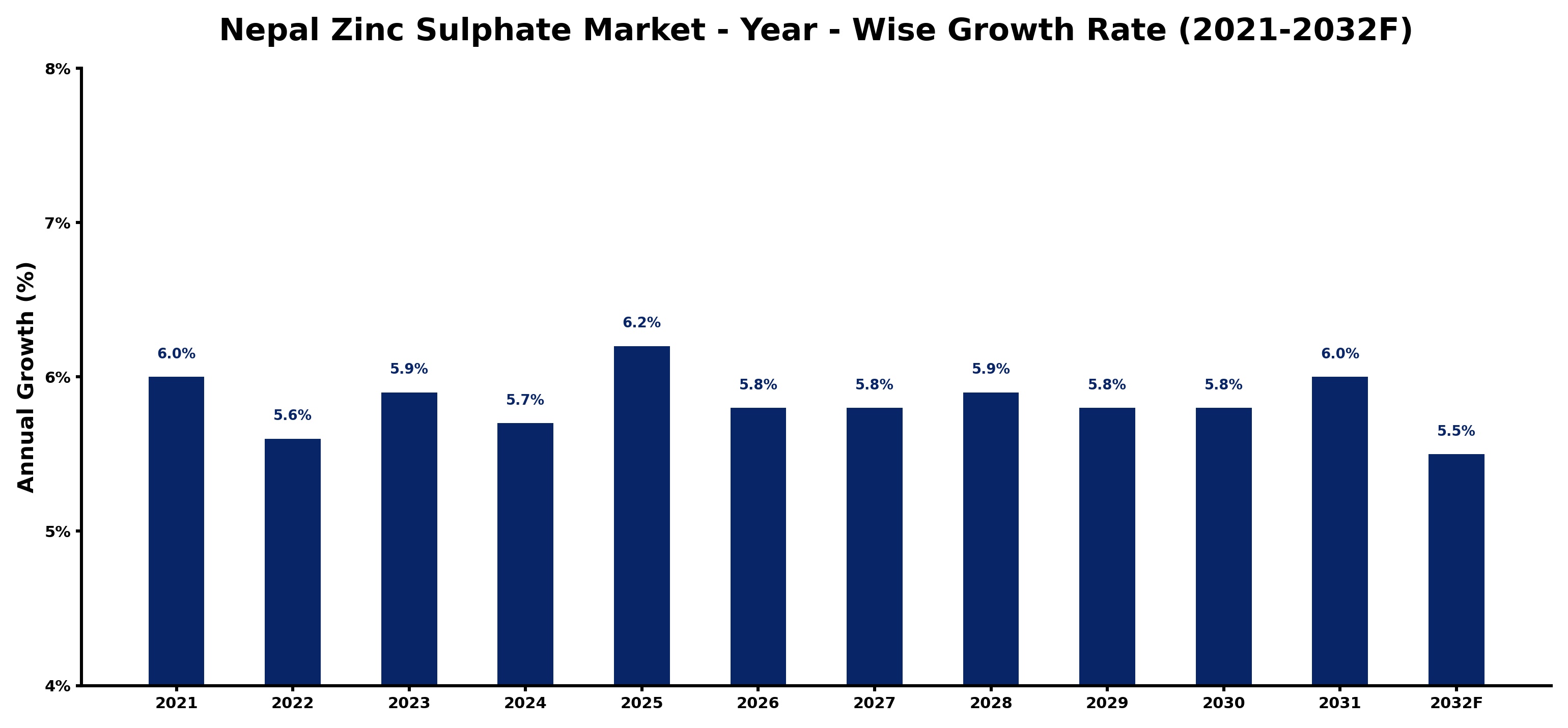
The table below presents the year‑wise growth rates along with the key drivers influencing the market
| Year | Growth Rate | Major Drivers |
| 2021 | 6.0% | Agricultural sector growth stimulated demand |
| 2022 | 5.6% | Increased awareness of micronutrients benefits |
| 2023 | 5.9% | Rising fertilizer usage enhanced sales |
| 2024 | 5.7% | Government support for agriculture initiatives |
| 2025 | 6.2% | Export opportunities expanded market reach |
| 2026 | 5.8% | Crop yield improvements drove consumption |
| 2027 | 5.8% | Sustainable farming practices gained traction |
| 2028 | 5.9% | Research and development investments increased |
| 2029 | 5.8% | Partnerships with agricultural cooperatives formed |
| 2030 | 5.8% | Technological advancements improved production |
| 2031 | 6.0% | Consumer education on zinc benefits |
| 2032 | 5.5% | Regulatory support for micronutrient usage |
Note - Market size estimations and growth projections presented in this report are based on 6Wresearch's advanced forecasting approach, validated with industry datasets as of June 2026.
Nepal Zinc Sulphate Market Synopsis
The demand for zinc sulfate in Nepal is particularly pronounced in regions with zinc-deficient soil, where its application can significantly boost agricultural output. With the government actively promoting the use of micronutrients in fertilizers, there is a growing recognition of zinc sulfate's role in ensuring food security and enhancing soil health.
Nepal's agricultural sector, which employs a substantial portion of the population, is increasingly adopting sustainable farming practices. This shift not only fosters a rising interest in zinc sulfate but also opens avenues for manufacturers to innovate and meet the evolving needs of farmers who are prioritizing organic and environmentally friendly solutions.
Nepal Zinc Sulphate Market Key Takeaways
- Growing awareness among farmers about the significance of zinc in crop health is driving demand.
- Government subsidies and policies are incentivizing the adoption of zinc sulfate in agriculture.
- Challenges remain in the distribution and accessibility of quality zinc sulfate products.
- The trend towards organic farming is creating opportunities for the development of specialized zinc sulfate fertilizers.
- Investment in production capabilities is crucial to meet the burgeoning market demand.
Evaluation of Restraints in Nepal Zinc Sulphate Market
Despite the promising growth, the Nepal Zinc Sulphate market faces several restraints that could impede progress. Limited awareness among farmers about the specific benefits of zinc sulfate presents a significant hurdle. Furthermore, inconsistent product quality can lead to skepticism regarding efficacy, making it difficult for legitimate producers to gain trust. Access to high-quality zinc sulfate at reasonable prices is also a major concern, particularly in rural areas where transportation infrastructure may be lacking. These challenges necessitate a coordinated effort from industry players to enhance product quality, improve distribution channels, and educate farmers effectively.
Nepal Zinc Sulphate Market Trends
The Nepal Zinc Sulphate market is currently shaped by several compelling trends. Firstly, the emphasis on sustainable agriculture is gaining momentum, with more farmers recognizing the importance of micronutrients in maintaining soil fertility. Secondly, innovations in product formulations are being explored to cater to the organic segment, providing more targeted solutions for different crop types. Additionally, educational campaigns spearheaded by government bodies and agricultural organizations are fostering greater understanding of the impact of zinc sulfate on yield enhancement, further influencing market dynamics.
Nepal Zinc Sulphate Market Opportunities
The opportunities for investment and growth in the Nepal Zinc Sulphate market are robust. As the agricultural sector continues to modernize, companies have a unique chance to align their products with the evolving needs of farmers. The rising trend toward organic farming presents an avenue for specialized zinc sulfate formulations tailored to organic growers. Furthermore, the government's support for sustainable farming practices could lead to increased funding and resources for zinc sulfate production initiatives, ensuring long-term market viability.
Government Initiatives in the Nepal Zinc Sulphate Market
The Nepalese government has put in place several initiatives aimed at bolstering the agricultural sector and promoting the use of zinc sulfate fertilizers. These include subsidies aimed at reducing costs for farmers and enhancing the accessibility of quality fertilizers. Additionally, there are ongoing awareness campaigns that educate farmers about the essential role of micronutrients like zinc in achieving higher crop productivity. Regulatory measures have also been instituted to ensure the quality and effectiveness of zinc sulfate products, further supporting the agricultural community.
Future Insights of the Nepal Zinc Sulphate Market
Looking ahead to 2026-2032, the Nepal Zinc Sulphate market is poised for significant advancements. The combination of increasing agricultural demand, coupled with heightened awareness of zinc deficiencies, will likely sustain market momentum. As technological innovations improve production efficiency and product quality, stakeholders can expect to see an increase in the diversity of zinc sulfate offerings. The pharmaceutical applications of zinc sulfate also present an additional layer of growth potential, further reinforcing the market's robust outlook.
Nepal Zinc Sulphate Market Latest Developments (May 2025 - June 2026)
In recent months, the Nepal Zinc Sulphate market has seen a shift towards the introduction of more diverse product formulations aimed at specific crop needs. Manufacturers are increasingly focusing on developing organic-approved zinc sulfate products to meet the demands of environmentally conscious farmers. Furthermore, collaborations between government entities and agricultural organizations are intensifying, paving the way for more comprehensive educational programs on nutrient management and the effective use of zinc sulfate fertilizers.
Nepal Zinc Sulphate Market - Key Attractiveness of the Report
- 10 Years of Market Numbers
- Historical Data Starting from 2022 to 2025
- Base Year: 2025
- Forecast Data until 2032
- Key Performance Indicators Impacting the Market
- Major Upcoming Developments and Projects
Key Highlights of the Report:
- Nepal Zinc Sulphate Market Outlook
- Market Size of Nepal Zinc Sulphate Market, 2025
- Forecast of Nepal Zinc Sulphate Market, 2032
- Historical Data and Forecast of Nepal Zinc Sulphate Revenues & Volume for the Period 2022-2032F
- Nepal Zinc Sulphate Market Trend Evolution
- Nepal Zinc Sulphate Market Drivers and Challenges
- Nepal Zinc Sulphate Price Trends
- Nepal Zinc Sulphate Porter's Five Forces
- Nepal Zinc Sulphate Industry Life Cycle
- Historical Data and Forecast of Nepal Zinc Sulphate Market Revenues & Volume By Type for the Period 2022-2032F
- Historical Data and Forecast of Nepal Zinc Sulphate Market Revenues & Volume By Zinc Sulphate Anhydrous for the Period 2022-2032F
- Historical Data and Forecast of Nepal Zinc Sulphate Market Revenues & Volume By Zinc Sulphate Hexahydrate for the Period 2022-2032F
- Historical Data and Forecast of Nepal Zinc Sulphate Market Revenues & Volume By Zinc Sulphate Heptahydrate for the Period 2022-2032F
- Historical Data and Forecast of Nepal Zinc Sulphate Market Revenues & Volume By Zinc Sulphate Monohydrate for the Period 2022-2032F
- Historical Data and Forecast of Nepal Zinc Sulphate Market Revenues & Volume By Application for the Period 2022-2032F
- Historical Data and Forecast of Nepal Zinc Sulphate Market Revenues & Volume By Agrochemicals for the Period 2022-2032F
- Historical Data and Forecast of Nepal Zinc Sulphate Market Revenues & Volume By Chemicals for the Period 2022-2032F
- Historical Data and Forecast of Nepal Zinc Sulphate Market Revenues & Volume By Pharmaceuticals for the Period 2022-2032F
- Historical Data and Forecast of Nepal Zinc Sulphate Market Revenues & Volume By Synthetic Fibers for the Period 2022-2032F
- Historical Data and Forecast of Nepal Zinc Sulphate Market Revenues & Volume By Water Treatment for the Period 2022-2032F
- Historical Data and Forecast of Nepal Zinc Sulphate Market Revenues & Volume By Others for the Period 2022-2032F
- Nepal Zinc Sulphate Import Export Trade Statistics
- Market Opportunity Assessment By Type
- Market Opportunity Assessment By Application
- Nepal Zinc Sulphate Top Companies Market Share
- Nepal Zinc Sulphate Competitive Benchmarking By Technical and Operational Parameters
- Nepal Zinc Sulphate Company Profiles
- Nepal Zinc Sulphate Key Strategic Recommendations






































