Netherlands Ascorbic Acid Market Size (2020-2030)
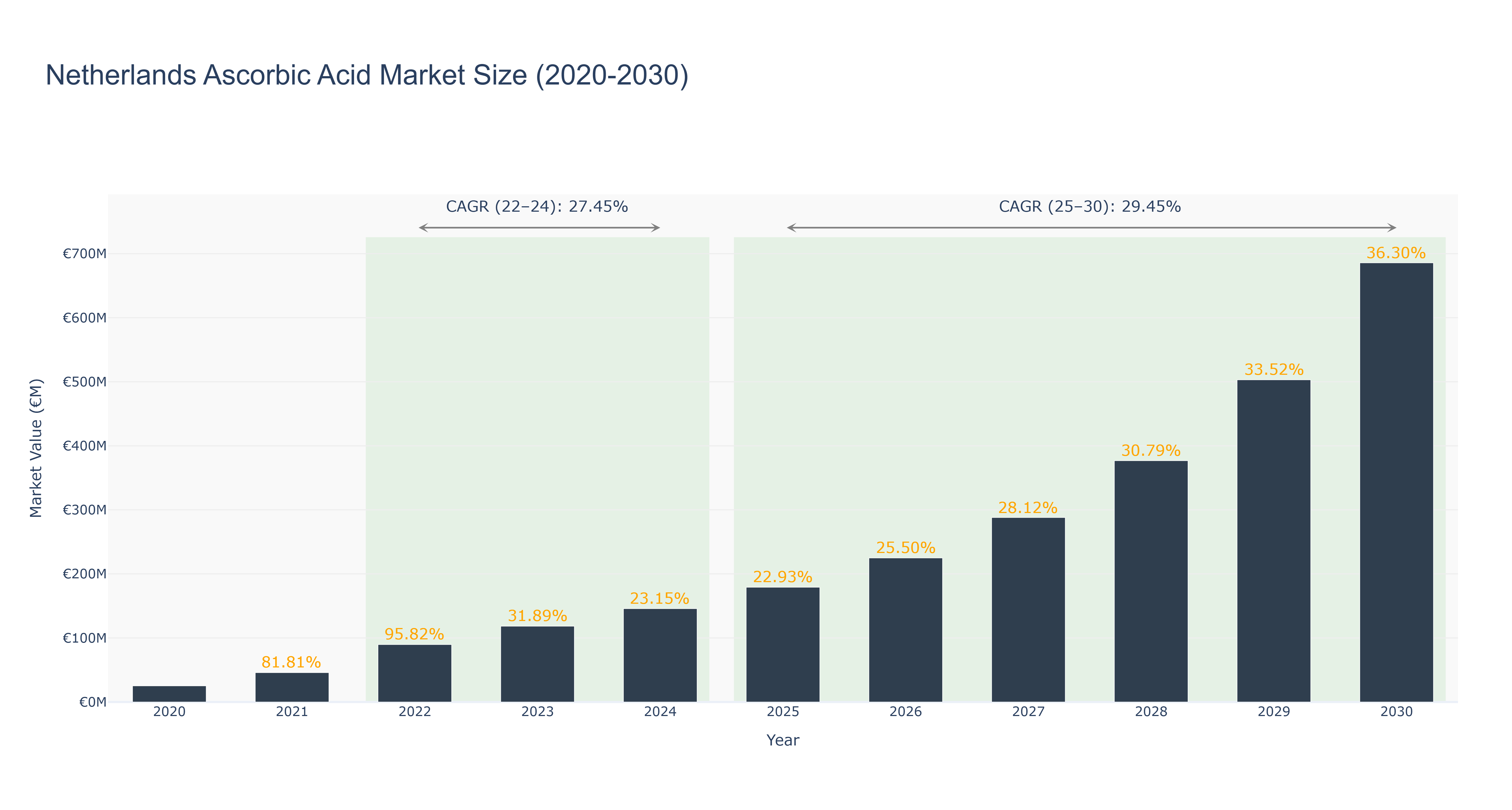
Netherlands Ascorbic Acid Market has shown a steady growth trajectory over the years. The market size increased from €25.20 million in 2020 to €145.75 million in 2024, experiencing a notable 23.15% growth rate. Forecasts indicate a promising outlook, with the market size projected to reach €685.70 million by 2030, exhibiting a Compound Annual Growth Rate (CAGR) of 29.45% from 2025 to 2030. The market witnessed a spike in growth between 2026 and 2027, with a 28.12% increase attributed to rising consumer demand for health supplements. Looking ahead, the Netherlands Ascorbic Acid Market is poised for further expansion driven by increasing awareness of the health benefits of vitamin C, and upcoming collaborations between local pharmaceutical companies and research institutions to develop innovative formulations for the market.
Netherlands Ascorbic Acid Market: Production & Trade Performance (2019-2025)
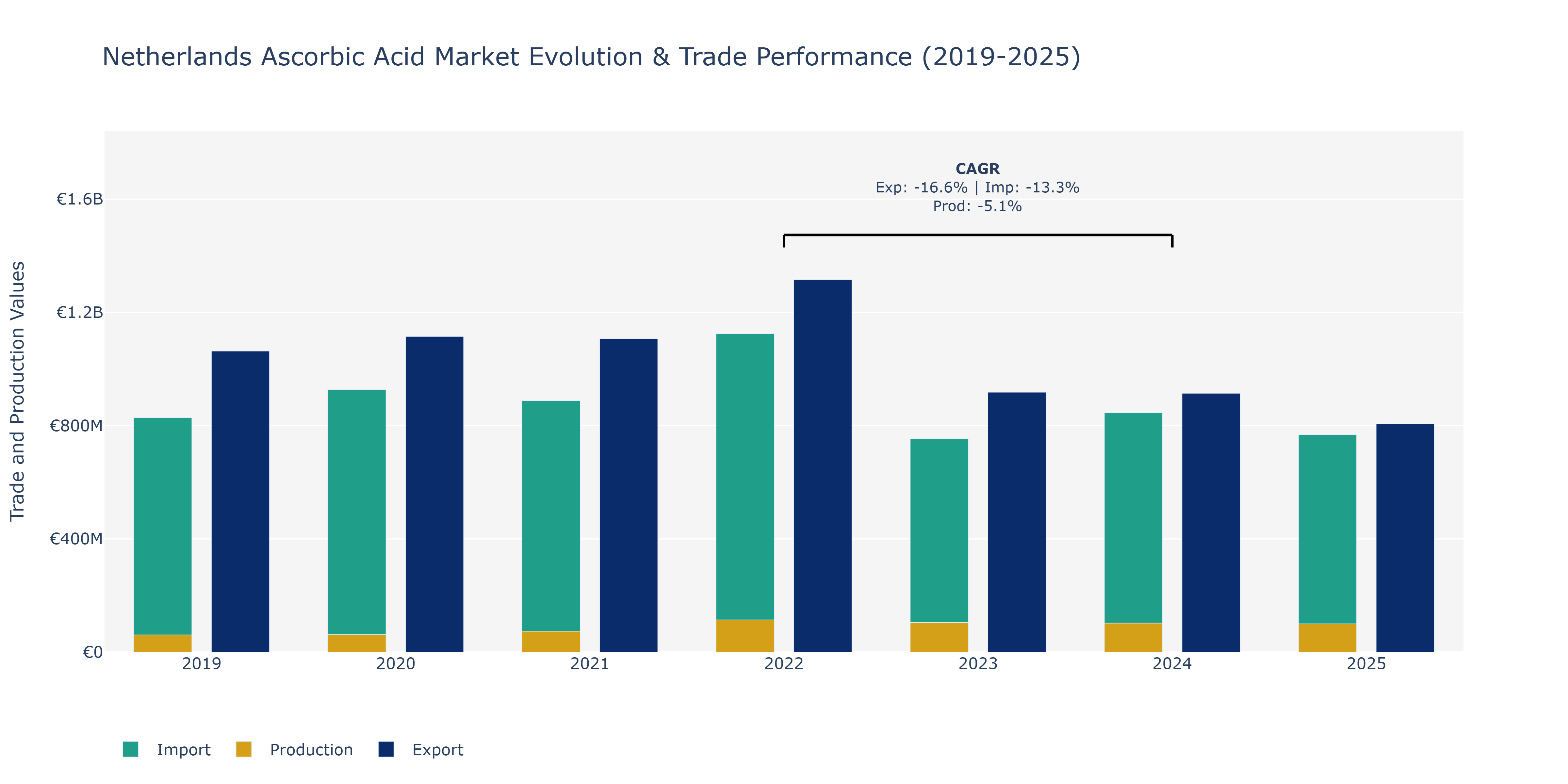
In the Netherlands Ascorbic Acid Market, from 2019 to 2025, exports fluctuated with a peak in 2022 at €1.32 billion and a decrease to €0.81 billion in 2025. Imports followed a similar pattern, reaching a peak of €1.12 billion in 2022 and then decreasing to €0.77 billion in 2025. Production also saw fluctuations, peaking in 2022 at €113.43 million and then declining to €99.64 million in 2025. The decrease in exports and imports post-2022 could be attributed to changes in global demand, trade policies, or competitive pressures affecting the Netherlands' ascorbic acid market. The decline in production could be influenced by factors such as technological advancements leading to increased efficiency or shifts in raw material costs impacting the production process. These trends highlight the market's sensitivity to both domestic and international dynamics, necessitating strategic adaptation to maintain competitiveness in the industry.
Key Highlights of the Report:
- Netherlands Ascorbic Acid Market Outlook
- Market Size of Netherlands Ascorbic Acid Market, 2025
- Forecast of Netherlands Ascorbic Acid Market, 2032
- Historical Data and Forecast of Netherlands Ascorbic Acid Revenues & Volume for the Period 2022 - 2032F
- Netherlands Ascorbic Acid Market Trend Evolution
- Netherlands Ascorbic Acid Market Drivers and Challenges
- Netherlands Ascorbic Acid Price Trends
- Netherlands Ascorbic Acid Porter`s Five Forces
- Netherlands Ascorbic Acid Industry Life Cycle
- Historical Data and Forecast of Netherlands Ascorbic Acid Market Revenues & Volume By Grade for the Period 2022 - 2032F
- Historical Data and Forecast of Netherlands Ascorbic Acid Market Revenues & Volume By Food & Pharmaceutical for the Period 2022 - 2032F
- Historical Data and Forecast of Netherlands Ascorbic Acid Market Revenues & Volume By Industrial for the Period 2022 - 2032F
- Historical Data and Forecast of Netherlands Ascorbic Acid Market Revenues & Volume By Application for the Period 2022 - 2032F
- Historical Data and Forecast of Netherlands Ascorbic Acid Market Revenues & Volume By Food & Beverages for the Period 2022 - 2032F
- Historical Data and Forecast of Netherlands Ascorbic Acid Market Revenues & Volume By Pharmaceutical for the Period 2022 - 2032F
- Historical Data and Forecast of Netherlands Ascorbic Acid Market Revenues & Volume By Cosmetics for the Period 2022 - 2032F
- Historical Data and Forecast of Netherlands Ascorbic Acid Market Revenues & Volume By Chemicals for the Period 2022 - 2032F
- Historical Data and Forecast of Netherlands Ascorbic Acid Market Revenues & Volume By Agriculture for the Period 2022 - 2032F
- Historical Data and Forecast of Netherlands Ascorbic Acid Market Revenues & Volume By Others for the Period 2022 - 2032F
- Netherlands Ascorbic Acid Import Export Trade Statistics
- Market Opportunity Assessment By Grade
- Market Opportunity Assessment By Application
- Netherlands Ascorbic Acid Top Companies Market Share
- Netherlands Ascorbic Acid Competitive Benchmarking By Technical and Operational Parameters
- Netherlands Ascorbic Acid Company Profiles
- Netherlands Ascorbic Acid Key Strategic Recommendations






































