Netherlands Electrostatic Precipitator Market Top 5 Importing Countries and Market Competition (HHI) Analysis
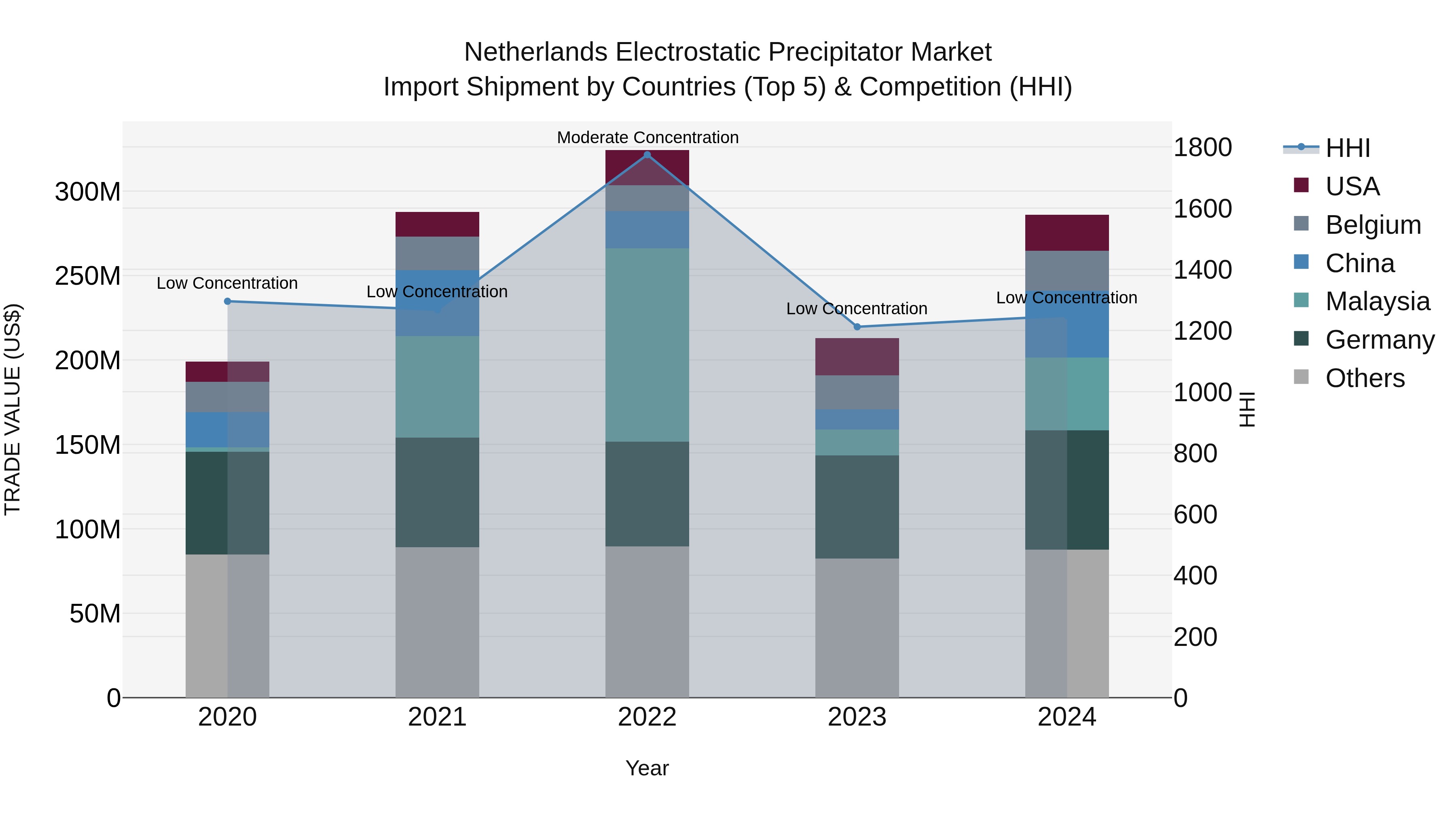
In 2024, the Netherlands saw a significant increase in electrostatic precipitator import shipments, with top exporting countries being Germany, Malaysia, China, Belgium, and the USA. The market remained competitive with low concentration, indicating a diverse range of suppliers. The compound annual growth rate (CAGR) from 2020 to 2024 was strong at 9.48%, and the growth rate from 2023 to 2024 spiked at an impressive 34.35%. These statistics suggest a thriving market for electrostatic precipitators in the Netherlands, driven by a variety of international suppliers.
Netherlands Electrostatic Precipitator Market Synopsis
The Netherlands Electrostatic Precipitator market is witnessing steady growth due to increasing environmental regulations and the need for efficient air pollution control systems. Key factors driving market growth include the rising awareness about the harmful effects of air pollution, particularly in industrial sectors, leading to higher adoption of electrostatic precipitators. Additionally, the government`s focus on sustainable development and clean energy initiatives further boosts market demand. Major players in the Netherlands Electrostatic Precipitator market include Mitsubishi Hitachi Power Systems, Ltd., Babcock & Wilcox Enterprises, Inc., and General Electric Company, among others. The market is characterized by technological advancements such as the integration of IoT and digital monitoring systems to enhance efficiency and reduce maintenance costs, offering lucrative opportunities for market expansion in the forecast period.
Netherlands Electrostatic Precipitator Market Trends
In the Netherlands, the Electrostatic Precipitator Market is witnessing a growing demand driven by the increasing focus on environmental regulations and sustainability. The push towards reducing air pollution and greenhouse gas emissions has propelled the adoption of electrostatic precipitators in various industries such as power generation, cement, and chemical plants. Additionally, the government`s incentives and initiatives to promote clean energy sources and technologies have further boosted the market growth. With advancements in technology leading to more efficient and cost-effective electrostatic precipitators, there are significant opportunities for manufacturers and suppliers to capitalize on this trend. Collaborations with research institutions and investment in innovation are key strategies for companies looking to establish a strong presence in the evolving Netherlands electrostatic precipitator market.
Netherlands Electrostatic Precipitator Market Challenges
In the Netherlands Electrostatic Precipitator Market, challenges primarily revolve around the need for continuous technological advancements to meet stringent environmental regulations and energy efficiency standards. As the country focuses on reducing air pollution and promoting sustainable practices, electrostatic precipitator manufacturers must invest in research and development to enhance the efficiency and effectiveness of their products. Additionally, competition from alternative technologies such as fabric filters and scrubbers poses a challenge in maintaining market share. Economic factors, including fluctuations in raw material prices and overall market demand, also impact the growth of the electrostatic precipitator market in the Netherlands. Overall, navigating these challenges requires market players to stay innovative, adaptable, and responsive to evolving regulatory and industry trends.
Netherlands Electrostatic Precipitator Market Investment Opportunities
The Netherlands Electrostatic Precipitator market is primarily driven by the growing concerns regarding air pollution and the increasing focus on environmental sustainability. Stringent regulations imposed by the government to reduce emissions from industrial activities have propelled the demand for electrostatic precipitators as an effective air pollution control technology. Additionally, the rising awareness among industries about the benefits of electrostatic precipitators in improving air quality and reducing health risks for employees is further driving market growth. The technological advancements in electrostatic precipitators, such as enhanced efficiency and reduced maintenance costs, are also contributing to the market expansion in the Netherlands. Overall, the shift towards cleaner and more sustainable industrial operations is a key driver shaping the electrostatic precipitator market in the country.
Netherlands Electrostatic Precipitator Market Government Polices
In the Netherlands, government policies related to the Electrostatic Precipitator (ESP) market primarily focus on environmental protection and air quality improvement. The government has implemented regulations and standards to ensure that ESPs installed in various industries comply with emission limits and effectively capture particulate matter. Additionally, there are incentives and subsidies available for companies investing in advanced ESP technologies to reduce their environmental impact and promote sustainability. The government also encourages research and development in the ESP sector to foster innovation and drive the adoption of more efficient and cost-effective solutions. Overall, the Netherlands government`s policies aim to support the ESP market`s growth while safeguarding the environment and public health.
Netherlands Electrostatic Precipitator Market Future Outlook
The future outlook for the Netherlands Electrostatic Precipitator Market appears to be promising as the country continues to prioritize environmental sustainability and air quality improvement. With increasing regulations and government initiatives focusing on reducing emissions and promoting clean energy, the demand for electrostatic precipitators is expected to rise. The market is likely to witness growth driven by industries such as power generation, cement, and chemical processing that require effective particulate matter control solutions. Additionally, advancements in technology leading to more efficient and cost-effective electrostatic precipitator systems will further stimulate market expansion. Overall, a combination of regulatory support, industry awareness, and technological advancements is anticipated to drive steady growth in the Netherlands Electrostatic Precipitator Market in the coming years.
Key Highlights of the Report:
- Netherlands Electrostatic Precipitator Market Outlook
- Market Size of Netherlands Electrostatic Precipitator Market, 2024
- Forecast of Netherlands Electrostatic Precipitator Market, 2031
- Historical Data and Forecast of Netherlands Electrostatic Precipitator Revenues & Volume for the Period 2021-2031
- Netherlands Electrostatic Precipitator Market Trend Evolution
- Netherlands Electrostatic Precipitator Market Drivers and Challenges
- Netherlands Electrostatic Precipitator Price Trends
- Netherlands Electrostatic Precipitator Porter`s Five Forces
- Netherlands Electrostatic Precipitator Industry Life Cycle
- Historical Data and Forecast of Netherlands Electrostatic Precipitator Market Revenues & Volume By Type for the Period 2021-2031
- Historical Data and Forecast of Netherlands Electrostatic Precipitator Market Revenues & Volume By Dry ESP for the Period 2021-2031
- Historical Data and Forecast of Netherlands Electrostatic Precipitator Market Revenues & Volume By Wet ESP for the Period 2021-2031
- Historical Data and Forecast of Netherlands Electrostatic Precipitator Market Revenues & Volume By Vertical for the Period 2021-2031
- Historical Data and Forecast of Netherlands Electrostatic Precipitator Market Revenues & Volume By Power & Electricity for the Period 2021-2031
- Historical Data and Forecast of Netherlands Electrostatic Precipitator Market Revenues & Volume By Metals for the Period 2021-2031
- Historical Data and Forecast of Netherlands Electrostatic Precipitator Market Revenues & Volume By Cement for the Period 2021-2031
- Historical Data and Forecast of Netherlands Electrostatic Precipitator Market Revenues & Volume By Chemicals for the Period 2021-2031
- Historical Data and Forecast of Netherlands Electrostatic Precipitator Market Revenues & Volume By End User for the Period 2021-2031
- Historical Data and Forecast of Netherlands Electrostatic Precipitator Market Revenues & Volume By Power & Electricity for the Period 2021-2031
- Historical Data and Forecast of Netherlands Electrostatic Precipitator Market Revenues & Volume By Metal for the Period 2021-2031
- Historical Data and Forecast of Netherlands Electrostatic Precipitator Market Revenues & Volume By Cement for the Period 2021-2031
- Historical Data and Forecast of Netherlands Electrostatic Precipitator Market Revenues & Volume By Chemicals for the Period 2021-2031
- Historical Data and Forecast of Netherlands Electrostatic Precipitator Market Revenues & Volume By Others for the Period 2021-2031
- Historical Data and Forecast of Netherlands Electrostatic Precipitator Market Revenues & Volume By Offering for the Period 2021-2031
- Historical Data and Forecast of Netherlands Electrostatic Precipitator Market Revenues & Volume By Hardware & Software for the Period 2021-2031
- Historical Data and Forecast of Netherlands Electrostatic Precipitator Market Revenues & Volume By Services for the Period 2021-2031
- Netherlands Electrostatic Precipitator Import Export Trade Statistics
- Market Opportunity Assessment By Type
- Market Opportunity Assessment By Vertical
- Market Opportunity Assessment By End User
- Market Opportunity Assessment By Offering
- Netherlands Electrostatic Precipitator Top Companies Market Share
- Netherlands Electrostatic Precipitator Competitive Benchmarking By Technical and Operational Parameters
- Netherlands Electrostatic Precipitator Company Profiles
- Netherlands Electrostatic Precipitator Key Strategic Recommendations






































