Netherlands Nickel Market Size (2020-2030)
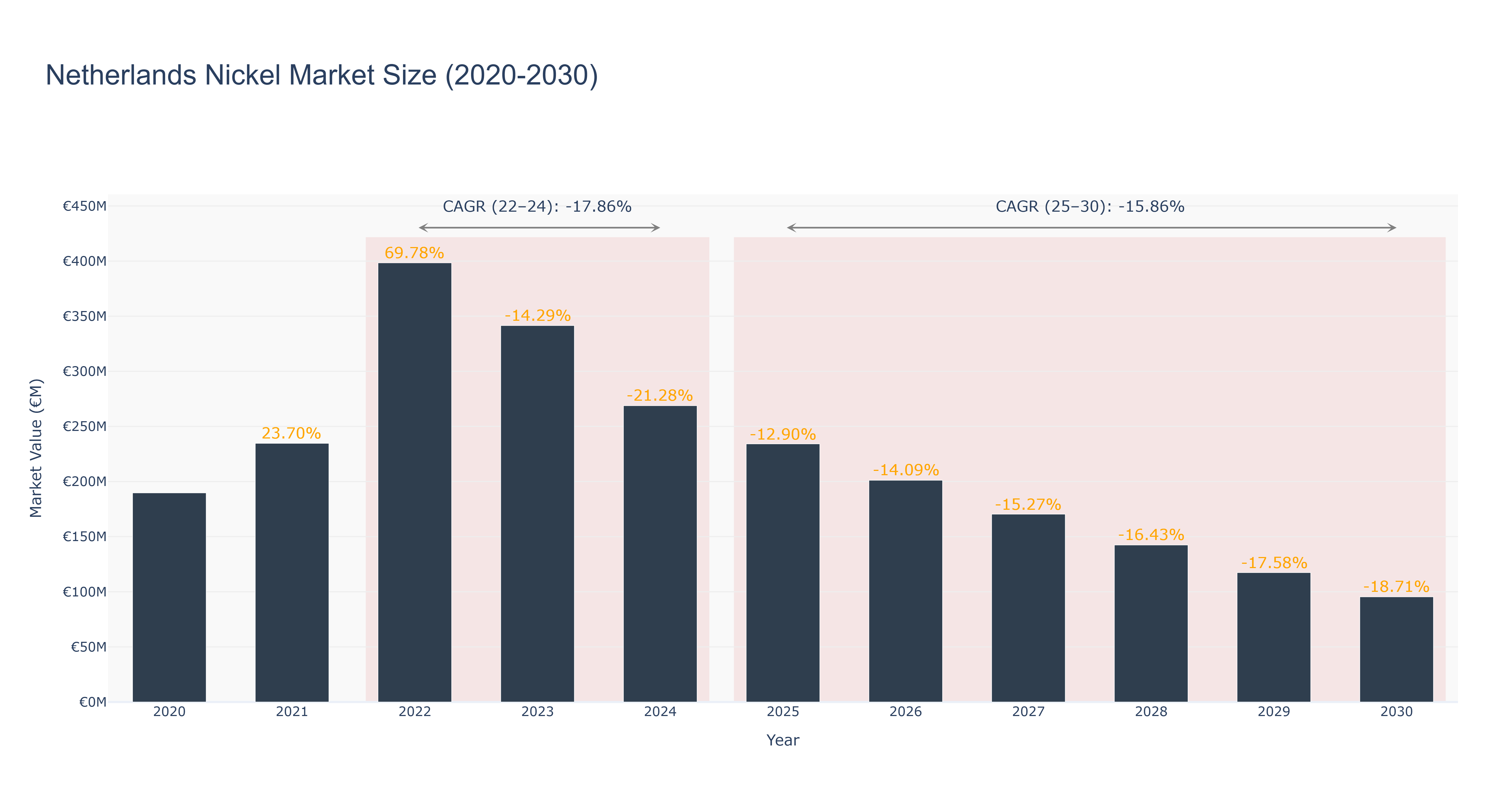
Netherlands Nickel Market has experienced fluctuations in recent years. The peak market size was €398.39 million in 2022, followed by a decline to €268.82 million in 2024. The forecasted market size from 2025 to 2030 suggests a further decrease, reaching €95.41 million in 2030. The CAGR for the period 2022-24 was -17.86%, while for 2025-30, it is projected to be -15.86%. The market downturn can be attributed to global economic uncertainties impacting demand, while the forecasted decline may be influenced by evolving consumer preferences towards alternative materials. Despite these challenges, recent developments indicate potential collaborations with sustainable energy initiatives in the country, aiming to drive innovation and market growth in the near future. The industry drivers include technological advancements and environmental regulations shaping the market landscape. Looking ahead, strategic partnerships and investments in research and development are crucial for the market's resilience and competitiveness.
Netherlands Nickel Market: Production & Trade Performance (2019-2025)
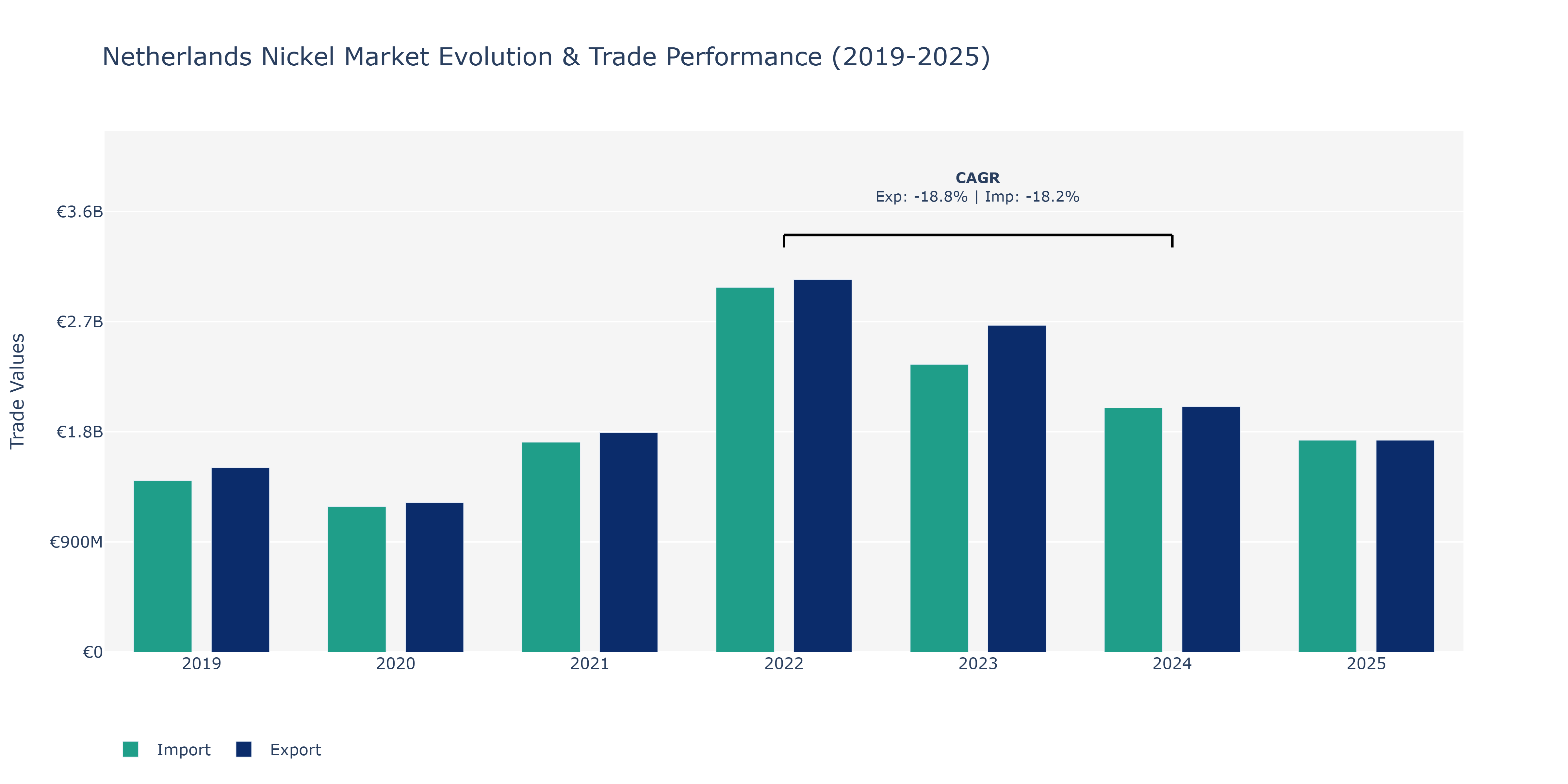
The Netherlands Nickel Market experienced fluctuating trends in both exports and imports from 2019 to 2025. Exports peaked in 2022 at €3.04 billion, showcasing a substantial increase from the previous years. However, a notable decline followed in 2023 and 2024, dropping to €2.67 billion and €2.01 billion, respectively. By 2025, exports had decreased further to €1.73 billion. Conversely, imports mirrored this pattern, with a peak in 2022 at €2.98 billion, followed by a decrease in the subsequent years. The market saw a balanced trade volume in 2024, with imports almost on par with exports. These fluctuations can be attributed to several factors, including global demand shifts, price fluctuations, and supply chain disruptions. Additionally, economic conditions and trade agreements may have influenced these trends. The negative CAGR for both exports and imports from 2022 to 2024 indicates a challenging period for the Netherlands Nickel Market, necessitating strategic adjustments to navigate market dynamics effectively.
Key Highlights of the Report:
- Netherlands Nickel Market Outlook
- Market Size of Netherlands Nickel Market, 2025
- Forecast of Netherlands Nickel Market, 2032
- Historical Data and Forecast of Netherlands Nickel Revenues & Volume for the Period 2022 - 2032F
- Netherlands Nickel Market Trend Evolution
- Netherlands Nickel Market Drivers and Challenges
- Netherlands Nickel Price Trends
- Netherlands Nickel Porter`s Five Forces
- Netherlands Nickel Industry Life Cycle
- Historical Data and Forecast of Netherlands Nickel Market Revenues & Volume By Applications for the Period 2022 - 2032F
- Historical Data and Forecast of Netherlands Nickel Market Revenues & Volume By Stainless Steel for the Period 2022 - 2032F
- Historical Data and Forecast of Netherlands Nickel Market Revenues & Volume By Super Magnets for the Period 2022 - 2032F
- Historical Data and Forecast of Netherlands Nickel Market Revenues & Volume By Electroplating Chemicals for the Period 2022 - 2032F
- Historical Data and Forecast of Netherlands Nickel Market Revenues & Volume By Rechargeable Batteries for the Period 2022 - 2032F
- Historical Data and Forecast of Netherlands Nickel Market Revenues & Volume By Others for the Period 2022 - 2032F
- Netherlands Nickel Import Export Trade Statistics
- Market Opportunity Assessment By Applications
- Netherlands Nickel Top Companies Market Share
- Netherlands Nickel Competitive Benchmarking By Technical and Operational Parameters
- Netherlands Nickel Company Profiles
- Netherlands Nickel Key Strategic Recommendations






































