Netherlands Polyester Spun Yarn Market Size (2020-2030)
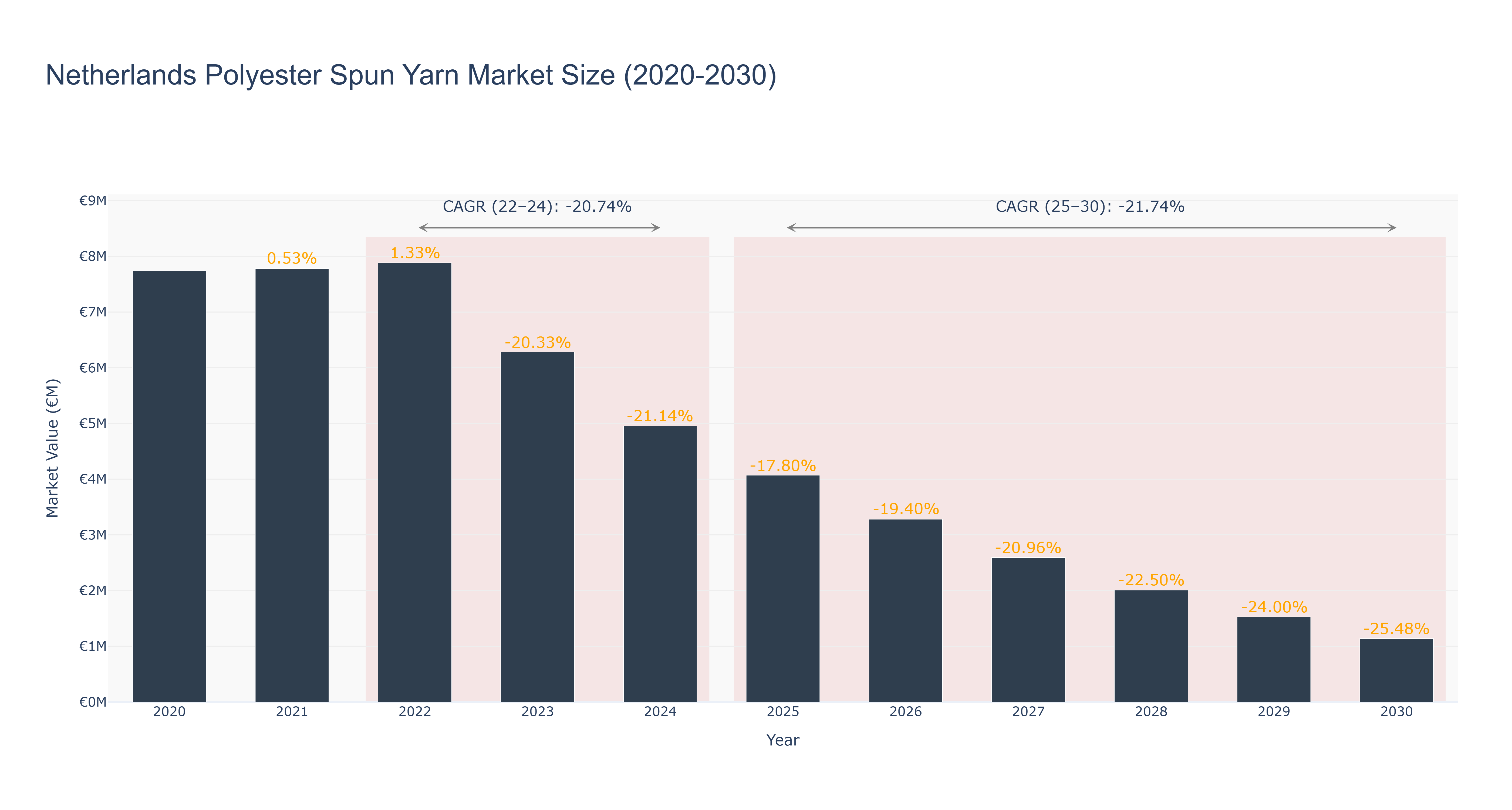
The Netherlands Polyester Spun Yarn Market experienced a peak market size of €7.88 million in 2022, followed by a decline to €4.07 million in 2025. The market is forecasted to continue shrinking, reaching €1.14 million by 2030, with a CAGR of -21.74% from 2025 to 2030. The downward trend can be attributed to various factors such as changing consumer preferences, increased competition, and economic uncertainties. Despite the challenging market conditions, there are upcoming projects in sustainable yarn production and innovative technology adoption that aim to revitalize the market in the near future. Industry drivers like sustainability initiatives and technological advancements will play a crucial role in shaping the market's trajectory. Stakeholders should focus on adapting to changing market dynamics and leveraging these developments to drive growth in the Netherlands Polyester Spun Yarn Market.
Netherlands Polyester Spun Yarn Market: Production & Trade Performance (2019-2025)
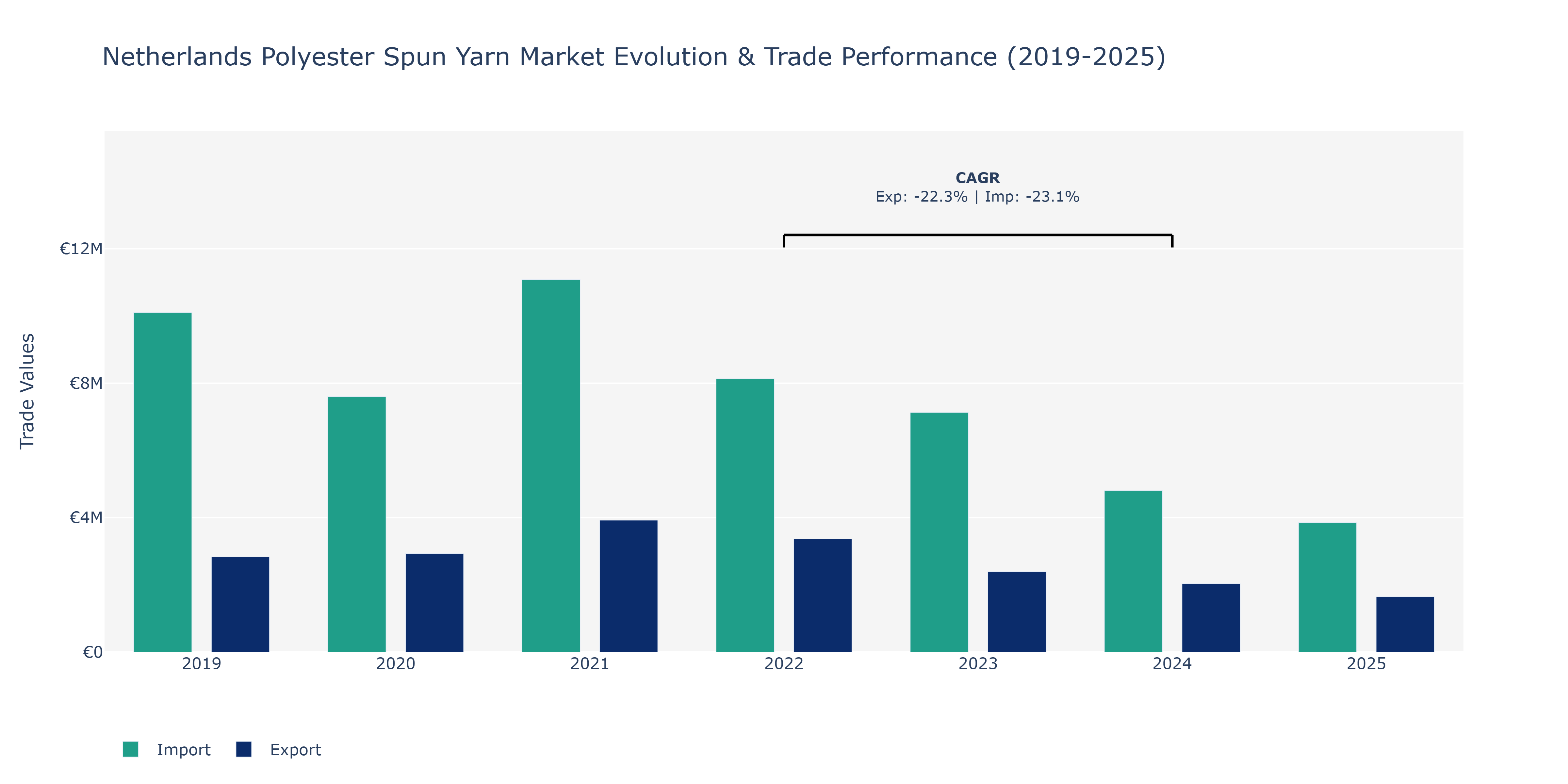
In the Netherlands Polyester Spun Yarn Market, exports and imports experienced notable fluctuations over the years. In 2019, imports exceeded exports significantly, standing at €10.1 million and €2.83 million, respectively. However, by 2021, exports surged to €3.92 million, surpassing Import value of €11.08 million. This increase in exports could be attributed to the growing demand for polyester spun yarn in the global textile industry, driven by factors such as sustainability concerns and versatile applications in clothing and home textiles. Despite a temporary decline in 2023 to €2.39 million for exports and €7.13 million for imports, the market showed resilience, bouncing back in subsequent years. The substantial decrease in imports in 2024 to €4.81 million might indicate local production capacity improvements or shifts in sourcing strategies. The declining trend continues in 2025, demonstrating a consistent focus on enhancing export competitiveness and possibly local manufacturing efficiencies to meet international demand.
Key Highlights of the Report:
- Netherlands Polyester Spun Yarn Market Outlook
- Market Size of Netherlands Polyester Spun Yarn Market, 2025
- Forecast of Netherlands Polyester Spun Yarn Market, 2032
- Historical Data and Forecast of Netherlands Polyester Spun Yarn Revenues & Volume for the Period 2022 - 2032F
- Netherlands Polyester Spun Yarn Market Trend Evolution
- Netherlands Polyester Spun Yarn Market Drivers and Challenges
- Netherlands Polyester Spun Yarn Price Trends
- Netherlands Polyester Spun Yarn Porter`s Five Forces
- Netherlands Polyester Spun Yarn Industry Life Cycle
- Historical Data and Forecast of Netherlands Polyester Spun Yarn Market Revenues & Volume By Types for the Period 2022 - 2032F
- Historical Data and Forecast of Netherlands Polyester Spun Yarn Market Revenues & Volume By Recycled Spun Yarn for the Period 2022 - 2032F
- Historical Data and Forecast of Netherlands Polyester Spun Yarn Market Revenues & Volume By Non-recycled Spun Yarn for the Period 2022 - 2032F
- Historical Data and Forecast of Netherlands Polyester Spun Yarn Market Revenues & Volume By Fields for the Period 2022 - 2032F
- Historical Data and Forecast of Netherlands Polyester Spun Yarn Market Revenues & Volume By Apparel for the Period 2022 - 2032F
- Historical Data and Forecast of Netherlands Polyester Spun Yarn Market Revenues & Volume By Household Textiles for the Period 2022 - 2032F
- Historical Data and Forecast of Netherlands Polyester Spun Yarn Market Revenues & Volume By Others for the Period 2022 - 2032F
- Netherlands Polyester Spun Yarn Import Export Trade Statistics
- Market Opportunity Assessment By Types
- Market Opportunity Assessment By Fields
- Netherlands Polyester Spun Yarn Top Companies Market Share
- Netherlands Polyester Spun Yarn Competitive Benchmarking By Technical and Operational Parameters
- Netherlands Polyester Spun Yarn Company Profiles
- Netherlands Polyester Spun Yarn Key Strategic Recommendations






































