New Zealand Aggregates Market Top 5 Importing Countries and Market Competition (HHI) Analysis
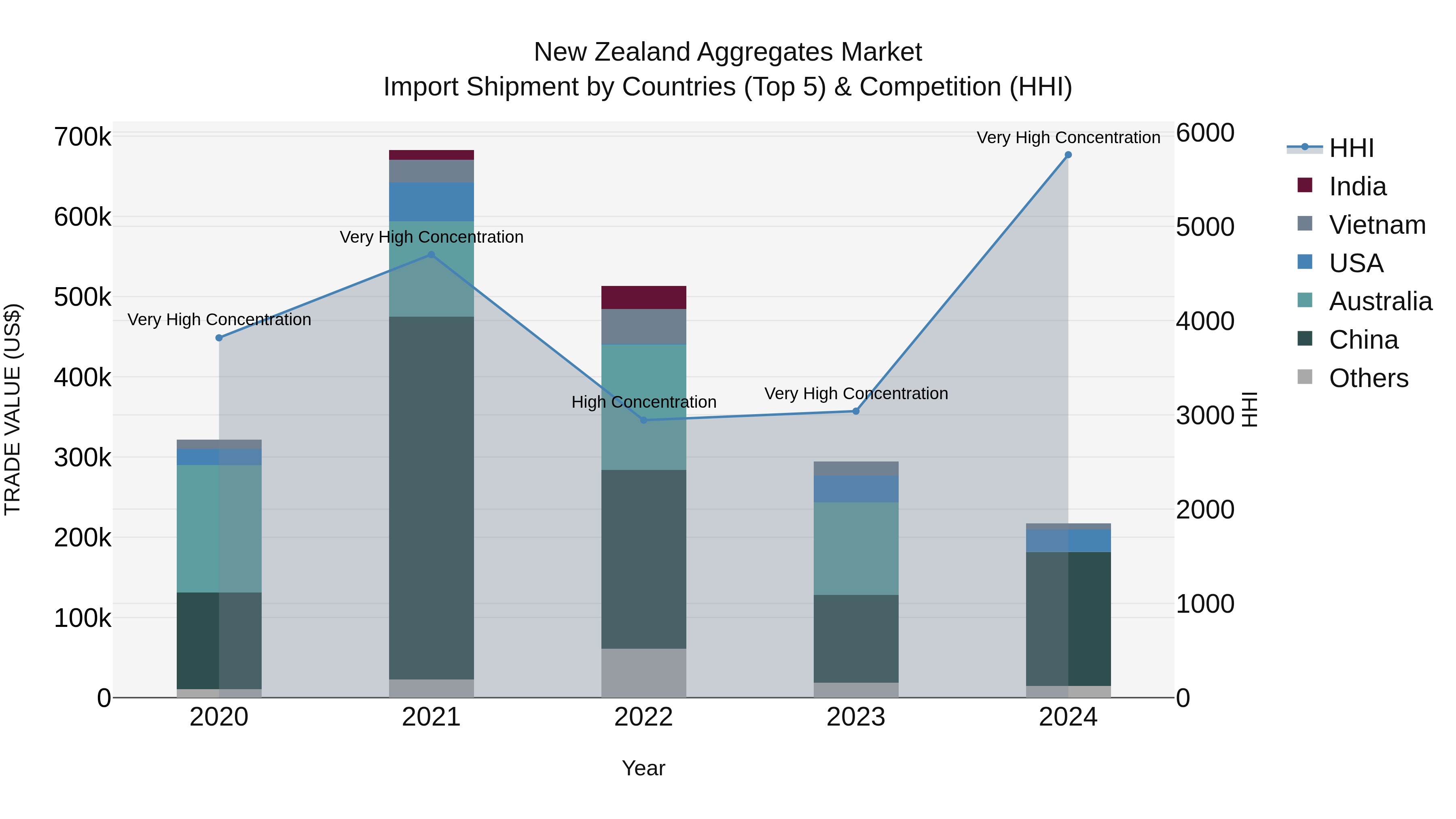
Despite the decline in CAGR and growth rate in 2024, New Zealand continued to see significant import shipments of aggregates. The top exporting countries to New Zealand, including China, USA, Germany, Vietnam, and Indonesia, maintained a strong presence in the market. The high Herfindahl-Hirschman Index (HHI) indicates a concentrated market, suggesting potential challenges for competition. Monitoring the trends and dynamics in the global aggregates market will be crucial for stakeholders in New Zealand to navigate the evolving landscape effectively.
Key Highlights of the Report:
- New Zealand Aggregates Market Outlook
- Market Size of New Zealand Aggregates Market, 2025
- Forecast of New Zealand Aggregates Market, 2032
- Historical Data and Forecast of New Zealand Aggregates Revenues & Volume for the Period 2022 - 2032F
- New Zealand Aggregates Market Trend Evolution
- New Zealand Aggregates Market Drivers and Challenges
- New Zealand Aggregates Price Trends
- New Zealand Aggregates Porter's Five Forces
- New Zealand Aggregates Industry Life Cycle
- Historical Data and Forecast of New Zealand Aggregates Market Revenues & Volume By Product Type for the Period 2022 - 2032F
- Historical Data and Forecast of New Zealand Aggregates Market Revenues & Volume By Crushed Stone for the Period 2022 - 2032F
- Historical Data and Forecast of New Zealand Aggregates Market Revenues & Volume By Sand for the Period 2022 - 2032F
- Historical Data and Forecast of New Zealand Aggregates Market Revenues & Volume By Gravel for the Period 2022 - 2032F
- Historical Data and Forecast of New Zealand Aggregates Market Revenues & Volume By Recycled Aggregates for the Period 2022 - 2032F
- Historical Data and Forecast of New Zealand Aggregates Market Revenues & Volume By Application for the Period 2022 - 2032F
- Historical Data and Forecast of New Zealand Aggregates Market Revenues & Volume By Construction Materials for the Period 2022 - 2032F
- Historical Data and Forecast of New Zealand Aggregates Market Revenues & Volume By Road Construction for the Period 2022 - 2032F
- Historical Data and Forecast of New Zealand Aggregates Market Revenues & Volume By Concrete Production for the Period 2022 - 2032F
- Historical Data and Forecast of New Zealand Aggregates Market Revenues & Volume By Landscaping for the Period 2022 - 2032F
- Historical Data and Forecast of New Zealand Aggregates Market Revenues & Volume By End User for the Period 2022 - 2032F
- Historical Data and Forecast of New Zealand Aggregates Market Revenues & Volume By Construction Industry for the Period 2022 - 2032F
- Historical Data and Forecast of New Zealand Aggregates Market Revenues & Volume By Residential for the Period 2022 - 2032F
- Historical Data and Forecast of New Zealand Aggregates Market Revenues & Volume By Commercial for the Period 2022 - 2032F
- New Zealand Aggregates Import Export Trade Statistics
- Market Opportunity Assessment By Product Type
- Market Opportunity Assessment By Application
- Market Opportunity Assessment By End User
- New Zealand Aggregates Top Companies Market Share
- New Zealand Aggregates Competitive Benchmarking By Technical and Operational Parameters
- New Zealand Aggregates Company Profiles
- New Zealand Aggregates Key Strategic Recommendations






































