New Zealand Bath Salt Market Growth Rate Analysis (2025 - 2031)
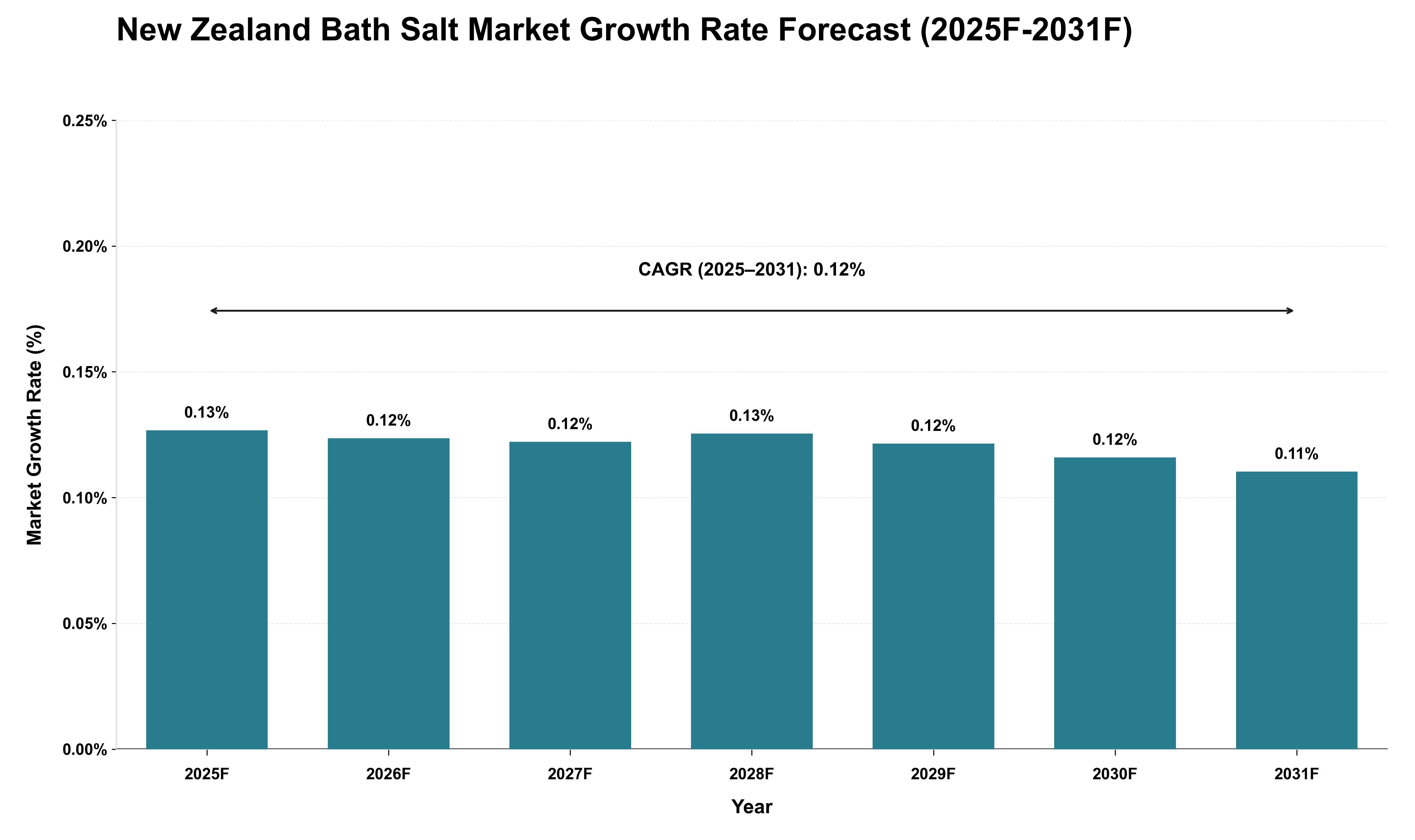
From 2025 onward, the New Zealand bath salt market will experience a modest growth trajectory, with an anticipated compound annual growth rate (CAGR) of 0.12%. This trend will reflect a gradual increase in end-use demand driven by evolving consumer preferences towards wellness and self-care products. The projected annual growth rates, fluctuating slightly around 0.11% to 0.13%, suggest that while the market will not exhibit explosive expansion, it will benefit from steady consumption patterns influenced by health-conscious trends and increased leisure time among consumers. Additionally, import dependencies on raw materials may play a role in shaping pricing dynamics and availability, potentially impacting overall market performance. As global supply chains stabilize post-pandemic, New Zealand's bath salt sector is likely to align with broader cyclical trends in personal care spending, reinforcing its position within the wellness industry without significant volatility.
Key Highlights of the Report:
- New Zealand Bath Salt Market Outlook
- Market Size of New Zealand Bath Salt Market, 2025
- Forecast of New Zealand Bath Salt Market, 2032
- Historical Data and Forecast of New Zealand Bath Salt Revenues & Volume for the Period 2022 - 2032F
- New Zealand Bath Salt Market Trend Evolution
- New Zealand Bath Salt Market Drivers and Challenges
- New Zealand Bath Salt Price Trends
- New Zealand Bath Salt Porter`s Five Forces
- New Zealand Bath Salt Industry Life Cycle
- Historical Data and Forecast of New Zealand Bath Salt Market Revenues & Volume By Type for the Period 2022 - 2032F
- Historical Data and Forecast of New Zealand Bath Salt Market Revenues & Volume By Atlantic Salt for the Period 2022 - 2032F
- Historical Data and Forecast of New Zealand Bath Salt Market Revenues & Volume By Crystal Salt for the Period 2022 - 2032F
- Historical Data and Forecast of New Zealand Bath Salt Market Revenues & Volume By Dead Sea Salt for the Period 2022 - 2032F
- Historical Data and Forecast of New Zealand Bath Salt Market Revenues & Volume By Epsom Salt for the Period 2022 - 2032F
- Historical Data and Forecast of New Zealand Bath Salt Market Revenues & Volume By Others for the Period 2022 - 2032F
- Historical Data and Forecast of New Zealand Bath Salt Market Revenues & Volume By Form for the Period 2022 - 2032F
- Historical Data and Forecast of New Zealand Bath Salt Market Revenues & Volume By Granular for the Period 2022 - 2032F
- Historical Data and Forecast of New Zealand Bath Salt Market Revenues & Volume By Powder for the Period 2022 - 2032F
- Historical Data and Forecast of New Zealand Bath Salt Market Revenues & Volume By Coarse for the Period 2022 - 2032F
- Historical Data and Forecast of New Zealand Bath Salt Market Revenues & Volume By Others for the Period 2022 - 2032F
- Historical Data and Forecast of New Zealand Bath Salt Market Revenues & Volume By Distribution Channel for the Period 2022 - 2032F
- Historical Data and Forecast of New Zealand Bath Salt Market Revenues & Volume By Store Based for the Period 2022 - 2032F
- Historical Data and Forecast of New Zealand Bath Salt Market Revenues & Volume By Non Store Based for the Period 2022 - 2032F
- New Zealand Bath Salt Import Export Trade Statistics
- Market Opportunity Assessment By Type
- Market Opportunity Assessment By Form
- Market Opportunity Assessment By Distribution Channel
- New Zealand Bath Salt Top Companies Market Share
- New Zealand Bath Salt Competitive Benchmarking By Technical and Operational Parameters
- New Zealand Bath Salt Company Profiles
- New Zealand Bath Salt Key Strategic Recommendations






































