New Zealand Black Pepper Market Year-wise Growth Rate (2021-2031F)
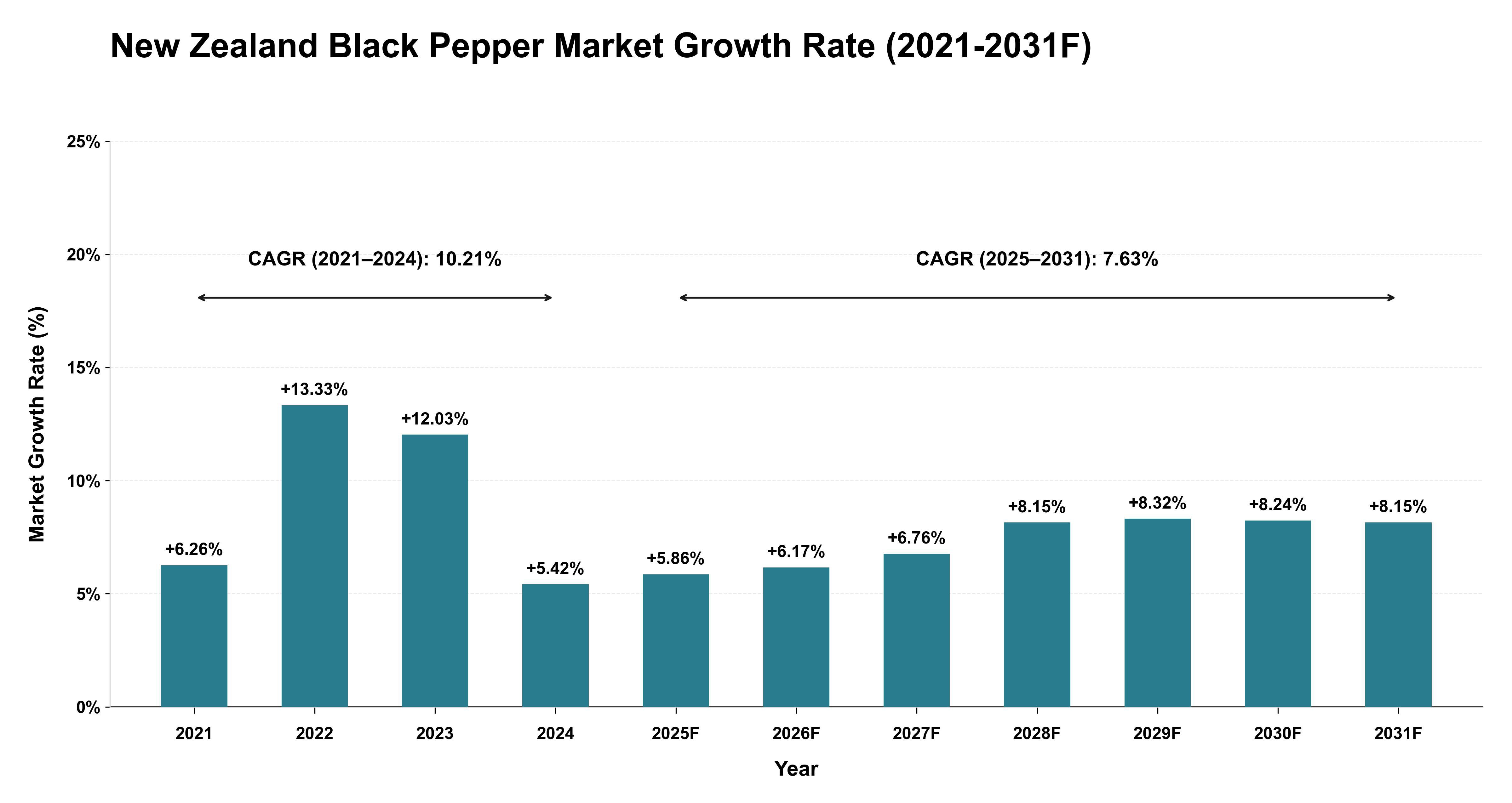
The New Zealand Black Pepper Market witnessed a notable growth acceleration from 2021 to 2023, driven by increasing consumer demand for exotic flavors and culinary experiences. This period saw robust annual growth rates of 6.26%, 13.33%, and 12.03%, respectively, reflecting a surge in end-use industries like gourmet restaurants and food processing. However, in 2024, the market experienced a slight deceleration with a growth rate of 5.42% due to supply chain disruptions and price fluctuations. Looking ahead to 2025-2031, the market is expected to maintain steady growth momentum with annual rates ranging from 5.86% to 8.32%. This forecasted growth signifies a maturing market that continues to attract consumers seeking premium spices, while also emphasizing the importance of supply chain resilience and quality control measures in ensuring sustained market expansion.
Key Highlights of the Report:
- New Zealand Black Pepper Market Outlook
- Market Size of New Zealand Black Pepper Market, 2025
- Forecast of New Zealand Black Pepper Market, 2032
- Historical Data and Forecast of New Zealand Black Pepper Revenues & Volume for the Period 2022 - 2032
- New Zealand Black Pepper Market Trend Evolution
- New Zealand Black Pepper Market Drivers and Challenges
- New Zealand Black Pepper Price Trends
- New Zealand Black Pepper Porter's Five Forces
- New Zealand Black Pepper Industry Life Cycle
- Historical Data and Forecast of New Zealand Black Pepper Market Revenues & Volume By Category for the Period 2022 - 2032
- Historical Data and Forecast of New Zealand Black Pepper Market Revenues & Volume By Organic for the Period 2022 - 2032
- Historical Data and Forecast of New Zealand Black Pepper Market Revenues & Volume By Inorganic for the Period 2022 - 2032
- Historical Data and Forecast of New Zealand Black Pepper Market Revenues & Volume By Application for the Period 2022 - 2032
- Historical Data and Forecast of New Zealand Black Pepper Market Revenues & Volume By Foodstuff & Drinks for the Period 2022 - 2032
- Historical Data and Forecast of New Zealand Black Pepper Market Revenues & Volume By Fitness Maintenance for the Period 2022 - 2032
- Historical Data and Forecast of New Zealand Black Pepper Market Revenues & Volume By Private Upkeep for the Period 2022 - 2032
- Historical Data and Forecast of New Zealand Black Pepper Market Revenues & Volume By Makeups for the Period 2022 - 2032
- New Zealand Black Pepper Import Export Trade Statistics
- Market Opportunity Assessment By Category
- Market Opportunity Assessment By Application
- New Zealand Black Pepper Top Companies Market Share
- New Zealand Black Pepper Competitive Benchmarking By Technical and Operational Parameters
- New Zealand Black Pepper Company Profiles
- New Zealand Black Pepper Key Strategic Recommendations






































