New Zealand Books Market Growth Rate Analysis (2025 - 2031)
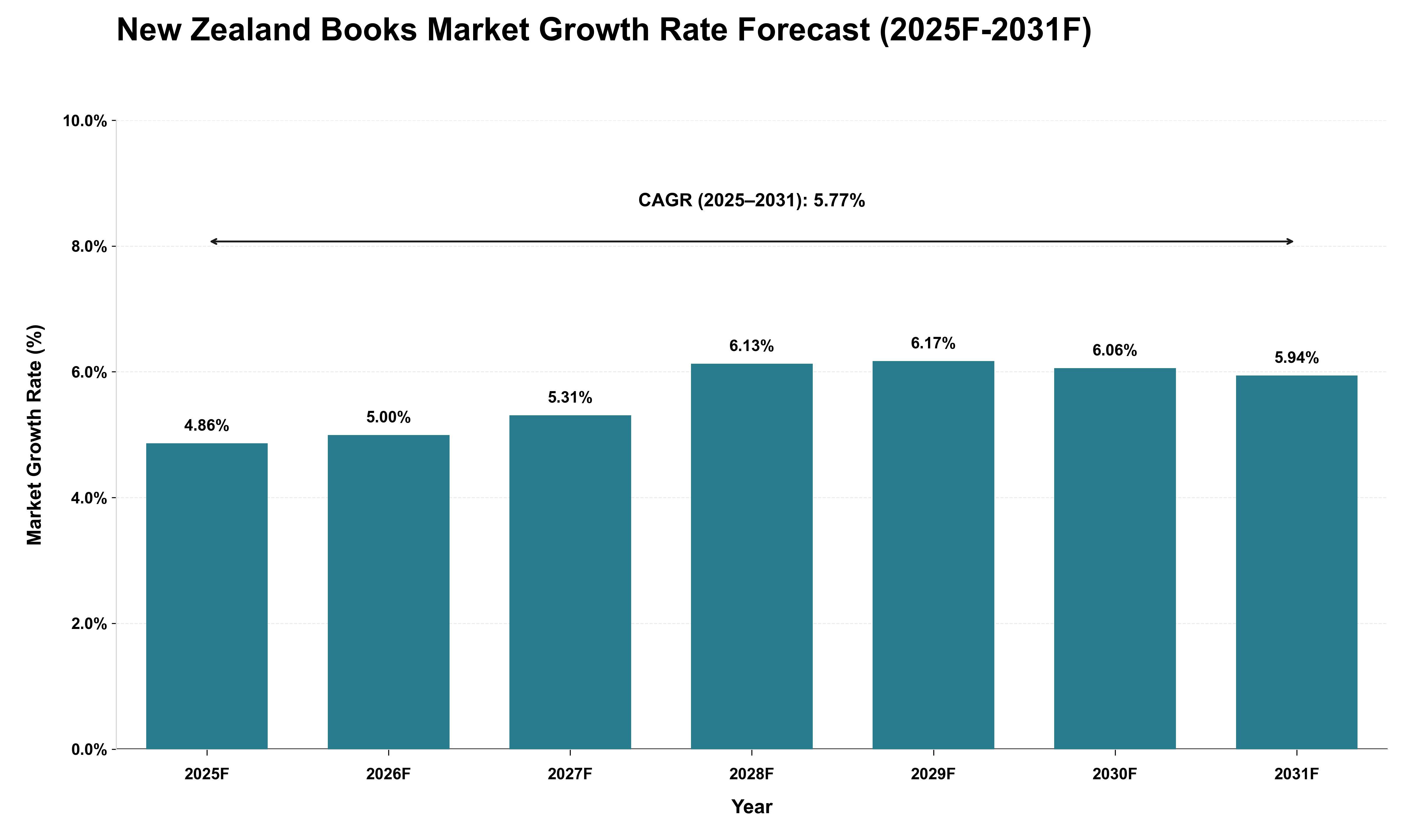
The New Zealand books market is projected to experience a compound annual growth rate of 5.77% from 2025 to 2031, reflecting a robust trajectory influenced by regulatory and trade policy factors. As the government continues to support local publishing through favorable copyright laws and potential subsidies, this will likely enhance domestic production capabilities while reducing import dependencies. The anticipated annual growth rates, starting at 4.86% in 2025 and peaking at 6.17% in 2029, suggest an increasing consumer appetite for both physical and digital books, driven by evolving reading habits and educational reforms emphasizing literacy. Additionally, trade policies that facilitate easier access to international markets may encourage local publishers to expand their offerings, further stimulating growth. Overall, these macroeconomic dynamics will create a conducive environment for sustained expansion within the sector throughout the forecast period.
Key Highlights of the Report:
- New Zealand Books Market Outlook
- Market Size of New Zealand Books Market, 2025
- Forecast of New Zealand Books Market, 2032
- Historical Data and Forecast of New Zealand Books Revenues & Volume for the Period 2022 - 2032F
- New Zealand Books Market Trend Evolution
- New Zealand Books Market Drivers and Challenges
- New Zealand Books Price Trends
- New Zealand Books Porter`s Five Forces
- New Zealand Books Industry Life Cycle
- Historical Data and Forecast of New Zealand Books Market Revenues & Volume By Type for the Period 2022 - 2032F
- Historical Data and Forecast of New Zealand Books Market Revenues & Volume By Science for the Period 2022 - 2032F
- Historical Data and Forecast of New Zealand Books Market Revenues & Volume By Historical for the Period 2022 - 2032F
- Historical Data and Forecast of New Zealand Books Market Revenues & Volume By Mystery for the Period 2022 - 2032F
- Historical Data and Forecast of New Zealand Books Market Revenues & Volume By Fantasy for the Period 2022 - 2032F
- Historical Data and Forecast of New Zealand Books Market Revenues & Volume By Literary for the Period 2022 - 2032F
- Historical Data and Forecast of New Zealand Books Market Revenues & Volume By Others (Classic, Biographies) for the Period 2022 - 2032F
- Historical Data and Forecast of New Zealand Books Market Revenues & Volume By Distribution Channel for the Period 2022 - 2032F
- Historical Data and Forecast of New Zealand Books Market Revenues & Volume By Online for the Period 2022 - 2032F
- Historical Data and Forecast of New Zealand Books Market Revenues & Volume By Local Book Shops for the Period 2022 - 2032F
- Historical Data and Forecast of New Zealand Books Market Revenues & Volume By Retail Shops for the Period 2022 - 2032F
- Historical Data and Forecast of New Zealand Books Market Revenues & Volume By Specialty Stores for the Period 2022 - 2032F
- Historical Data and Forecast of New Zealand Books Market Revenues & Volume By Format for the Period 2022 - 2032F
- Historical Data and Forecast of New Zealand Books Market Revenues & Volume By Hard Copy for the Period 2022 - 2032F
- Historical Data and Forecast of New Zealand Books Market Revenues & Volume By E-Book for the Period 2022 - 2032F
- Historical Data and Forecast of New Zealand Books Market Revenues & Volume By Audiobooks for the Period 2022 - 2032F
- New Zealand Books Import Export Trade Statistics
- Market Opportunity Assessment By Type
- Market Opportunity Assessment By Distribution Channel
- Market Opportunity Assessment By Format
- New Zealand Books Top Companies Market Share
- New Zealand Books Competitive Benchmarking By Technical and Operational Parameters
- New Zealand Books Company Profiles
- New Zealand Books Key Strategic Recommendations






































