New Zealand Coffee Roaster Market Top 5 Importing Countries and Market Competition (HHI) Analysis
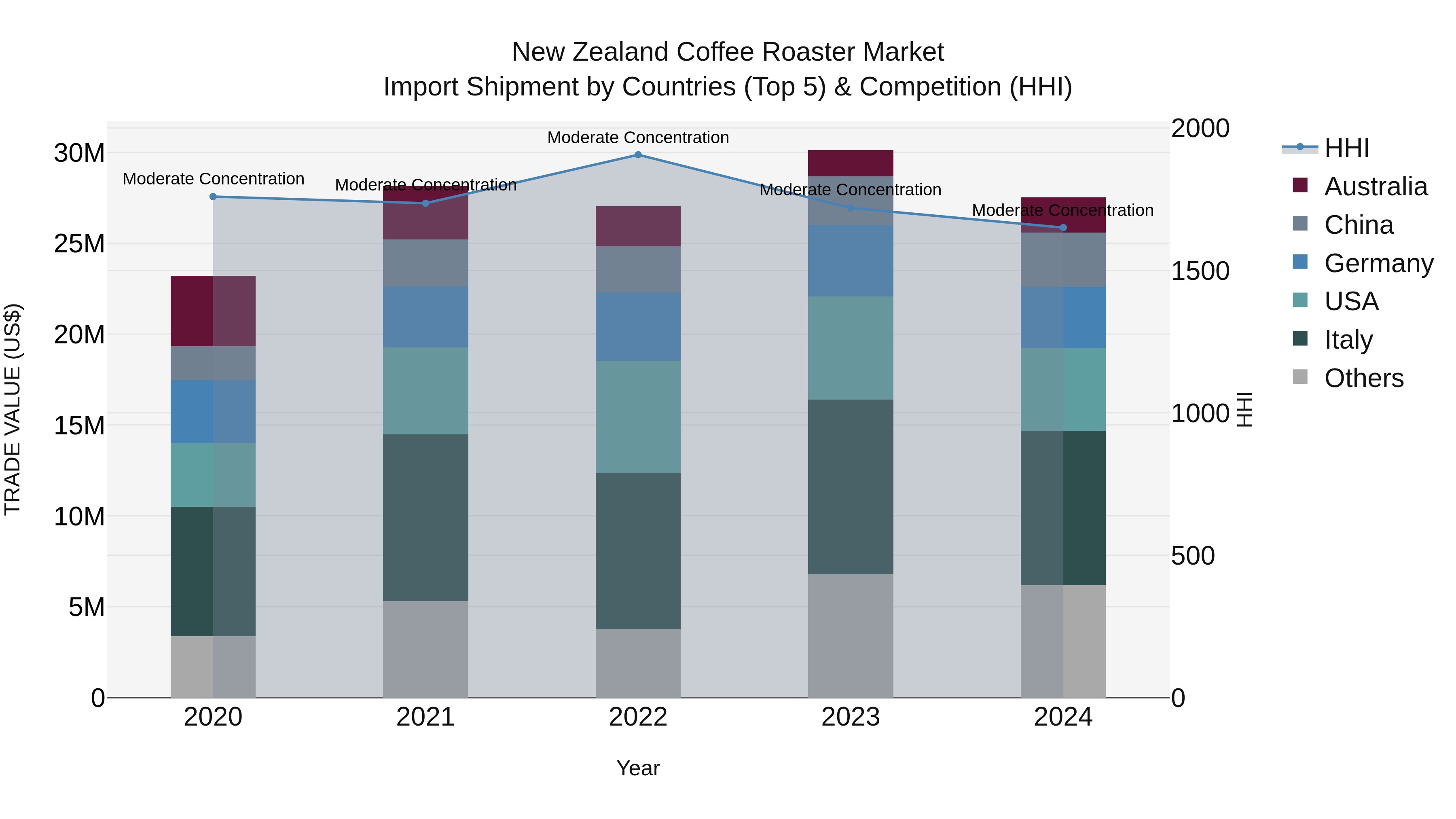
In 2024, New Zealand`s coffee roaster import market continued to see a diverse range of suppliers, with Italy, USA, Germany, China, and Switzerland leading the pack. Despite a slight decline in growth rate from 2023 to 2024, the market maintained moderate concentration levels, indicating steady competition among suppliers. With a healthy CAGR of 4.35% over the period of 2020-2024, the New Zealand coffee roaster import market remains an attractive destination for exporters looking to tap into the country`s coffee culture.
Coffee Roaster Market: New Zealand vs Top 5 Major Economies in 2027 (Asia)
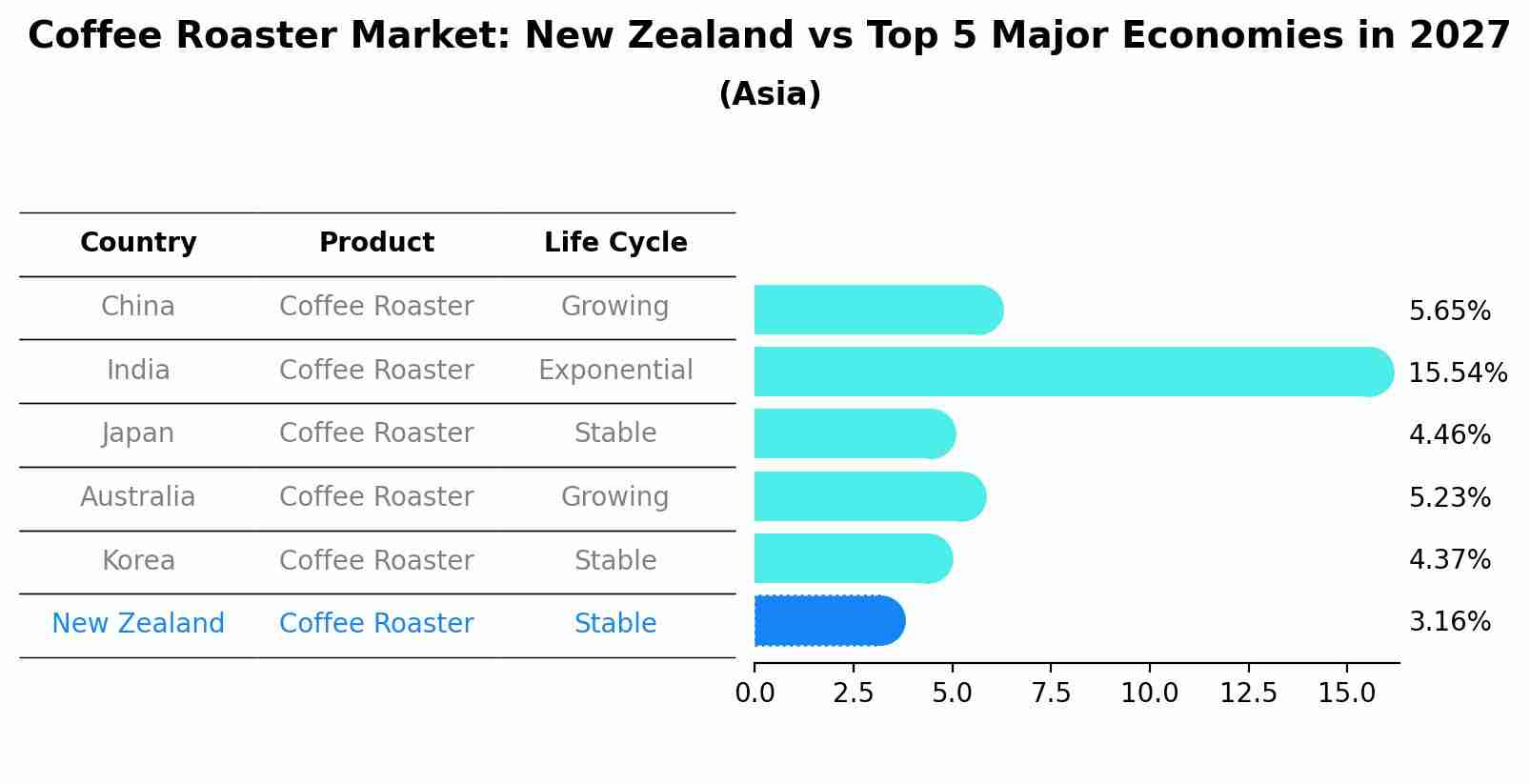
In the Asia region, the Coffee Roaster market in New Zealand is projected to expand at a stable growth rate of 3.16% by 2027. The largest economy is China, followed by India, Japan, Australia and South Korea.
New Zealand Coffee Roaster Market Overview
New Zealand coffee roaster market reflects the nation`s passion for specialty coffee and the emphasis on flavor profiling and bean quality in the roasting process. From small-batch artisanal roasters to large-scale commercial operations, the market caters to diverse preferences, offering a wide range of coffee profiles and roast levels. Market dynamics are influenced by factors such as coffee sourcing practices, roasting techniques, and consumer demand for unique flavor experiences.
Drivers of the market
The New Zealand coffee roaster market showcases a vibrant community of artisanal coffee roasters dedicated to sourcing, roasting, and showcasing premium coffee beans. With a focus on flavor profiling and craftsmanship, coffee roasters in New Zealand play a crucial role in shaping the country`s coffee culture and delivering exceptional coffee experiences to consumers.
Challenges of the market
The New Zealand coffee roaster market contends with challenges related to sourcing high-quality coffee beans, ensuring consistent roasting standards, and meeting stringent food safety regulations. Additionally, maintaining brand reputation and consumer trust amidst growing competition from specialty coffee roasters and cafe chains requires a strategic approach to marketing and customer engagement.
Government Policy of the market
Government policies in New Zealand promote food safety, quality standards, and environmental responsibility in the coffee roaster market. Regulations cover roasting processes, storage conditions, and packaging to preserve flavor and freshness while minimizing waste.
Key Highlights of the Report:
- New Zealand Coffee Roaster Market Outlook
- Market Size of New Zealand Coffee Roaster Market, 2024
- Forecast of New Zealand Coffee Roaster Market, 2031
- Historical Data and Forecast of New Zealand Coffee Roaster Revenues & Volume for the Period 2021-2031
- New Zealand Coffee Roaster Market Trend Evolution
- New Zealand Coffee Roaster Market Drivers and Challenges
- New Zealand Coffee Roaster Price Trends
- New Zealand Coffee Roaster Porter`s Five Forces
- New Zealand Coffee Roaster Industry Life Cycle
- Historical Data and Forecast of New Zealand Coffee Roaster Market Revenues & Volume By Type for the Period 2021-2031
- Historical Data and Forecast of New Zealand Coffee Roaster Market Revenues & Volume By Drum for the Period 2021-2031
- Historical Data and Forecast of New Zealand Coffee Roaster Market Revenues & Volume By Hot Air for the Period 2021-2031
- Historical Data and Forecast of New Zealand Coffee Roaster Market Revenues & Volume By Stove Top for the Period 2021-2031
- Historical Data and Forecast of New Zealand Coffee Roaster Market Revenues & Volume By Other Types for the Period 2021-2031
- Historical Data and Forecast of New Zealand Coffee Roaster Market Revenues & Volume By Category for the Period 2021-2031
- Historical Data and Forecast of New Zealand Coffee Roaster Market Revenues & Volume By Electrical Roaster for the Period 2021-2031
- Historical Data and Forecast of New Zealand Coffee Roaster Market Revenues & Volume By Gas Roaster for the Period 2021-2031
- Historical Data and Forecast of New Zealand Coffee Roaster Market Revenues & Volume By End-user for the Period 2021-2031
- Historical Data and Forecast of New Zealand Coffee Roaster Market Revenues & Volume By Industrial for the Period 2021-2031
- Historical Data and Forecast of New Zealand Coffee Roaster Market Revenues & Volume By Commercial for the Period 2021-2031
- Historical Data and Forecast of New Zealand Coffee Roaster Market Revenues & Volume By Household for the Period 2021-2031
- New Zealand Coffee Roaster Import Export Trade Statistics
- Market Opportunity Assessment By Type
- Market Opportunity Assessment By Category
- Market Opportunity Assessment By End-user
- New Zealand Coffee Roaster Top Companies Market Share
- New Zealand Coffee Roaster Competitive Benchmarking By Technical and Operational Parameters
- New Zealand Coffee Roaster Company Profiles
- New Zealand Coffee Roaster Key Strategic Recommendations






































