New Zealand Deodorants and Anti-perspirant Products Market Top 5 Importing Countries and Market Competition (HHI) Analysis
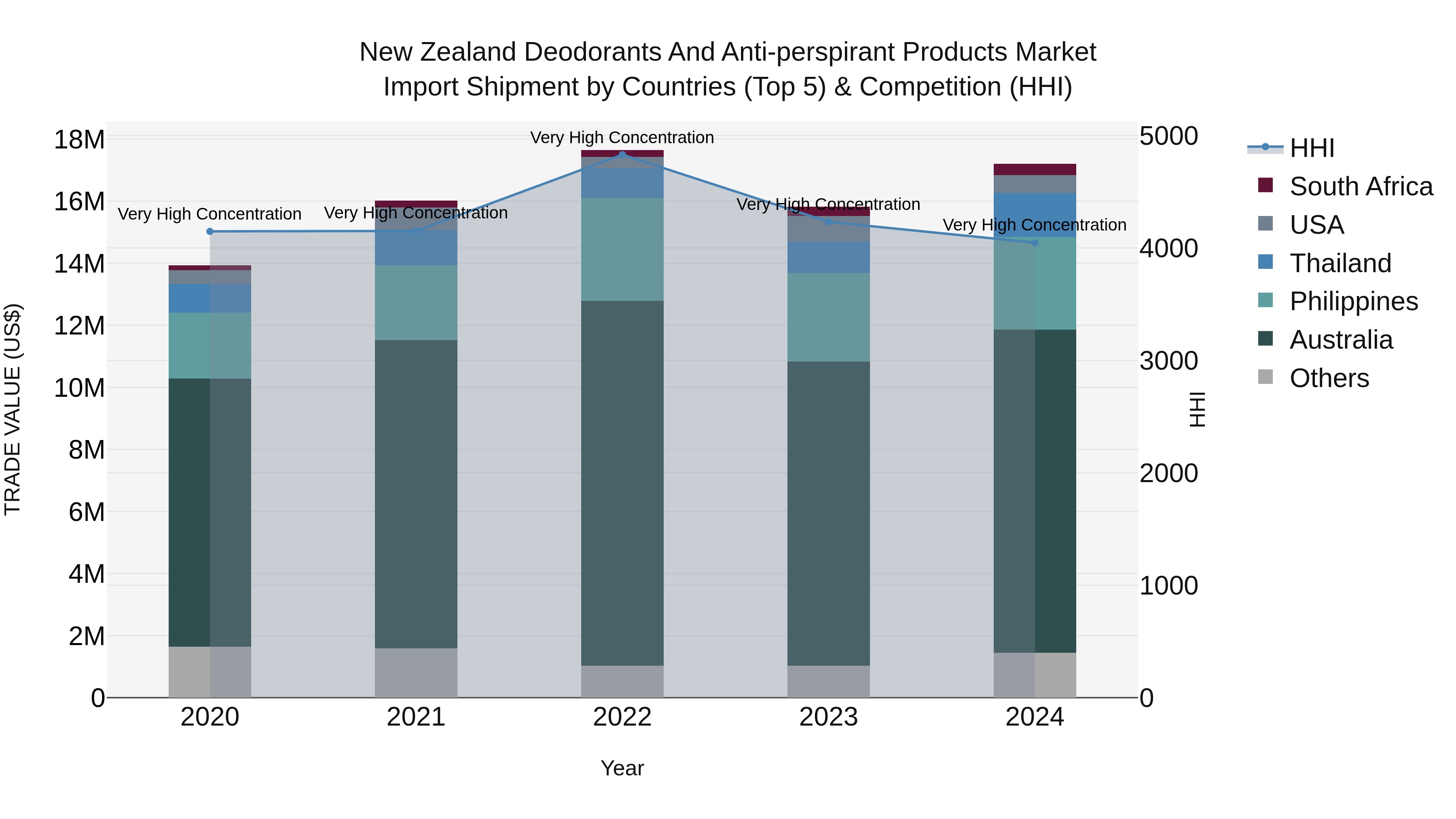
The deodorants and anti-perspirant market in New Zealand continues to thrive with top imports coming from Australia, Philippines, Thailand, USA, and South Africa in 2024. The high Herfindahl-Hirschman Index (HHI) indicates a concentrated market landscape. With a solid compound annual growth rate (CAGR) of 5.41% from 2020 to 2024 and a notable growth rate of 8.72% from 2023 to 2024, the industry shows promising momentum and consumer demand for these personal care products remains strong.
Key Highlights of the Report:
- New Zealand Deodorants and Anti-Perspirant Products Market Outlook
- Market Size of New Zealand Deodorants and Anti-Perspirant Products Market, 2025
- Forecast of New Zealand Deodorants and Anti-Perspirant Products Market, 2032
- Historical Data and Forecast of New Zealand Deodorants and Anti-Perspirant Products Revenues & Volume for the Period 2022 - 2032F
- New Zealand Deodorants and Anti-Perspirant Products Market Trend Evolution
- New Zealand Deodorants and Anti-Perspirant Products Market Drivers and Challenges
- New Zealand Deodorants and Anti-Perspirant Products Price Trends
- New Zealand Deodorants and Anti-Perspirant Products Porter`s Five Forces
- New Zealand Deodorants and Anti-Perspirant Products Industry Life Cycle
- Historical Data and Forecast of New Zealand Deodorants and Anti-Perspirant Products Market Revenues & Volume By Function for the Period 2022 - 2032F
- Historical Data and Forecast of New Zealand Deodorants and Anti-Perspirant Products Market Revenues & Volume By Aerosol Spray for the Period 2022 - 2032F
- Historical Data and Forecast of New Zealand Deodorants and Anti-Perspirant Products Market Revenues & Volume By Cream for the Period 2022 - 2032F
- Historical Data and Forecast of New Zealand Deodorants and Anti-Perspirant Products Market Revenues & Volume By Roll-On for the Period 2022 - 2032F
- Historical Data and Forecast of New Zealand Deodorants and Anti-Perspirant Products Market Revenues & Volume By Gel for the Period 2022 - 2032F
- Historical Data and Forecast of New Zealand Deodorants and Anti-Perspirant Products Market Revenues & Volume By Ingredient for the Period 2022 - 2032F
- Historical Data and Forecast of New Zealand Deodorants and Anti-Perspirant Products Market Revenues & Volume By Alcohol for the Period 2022 - 2032F
- Historical Data and Forecast of New Zealand Deodorants and Anti-Perspirant Products Market Revenues & Volume By Antimicrobials for the Period 2022 - 2032F
- Historical Data and Forecast of New Zealand Deodorants and Anti-Perspirant Products Market Revenues & Volume By Conditioner and Moisturizer for the Period 2022 - 2032F
- Historical Data and Forecast of New Zealand Deodorants and Anti-Perspirant Products Market Revenues & Volume By Fragrances for the Period 2022 - 2032F
- Historical Data and Forecast of New Zealand Deodorants and Anti-Perspirant Products Market Revenues & Volume By Paraben and Propellants for the Period 2022 - 2032F
- Historical Data and Forecast of New Zealand Deodorants and Anti-Perspirant Products Market Revenues & Volume By Others for the Period 2022 - 2032F
- New Zealand Deodorants and Anti-Perspirant Products Import Export Trade Statistics
- Market Opportunity Assessment By Function
- Market Opportunity Assessment By Ingredient
- New Zealand Deodorants and Anti-Perspirant Products Top Companies Market Share
- New Zealand Deodorants and Anti-Perspirant Products Competitive Benchmarking By Technical and Operational Parameters
- New Zealand Deodorants and Anti-Perspirant Products Company Profiles
- New Zealand Deodorants and Anti-Perspirant Products Key Strategic Recommendations






































