New Zealand Electric Lighting Equipment Market Growth Rate Analysis (2025 - 2031)
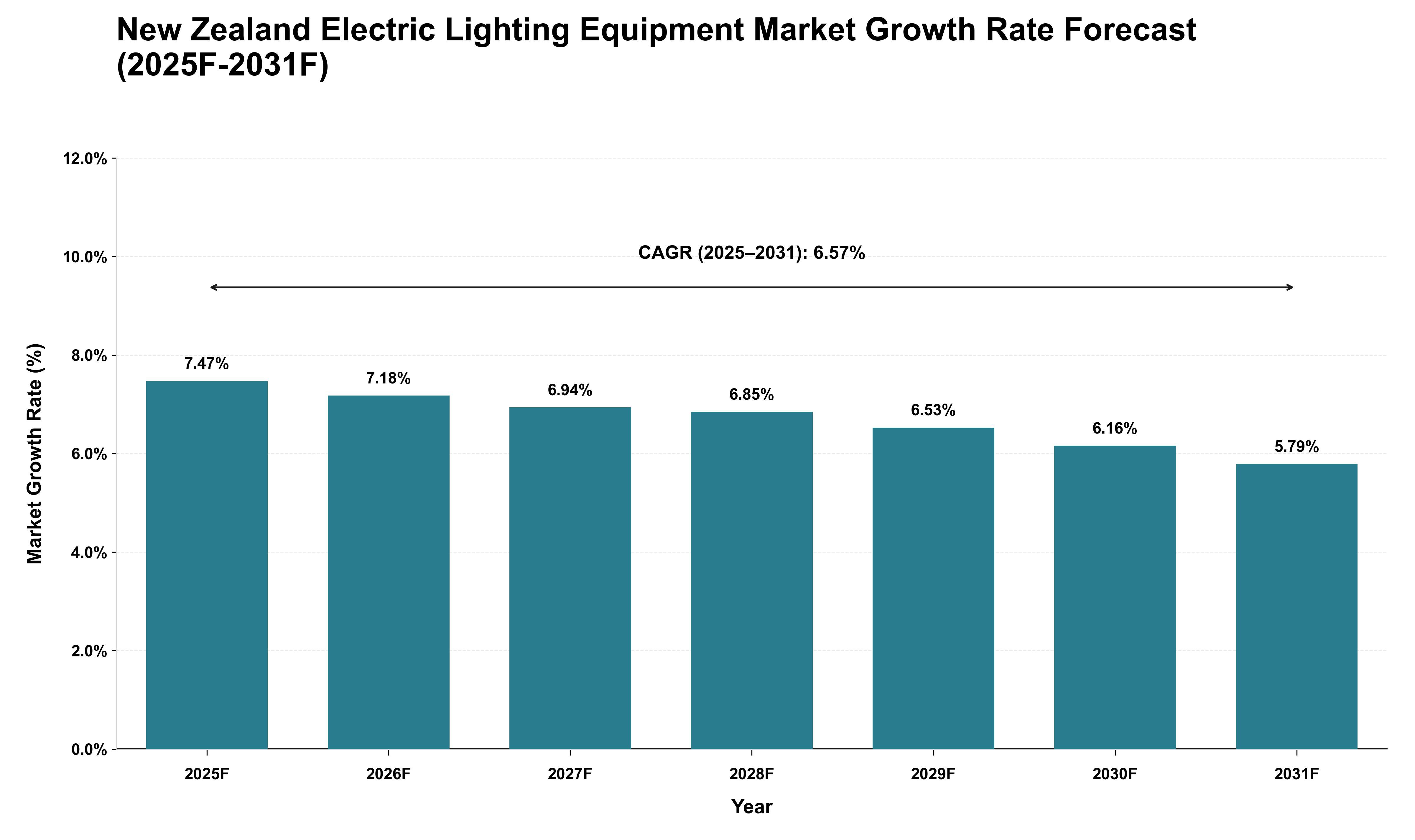
The New Zealand electric lighting equipment market will experience a robust growth trajectory driven by increasing energy efficiency regulations and a shift towards sustainable lighting solutions. As global demand for energy-efficient products rises, New Zealand's import dynamics will reflect a growing reliance on advanced technologies from key trading partners, enhancing the competitive landscape. The forecasted CAGR of 6.57% indicates that annual growth rates will gradually decline from 7.47% in 2025 to 5.79% by 2031, suggesting an initial surge in adoption followed by a stabilization phase as the market adjusts to evolving consumer preferences and regulatory frameworks. This trend will likely lead to intensified trade flows, with imports of innovative lighting technologies becoming essential to meet domestic demand while fostering local manufacturing capabilities through strategic partnerships and investments in R&D. Overall, these factors will shape the electric lighting equipment sector's landscape in New Zealand during this period.
Key Highlights of the Report:
- New Zealand Electric lighting equipment Market Outlook
- Market Size of New Zealand Electric lighting equipment Market, 2024
- Forecast of New Zealand Electric lighting equipment Market, 2031
- Historical Data and Forecast of New Zealand Electric lighting equipment Revenues & Volume for the Period 2021-2031
- New Zealand Electric lighting equipment Market Trend Evolution
- New Zealand Electric lighting equipment Market Drivers and Challenges
- New Zealand Electric lighting equipment Price Trends
- New Zealand Electric lighting equipment Porter`s Five Forces
- New Zealand Electric lighting equipment Industry Life Cycle
- Historical Data and Forecast of New Zealand Electric lighting equipment Market Revenues & Volume By Type for the Period 2021-2031
- Historical Data and Forecast of New Zealand Electric lighting equipment Market Revenues & Volume By General Lighting for the Period 2021-2031
- Historical Data and Forecast of New Zealand Electric lighting equipment Market Revenues & Volume By Automotive Lighting for the Period 2021-2031
- Historical Data and Forecast of New Zealand Electric lighting equipment Market Revenues & Volume By Back Lighting for the Period 2021-2031
- Historical Data and Forecast of New Zealand Electric lighting equipment Market Revenues & Volume By Application for the Period 2021-2031
- Historical Data and Forecast of New Zealand Electric lighting equipment Market Revenues & Volume By Residential for the Period 2021-2031
- Historical Data and Forecast of New Zealand Electric lighting equipment Market Revenues & Volume By Commercial for the Period 2021-2031
- Historical Data and Forecast of New Zealand Electric lighting equipment Market Revenues & Volume By Automotive for the Period 2021-2031
- Historical Data and Forecast of New Zealand Electric lighting equipment Market Revenues & Volume By Others for the Period 2021-2031
- Historical Data and Forecast of New Zealand Electric lighting equipment Market Revenues & Volume By Sales Channel for the Period 2021-2031
- Historical Data and Forecast of New Zealand Electric lighting equipment Market Revenues & Volume By OEM for the Period 2021-2031
- Historical Data and Forecast of New Zealand Electric lighting equipment Market Revenues & Volume By Aftermarketfor the Period 2021-2031
- Historical Data and Forecast of New Zealand Electric lighting equipment Market Revenues & Volume By Mode for the Period 2021-2031
- Historical Data and Forecast of New Zealand Electric lighting equipment Market Revenues & Volume By Offline for the Period 2021-2031
- Historical Data and Forecast of New Zealand Electric lighting equipment Market Revenues & Volume By Online for the Period 2021-2031
- New Zealand Electric lighting equipment Import Export Trade Statistics
- Market Opportunity Assessment By Type
- Market Opportunity Assessment By Application
- Market Opportunity Assessment By Sales Channel
- Market Opportunity Assessment By Mode
- New Zealand Electric lighting equipment Top Companies Market Share
- New Zealand Electric lighting equipment Competitive Benchmarking By Technical and Operational Parameters
- New Zealand Electric lighting equipment Company Profiles
- New Zealand Electric lighting equipment Key Strategic Recommendations






































