New Zealand Electric Plugs and Sockets Market Growth Rate Analysis (2025 - 2031)
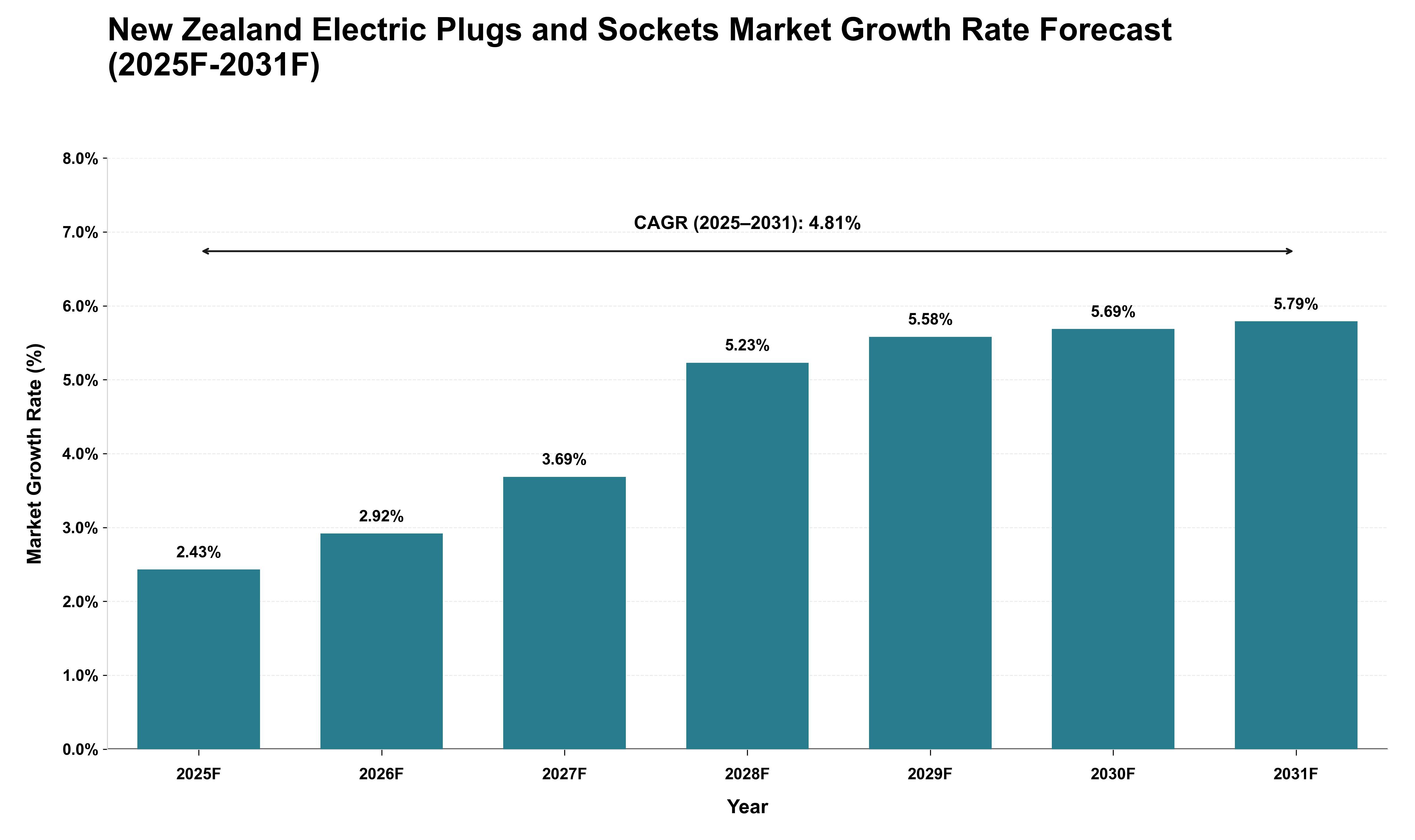
The projected growth trajectory for the New Zealand electric plugs and sockets market will exhibit a notable acceleration, particularly from 2027 onward, where the annual growth rate is expected to rise from 3.69% to 5.79% by 2031. This upward trend can be attributed to several macroeconomic factors, including increasing demand for energy-efficient solutions and the ongoing transition towards renewable energy sources, which will likely drive higher consumption of electrical components. Additionally, as raw material availability remains a critical factor, fluctuations in global supply chains may influence pricing dynamics; however, anticipated improvements in sourcing strategies could mitigate potential cost pressures. The forecasted CAGR of 4.81% reflects these underlying trends while also indicating that import dependencies on specific materials may create cyclical variations in market performance as global economic conditions evolve during this period.
Key Highlights of the Report:
- New Zealand Electric Plugs and Sockets Market Outlook
- Market Size of New Zealand Electric Plugs and Sockets Market, 2024
- Forecast of New Zealand Electric Plugs and Sockets Market, 2031
- Historical Data and Forecast of New Zealand Electric Plugs and Sockets Revenues & Volume for the Period 2021-2031
- New Zealand Electric Plugs and Sockets Market Trend Evolution
- New Zealand Electric Plugs and Sockets Market Drivers and Challenges
- New Zealand Electric Plugs and Sockets Price Trends
- New Zealand Electric Plugs and Sockets Porter`s Five Forces
- New Zealand Electric Plugs and Sockets Industry Life Cycle
- Historical Data and Forecast of New Zealand Electric Plugs and Sockets Market Revenues & Volume By Type for the Period 2021-2031
- Historical Data and Forecast of New Zealand Electric Plugs and Sockets Market Revenues & Volume By Two-Pin for the Period 2021-2031
- Historical Data and Forecast of New Zealand Electric Plugs and Sockets Market Revenues & Volume By Three-Pin for the Period 2021-2031
- Historical Data and Forecast of New Zealand Electric Plugs and Sockets Market Revenues & Volume By Four-Pin for the Period 2021-2031
- Historical Data and Forecast of New Zealand Electric Plugs and Sockets Market Revenues & Volume By Five-pin for the Period 2021-2031
- Historical Data and Forecast of New Zealand Electric Plugs and Sockets Market Revenues & Volume By Power rate for the Period 2021-2031
- Historical Data and Forecast of New Zealand Electric Plugs and Sockets Market Revenues & Volume By High Power for the Period 2021-2031
- Historical Data and Forecast of New Zealand Electric Plugs and Sockets Market Revenues & Volume By Medium Power for the Period 2021-2031
- Historical Data and Forecast of New Zealand Electric Plugs and Sockets Market Revenues & Volume By Low Power for the Period 2021-2031
- Historical Data and Forecast of New Zealand Electric Plugs and Sockets Market Revenues & Volume By End User for the Period 2021-2031
- Historical Data and Forecast of New Zealand Electric Plugs and Sockets Market Revenues & Volume By Residential for the Period 2021-2031
- Historical Data and Forecast of New Zealand Electric Plugs and Sockets Market Revenues & Volume By Commercial for the Period 2021-2031
- Historical Data and Forecast of New Zealand Electric Plugs and Sockets Market Revenues & Volume By Industrial for the Period 2021-2031
- New Zealand Electric Plugs and Sockets Import Export Trade Statistics
- Market Opportunity Assessment By Type
- Market Opportunity Assessment By Power rate
- Market Opportunity Assessment By End User
- New Zealand Electric Plugs and Sockets Top Companies Market Share
- New Zealand Electric Plugs and Sockets Competitive Benchmarking By Technical and Operational Parameters
- New Zealand Electric Plugs and Sockets Company Profiles
- New Zealand Electric Plugs and Sockets Key Strategic Recommendations






































