New Zealand Electrical Equipment Market Year-wise Growth Rate (2021-2031F)
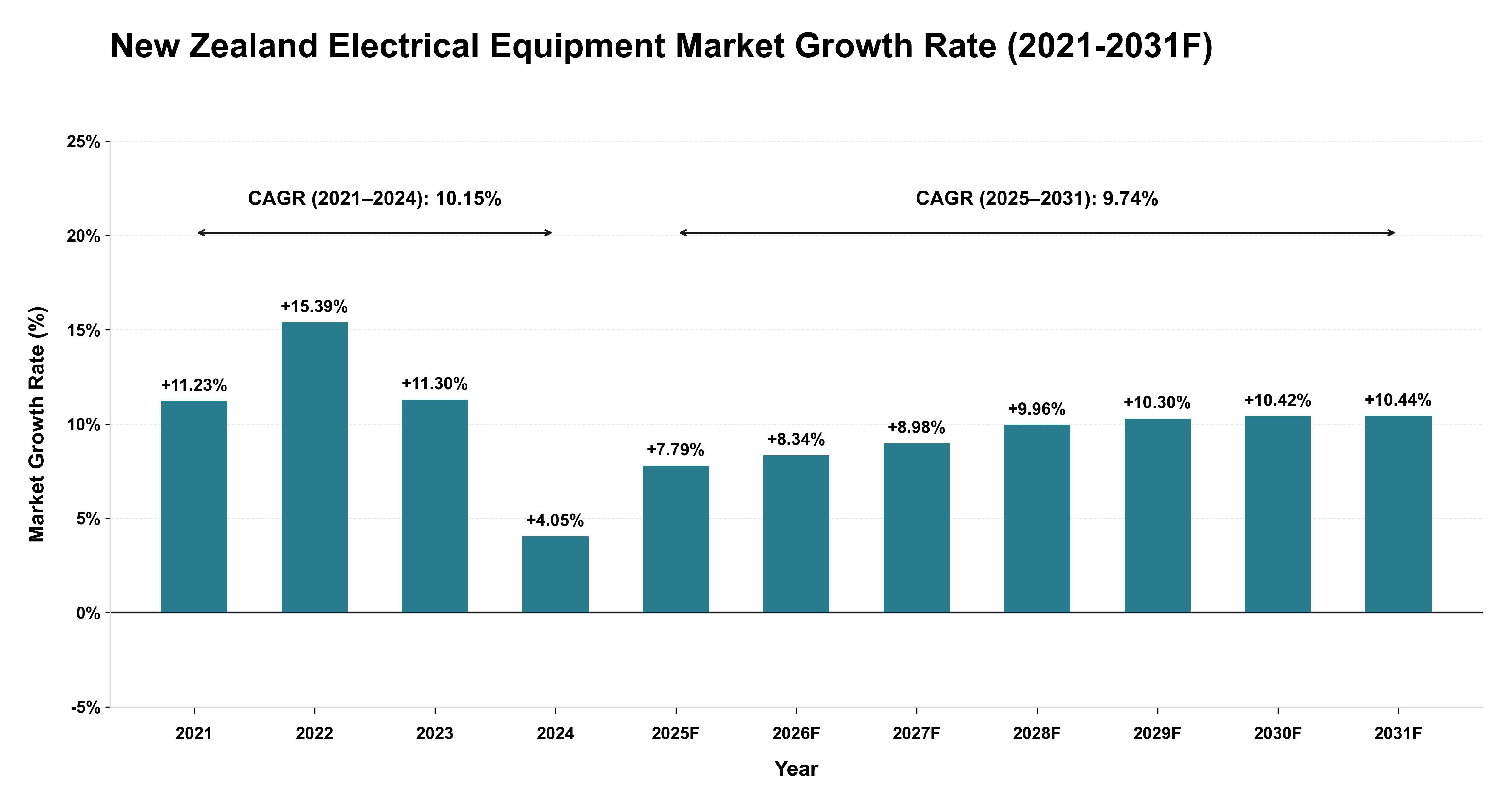
The New Zealand Electrical Equipment Market saw robust growth during 2021-2024, with a CAGR of 10.15%. This period was characterized by significant acceleration, especially in 2022 with a growth rate of 15.39%, driven by technological advancements and increased infrastructure investments. However, growth decelerated in 2024 to 4.05%, indicating a temporary slowdown possibly due to supply chain disruptions or market adjustments. Looking ahead to 2025-2031, a slightly lower forecast CAGR of 9.74% suggests a more stable but still positive trajectory for the market. The consistent growth rates from 2026 onwards indicate resilience and sustained demand for electrical equipment, likely fueled by ongoing modernization efforts, renewable energy projects, and evolving consumer preferences towards smart technologies in New Zealand.
Key Highlights of the Report:
- New Zealand Electrical Equipment Market Outlook
- Market Size of New Zealand Electrical Equipment Market, 2024
- Forecast of New Zealand Electrical Equipment Market, 2031
- Historical Data and Forecast of New Zealand Electrical Equipment Revenues & Volume for the Period 2021-2031
- New Zealand Electrical Equipment Market Trend Evolution
- New Zealand Electrical Equipment Market Drivers and Challenges
- New Zealand Electrical Equipment Price Trends
- New Zealand Electrical Equipment Porter`s Five Forces
- New Zealand Electrical Equipment Industry Life Cycle
- Historical Data and Forecast of New Zealand Electrical Equipment Market Revenues & Volume By Types for the Period 2021-2031
- Historical Data and Forecast of New Zealand Electrical Equipment Market Revenues & Volume By Electronic and electrical wires and cables for the Period 2021-2031
- Historical Data and Forecast of New Zealand Electrical Equipment Market Revenues & Volume By Batteries and accumulators for the Period 2021-2031
- Historical Data and Forecast of New Zealand Electrical Equipment Market Revenues & Volume By Wiring devices for the Period 2021-2031
- Historical Data and Forecast of New Zealand Electrical Equipment Market Revenues & Volume By Electric lighting equipment for the Period 2021-2031
- Historical Data and Forecast of New Zealand Electrical Equipment Market Revenues & Volume By Others for the Period 2021-2031
- Historical Data and Forecast of New Zealand Electrical Equipment Market Revenues & Volume By Applications for the Period 2021-2031
- Historical Data and Forecast of New Zealand Electrical Equipment Market Revenues & Volume By Residential end-users for the Period 2021-2031
- Historical Data and Forecast of New Zealand Electrical Equipment Market Revenues & Volume By Non-residential end-users for the Period 2021-2031
- New Zealand Electrical Equipment Import Export Trade Statistics
- Market Opportunity Assessment By Types
- Market Opportunity Assessment By Applications
- New Zealand Electrical Equipment Top Companies Market Share
- New Zealand Electrical Equipment Competitive Benchmarking By Technical and Operational Parameters
- New Zealand Electrical Equipment Company Profiles
- New Zealand Electrical Equipment Key Strategic Recommendations






































