New Zealand Epoxy Market Growth Rate Analysis (2025 - 2031)
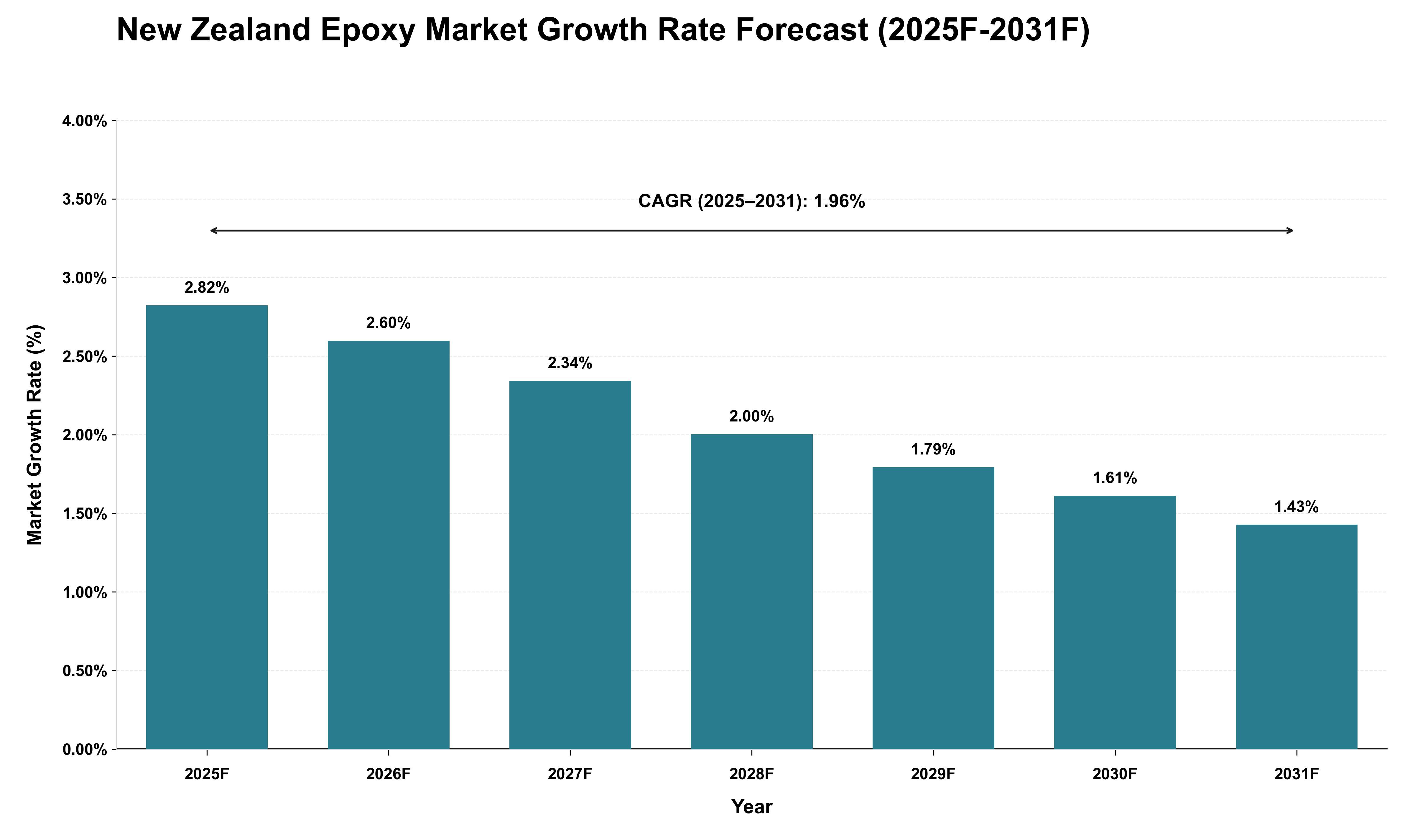
The New Zealand epoxy market will experience a gradual deceleration in growth, driven primarily by evolving supply chain dynamics and fluctuating input costs. As the forecasted CAGR of 1.96% suggests, annual growth rates will decline from 2.82% in 2025 to 1.43% by 2031, reflecting increasing pressures on raw material availability and pricing volatility. The reliance on imported components will exacerbate these challenges, as global supply chain disruptions may lead to higher transportation costs and longer lead times for essential inputs. Additionally, cyclical trends in construction and manufacturing sectors will influence demand patterns, with potential slowdowns in these industries impacting epoxy consumption rates. Consequently, while the market remains poised for steady growth, external economic factors will necessitate strategic adjustments among stakeholders to navigate the complexities of input cost fluctuations and supply chain resilience effectively.
Key Highlights of the Report:
- New Zealand Epoxy Market Outlook
- Market Size of New Zealand Epoxy Market, 2025
- Forecast of New Zealand Epoxy Market, 2032
- Historical Data and Forecast of New Zealand Epoxy Revenues & Volume for the Period 2022 - 2032F
- New Zealand Epoxy Market Trend Evolution
- New Zealand Epoxy Market Drivers and Challenges
- New Zealand Epoxy Price Trends
- New Zealand Epoxy Porter`s Five Forces
- New Zealand Epoxy Industry Life Cycle
- Historical Data and Forecast of New Zealand Epoxy Market Revenues & Volume By Type for the Period 2022 - 2032F
- Historical Data and Forecast of New Zealand Epoxy Market Revenues & Volume By Liquid for the Period 2022 - 2032F
- Historical Data and Forecast of New Zealand Epoxy Market Revenues & Volume By Solid & Solution for the Period 2022 - 2032F
- Historical Data and Forecast of New Zealand Epoxy Market Revenues & Volume By Application for the Period 2022 - 2032F
- Historical Data and Forecast of New Zealand Epoxy Market Revenues & Volume By Construction for the Period 2022 - 2032F
- Historical Data and Forecast of New Zealand Epoxy Market Revenues & Volume By Automotive & transportation for the Period 2022 - 2032F
- Historical Data and Forecast of New Zealand Epoxy Market Revenues & Volume By Electrical & electronics for the Period 2022 - 2032F
- Historical Data and Forecast of New Zealand Epoxy Market Revenues & Volume By General industrial for the Period 2022 - 2032F
- Historical Data and Forecast of New Zealand Epoxy Market Revenues & Volume By Wind for the Period 2022 - 2032F
- Historical Data and Forecast of New Zealand Epoxy Market Revenues & Volume By Marine for the Period 2022 - 2032F
- Historical Data and Forecast of New Zealand Epoxy Market Revenues & Volume By Aerospace for the Period 2022 - 2032F
- Historical Data and Forecast of New Zealand Epoxy Market Revenues & Volume By Consumer goods for the Period 2022 - 2032F
- New Zealand Epoxy Import Export Trade Statistics
- Market Opportunity Assessment By Type
- Market Opportunity Assessment By Application
- New Zealand Epoxy Top Companies Market Share
- New Zealand Epoxy Competitive Benchmarking By Technical and Operational Parameters
- New Zealand Epoxy Company Profiles
- New Zealand Epoxy Key Strategic Recommendations






































