New Zealand Footwear Market Growth Rate Analysis (2025 - 2031)
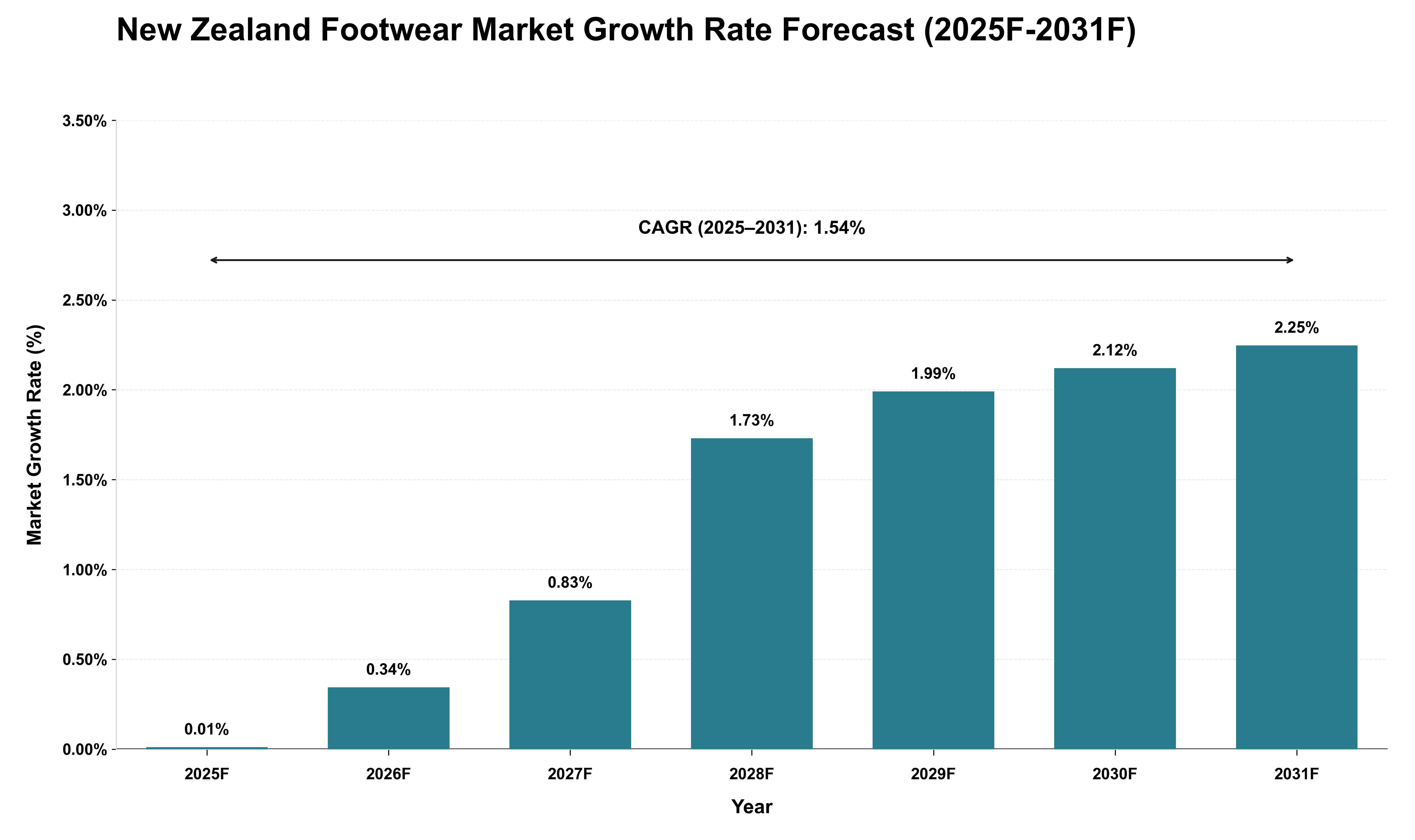
The New Zealand footwear market will experience a gradual growth trajectory from 2025 to 2031, driven primarily by evolving consumer preferences and the anticipated stabilization of supply chain dynamics. As global logistics improve and input costs normalize, manufacturers will likely benefit from reduced shipping delays and lower raw material prices, fostering a more favorable environment for production. The projected CAGR of 1.54% reflects this gradual recovery, with annual growth rates increasing from a mere 0.01% in 2025 to 2.25% by 2031. This upward trend suggests that as import dependencies shift towards more sustainable sourcing practices, local brands may gain traction, enhancing competition within the market. Additionally, cyclical trends in consumer spending on discretionary items like footwear will play a crucial role in shaping demand patterns, particularly as economic conditions stabilize post-pandemic and disposable incomes rise.
Key Highlights of the Report:
- New Zealand Footwear Market Outlook
- Market Size of New Zealand Footwear Market, 2025
- Forecast of New Zealand Footwear Market, 2032
- Historical Data and Forecast of New Zealand Footwear Revenues & Volume for the Period 2022 - 2032F
- New Zealand Footwear Market Trend Evolution
- New Zealand Footwear Market Drivers and Challenges
- New Zealand Footwear Price Trends
- New Zealand Footwear Porter`s Five Forces
- New Zealand Footwear Industry Life Cycle
- Historical Data and Forecast of New Zealand Footwear Market Revenues & Volume By Type for the Period 2022 - 2032F
- Historical Data and Forecast of New Zealand Footwear Market Revenues & Volume By Athletic for the Period 2022 - 2032F
- Historical Data and Forecast of New Zealand Footwear Market Revenues & Volume By Non-Athletic for the Period 2022 - 2032F
- Historical Data and Forecast of New Zealand Footwear Market Revenues & Volume By Material for the Period 2022 - 2032F
- Historical Data and Forecast of New Zealand Footwear Market Revenues & Volume By Lather for the Period 2022 - 2032F
- Historical Data and Forecast of New Zealand Footwear Market Revenues & Volume By Rubber for the Period 2022 - 2032F
- Historical Data and Forecast of New Zealand Footwear Market Revenues & Volume By Plastic for the Period 2022 - 2032F
- Historical Data and Forecast of New Zealand Footwear Market Revenues & Volume By End-users for the Period 2022 - 2032F
- Historical Data and Forecast of New Zealand Footwear Market Revenues & Volume By Male for the Period 2022 - 2032F
- Historical Data and Forecast of New Zealand Footwear Market Revenues & Volume By Female for the Period 2022 - 2032F
- Historical Data and Forecast of New Zealand Footwear Market Revenues & Volume By Kids for the Period 2022 - 2032F
- Historical Data and Forecast of New Zealand Footwear Market Revenues & Volume By Distribution Channel for the Period 2022 - 2032F
- Historical Data and Forecast of New Zealand Footwear Market Revenues & Volume By Online Stores for the Period 2022 - 2032F
- Historical Data and Forecast of New Zealand Footwear Market Revenues & Volume By Supermarkets and Hypermarkets for the Period 2022 - 2032F
- Historical Data and Forecast of New Zealand Footwear Market Revenues & Volume By Independent Retail Stores for the Period 2022 - 2032F
- Historical Data and Forecast of New Zealand Footwear Market Revenues & Volume By Others for the Period 2022 - 2032F
- New Zealand Footwear Import Export Trade Statistics
- Market Opportunity Assessment By Type
- Market Opportunity Assessment By Material
- Market Opportunity Assessment By End-users
- Market Opportunity Assessment By Distribution Channel
- New Zealand Footwear Top Companies Market Share
- New Zealand Footwear Competitive Benchmarking By Technical and Operational Parameters
- New Zealand Footwear Company Profiles
- New Zealand Footwear Key Strategic Recommendations






































