New Zealand Frozen Food Market Top 5 Importing Countries and Market Competition (HHI) Analysis
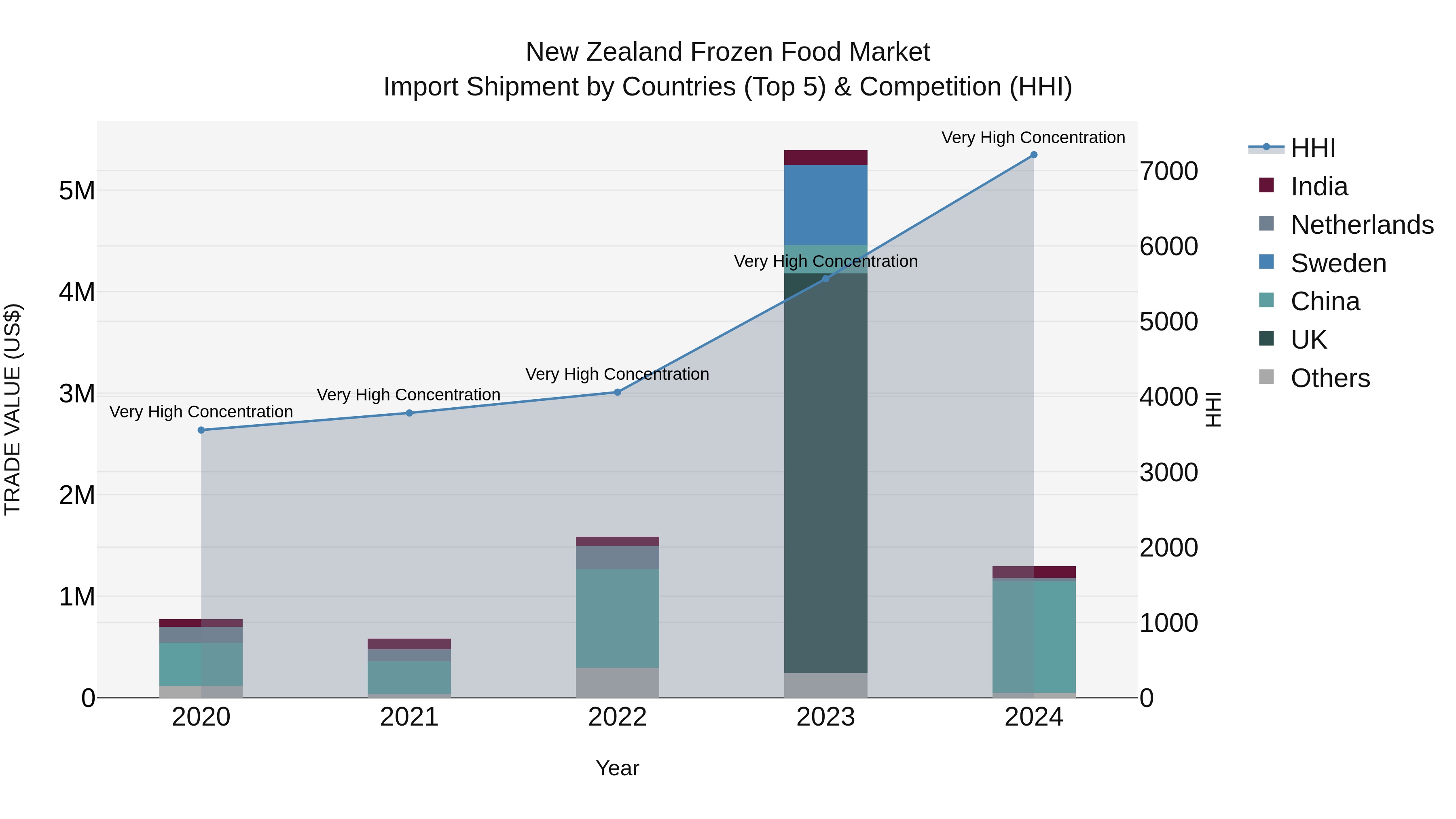
In 2024, New Zealand continued to see significant frozen food import shipments, with China, India, Belgium, Netherlands, and Turkey being the top exporting countries. The market remained highly concentrated, as indicated by the high Herfindahl-Hirschman Index (HHI). Despite a strong compound annual growth rate (CAGR) of 13.82% from 2020 to 2024, there was a notable decline in growth rate from 2023 to 2024 at -75.96%. This fluctuation may be attributed to various factors influencing trade dynamics and consumer preferences in the frozen food market.
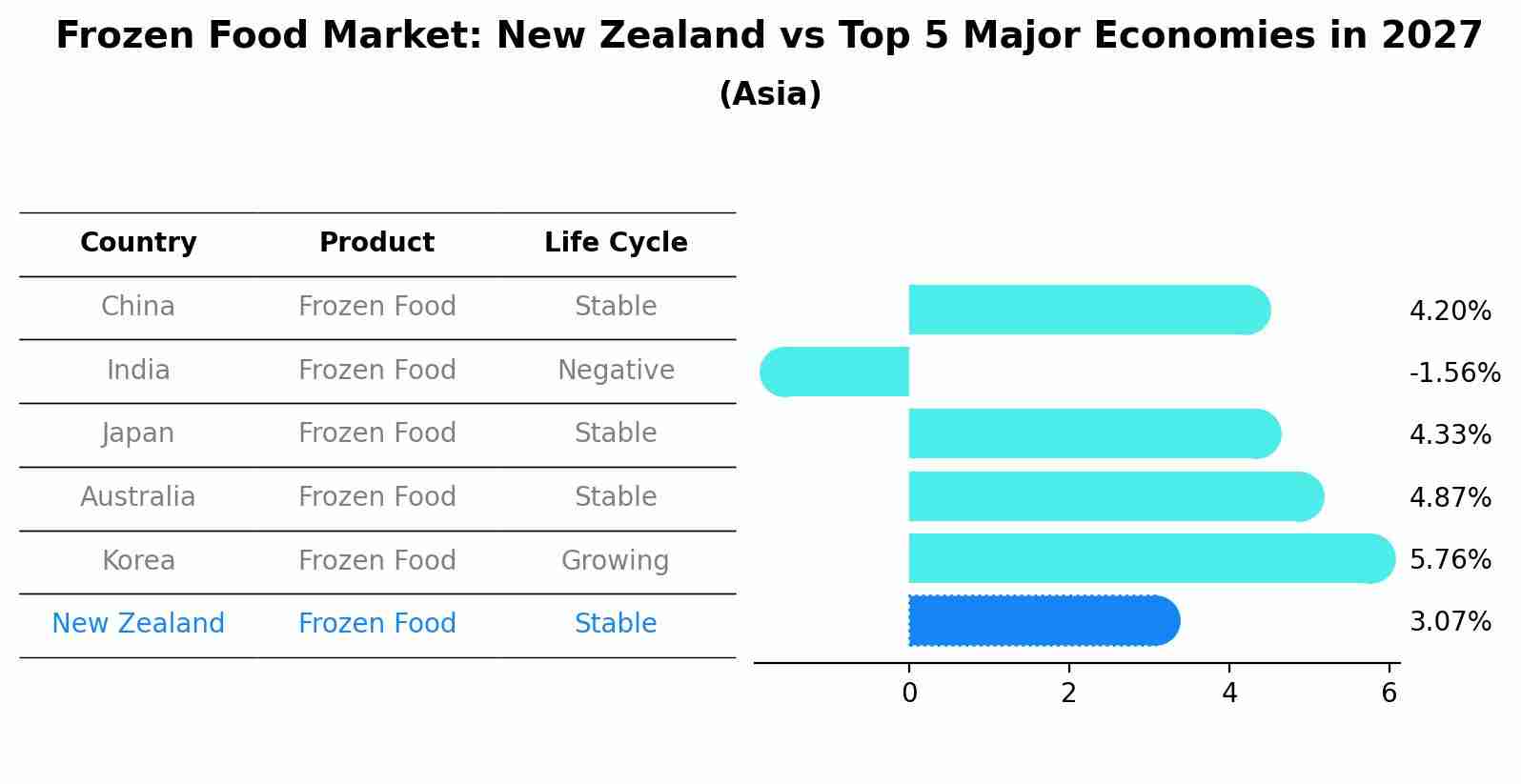
Frozen Food Market: New Zealand vs Top 5 Major Economies in 2027 (Asia)
New Zealand's Frozen Food market is anticipated to experience a stable growth rate of 3.07% by 2027, reflecting trends observed in the largest economy China, followed by India, Japan, Australia and South Korea.
New Zealand Frozen Food Market Growth Rate
According to 6Wresearch internal database and industry insights, the New Zealand Frozen Food Market is projected to grow at a compound annual growth rate (CAGR) of 6.2% during the forecast period from 2026 to 2032.
Topics Covered in the New Zealand Frozen Food Market Report
The New Zealand Frozen Food Market report thoroughly covers the market by product type End Users, Distribution Channels, and Freezing Techniques, providing an unbiased and detailed analysis of ongoing market trends, opportunities, challenges, and market drivers, helping stakeholders align their strategies with current and future market dynamics.
New Zealand Frozen Food Market Highlights
| Report Name | New Zealand Frozen Food Market |
| Forecast Period | 2026–2032 |
| CAGR | 6.20% |
| Growing Sector | Frozen Foods |
New Zealand Frozen Food Market Synopsis
A steady increase in the demand for convenience food items, healthier frozen food choices along with the trend toward prepared meals is contributing to the overall growth of the New Zealand Frozen Food Industry. Growth in consumer preference for healthy frozen food options has been illustrated by the increase in the sales of frozen fruits and vegetables. Improvements in freeze technology have also allowed for better taste, texture and shelf stability of frozen food products creating additional support for the Frozen Food Industry's growth. The continued popularity of Frozen Food will be driven by its appeal as a convenient product and due to its long shelf life.
Evaluation of Growth Drivers in the New Zealand Frozen Food Market
Below mentioned are some prominent drivers and their impact on the market dynamics:
| Drivers | Primary Segments Affected | Why It Matters (Evidence) |
| Convenience and Time Efficiency | Frozen Ready Meals, Frozen Meat and Poultry, Frozen Snacks | The increasing demand for time-saving, convenient meal options is driving the adoption of frozen foods. |
| Health Consciousness | Frozen Fruits and Vegetables, Frozen Ready Meals | Consumers who focus on health are turning to frozen vegetables and fruit, now that these items retain their nutritional value for a long time without reducing it. |
| Advancements in Freezing Technology | Frozen Ready Meals, Frozen Meat and Poultry | Improved freezing techniques ensure better food preservation, retaining quality and taste, which appeals to consumers. |
| Increased Demand for Protein-Rich Foods | Frozen Meat and Poultry, Frozen Fish and Seafood | A growing preference for high-protein diets is encouraging demand for frozen meat, poultry, and seafood. |
| The Rising Popularity of Online Shopping | Frozen Foods (All Categories) | The shift towards e-commerce platforms is making frozen food more accessible to a wider consumer base. |
New Zealand Frozen Food Market Size is projected to grow at a CAGR of 6.2% from 2026 to 2032. There has been an increase in numerous factors for the growth of the Frozen Food Market in New Zealand including growth being enhanced through demand for healthier convenience based Frozen Foods and Ready to Eat meals. Innovations made to freezing technology and the popularity of frozen fruit and vegetables have also driven the growth of the market. There is an increased drive from consumers for convenience with health consciousness which has led to the increased requirement for higher quality frozen foods.
Evaluation of Restraints in the New Zealand Frozen Food Market
Below mentioned are some major restraints and their influence on the market dynamics:
| Restraints | Primary Segments Affected | What This Means (Evidence) |
| High Prices of Premium Frozen Products | Frozen Ready Meals, Frozen Meat and Poultry | The high prices of premium frozen products may limit access for price-sensitive consumers. |
| Lack of Consumer Awareness about Frozen Food Quality | Frozen Fruits and Vegetables, Frozen Ready Meals | Misconceptions about the quality of frozen food can hinder its adoption. |
| Seasonal Demand Fluctuations | Frozen Fruits and Vegetables, Frozen Seafood | The seasonal demand for particular products impacts both inventory management and sales performance across all products. |
| Competing Substitutes | Frozen Ready Meals, Frozen Snacks | Competition from fresh food alternatives and increasing preference for home-cooked meals can slow growth in some segments. |
| Concerns over Long-Term Health Impacts of Frozen Food | Frozen Ready Meals, Frozen Snacks | Some customers are alarmed about their health due to the inclusion of processed frozen foods, which constricts penetration of the product into some customer segments. |
New Zealand Frozen Food Market Challenges
There are several challenges currently faced by the New Zealand Frozen Food Industry regarding premium pricing. This can decrease the attractiveness of these types of products to consumers who are budget conscious. In addition to concerns about price, there are also many myths surrounding frozen food particularly in reference to frozen fruit, vegetables which could restrict market penetration. Additionally, there are concerns regarding the seasonality of products, for example, frozen seafood, frozen fruit have limited availability at certain times of year, which can deter consumers from purchasing those types of products.
New Zealand Frozen Food Market Trends
Here are some major trends changing the New Zealand Frozen Food Market Growth dynamics:
Improvements in Freezing Technologies:
Advanced freezing methods, such as flash freezing, are preserving the taste, texture, and nutritional value of frozen foods better than before. This trend is increasing the popularity of frozen ready meals and vegetables.
Health-Conscious Consumer Shift:
There is an increasing preference for frozen foods that are nutritious, such as frozen vegetables and fruits. Consumers are seeking alternatives that provide convenience without compromising on health.
Growth of Online Shopping and E-Commerce:
E-commerce platforms which have expanded their services now provide customers easier access to frozen food products. Online frozen food shopping enables consumers to obtain products from more stores which results in increased market presence and business development.
Investment Opportunities in the New Zealand Frozen Food Market
The New Zealand Frozen Food Market presents several investment opportunities, including:
Advancements in Freezing Technology
Through investment in freezing technology, companies will achieve better frozen food quality, taste and food preservation, which will result in increased consumer acceptance.
Rising E-Commerce Platforms
E-commerce investment favorably boosts the level of interaction with the emerging audience and market perception for businesses.
Health-Conscious Frozen Food Products
Expanding our selection to include items that address the needs of health-conscious consumers, which involves low-fat, high-protein content, and organic ingredients, seems to be a promising approach toward generating more growth.
Top 5 Leading Players in the New Zealand Frozen Food Market
Below is the list of prominent companies leading the New Zealand Frozen Food Market Share:
1. Nestle S.A.
| Company Name | Nestlé S.A. |
| Established Year | 1867 |
| Headquarters | Vevey, Switzerland |
| Official Website | Click Here |
Description: Nestlé is a global leader in the frozen food industry, offering a wide range of frozen ready meals, vegetables, and desserts. The company is known for its high-quality products and innovations in convenience foods.
2. Goodman Fielder
| Company Name | Goodman Fielder |
| Established Year | 1886 |
| Headquarters | Auckland, New Zealand |
| Official Website | Click Here |
Description: Goodman Fielder is one of New Zealand's largest food companies, specializing in frozen bakery items, meats, and ready meals. The company focuses on convenience and quality in its frozen food offerings.
3. Frucor Suntory
| Company Name | Frucor Suntory |
| Established Year | 1960 |
| Headquarters | Auckland, New Zealand |
| Official Website | Click Here |
Description: A leader in the frozen fruit sector, Frucor Suntory focuses on producing high-quality frozen fruit products for both the retail and food service industries.
4. The Warehouse Group
| Company Name | The Warehouse Group |
| Established Year | 1982 |
| Headquarters | Auckland, New Zealand |
| Official Website | Click Here |
Description: The Warehouse Group offers a variety of frozen food products, including ready-to-eat meals, frozen meats, and desserts, sold through their retail network and online platforms.
5. McCain Foods
| Company Name | McCain Foods |
| Established Year | 1957 |
| Headquarters | Florenceville-Bristol, Canada |
| Official Website | Click Here |
Description: McCain Foods is a leading frozen food company specializing in frozen potatoes, including frozen French fries and other potato-based products, catering to both retail and food service sectors.
Government Regulations Introduced in the New Zealand Frozen Food Market
According to New Zealander government data, the New Zealand government, via MPI (Ministry for Primary Industries), recently has enacted different pieces of legislation regulating the production and distribution of frozen foods in order to protect both consumers from unsafe frozen foods and to protect the economic interests of food manufacturers and retailers. Specifically, regulations have been established concerning food safety, labeling, and overall cleanliness of frozen food from production through distribution to consumer purchase.
Future Insights of the New Zealand Frozen Food Market
There is an optimistic outlook for the New Zealand Frozen Food Market, this is due to an increase in demand for convenience and healthy choice products. The growth of online grocery shopping and improvements in the freezing process have increased the reach of the grocery stores and frozen foods. Furthermore, the increase in demand for premium and customized frozen food will help to support long-term growth of the market. These trends show that consumers are starting to prefer quality, convenience and variety. Thus, creating more opportunities for continued growth and development of this market in the future.
Market Segmentation Analysis
The report offers a comprehensive study of the following market segments and their leading categories:
By Product: Frozen Ready Meals to Dominate the Market
According to Ritika Kalra, Senior Research Analyst, 6Wresearch, Frozen Ready Meals will dominate the market due to their convenience and growing consumer preference for time-saving, ready-to-eat solutions. These meals are particularly popular among busy professionals and families seeking quick meal options. Other product categories, such as frozen meat and poultry, will continue to grow as consumers focus on protein-rich foods.
By End Users: Retail Customers to Dominate the Market
The Retail Customers segment will dominate the New Zealand Frozen Food Market. The market demand is primarily driven by retail customers as more households, especially busy working individuals and families, now choose frozen foods.
By Distribution Channels: Offline to Dominate the Market
The Offline distribution channel will continue to dominate the New Zealand Frozen Food Market due to traditional grocery shopping habits, although the Online channel is growing rapidly as more consumers turn to e-commerce platforms for their food purchases.
By Freezing Techniques: Individual Quick Freezing to Dominate the Market
Individual Quick Freezing (IQF) will dominate the market due to its ability to freeze food quickly while maintaining its quality and texture. This technique is widely used in the production of frozen fruits, vegetables, and ready meals.
Key Attractiveness of the Report
- 10 Years of Market Numbers
- Historical Data Starting from 2022 to 2025
- Base Year: 2025
- Forecast Data until 2032
- Key Performance Indicators Impacting the Market
- Major Upcoming Developments and Projects
Key Highlights of the Report:
- New Zealand Frozen Food Market Outlook
- Market Size of New Zealand Frozen Food Market, 2025
- Forecast of New Zealand Frozen Food Market, 2032
- Historical Data and Forecast of New Zealand Frozen Food Revenues & Volume for the Period 2022-2032F
- New Zealand Frozen Food Market Trend Evolution
- New Zealand Frozen Food Market Drivers and Challenges
- New Zealand Frozen Food Price Trends
- New Zealand Frozen Food Porter`s Five Forces
- New Zealand Frozen Food Industry Life Cycle
- Historical Data and Forecast of New Zealand Frozen Food Market Revenues & Volume By Product Types for the Period 2022-2032F
- Historical Data and Forecast of New Zealand Frozen Food Market Revenues & Volume By Frozen Ready Meals for the Period 2022-2032F
- Historical Data and Forecast of New Zealand Frozen Food Market Revenues & Volume By Frozen Meat and Poultry for the Period 2022-2032F
- Historical Data and Forecast of New Zealand Frozen Food Market Revenues & Volume By Frozen Fish and Seafood for the Period 2022-2032F
- Historical Data and Forecast of New Zealand Frozen Food Market Revenues & Volume By Frozen Fruits and Vegetables for the Period 2022-2032F
- Historical Data and Forecast of New Zealand Frozen Food Market Revenues & Volume By Frozen Snack Products for the Period 2022-2032F
- Historical Data and Forecast of New Zealand Frozen Food Market Revenues & Volume By Frozen Confectionery and Bakery Items for the Period 2022-2032F
- Historical Data and Forecast of New Zealand Frozen Food Market Revenues & Volume By Others for the Period 2022-2032F
- Historical Data and Forecast of New Zealand Frozen Food Market Revenues & Volume By End Users for the Period 2022-2032F
- Historical Data and Forecast of New Zealand Frozen Food Market Revenues & Volume By Retail Customers for the Period 2022-2032F
- Historical Data and Forecast of New Zealand Frozen Food Market Revenues & Volume By Food Service Industry for the Period 2022-2032F
- Historical Data and Forecast of New Zealand Frozen Food Market Revenues & Volume By Distribution Channels for the Period 2022-2032F
- Historical Data and Forecast of New Zealand Frozen Food Market Revenues & Volume By Offline for the Period 2022-2032F
- Historical Data and Forecast of New Zealand Frozen Food Market Revenues & Volume By Online for the Period 2022-2032F
- Historical Data and Forecast of New Zealand Frozen Food Market Revenues & Volume By Freezing Techniques for the Period 2022-2032F
- Historical Data and Forecast of New Zealand Frozen Food Market Revenues & Volume By Individual Quick Freezing for the Period 2022-2032F
- Historical Data and Forecast of New Zealand Frozen Food Market Revenues & Volume By Blast Freezing for the Period 2022-2032F
- Historical Data and Forecast of New Zealand Frozen Food Market Revenues & Volume By Deep Freezing for the Period 2022-2032F
- Historical Data and Forecast of New Zealand Frozen Food Market Revenues & Volume By Others for the Period 2022-2032F
- New Zealand Frozen Food Import Export Trade Statistics
- Market Opportunity Assessment By Product Types
- Market Opportunity Assessment By End Users
- Market Opportunity Assessment By Distribution Channels
- Market Opportunity Assessment By Freezing Techniques
- New Zealand Frozen Food Top Companies Market Share
- New Zealand Frozen Food Competitive Benchmarking By Technical and Operational Parameters
- New Zealand Frozen Food Company Profiles
- New Zealand Frozen Food Key Strategic Recommendations
Market Covered
The report offers a comprehensive study of the following market segments:
By Product Types
- Frozen Ready Meals
- Frozen Meat and Poultry
- Frozen Fish and Seafood
- Frozen Fruits and Vegetables
- Frozen Snack Products
- Frozen Confectionery and Bakery Items
- Others
By End Users
- Retail Customers
- Food Service Industry
By Distribution Channels
- Offline
- Online
By Freezing Techniques
- Individual Quick Freezing
- Blast Freezing
- Deep Freezing
- Others






































