New Zealand Fruit Snack Market Top 5 Importing Countries and Market Competition (HHI) Analysis
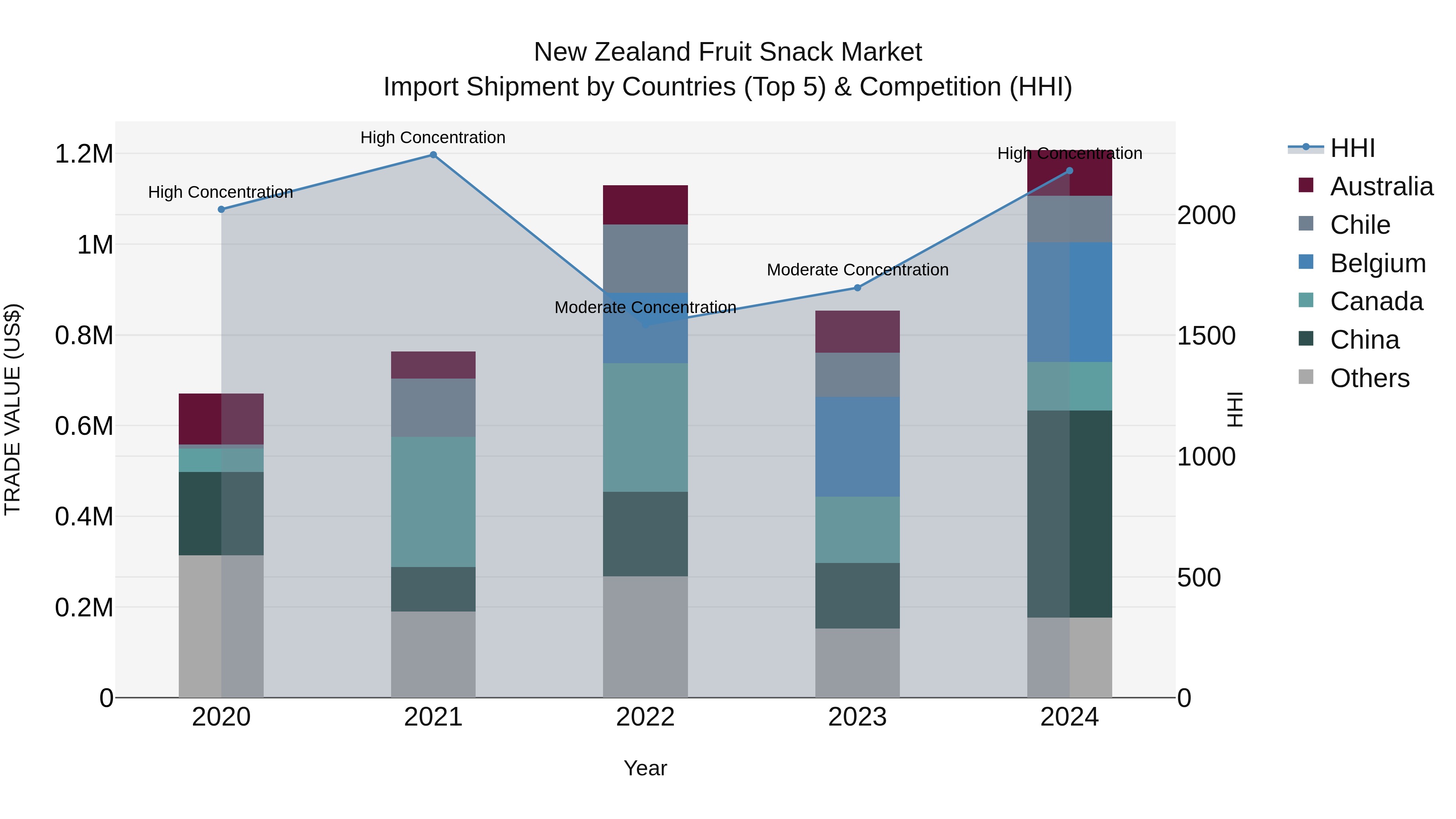
The New Zealand fruit snack import market experienced a significant increase in concentration levels in 2024, with China, Belgium, Canada, Chile, and Australia emerging as the top exporting countries. The market has shown impressive growth with a CAGR of 15.82% from 2020 to 2024, and a notable growth rate of 41.39% from 2023 to 2024. This upward trend indicates a growing demand for fruit snacks in New Zealand, presenting opportunities for both domestic and international suppliers to capitalize on this flourishing market.
Key Highlights of the Report:
- New Zealand Fruit Snack Market Outlook
- Market Size of New Zealand Fruit Snack Market, 2025
- Forecast of New Zealand Fruit Snack Market, 2032
- Historical Data and Forecast of New Zealand Fruit Snack Revenues & Volume for the Period 2022 - 2032F
- New Zealand Fruit Snack Market Trend Evolution
- New Zealand Fruit Snack Market Drivers and Challenges
- New Zealand Fruit Snack Price Trends
- New Zealand Fruit Snack Porter's Five Forces
- New Zealand Fruit Snack Industry Life Cycle
- Historical Data and Forecast of New Zealand Fruit Snack Market Revenues & Volume By Product Type for the Period 2022 - 2032F
- Historical Data and Forecast of New Zealand Fruit Snack Market Revenues & Volume By Dried Fruits for the Period 2022 - 2032F
- Historical Data and Forecast of New Zealand Fruit Snack Market Revenues & Volume By Fruit Bars for the Period 2022 - 2032F
- Historical Data and Forecast of New Zealand Fruit Snack Market Revenues & Volume By Fruit Gummies for the Period 2022 - 2032F
- Historical Data and Forecast of New Zealand Fruit Snack Market Revenues & Volume By Fruit Chips for the Period 2022 - 2032F
- Historical Data and Forecast of New Zealand Fruit Snack Market Revenues & Volume By Distribution Channel for the Period 2022 - 2032F
- Historical Data and Forecast of New Zealand Fruit Snack Market Revenues & Volume By Supermarkets & Hypermarkets for the Period 2022 - 2032F
- Historical Data and Forecast of New Zealand Fruit Snack Market Revenues & Volume By Convenience Stores for the Period 2022 - 2032F
- Historical Data and Forecast of New Zealand Fruit Snack Market Revenues & Volume By Online Retail for the Period 2022 - 2032F
- Historical Data and Forecast of New Zealand Fruit Snack Market Revenues & Volume By Consumer Age Group for the Period 2022 - 2032F
- Historical Data and Forecast of New Zealand Fruit Snack Market Revenues & Volume By Kids for the Period 2022 - 2032F
- Historical Data and Forecast of New Zealand Fruit Snack Market Revenues & Volume By Adults for the Period 2022 - 2032F
- New Zealand Fruit Snack Import Export Trade Statistics
- Market Opportunity Assessment By Product Type
- Market Opportunity Assessment By Distribution Channel
- Market Opportunity Assessment By Consumer Age Group
- New Zealand Fruit Snack Top Companies Market Share
- New Zealand Fruit Snack Competitive Benchmarking By Technical and Operational Parameters
- New Zealand Fruit Snack Company Profiles
- New Zealand Fruit Snack Key Strategic Recommendations






































