New Zealand Ginger Market Growth Rate Analysis (2025 - 2031)
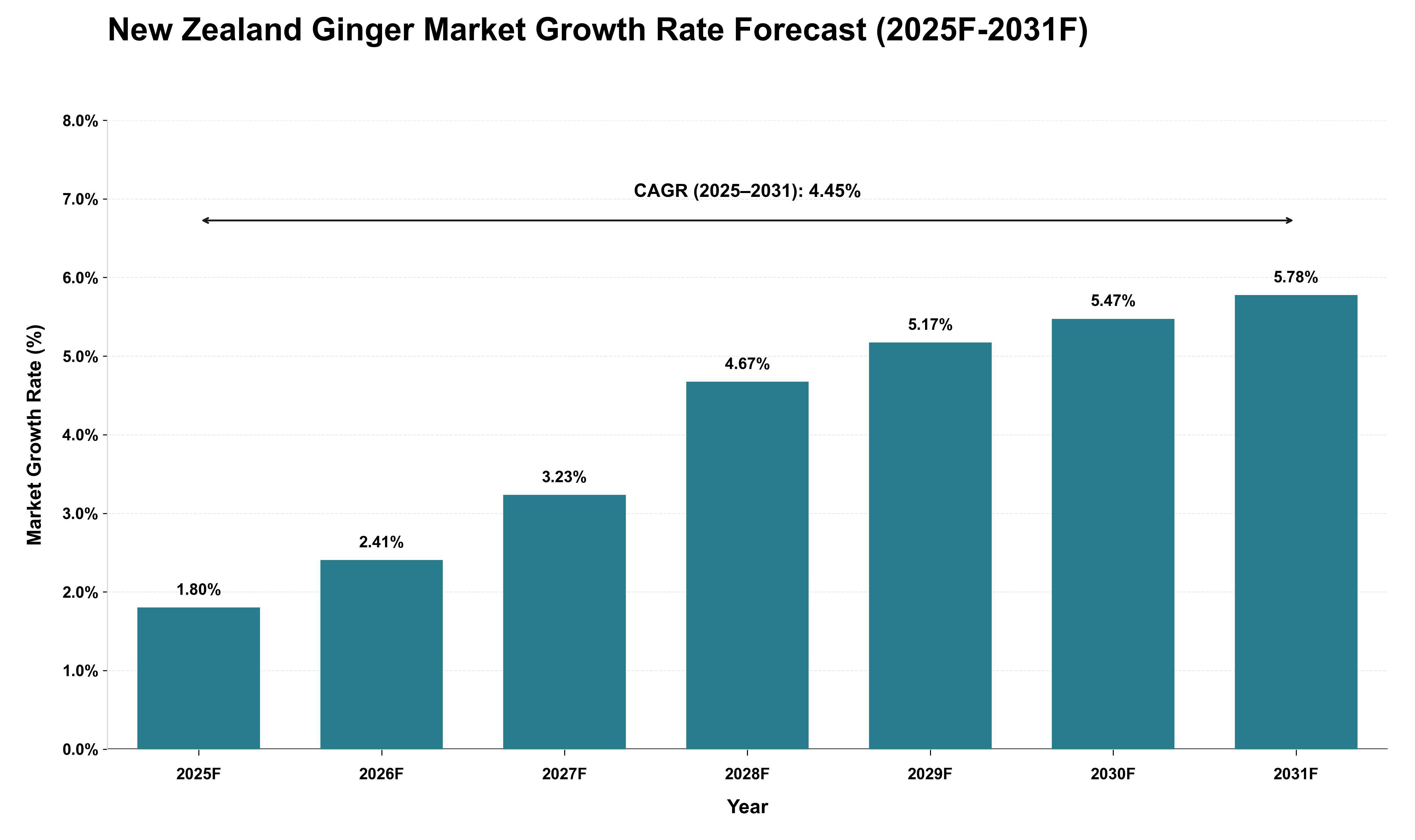
The New Zealand ginger market is projected to experience a compound annual growth rate of 4.45% from 2025 to 2031, reflecting an upward trajectory in consumer demand and market dynamics. The initial growth rate of 1.80% in 2025 will gradually accelerate, reaching 5.78% by 2031, indicating a robust competitive landscape driven by increasing health consciousness and culinary trends favoring ginger's versatility. As import dependencies remain significant, fluctuations in global supply chains and trade policies will likely influence pricing and availability, impacting local producers' capacity to meet rising demand. Additionally, cyclical trends associated with agricultural production may introduce variability in output levels; however, advancements in cultivation techniques and potential expansions in domestic production capabilities are expected to mitigate these effects. Overall, the combination of evolving consumer preferences and strategic responses from suppliers will shape the market's growth trajectory during this forecast period.
Key Highlights of the Report:
- New Zealand Ginger Market Outlook
- Market Size of New Zealand Ginger Market, 2025
- Forecast of New Zealand Ginger Market, 2032
- Historical Data and Forecast of New Zealand Ginger Revenues & Volume for the Period 2022 - 2032F
- New Zealand Ginger Market Trend Evolution
- New Zealand Ginger Market Drivers and Challenges
- New Zealand Ginger Price Trends
- New Zealand Ginger Porter`s Five Forces
- New Zealand Ginger Industry Life Cycle
- Historical Data and Forecast of New Zealand Ginger Market Revenues & Volume By Product Type for the Period 2022 - 2032F
- Historical Data and Forecast of New Zealand Ginger Market Revenues & Volume By Fresh Ginger for the Period 2022 - 2032F
- Historical Data and Forecast of New Zealand Ginger Market Revenues & Volume By Dried Ginger for the Period 2022 - 2032F
- Historical Data and Forecast of New Zealand Ginger Market Revenues & Volume By Preserved Ginger for the Period 2022 - 2032F
- Historical Data and Forecast of New Zealand Ginger Market Revenues & Volume By Ginger Oil for the Period 2022 - 2032F
- Historical Data and Forecast of New Zealand Ginger Market Revenues & Volume By Others for the Period 2022 - 2032F
- Historical Data and Forecast of New Zealand Ginger Market Revenues & Volume By Application for the Period 2022 - 2032F
- Historical Data and Forecast of New Zealand Ginger Market Revenues & Volume By Food Industry for the Period 2022 - 2032F
- Historical Data and Forecast of New Zealand Ginger Market Revenues & Volume By Pharmaceuticals Industry for the Period 2022 - 2032F
- Historical Data and Forecast of New Zealand Ginger Market Revenues & Volume By Cosmetics Industry for the Period 2022 - 2032F
- Historical Data and Forecast of New Zealand Ginger Market Revenues & Volume By Others for the Period 2022 - 2032F
- Historical Data and Forecast of New Zealand Ginger Market Revenues & Volume By Distribution Channel for the Period 2022 - 2032F
- Historical Data and Forecast of New Zealand Ginger Market Revenues & Volume By Traditional Retail for the Period 2022 - 2032F
- Historical Data and Forecast of New Zealand Ginger Market Revenues & Volume By Modern Retail Stores for the Period 2022 - 2032F
- Historical Data and Forecast of New Zealand Ginger Market Revenues & Volume By Others for the Period 2022 - 2032F
- New Zealand Ginger Import Export Trade Statistics
- Market Opportunity Assessment By Product Type
- Market Opportunity Assessment By Application
- Market Opportunity Assessment By Distribution Channel
- New Zealand Ginger Top Companies Market Share
- New Zealand Ginger Competitive Benchmarking By Technical and Operational Parameters
- New Zealand Ginger Company Profiles
- New Zealand Ginger Key Strategic Recommendations






































