New Zealand Hair Accessories Market Growth Rate Analysis (2025 - 2031)
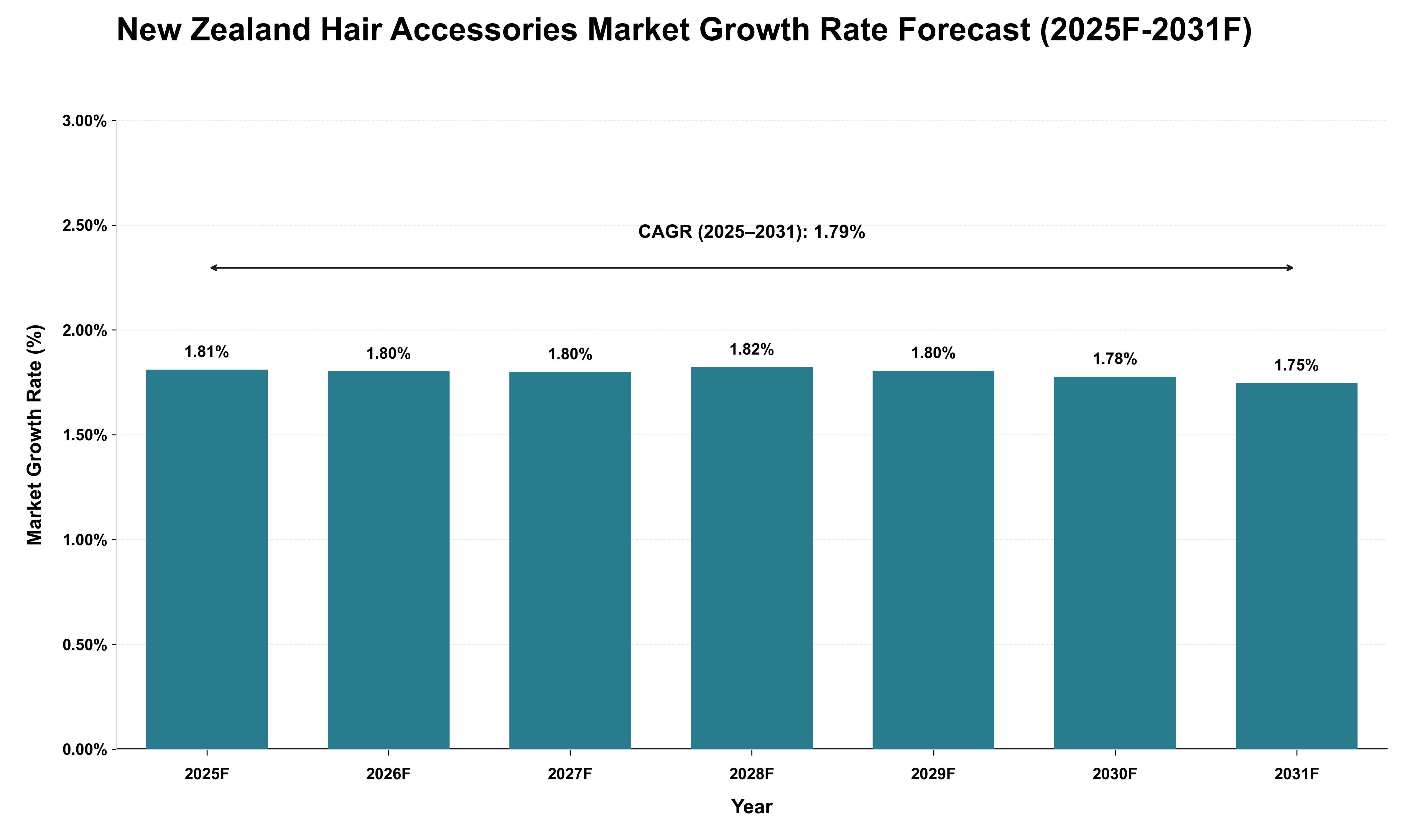
The New Zealand hair accessories market is projected to experience a compound annual growth rate of 1.79% from 2025 to 2031, reflecting a stable yet modest expansion trajectory. This growth will be influenced by regulatory frameworks that govern import tariffs and trade agreements, which are expected to remain favorable for foreign suppliers, thereby enhancing product availability and variety. As consumer preferences evolve towards sustainable and ethically sourced products, manufacturers may face pressure to adapt their offerings in compliance with emerging environmental regulations. Additionally, cyclical trends in disposable income will play a crucial role; as economic conditions fluctuate, discretionary spending on non-essential items like hair accessories may see corresponding shifts. The annual growth rates indicate slight variations year-on-year, suggesting that while the market will maintain its upward trend, external factors such as global supply chain dynamics and changing consumer behavior will necessitate ongoing adaptation by stakeholders in this sector.
Key Highlights of the Report:
- New Zealand Hair Accessories Market Outlook
- Market Size of New Zealand Hair Accessories Market, 2024
- Forecast of New Zealand Hair Accessories Market, 2031
- Historical Data and Forecast of New Zealand Hair Accessories Revenues & Volume for the Period 2021-2031
- New Zealand Hair Accessories Market Trend Evolution
- New Zealand Hair Accessories Market Drivers and Challenges
- New Zealand Hair Accessories Price Trends
- New Zealand Hair Accessories Porter`s Five Forces
- New Zealand Hair Accessories Industry Life Cycle
- Historical Data and Forecast of New Zealand Hair Accessories Market Revenues & Volume By Product Type for the Period 2021-2031
- Historical Data and Forecast of New Zealand Hair Accessories Market Revenues & Volume By Clips & Pins for the Period 2021-2031
- Historical Data and Forecast of New Zealand Hair Accessories Market Revenues & Volume By Head Bands for the Period 2021-2031
- Historical Data and Forecast of New Zealand Hair Accessories Market Revenues & Volume By Wigs & Extensions for the Period 2021-2031
- Historical Data and Forecast of New Zealand Hair Accessories Market Revenues & Volume By Elastics & Ties for the Period 2021-2031
- Historical Data and Forecast of New Zealand Hair Accessories Market Revenues & Volume By Others for the Period 2021-2031
- Historical Data and Forecast of New Zealand Hair Accessories Market Revenues & Volume By Distribution Channel for the Period 2021-2031
- Historical Data and Forecast of New Zealand Hair Accessories Market Revenues & Volume By Supermarkets & Hypermarkets for the Period 2021-2031
- Historical Data and Forecast of New Zealand Hair Accessories Market Revenues & Volume By General Stores for the Period 2021-2031
- Historical Data and Forecast of New Zealand Hair Accessories Market Revenues & Volume By Online for the Period 2021-2031
- New Zealand Hair Accessories Import Export Trade Statistics
- Market Opportunity Assessment By Product Type
- Market Opportunity Assessment By Distribution Channel
- New Zealand Hair Accessories Top Companies Market Share
- New Zealand Hair Accessories Competitive Benchmarking By Technical and Operational Parameters
- New Zealand Hair Accessories Company Profiles
- New Zealand Hair Accessories Key Strategic Recommendations






































