New Zealand Honey Market Growth Rate Analysis (2025 - 2031)
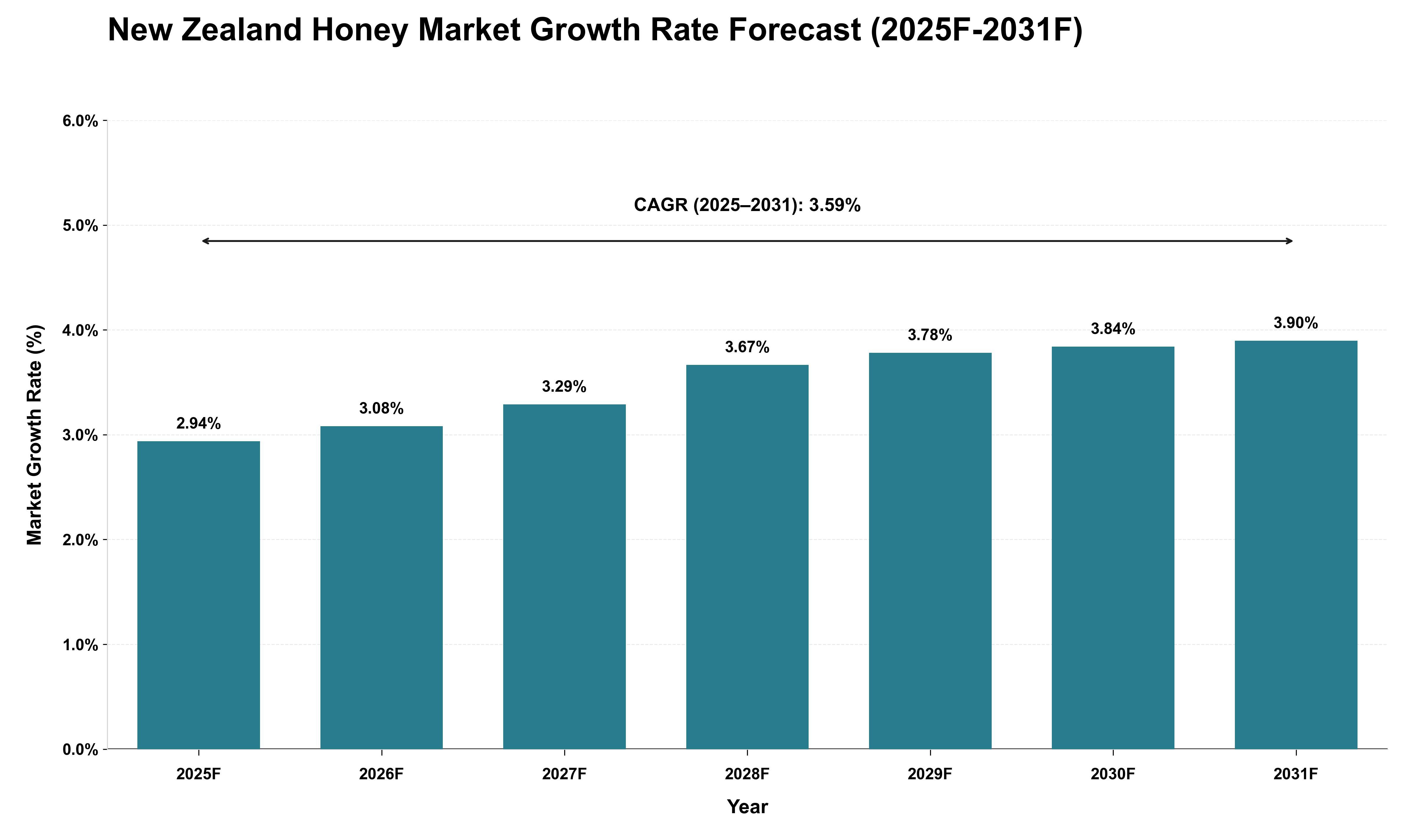
The projected growth trajectory for the New Zealand honey market will exhibit a consistent acceleration, with annual growth rates increasing from 2.94% in 2025 to 3.90% by 2031, reflecting a compound annual growth rate (CAGR) of 3.59%. This upward trend indicates a strengthening end-use demand driven by rising consumer preferences for natural and health-oriented products, alongside an anticipated increase in export opportunities as global markets expand their appetite for premium honey varieties. The expected cyclical trends will likely be influenced by factors such as climate variability affecting production yields and evolving regulatory frameworks that may impact import dependencies. As consumers increasingly prioritize sustainability and traceability in their purchasing decisions, the New Zealand honey sector is poised to capitalize on these shifts, enhancing its competitive positioning in both domestic and international markets throughout the forecast period.
Key Highlights of the Report:
- New Zealand Honey Market Outlook
- Market Size of New Zealand Honey Market, 2025
- Forecast of New Zealand Honey Market, 2032
- Historical Data and Forecast of New Zealand Honey Revenues & Volume for the Period 2022 - 2032F
- New Zealand Honey Market Trend Evolution
- New Zealand Honey Market Drivers and Challenges
- New Zealand Honey Price Trends
- New Zealand Honey Porter`s Five Forces
- New Zealand Honey Industry Life Cycle
- Historical Data and Forecast of New Zealand Honey Market Revenues & Volume By Type for the Period 2022 - 2032F
- Historical Data and Forecast of New Zealand Honey Market Revenues & Volume By Alfalfa Honey for the Period 2022 - 2032F
- Historical Data and Forecast of New Zealand Honey Market Revenues & Volume By Wildflower Honey for the Period 2022 - 2032F
- Historical Data and Forecast of New Zealand Honey Market Revenues & Volume By Buckwheat Honey for the Period 2022 - 2032F
- Historical Data and Forecast of New Zealand Honey Market Revenues & Volume By Acacia Honey for the Period 2022 - 2032F
- Historical Data and Forecast of New Zealand Honey Market Revenues & Volume By Clover Honey for the Period 2022 - 2032F
- Historical Data and Forecast of New Zealand Honey Market Revenues & Volume By Others for the Period 2022 - 2032F
- Historical Data and Forecast of New Zealand Honey Market Revenues & Volume By Applications for the Period 2022 - 2032F
- Historical Data and Forecast of New Zealand Honey Market Revenues & Volume By Food and Beverage for the Period 2022 - 2032F
- Historical Data and Forecast of New Zealand Honey Market Revenues & Volume By Personal Care Products for the Period 2022 - 2032F
- Historical Data and Forecast of New Zealand Honey Market Revenues & Volume By Pharmaceuticals for the Period 2022 - 2032F
- Historical Data and Forecast of New Zealand Honey Market Revenues & Volume By Others for the Period 2022 - 2032F
- Historical Data and Forecast of New Zealand Honey Market Revenues & Volume By Packaging for the Period 2022 - 2032F
- Historical Data and Forecast of New Zealand Honey Market Revenues & Volume By Bottle for the Period 2022 - 2032F
- Historical Data and Forecast of New Zealand Honey Market Revenues & Volume By Jar for the Period 2022 - 2032F
- Historical Data and Forecast of New Zealand Honey Market Revenues & Volume By Tube for the Period 2022 - 2032F
- Historical Data and Forecast of New Zealand Honey Market Revenues & Volume By Tub for the Period 2022 - 2032F
- Historical Data and Forecast of New Zealand Honey Market Revenues & Volume By Others for the Period 2022 - 2032F
- New Zealand Honey Import Export Trade Statistics
- Market Opportunity Assessment By Type
- Market Opportunity Assessment By Applications
- Market Opportunity Assessment By Packaging
- New Zealand Honey Top Companies Market Share
- New Zealand Honey Competitive Benchmarking By Technical and Operational Parameters
- New Zealand Honey Company Profiles
- New Zealand Honey Key Strategic Recommendations






































