New Zealand Ice Cream Market Growth Rate
According to 6Wresearch internal database and industry insights, the New Zealand Ice Cream Market is growing at a compound annual growth rate (CAGR) of 6% during the forecast period (2026-2032).
New Zealand Ice Cream Market Year-wise Growth Rate and Key Drivers (2022-2032)
This graph illustrates the annual growth rates of the New Zealand Ice cream Market from 2022 to 2032, highlighting stable industrial expansion, infrastructure-driven demand, and increasing adoption of precision finishing solutions.
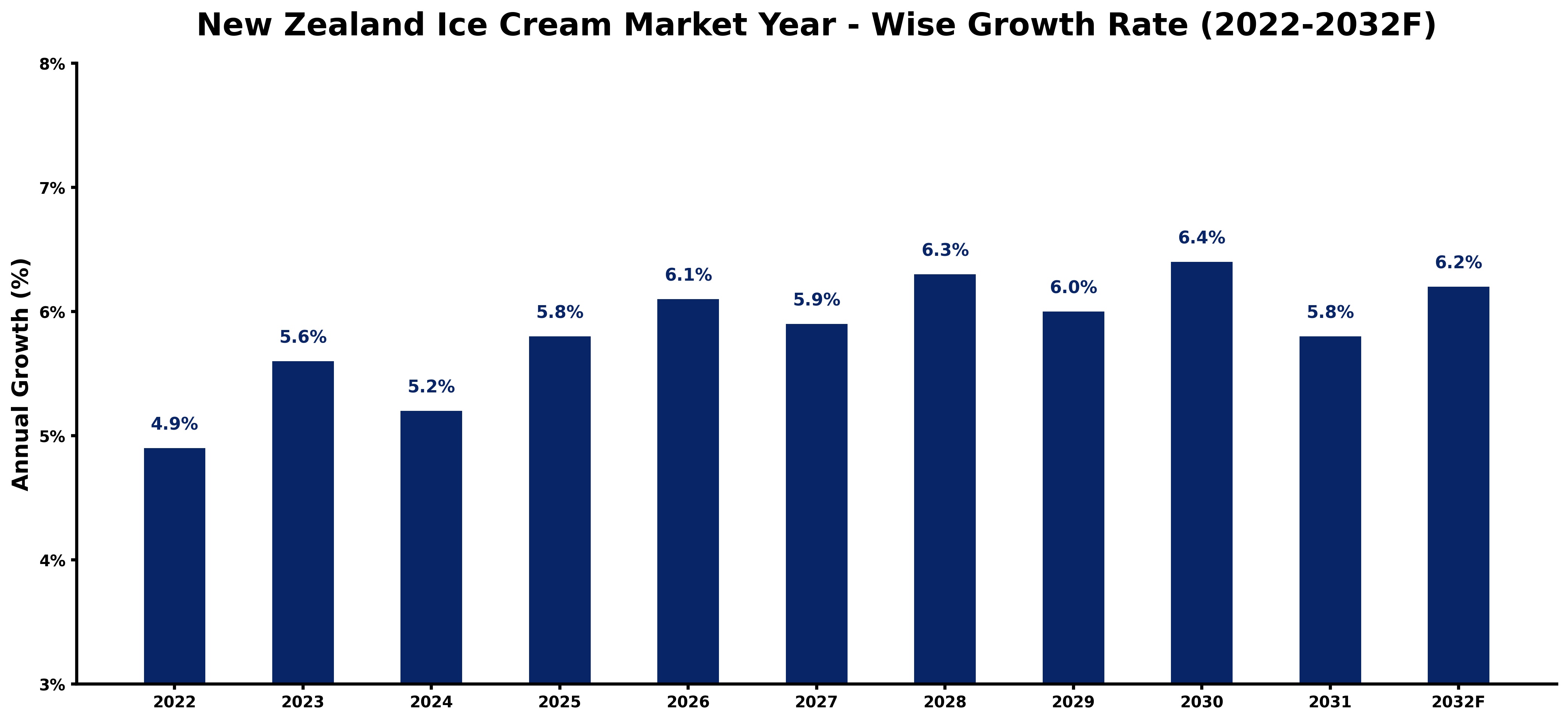
The following table summarizes the historical and forecasted growth rates of the New Zealand Ice cream Market, along with the rationale behind each year’s performance.
| Year | Estimated Growth (%) | Market Rationale |
| 2022 | 4.9% | Recovery in tourism and foodservice channels supported demand after earlier disruptions. |
| 2023 | 5.6% | Premium ice cream consumption and retail promotions strengthened market growth. |
| 2024 | 5.2% | Inflationary pressures and cautious consumer spending moderated volume growth. |
| 2025 | 5.8% | Product innovation, healthier formulations, and seasonal demand improved market performance. |
| 2026 | 6.1% | Rising demand for premium, plant-based, and indulgent frozen desserts accelerated market expansion. |
| 2027 | 5.9% | Stable household consumption and wider retail availability maintained steady growth. |
| 2028 | 6.3% | Growth in artisanal offerings and tourism-driven consumption supported higher sales. |
| 2029 | 6% | Market maturity balanced by continued premiumization and new product launches. |
| 2030 | 6.4% | Increased demand for functional, dairy-free, and low-sugar variants boosted revenues. |
| 2031 | 5.8% | Higher input costs slightly tempered demand despite continued innovation. |
| 2032 | 6.2% | Strong brand investments, expanding premium portfolio, and resilient consumer demand supported market growth. |
Topics Covered in the New Zealand Ice Cream Market Report
New Zealand Ice Cream Market report thoroughly covers the market by types, distribution channels, and flavors. The market report provides an unbiased and detailed analysis of ongoing market trends, opportunities/high growth areas, and market drivers, which would help stakeholders devise and align their market strategies according to the current and future market dynamics.
New Zealand Ice Cream Market Highlights
| Report Name | New Zealand Ice Cream Market |
| Forecast period | 2026–2032 |
| CAGR | 6% |
| Growing Sector | Artisanal Ice Cream |
New Zealand Ice Cream Market Synopsis
The New Zealand ice cream market is expected to experience robust growth. This boost is due to the increasing demand for premium and artisanal ice creams among consumers of New Zealand. Moreover, due to the increasing demand for healthy food products and the growing number of creative ways to sell products, the dairy industry is growing rapidly. In addition, many governments are implementing new regulations that encourage both producers and consumers to support local dairy farms and to increase exports of milk and cheese, while also encouraging consumers to choose more plant-based and lower sugar products.
Evaluation of Growth Drivers in the New Zealand Ice Cream Market
Below mentioned are some growth drivers and their impact on market dynamics:
| Drivers | Primary Segments Affected | Why It Matters |
| Health Conscious Trends | Types (Plant-Based Ice Cream, Low-Sugar Ice Cream) | Demand for healthier, low-sugar, and plant-based options is rising. |
| Premiumization of Products | Types (Premium Ice Cream) | Premium and artisanal options are attracting affluent consumers. |
| E-commerce and Delivery Growth | Distribution Channels (Online) | Online retail and delivery are expanding consumer access. |
| Sustainable Production Practices | Types (Artisanal Ice Cream), Distribution Channels (Supermarket/Hypermarket) | Eco-friendly practices attract environmentally-conscious buyers. |
| Product Innovation | Types (Impulse Ice Cream, Take-home Ice Cream) | Unique flavors and healthier options are growing the market. |
The New Zealand Ice Cream Market is projected to grow significantly, with a CAGR of 6% during the forecast period of 2026-2032. The market is being driven by consumers' increasing preference for multi-flavored ice creams. Further, the market is driven by the introduction of new artisanal and health-conscious ice creams; consumers are preferring low-fat and plant-based options due to growing health consciousness. The rise of e-commerce retail platforms is expected to increase this industry's sales by providing multiple choices by click and collect service. On top of that, ice creams are highly preferred desserts by every age group and are widely consumed on multiple occasions and celebrations by the people of New Zealand.
Evaluation of Restraints in the New Zealand Ice Cream Market
Below mentioned are some major restraints and their influence on market dynamics:
| Restraints | Primary Segments Affected | What This Means |
| Seasonality of Demand | Distribution Channels (Supermarkets, Ice Cream Parlours) | Ice cream sales dip during colder months. |
| High Ingredient Costs | Types (Premium Ice Cream, Plant-Based Ice Cream) | The growing cost hampers market sales. |
| Competition from Alternative Desserts | Types (Artisanal Ice Cream, Take-home Ice Cream) | This slows the industry adoption due to varied varieties availability. |
| Environmental Regulations | Types (Artisanal Ice Cream) | The operational costs gets too high. |
| Price Sensitivity | Types (Impulse Ice Cream) | Economic factors limit demand for premium-priced products. |
New Zealand Ice Cream Market Challenges
In the New Zealand Ice Cream Market faces with multiple challenges, which needs to be dealt with for the industry strong growth. The main challenge is the declining of sales according to season as summer season have higher sales than in winter. Also, the profitability margins stays variable due to les cold storage’s availability in few regions and high packaging cost. Moreover, growing health trends also hamper this industry long term growth aspects.
New Zealand Ice Cream Market Trends
Some major trends contributing to the development of the New Zealand Ice Cream Market Growth are:
- Rise in Health-Conscious Consumers: Demand for low-sugar, gluten-free, and plant-based ice creams continues to rise as consumers become more health-conscious.
- E-commerce and Home Delivery: services are the booming trend due to consumer increased usage of internet.
- Premiumization: Consumers are increasingly willing to pay a premium for artisanal and gourmet ice cream made from high-quality ingredients.
- Innovative Flavors and Experiences: Manufacturers are introducing new and unique flavors, as well as providing premium experiences through indulgent or exotic offerings.
Investment Opportunities in the New Zealand Ice Cream Market
Here are some investment opportunities in the New Zealand Ice Cream Industry:
- E-commerce Platforms: as these platforms are highly used by consumers, as they provide with ease of delivery and premium options.
- Artisanal Ice Cream Production: Invest in the production and distribution of artisanal and premium ice cream brands, focusing on quality and innovation to cater to niche consumer segments.
- Health-Conscious Offerings: Develop and market low-sugar, gluten-free, or plant-based ice creams that appeal to the growing health-conscious market.
Top 5 Leading Players in the New Zealand Ice Cream Market
Here are some top companies contributing to New Zealand Ice Cream Market Share:
1. Tip Top Ice Cream
| Company Name | Tip Top Ice Cream |
|---|---|
| Established Year | 1936 |
| Headquarters | Auckland, New Zealand |
| Official Website | Click Here |
Tip Top Ice Cream is a market leader in New Zealand’s ice cream industry, offering a wide range of ice cream products, including premium and impulse options. The company is known for its high-quality ingredients and extensive distribution network.
2. Pams Ice Cream
| Company Name | Pams Ice Cream |
|---|---|
| Established Year | 2007 |
| Headquarters | Auckland, New Zealand |
| Official Website | Click Here |
Pams Ice Cream offers a variety of flavors and formats, including take-home and impulse options. The brand focuses on affordability and quality, catering to mainstream consumer preferences.
3. Kapiti Ice Cream
| Company Name | Kapiti Ice Cream |
|---|---|
| Established Year | 1984 |
| Headquarters | Wellington, New Zealand |
| Official Website | Click Here |
Kapiti Ice Cream produces premium, artisanal ice cream made from locally sourced ingredients. Known for its innovative flavors, Kapiti is a prominent player in the premium ice cream market.
4. Over the Moo
| Company Name | Over the Moo |
|---|---|
| Established Year | 2014 |
| Headquarters | Auckland, New Zealand |
| Official Website | Click Here |
Over the Moo specializes in plant-based ice cream, catering to the growing vegan and lactose-free market. The company is known for its high-quality, dairy-free ice cream options.
5. New Zealand Natural
| Company Name | New Zealand Natural |
|---|---|
| Established Year | 1984 |
| Headquarters | Auckland, New Zealand |
| Official Website | Click Here |
New Zealand Natural is a global ice cream brand offering premium flavors made from natural ingredients. The company focuses on creating indulgent, high-quality ice cream products for discerning consumers.
Government Regulations Introduced in the New Zealand Ice Cream Market
According to New Zealand government data, The evolution of the New Zealand ice cream market is significantly shaped by governmental laws. The New Zealand Food Safety Authority (NZFSA) guarantees product safety, specifically on hygiene, quality assurance, and labeling. The government further advocates for sustainability via initiatives such as the “Waste Minimization Act,” which promotes the decrease of packaging waste in the food industry. These steps enhance product safety and environmental standards while bolstering New Zealand’s status as a prominent ice cream exporter.
Future Insights of the New Zealand Ice Cream Market
The outlook for the New Zealand Ice Cream Market appears favorable, with strong growth projected over the next several years. Factors such as increasing demand for premium ice cream, the rise of health-conscious and plant-based products, and the expansion of e-commerce platforms will continue to drive market growth. Innovations in flavors and packaging, along with government support for sustainable production, are also expected to positively impact the market’s trajectory.
Market Segmentation Analysis
The report offers a comprehensive study of the subsequent market segments and their leading categories.
Impulse Ice Cream to Dominate the Market - By Sales Type
According to Guneet Kaur, Senior Research Analyst, 6Wresearch, impulse ice cream dominates the market due to its convenience and instant gratification appeal. It is widely consumed as a quick snack, making it highly popular in supermarkets, convenience stores, and ice cream parlors.
Supermarket/Hypermarket to Dominate the Market – By Distribution Channel Type
Supermarkets and hypermarkets are the fastest-growing distribution channels in New Zealand due to their extensive reach and variety of ice cream brands. Consumers prefer to purchase ice cream in bulk from these stores, benefitting from promotions and discounts.
Key attractiveness of the report
- 10 Years Market Numbers.
- Historical Data Starting from 2022 to 2025.
- Base Year: 2025
- Forecast Data until 2032.
- Key Performance Indicators Impacting the Market.
- Major Upcoming Developments and Projects.
Key Highlights of the Report:
- New Zealand Ice cream Market Outlook
- Market Size of New Zealand Ice cream Market, 2025
- Forecast of New Zealand Ice cream Market, 2032
- Historical Data and Forecast of New Zealand Ice cream Revenues & Volume for the Period 2022-2032
- New Zealand Ice cream Market Trend Evolution
- New Zealand Ice cream Market Drivers and Challenges
- New Zealand Ice cream Price Trends
- New Zealand Ice cream Porter`s Five Forces
- New Zealand Ice cream Industry Life Cycle
- Historical Data and Forecast of New Zealand Ice cream Market Revenues & Volume By Sales Types for the Period 2022-2032
- Historical Data and Forecast of New Zealand Ice cream Market Revenues & Volume By Impulse ice cream for the Period 2022-2032
- Historical Data and Forecast of New Zealand Ice cream Market Revenues & Volume By Take-home ice cream for the Period 2022-2032
- Historical Data and Forecast of New Zealand Ice cream Market Revenues & Volume By Artisanal ice cream for the Period 2022-2032
- Historical Data and Forecast of New Zealand Ice cream Market Revenues & Volume By Distribution Channel Type for the Period 2022-2032
- Historical Data and Forecast of New Zealand Ice cream Market Revenues & Volume By Supermarket/Hypermarket for the Period 2022-2032
- Historical Data and Forecast of New Zealand Ice cream Market Revenues & Volume By Convenience stores for the Period 2022-2032
- Historical Data and Forecast of New Zealand Ice cream Market Revenues & Volume By Ice cream Parlour for the Period 2022-2032
- Historical Data and Forecast of New Zealand Ice cream Market Revenues & Volume By Online for the Period 2022-2032
- Historical Data and Forecast of New Zealand Ice cream Market Revenues & Volume By Others for the Period 2022-2032
- New Zealand Ice cream Import Export Trade Statistics
- Market Opportunity Assessment By Sales Types
- Market Opportunity Assessment By Distribution Channel Type
- New Zealand Ice cream Top Companies Market Share
- New Zealand Ice cream Competitive Benchmarking By Technical and Operational Parameters
- New Zealand Ice cream Company Profiles
- New Zealand Ice cream Key Strategic Recommendations
Market covered
The report subsequently covers the market by following segments and subsegments.
By Sales, Types:
- Impulse Ice Cream
- Take-home Ice Cream
- Artisanal Ice Cream
By Distribution Channel Type:
- Supermarket/Hypermarket
- Convenience Stores
- Ice Cream Parlour
- Online
- Others






































