New Zealand Magnet Market Top 5 Importing Countries and Market Competition (HHI) Analysis
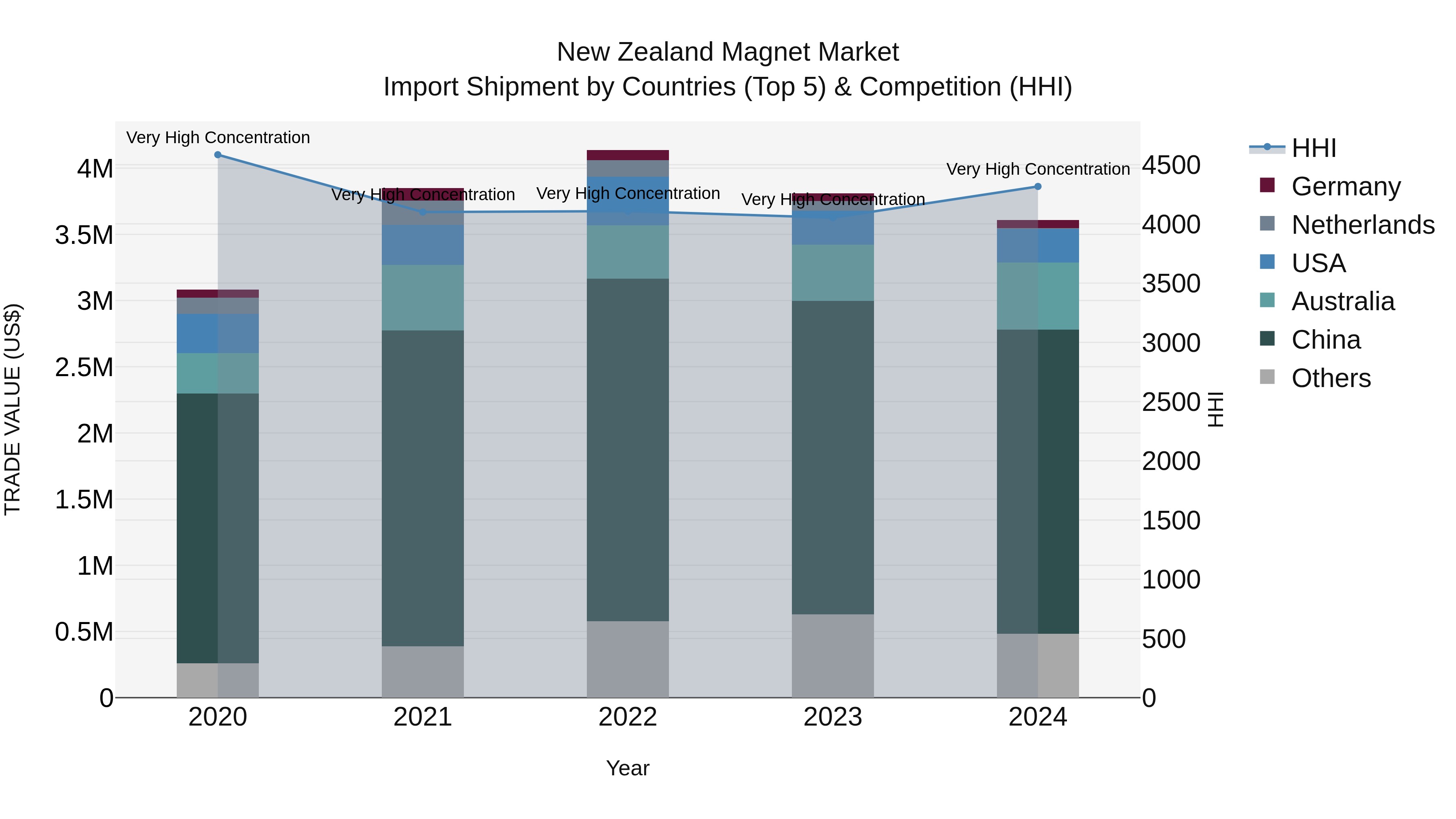
New Zealand`s magnet import market in 2024 saw top suppliers including China, Australia, USA, Taiwan, Province of China, and Vietnam. Despite a slight decline in growth rate from 2023 to 2024, the market maintained a high level of concentration, indicating strong competition among the key players. With a steady compound annual growth rate of 4.01% from 2020 to 2024, the import market for magnets in New Zealand continues to show resilience and potential for further expansion in the coming years.
Key Highlights of the Report:
- New Zealand Magnet Market Outlook
- Market Size of New Zealand Magnet Market, 2025
- Forecast of New Zealand Magnet Market, 2032
- Historical Data and Forecast of New Zealand Magnet Revenues & Volume for the Period 2022 - 2032
- New Zealand Magnet Market Trend Evolution
- New Zealand Magnet Market Drivers and Challenges
- New Zealand Magnet Price Trends
- New Zealand Magnet Porter's Five Forces
- New Zealand Magnet Industry Life Cycle
- Historical Data and Forecast of New Zealand Magnet Market Revenues & Volume By Magnet Type for the Period 2022 - 2032
- Historical Data and Forecast of New Zealand Magnet Market Revenues & Volume By Ferrite for the Period 2022 - 2032
- Historical Data and Forecast of New Zealand Magnet Market Revenues & Volume By Neodymium Iron Boron (NdFeB) for the Period 2022 - 2032
- Historical Data and Forecast of New Zealand Magnet Market Revenues & Volume By Aluminium Nickel Cobalt (AlNiCo) for the Period 2022 - 2032
- Historical Data and Forecast of New Zealand Magnet Market Revenues & Volume By Samarium Cobalt (SmCo) for the Period 2022 - 2032
- Historical Data and Forecast of New Zealand Magnet Market Revenues & Volume By Application for the Period 2022 - 2032
- Historical Data and Forecast of New Zealand Magnet Market Revenues & Volume By Computer Hard Disk Drives (HDD), CD, DVD for the Period 2022 - 2032
- Historical Data and Forecast of New Zealand Magnet Market Revenues & Volume By Hybrid Electric Vehicles for the Period 2022 - 2032
- Historical Data and Forecast of New Zealand Magnet Market Revenues & Volume By Electric Bicycles for the Period 2022 - 2032
- Historical Data and Forecast of New Zealand Magnet Market Revenues & Volume By Heating, Ventilating and Air Conditioners (HVAC) for the Period 2022 - 2032
- Historical Data and Forecast of New Zealand Magnet Market Revenues & Volume By Wind Turbines for the Period 2022 - 2032
- New Zealand Magnet Import Export Trade Statistics
- Market Opportunity Assessment By Magnet Type
- Market Opportunity Assessment By Application
- New Zealand Magnet Top Companies Market Share
- New Zealand Magnet Competitive Benchmarking By Technical and Operational Parameters
- New Zealand Magnet Company Profiles
- New Zealand Magnet Key Strategic Recommendations






































