New Zealand Mortar Market Growth Rate Analysis (2021 - 2031)
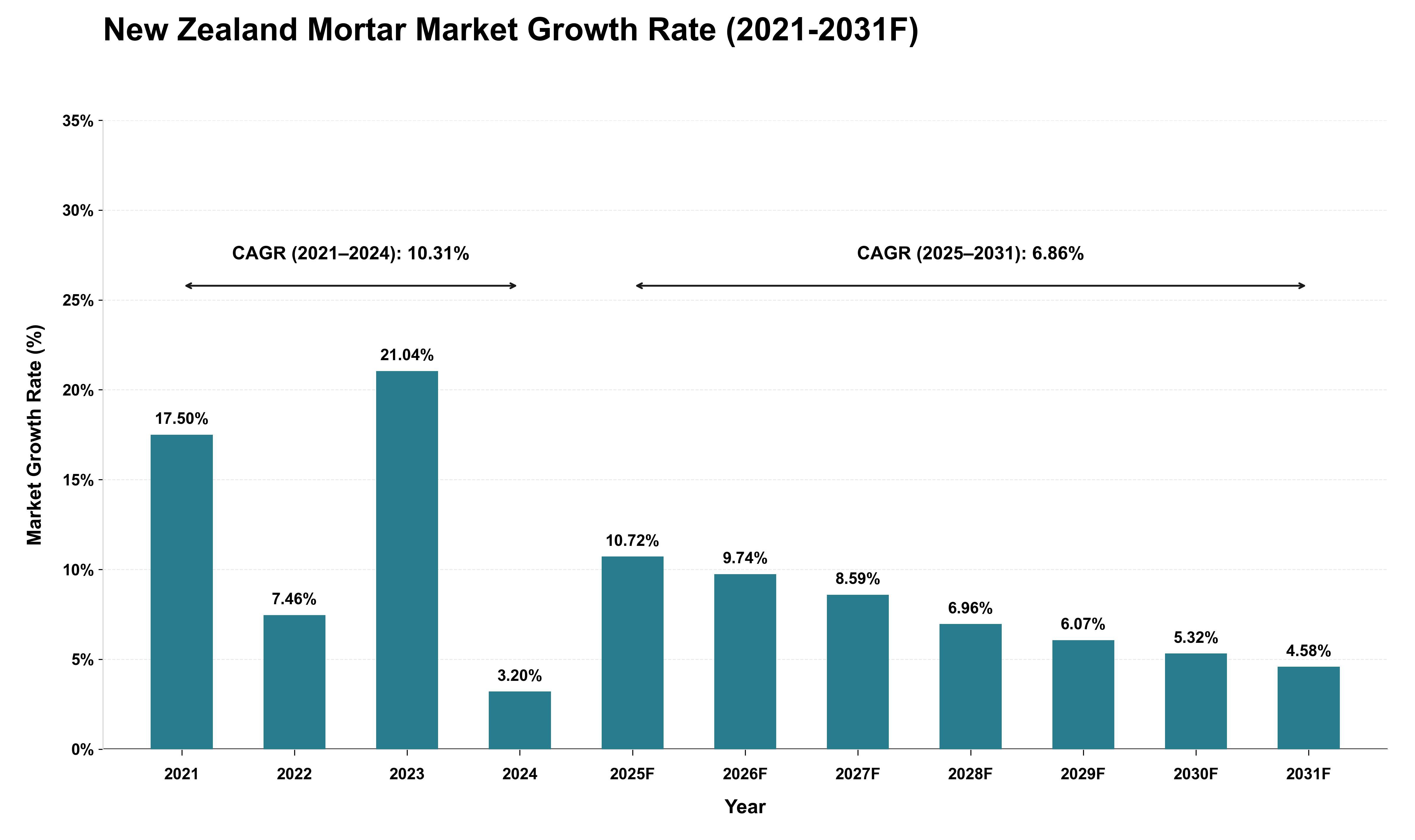
The New Zealand mortar market experienced a robust historical CAGR of 10.31% from 2021 to 2024, driven by a combination of post-pandemic construction demand and regulatory shifts favoring infrastructure investments. The surge in growth rates, particularly in 2021 and 2023, can be attributed to increased government spending on housing and public works, alongside global supply chain disruptions that heightened the reliance on local production. However, as the market transitioned into a forecasted CAGR of 6.86% for 2025-2031, growth rates are expected to moderate due to anticipated regulatory tightening aimed at sustainability and environmental standards, which may impose additional costs on manufacturers. Furthermore, global commodity price fluctuations and potential trade policy adjustments could influence import dynamics, thereby impacting local pricing structures and competitive positioning within the mortar segment.
Key Highlights of the Report:
- New Zealand Mortar Market Outlook
- Market Size of New Zealand Mortar Market, 2024
- Forecast of New Zealand Mortar Market, 2031
- Historical Data and Forecast of New Zealand Mortar Revenues & Volume for the Period 2021-2031
- New Zealand Mortar Market Trend Evolution
- New Zealand Mortar Market Drivers and Challenges
- New Zealand Mortar Price Trends
- New Zealand Mortar Porter`s Five Forces
- New Zealand Mortar Industry Life Cycle
- Historical Data and Forecast of New Zealand Mortar Market Revenues & Volume By Type for the Period 2021-2031
- Historical Data and Forecast of New Zealand Mortar Market Revenues & Volume By Wet Mixed Mortar for the Period 2021-2031
- Historical Data and Forecast of New Zealand Mortar Market Revenues & Volume By Dry Mortar for the Period 2021-2031
- Historical Data and Forecast of New Zealand Mortar Market Revenues & Volume By Application for the Period 2021-2031
- Historical Data and Forecast of New Zealand Mortar Market Revenues & Volume By Construction Industry for the Period 2021-2031
- Historical Data and Forecast of New Zealand Mortar Market Revenues & Volume By Home Decoration Industry for the Period 2021-2031
- Historical Data and Forecast of New Zealand Mortar Market Revenues & Volume By Others for the Period 2021-2031
- New Zealand Mortar Import Export Trade Statistics
- Market Opportunity Assessment By Type
- Market Opportunity Assessment By Application
- New Zealand Mortar Top Companies Market Share
- New Zealand Mortar Competitive Benchmarking By Technical and Operational Parameters
- New Zealand Mortar Company Profiles
- New Zealand Mortar Key Strategic Recommendations






































